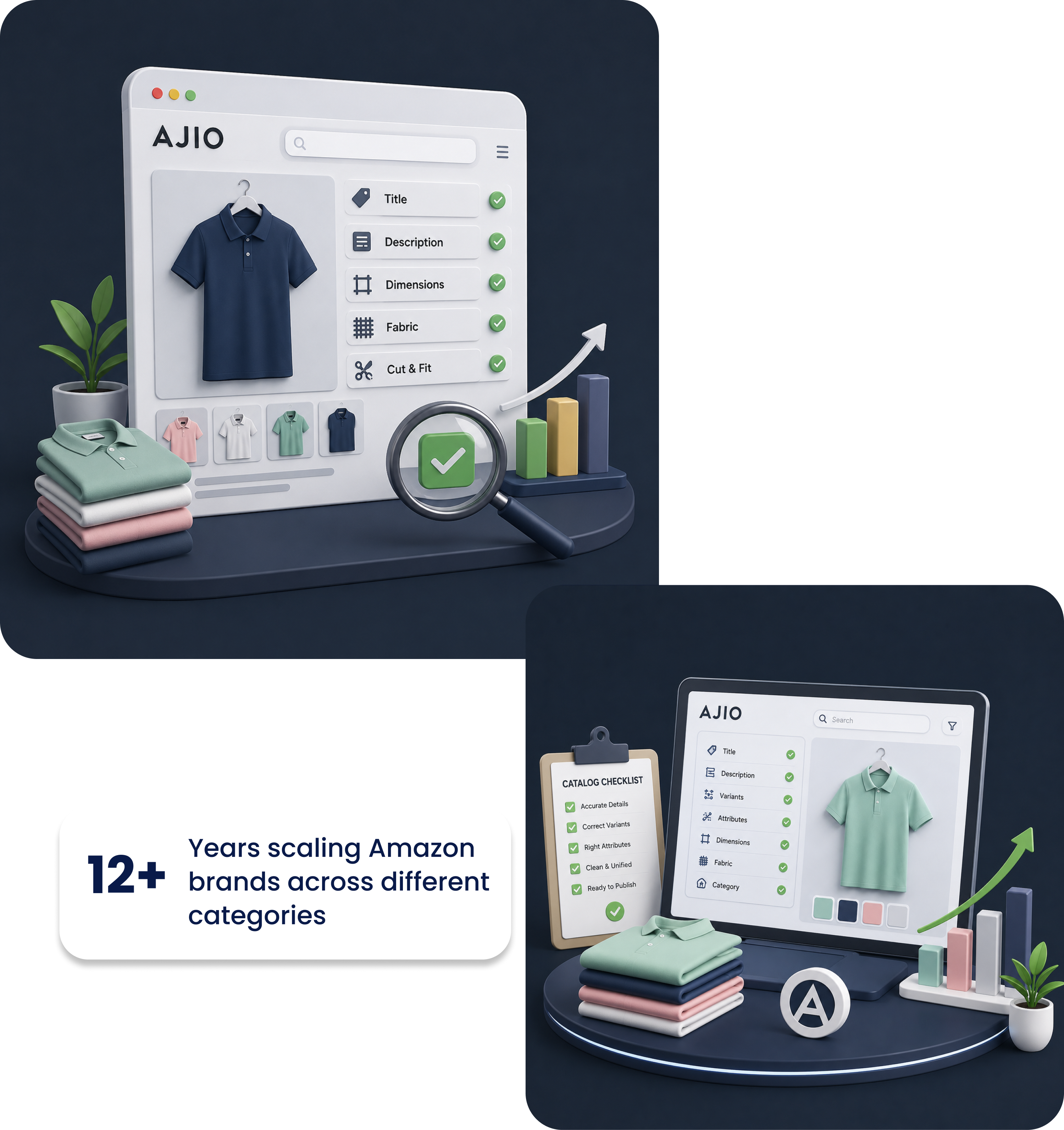
A single slip in an Ajio product detail can drag down its entire journey. Shoppers spot things fast - names guide their search, while dimensions, fabric, and cut shape whether they believe in what’s shown. Getting grouped properly? That drops items into the hands that actually want them, not ones that scroll past. Messy entries blur the lines - duplicates pop up, filters fail, versions clash like wrong puzzle pieces. Attention here, though- careful and clear, lifts each piece exactly where it needs to land, working quietly and smoothly when someone clicks through.
Start strong with HRL Infotechs - our catalogues for Ajio sellers follow the rhythm of the platform’s own search patterns, not just surface-level specs. Instead of guessing, we align each detail to match how Ajio processes data. Variants? Built to stay unified across listings, avoiding split visibility. Then comes the wording: smooth, human-sounding sentences packed with terms real buyers type in. Behind every field, a quiet precision tuned to performance.
Good cataloguing isn't about cramming in data. It's about giving Ajio's algorithm exactly what it needs to place your product correctly, and giving shoppers exactly what they need to decide quickly. Every field gets filled with purpose, not guesswork. Structure follows how people actually browse fashion and lifestyle categories on Ajio. Progress is steady, not a one-time push. Visibility improves because the catalogue finally makes sense to the platform and to the shopper.

Shoppers on Ajio search differently depending on what they're after apparel, footwear, accessories, beauty, or home essentials all carry their own buying logic. Someone browsing for a pair of sneakers compares differently than someone looking for ethnic wear or skincare, which means a single cataloguing template never works across categories. At HRL Infotechs, we study category-specific attribute requirements, sizing standards, and shopper search patterns to build catalogues that fit how each category is actually browsed and filtered on Ajio.
A catalogue that performs starts with structure that matches buyer behaviour. We handle product titles, descriptions, attributes, size charts, variant mapping, and backend keywords built around real Ajio search data and category norms, not templated guesswork. The aim is simple: products should be easy to find, easy to filter into, and easy to trust at a glance.
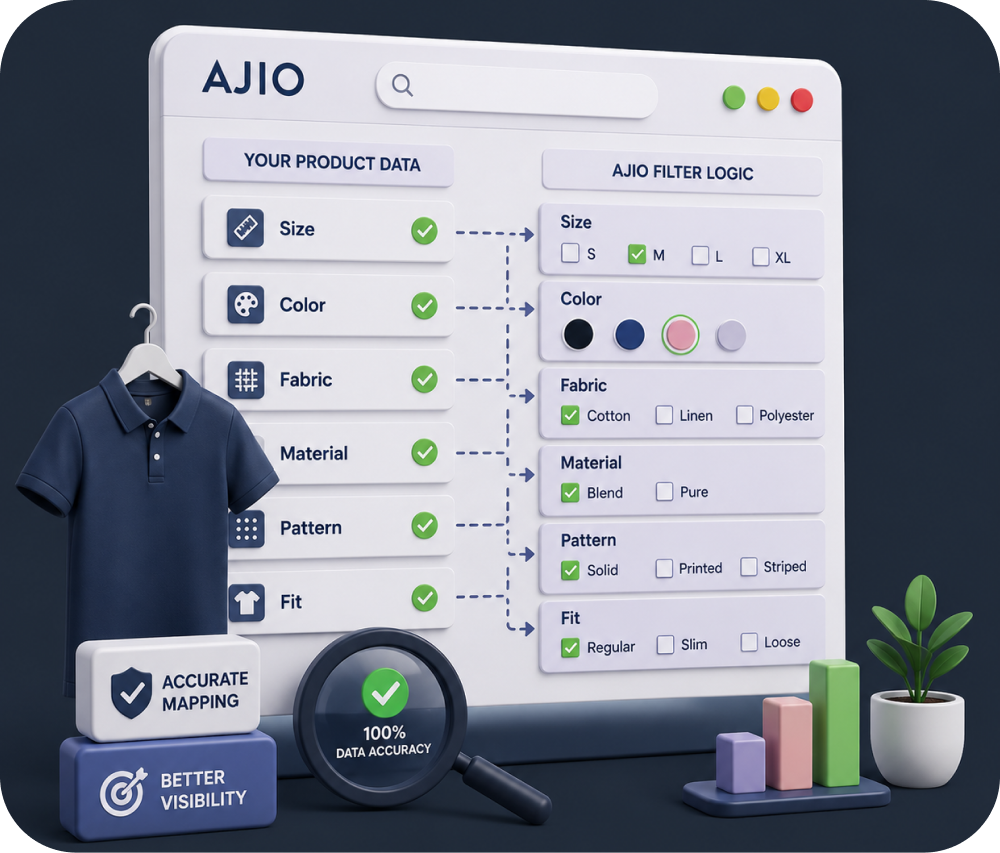
Most listing problems on Ajio trace back to incomplete or mismatched attributes — wrong size formats, missing fabric details, and inconsistent colour naming. We map every attribute field against Ajio's taxonomy so products land in the correct filters and don't get excluded from searches they should be winning.

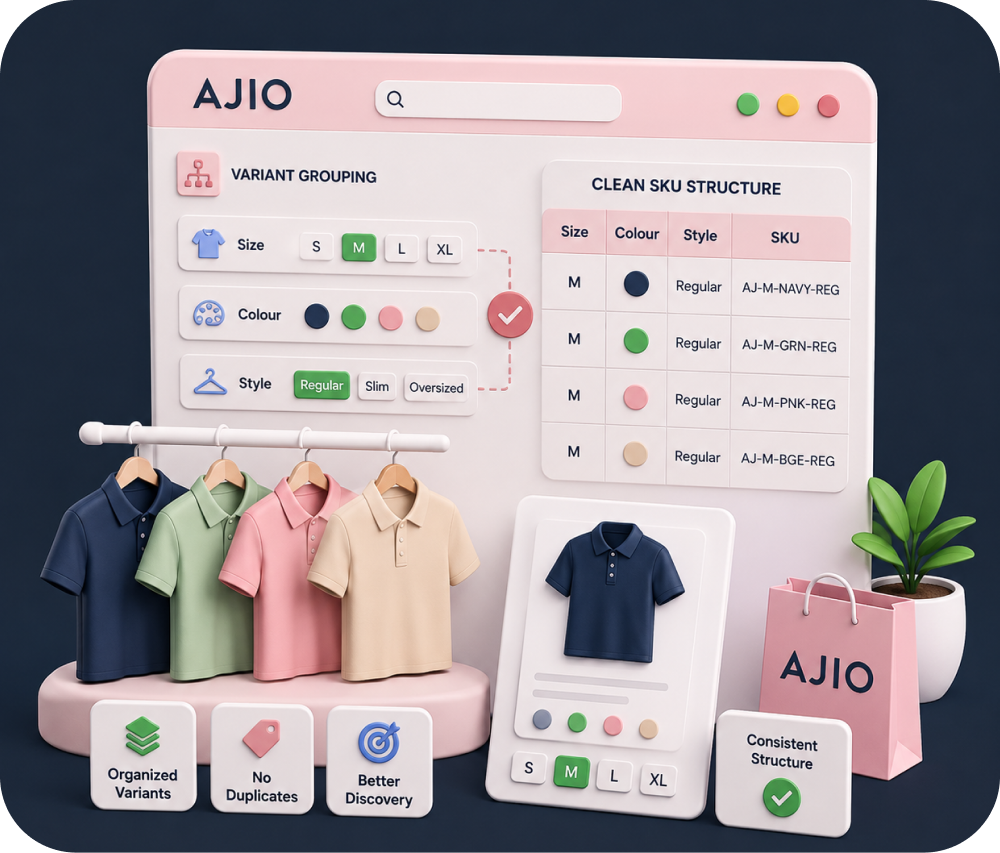
Fragmented variants — where the same product splits into multiple disconnected listings — quietly cost sales. We restructure SKUs so size and colour variations sit under a single parent listing the way shoppers expect, instead of competing against each other in search.

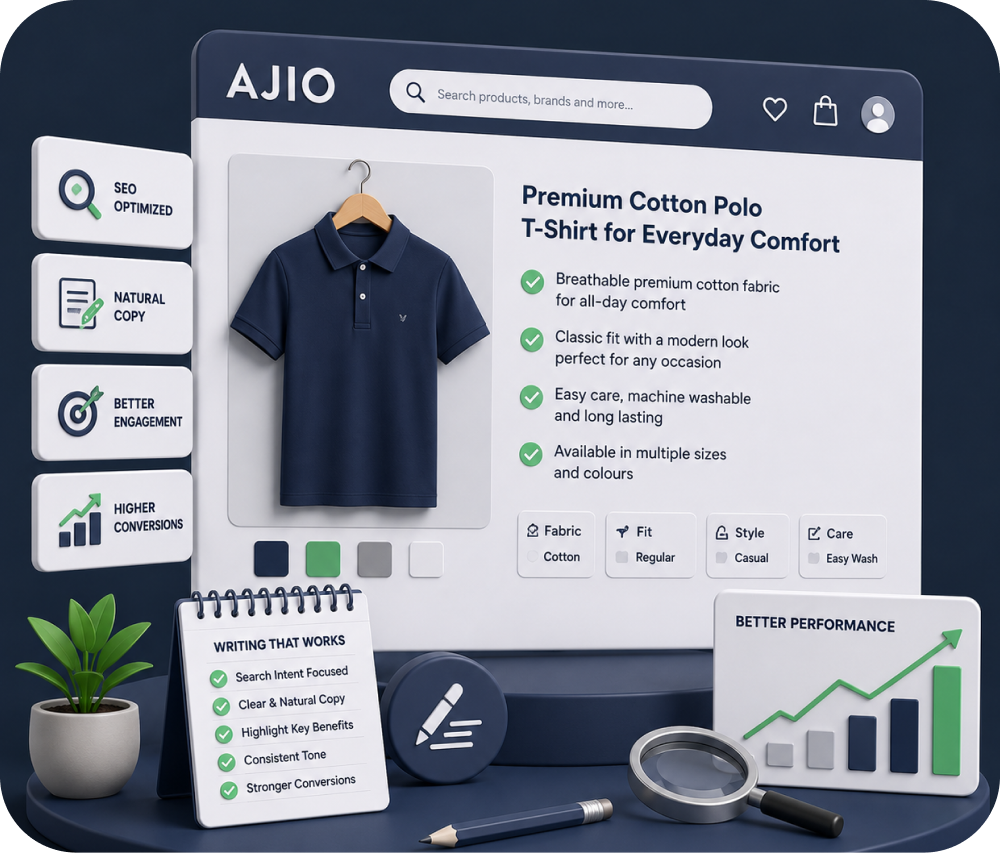
Descriptions on Ajio need to do two things at once: speak to a real shopper and satisfy what the search algorithm is scanning for. We write copy that covers fit, fabric, styling use-cases, and care instructions without sounding like a spec sheet or a keyword dump.

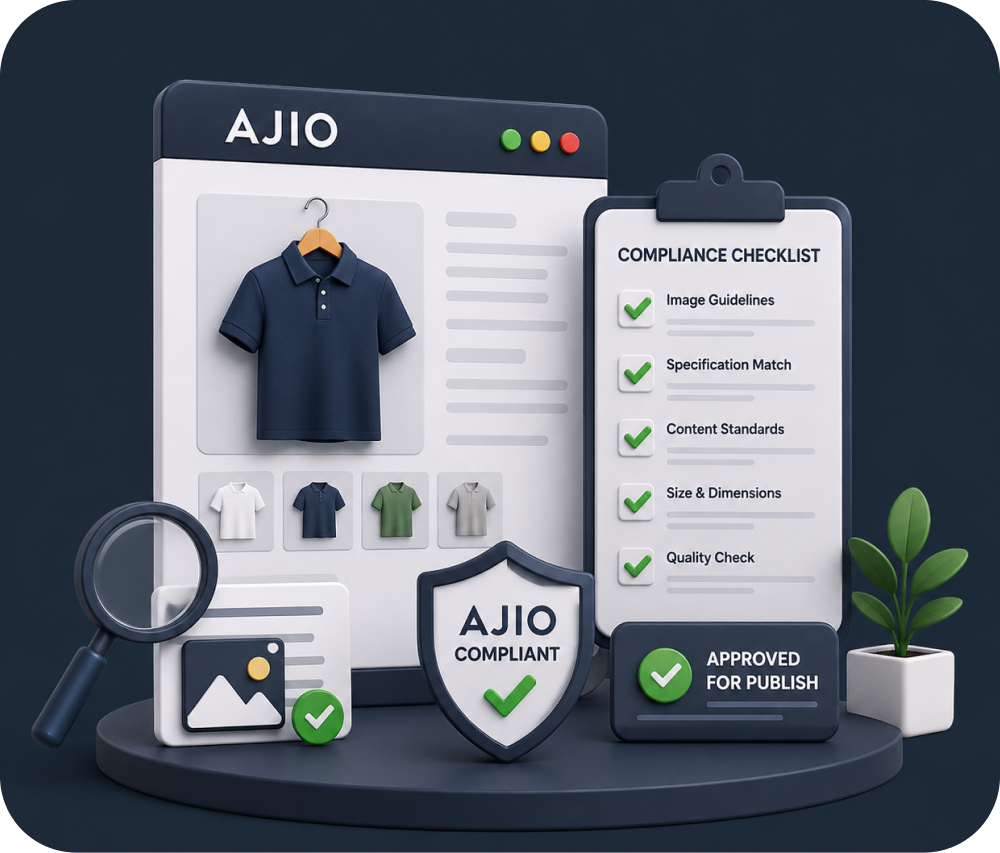
Ajio enforces strict image and specification guidelines, and listings that don't comply lose visibility or get flagged. We audit and align every asset and spec field against current platform requirements before anything goes live.

Ajio's catalogue requirements shift as the platform refines its search and filtering systems. A catalogue built correctly today can fall out of step in a few months if nobody's watching. HRL Infotechs works as an ongoing cataloguing partner, not a one-time data entry vendor. We track platform changes, fix attribute drift, and keep your catalogue aligned as requirements evolve.
Listings degrade quietly; attributes go missing during updates, variants split apart, and fields fall out of sync with new taxonomy rules. Left unchecked, these backend errors slowly choke your product indexing and organic search reach. Regular audits catch this before it affects visibility, not after sales already dipped, ensuring your store maintains a flawless digital shelf.
When Ajio updates its taxonomy, size standards, or compliance rules, listings that don't adjust quickly lose ranking and risk rejection. This frequently leads to suppressed buy buttons and sudden drops in category visibility. We track these changes and update your catalogue proactively, so your products stay compliant and visible through every platform shift without losing their competitive edge.
Over time, cataloguing needs constant updates. Performance numbers get checked regularly — then weights for attributes shift slightly because patterns change. Variant setups grow sharper too; adjustments happen piece by piece without big overhauls. These tiny steps add up: listings stay clear even when product counts climb higher. As buyer searches evolve, so does structure behind the scenes — navigation stays smooth simply because details are always adjusting quietly.
Every Ajio seller runs into the same core problem eventually: a catalogue that grows faster than it stays organised. New SKUs get added, variants multiply, attribute fields get filled inconsistently across product drops, and visibility starts slipping without an obvious cause. Our cataloguing services are built to fix that at the structural level.
Manual updates can only take you so far when the platform's background algorithms are constantly changing. Without automated oversight and strict quality control, minor indexing errors compound until your best-selling items quietly drop off the first page. We solve this by matching your internal data with Ajio's exact backend taxonomy requirements. This keeps your listings optimised for search filters, prevents sudden drops in traffic, and turns a chaotic inventory list into an organised, high-converting digital storefront.
Wherever your catalogue stands today, the fix is the same: clean attribute mapping, logical variant structuring, and content that's built around how Ajio's system and shoppers actually read a listing.
Everything brand owners typically want to know before kicking off an engagement. If something isn't covered here, send it through the inquiry form above; a strategist will reply within one business day.