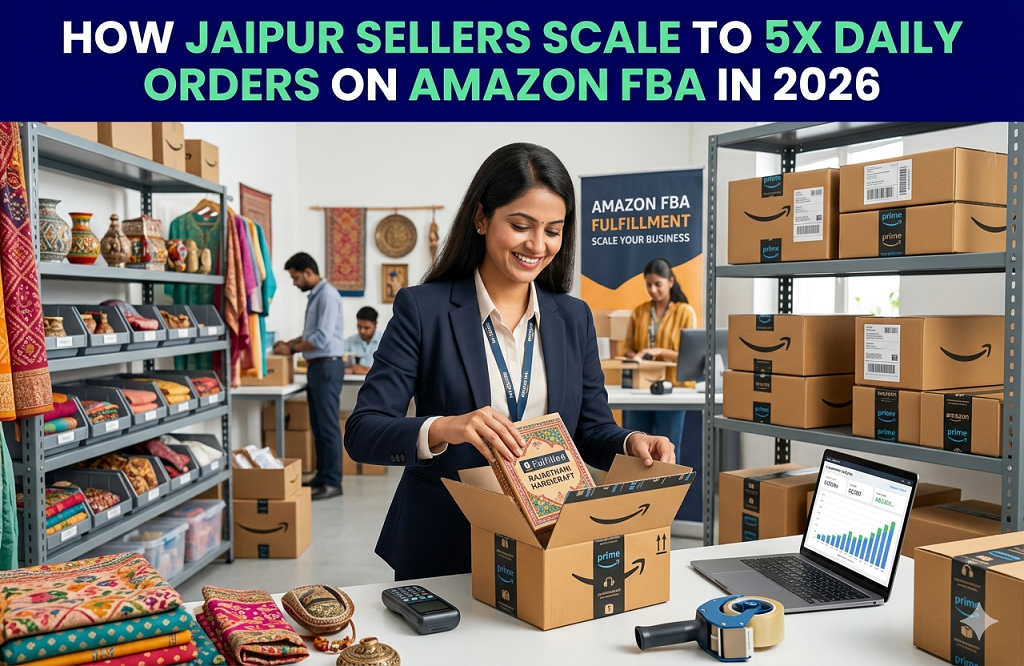
Amazon AI Prompts Went Live: How to Optimize Listings for Amazon’s New Contextual Ad Feature


Amazon has moved advertising closer to the actual shopping conversation. Sponsored Products Prompts and Sponsored Brands Prompts use AI to surface relevant product information around shopper questions and decision points. Amazon says the feature became generally available in the U.S. on March 25, 2026, and prompts can appear in shopping results and product detail pages. For Indian sellers, the key takeaway is simple: start improving the information Amazon’s AI can understand, but don’t assume every U.S. advertising feature is already available on Amazon.in.

If you’ve been treating your Amazon listing as a collection of keywords, this update is a good reason to change that approach. A shopper may ask whether a water purifier suits a family of four, whether a laptop is suitable for students, or whether a skincare product works for oily skin. Your listing needs to answer those questions clearly through titles, bullets, attributes, product information, reviews and supporting content. Amazon says its prompts use signals from product detail pages, Brand Stores and campaign data.

What Are Amazon AI Prompts and Why Do They Matter?

Amazon AI Prompts are AI-powered advertising enhancements that can present relevant product information during shopping interactions. They are designed to help shoppers move from a question or comparison to a more informed purchase decision.

This is different from a traditional keyword-triggered ad. Amazon determines which prompts and products are relevant using its own signals, while existing Sponsored Products and Sponsored Brands campaigns can become eligible automatically. Amazon also provides prompt-level reporting in the Ads Console and through its reporting system.

For sellers, this makes listing quality more closely connected with advertising quality. Your campaign can generate visibility, but the product information still needs to explain why the item fits the shopper’s requirement.

This is where Amazon Rufus ads become relevant. Amazon’s conversational shopping experience has evolved into Alexa for Shopping, but the underlying shift remains the same: shoppers can use natural questions rather than relying only on short search terms. Amazon’s current guidance describes prompts as conversational advertising that can help customers discover relevant product information.

How Should You Optimize Listings for Amazon AI Shopping?

To optimize listings for Amazon AI shopping, make your product information specific, consistent and useful for real buyer questions. Start with the highest-value ASINs rather than changing your entire catalogue at once.

Think about the questions a customer would ask before buying. If you sell a mixer grinder, for example, your listing should clearly communicate capacity, wattage, jar sizes, intended usage and relevant limitations. If you sell office chairs, explain weight capacity, adjustability, material, seat dimensions and suitable use cases.

This is also where how to optimize listings for Rufus AI becomes a practical exercise rather than a keyword trick. Amazon has not published a guaranteed formula such as a specific keyword density or content length that makes a product appear in AI recommendations. The safer approach is to make the product data complete enough for Amazon’s systems to understand what the product is, who it suits and how it differs from alternatives.

HRL Infotechs’ Amazon SEO and listing optimization services follow a similar foundation, covering keyword research, title enhancement, backend search terms, visual optimization and performance-based content improvements. The objective is not to stuff a listing with phrases. It is to make the listing relevant and understandable.

Which Parts of Your Amazon Listing Should You Change First?

Start with the title, bullets, attributes and backend search terms because these areas provide structured information about the product. Then review your images and A+ Content to make sure the visual and written information tell the same story.

A useful sequence is:

  1. Identify your 10 to 20 highest-value ASINs.
  2. Collect common customer questions from reviews, Q&A and support interactions.
  3. Compare those questions against your existing product content.
  4. Add missing factual information where Amazon’s policies allow.
  5. Remove vague or contradictory claims.
  6. Review PPC search-term data after the content changes.
  7. Measure conversion, sales and advertising efficiency before making another major change.

One trade-off experienced sellers learn quickly is that more content isn’t automatically better. A listing packed with repetitive keywords can be harder for shoppers to understand. Clear information about compatibility, size, use case, materials and limitations is often more valuable than another repetition of the main keyword.

Your Rufus AI listing optimization strategy should therefore focus on information quality first. Keyword research still matters, but the keyword should support the buying question rather than replace the answer.

What Is the Amazon Rufus Prompts Report and How Can Sellers Use It?

The Amazon Rufus Prompts Report provides prompt-level performance information for eligible campaigns. Amazon says the report can include prompt text, associated ads, impressions, clicks, CTR, CPC, spend, sales, ACoS, ROAS and orders or units.

If the feature is available to your marketplace and account, don’t treat this report as another dashboard to download and forget. Read the actual prompt language. It can show you the kinds of questions Amazon is connecting with your products.

For example, if your prompts repeatedly revolve around “Does this product work for…” while your listing barely explains that use case, you’ve found a content gap. If shoppers interact with comparison-style prompts, review the bullets and A+ Content to make your product’s differentiators easier to understand.

This is one of the most useful applications of Amazon Rufus prompts report data. The report can become a feedback loop between advertising and listing optimization rather than simply another performance report.

Amazon’s documentation also says prompts can be viewed from the Ads Console through Campaign, Ad Group, Ads and the Prompts tab when applicable.

Does A+ Content Help With AI-Driven Shopping?

A+ Content can strengthen the information available on a product detail page, particularly when it explains product benefits, comparisons and use cases clearly. It should support the core listing rather than compensate for missing or weak product information.

For sellers investing in AI readiness Amazon listing work, A+ Content is useful for addressing questions that are difficult to explain in five short bullets. A comparison module, for example, can help shoppers understand the difference between two products in the same range.

HRL Infotechs provides Amazon A+ Content design services, including product content writing, lifestyle imagery, brand storytelling, keyword optimization and comparison charts. The important distinction is that A+ Content should reinforce the product’s actual value proposition rather than become a collection of decorative graphics.

You should also remember that AI shopping does not eliminate the basics. A weak product, poor reviews, inaccurate specifications or an uncompetitive offer cannot be fixed simply by adding more A+ modules.

How Does Amazon Answer Engine Optimization Differ From Traditional Amazon SEO?

Amazon answer engine optimization, or Amazon AEO, focuses on making product information easy for an AI system to interpret and use when responding to conversational shopping questions. Traditional Amazon SEO places greater emphasis on discoverability for relevant searches, while AEO adds context, clarity and question-based relevance.

The two approaches should work together. A customer may search “wireless earbuds” first and later ask an AI shopping assistant which option is best for long office calls. Your listing needs to be relevant to the broad search while also containing accurate information about microphone quality, battery life, comfort and intended use.

This is why Amazon answer engine optimization (AEO) should not become another excuse for keyword stuffing. Amazon’s own conversational advertising guidance emphasizes the importance of clear product messaging and organized brand content because these provide stronger signals for AI-powered experiences.

A practical example: we often see sellers add five or six generic benefit phrases to a listing while leaving basic specifications incomplete. That is the wrong priority. If the customer needs to know dimensions, compatibility or capacity to decide, that information should come first.

What Is Amazon Contextual Ad Placement Beta?

Amazon’s contextual ad placement development uses AI to place relevant advertising and product information around shopper intent rather than relying solely on a conventional search-results placement.

The important distinction is that advertisers do not manually write every prompt. Amazon generates and manages the prompt experience using its own systems and signals. Existing campaigns can be eligible without requiring a separate campaign structure.

This means Amazon contextual ad placement beta should not be approached like a new keyword campaign where you simply create hundreds of targets. The stronger opportunity is to make your existing campaign and product data more useful.

For Indian brands, there is another important limitation: Amazon’s current documentation identifies Sponsored Products Prompts and Sponsored Brands Prompts as available to U.S. Amazon advertisers. Therefore, don’t increase Amazon.in budgets simply because the feature is live elsewhere. Verify marketplace availability inside your account first.

How Can Indian Amazon Sellers Prepare Now?

Indian sellers should prepare by improving the underlying listing rather than trying to force access to a feature that may not yet be available on Amazon.in.

Start with your highest-revenue products. Review their titles, bullets, attributes, images, A+ Content, reviews and search-term performance. Then identify questions that a real shopper would ask before spending ₹1,000, ₹5,000 or ₹20,000 on the product.

Your amazon product listing and seo services for sellers strategy should connect those questions with measurable search and conversion data. HRL Infotechs already recommends aligning listing content with PPC search terms, conversion data and product performance rather than managing advertising separately from catalogue optimization.

For sellers running serious advertising budgets, Amazon Advertising Services can also be integrated with listing optimization. That matters because sending paid traffic to a page that fails to answer obvious buyer questions simply increases the cost of discovering the problem.

You can also review HRL Infotechs’ recent guide on Amazon’s Rufus and Alexa for Shopping merger to understand how conversational shopping is developing beyond the original Rufus experience.

What Should You Do Next?

Don’t rewrite 500 listings because Amazon introduced AI-powered prompts. Start small and measure carefully.

Audit your top 10 to 20 ASINs. Identify the questions shoppers ask repeatedly. Improve the missing information in your titles, bullets, attributes and supporting content. Then connect your listing changes with search-term, conversion and advertising data.

If you’re unsure whether your images are helping or hurting the buying journey, HRL Infotechs’ recent Amazon product image SEO guide provides a useful next step for auditing the visual side of the listing.

The goal isn’t to make your listing “AI-friendly” by adding artificial language. The goal is to make the product easier for both shoppers and Amazon’s systems to understand.

If your listings are generating traffic but failing to answer buyer questions, that’s the gap worth fixing first. HRL Infotechs can help you audit listing content, A+ Content and advertising together so your Amazon strategy is built around the actual shopping journey rather than one isolated feature.

FAQs

Q1. Are Amazon AI Prompts available to sellers in India?

Ans. Amazon’s current documentation lists Sponsored Products Prompts and Sponsored Brands Prompts as generally available in the U.S. It does not currently list India as an available marketplace on that announcement. Indian sellers should therefore verify availability directly inside their Amazon Ads account rather than assuming that a U.S. rollout automatically applies to Amazon.in.

Q2. Do I need a separate campaign for Amazon AI Prompts?

Ans. No. Amazon says eligible Sponsored Products and Sponsored Brands campaigns are automatically enrolled in the prompts experience. Sellers can review prompt performance through the Ads Console and reporting tools where the feature is available. You don’t need to create a completely separate campaign simply to participate.

Q3. How do I make my Amazon listing ready for AI shopping?

Ans. Make the listing factually complete and easy to interpret. Explain the primary use case, specifications, compatibility, size, materials, benefits and limitations. Keep the information consistent across the title, bullets, attributes, images and supporting content. Avoid writing unnatural sentences simply to include AI-related keywords.

Q4. Can Amazon Rufus AI increase my product sales?

Ans. AI shopping can influence product discovery and purchase decisions, but no seller should treat AI prompts as a guaranteed sales channel. Performance depends on relevance, product quality, offer competitiveness, conversion rate, reviews, inventory and other marketplace factors. Use available reporting to measure actual business results instead of assuming visibility will automatically produce sales.

Q5. Should I optimize my Amazon listing for Rufus or Alexa for Shopping?

Ans. Optimize for the underlying shopping behaviour rather than the product name. Amazon’s conversational shopping experience has evolved from Rufus toward Alexa for Shopping. The practical requirement remains similar: provide accurate product information that helps an AI system understand shopper intent, product suitability and meaningful differences between products.

Q6. Is Amazon AEO replacing Amazon SEO?

Ans. No. Amazon AEO and Amazon SEO should complement each other. SEO helps your product become discoverable for relevant searches, while AEO focuses more on whether your product information can clearly answer conversational questions. Strong listings need both discoverability and useful, structured product information.
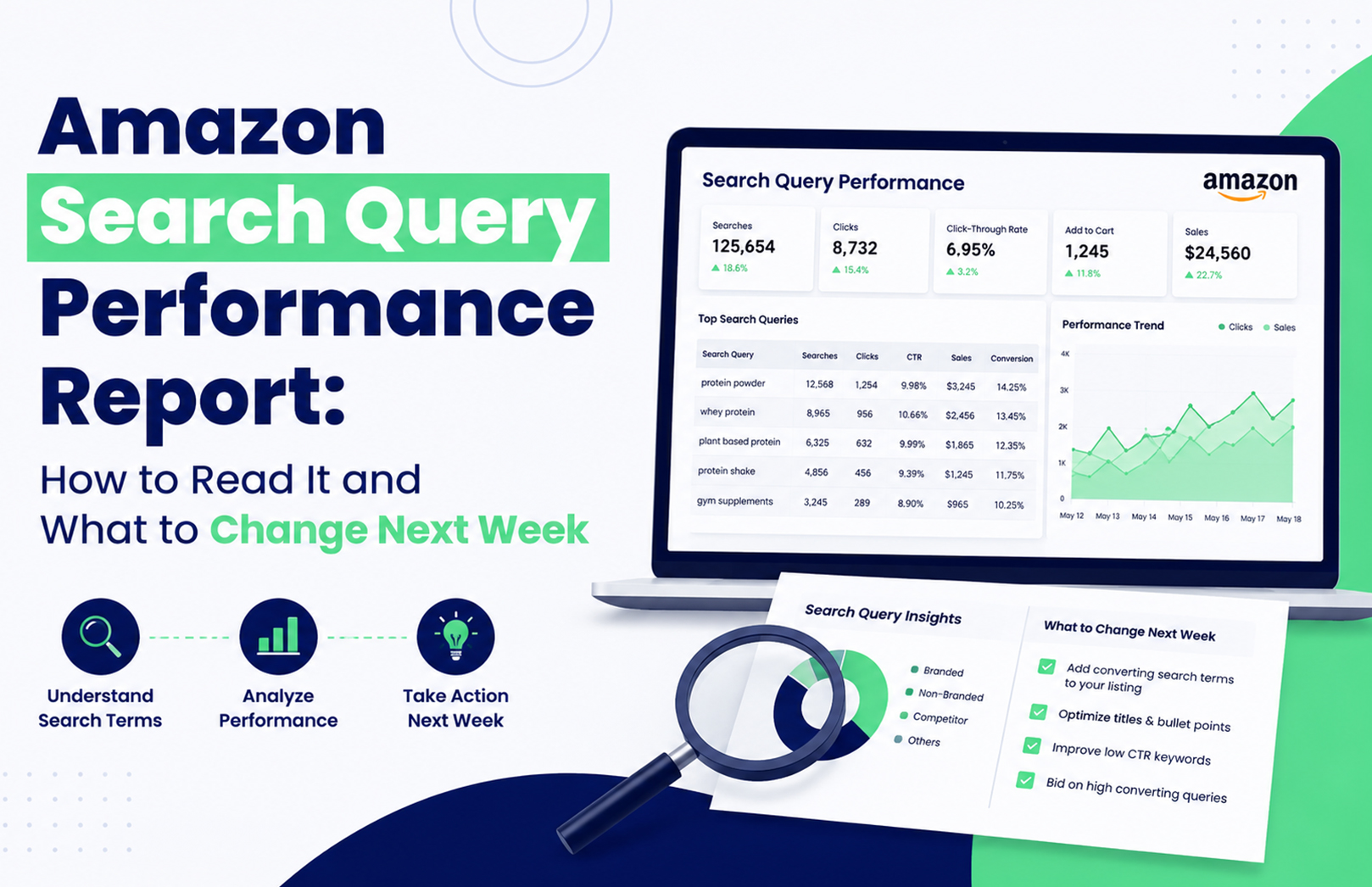
Amazon Search Query Performance Report: How to Read It and What to Change Next Week


Your Amazon product is getting 40,000 impressions for a search query, but only 800 clicks. Another query gets fewer impressions yet produces significantly more cart adds and purchases. Which one deserves your attention next week? The Amazon Search Query Performance report helps answer that question by showing how shoppers move from search impressions to clicks, cart adds, and purchases for queries associated with your brand.

The mistake is treating SQP as another keyword report. It isn’t. Used properly, it tells you where your brand is losing potential customers and whether the next action should be listing optimisation, advertising, pricing, or broader account management.

What Is the Amazon Search Query Performance Report?

The Amazon Search Query Performance report is a Brand Analytics report that shows how your brand performs for customer search queries. It provides query-level visibility into stages such as impressions, clicks, cart adds, and purchases, helping you compare your brand’s performance with the wider query opportunity.

For eligible brands, Search Query Performance sits within Amazon Brand Analytics in Seller Central. Amazon’s Brand Analytics tools are designed to give registered brands access to customer and search behaviour insights, but availability depends on account and Brand Registry eligibility.

The practical value is simple: instead of asking “Which keyword should I add?”, you can ask “At which stage are shoppers dropping away?”

How Do You Read Amazon SQP Data?

Read the report as a search-to-purchase funnel, not as a list of keywords. Start with relevant queries, then compare your performance across impressions, clicks, cart adds, and purchases before deciding what to change.

SQP SignalWhat It Usually IndicatesFirst Thing to Check
High impressions, low clicksVisibility without enough shopper interestMain image, title, price
High clicks, low cart addsProduct page isn’t convincing enoughListing content, reviews, offer
High cart adds, low purchasesPurchase frictionPrice, delivery, availability
Low impressionsWeak visibility or query coverageRelevance, SEO, PPC
Strong purchases, low brand shareOpportunity to capture more demandListing + advertising

1. Start With Commercially Relevant Queries

Don’t automatically select the query with the highest search volume.

Suppose you sell a ₹799 vitamin supplement in India. A broad query such as “vitamins” may generate huge search activity, but a more specific query such as “multivitamin for daily energy” could have stronger purchase intent for your particular product.

This is one of the judgement calls that matters in real Amazon optimisation: the biggest query isn’t necessarily the best query to win.

If the query is relevant but your listing isn’t sufficiently aligned with the customer’s language, review your Amazon SEO and listing optimisation strategy before simply increasing advertising spend. HRL Infotechs’ Amazon SEO service specifically combines keyword research with product-page optimisation.

2. Compare Impressions With Clicks

High impressions mean your products are appearing, but they don’t tell you whether shoppers care enough to click.

If your brand receives substantial impressions for a query but very few clicks, compare your product with the competing results visible for the same search. Look at the main image, price, rating, review count, title presentation, and product type.

A common mistake is changing keywords first. If Amazon is already showing the product for a relevant query, the bigger problem may be search-result competitiveness rather than keyword coverage.

What Should You Do When Amazon Impressions Are High but Clicks Are Low?

When impressions are healthy but clicks are weak, improve the elements shoppers see before entering your product detail page. The main image, visible title, price, rating, reviews, and relevance should be checked before you touch the campaign structure.

This is particularly important on mobile, where shoppers scroll quickly through competing products. HRL Infotechs’ analysis of how Amazon product images affect rankings, clicks and conversions highlights why product imagery should be treated as a performance element rather than decoration.

Don’t change five listing elements simultaneously if you want to understand what worked. Test the most obvious weakness first, document the change, and compare the next meaningful reporting period.

What Does Low Cart-Add Performance Mean?

High clicks but weak cart adds usually mean the search result did its job, but the product page didn’t complete the next step. The shopper was interested enough to visit but didn’t find sufficient reason to move closer to purchase.

Check your bullets, images, A+ Content, reviews, price, variations, product information and offer. Also ask whether the search query actually matches what your product delivers.

This is where Amazon listing optimisation and SQP analysis work together. The report identifies the leak; the listing work addresses the leak.

What If Cart Adds Are Strong but Purchases Are Low?

Strong cart activity with weak purchases can indicate purchase friction rather than poor keyword targeting. Price, delivery expectations, stock availability, promotions, competition and customer confidence can all influence the final decision.

Don’t automatically respond by increasing PPC bids. More traffic won’t necessarily fix a purchase-stage problem.

This is another practical trade-off: if the listing already generates clicks and cart adds, sending more paid traffic before fixing the purchase barrier can increase spend without solving conversion.

Amazon Search Query Performance vs Search Term Report: What’s the Difference?

The Amazon Search Query Performance report and the Search Term Report serve different purposes. SQP focuses on customer search-query performance around your brand, while the Search Term Report helps advertisers analyse the customer search terms associated with their advertising activity.

That distinction matters because an important customer query might represent a broader organic opportunity even when your current PPC activity isn’t capturing it effectively.

If the SQP data identifies a valuable query, compare it against your advertising data before deciding whether to increase keyword coverage, adjust bids, add negative targeting, or leave the query primarily to organic optimisation.

For broader advertising execution, Amazon advertising services can connect search-term analysis with Sponsored Products, Sponsored Brands, Sponsored Display and other advertising activities.

How Can Amazon Brand Analytics Search Terms Improve Your Keyword Strategy?

Amazon Brand Analytics search data can help you understand the language customers use and identify queries worth investigating for your catalogue. But don’t copy every high-volume search term into your listing.

A query should pass three tests before becoming a priority:

  1. Relevance: Does the query accurately describe your product?
  2. Commercial value: Do shoppers using it show meaningful buying behaviour?
  3. Competitive opportunity: Can your product realistically improve its position?

This approach prevents a common problem: building a keyword-heavy listing around searches that generate traffic but don’t generate the right customers.

How Do You Use Amazon Impression Share by Keyword?

Amazon impression share should be interpreted alongside the rest of the funnel. A low share can indicate an opportunity, but it doesn’t automatically mean you should spend more.

If your brand has low impression share but strong clicks and purchases whenever it appears, increasing visibility may be worth testing. If impression share is low and conversion is also poor, fixing the listing or offer may come first.

The same principle applies to advertising. Your goal isn’t simply to maximise impressions. You want qualified visibility that has a realistic path to conversion.

What Should You Change Next Week?

Once you’ve identified the biggest SQP gap, turn it into one clearly defined action rather than making broad account changes.

Monday: Segment the Queries

Separate relevant queries into four groups:

  • High impressions
  • High clicks
  • High cart adds
  • High purchases

Then identify where your brand is disproportionately weak.

Tuesday: Diagnose the Listing

For high-impression/low-click queries, compare your main image, title, rating, reviews and price against competing products.

For high-click/low-cart queries, inspect your detail page and product positioning.

If several products need this work, a structured Amazon product listing and SEO strategy can help connect query analysis with catalogue-level optimisation.

Wednesday: Review Advertising

Match priority queries against your advertising search terms.

Ask:

  • Are valuable queries being targeted?
  • Are bids competitive enough?
  • Are irrelevant searches consuming spend?
  • Are converting search terms isolated appropriately?
  • Is your listing strong enough to justify additional paid traffic?

Thursday: Check Price and Availability

Don’t ignore operational factors. A search-query problem can sometimes be caused by price, stock availability, delivery expectations or the competitive offer.

Friday: Make the Smallest Meaningful Change

Change one major variable at a time where practical.

For example, if the main image is clearly weaker than competitors, test the image before rewriting the entire listing and changing PPC bids on the same day.

Following Week: Compare Before and After

SQP data shouldn’t be judged from a single movement. Search volume changes, seasonality, promotions and reporting delays can affect short periods.

Keep a simple record of the query, original performance, change made and subsequent performance. That turns SQP from a reporting exercise into a repeatable optimisation process.

How Should SQP Data Influence Amazon PPC?

SQP should tell you where to investigate the opportunity. Advertising data should help determine how to capture it.

For example, imagine a query with strong customer demand and healthy purchase behaviour but weak brand visibility. That is a reasonable candidate for deeper PPC investigation.

But if the query generates plenty of clicks while your product rarely converts, increasing bids may simply buy more expensive traffic.

This is why advertising shouldn’t be evaluated through ACoS alone. HRL Infotechs’ recent Amazon ACoS vs TACoS analysis explains why sellers need to distinguish campaign-level advertising efficiency from broader business performance.

When Should You Use Amazon Account Management Services?

SQP becomes significantly more useful when someone actually turns the findings into weekly execution. That can involve listing changes, advertising adjustments, catalogue maintenance, inventory checks, reporting and account-health monitoring.

For brands managing multiple ASINs, these tasks can quickly become difficult to coordinate. Amazon account management services can bring those activities into one operational workflow, including catalogue management, account-health monitoring, performance tracking and other marketplace tasks.

The goal isn’t to generate another dashboard. The goal is to make sure the insight from that dashboard produces an action.

What Are the Biggest Amazon SQP Mistakes?

The biggest mistake is assuming that every low metric requires an immediate optimisation.

SQP data needs context. Query relevance, competition, product availability, pricing, promotions and the reporting period can all affect what you see.

The second mistake is making too many changes simultaneously. If you change your listing, increase PPC bids, reduce price and launch a promotion in the same week, you may improve sales without knowing which action created the improvement.

Experienced Amazon teams usually work with a clearer sequence: identify the bottleneck → choose the most relevant intervention → document it → measure the result → iterate.

Final Takeaway: Use SQP to Decide What Changes Next

The Amazon Search Query Performance report is most valuable when you use it to answer a practical question: where are customers dropping out of my search journey?

Start with commercially relevant queries. Compare impressions, clicks, cart adds and purchases. Then connect the gap to the appropriate action—listing optimisation, advertising, pricing, availability or account-level execution.

If your SQP report repeatedly shows the same gaps across important queries, that’s a sign that you need a consistent optimisation process rather than another one-off report. HRL Infotechs provides Amazon account management and marketplace optimisation support for brands that need the analysis and execution to work together.

Frequently Asked Questions

Q1. How often should I check the Amazon Search Query Performance report?

A weekly review is useful for active Amazon brands because it helps identify emerging visibility and conversion gaps. However, don’t make major decisions from a single short period. Compare relevant periods and account for seasonality, promotions, inventory changes and reporting delays before judging whether an optimisation worked.

Q2. What does a high Amazon SQP impression share mean?

High impression share means your brand is capturing a meaningful portion of the available visibility associated with a query. It doesn’t automatically mean the query is profitable or that your listing is converting well. Always evaluate impression share alongside clicks, cart adds, purchases and commercial relevance.

Q3. Can Amazon SQP data help with Amazon SEO?

Yes. SQP can provide useful evidence about customer search behaviour and your brand’s performance for relevant queries. Use it alongside keyword research, listing relevance, conversion data and competitive analysis. SQP should inform your Amazon SEO decisions rather than replace broader keyword and listing research.

Q3. Is Amazon SQP the same as the Amazon Search Term Report?

No. Search Query Performance is a Brand Analytics tool focused on customer search-query performance around your brand. The Search Term Report is primarily an advertising analysis tool. They can be used together: SQP can identify valuable search opportunities, while advertising reports can show how your paid campaigns capture those searches.

Q4. Should I increase PPC bids if my SQP impressions are low?

Not necessarily. Low impressions can result from weak relevance, limited advertising coverage, competition, inventory problems or other factors. First determine whether the query is commercially valuable and whether your product is capable of converting. Increase PPC coverage only when advertising is genuinely the missing part of the funnel.

Q5. Can an Amazon agency manage SQP analysis every week?

Yes. SQP analysis can be incorporated into a broader Amazon management process that combines search-query analysis, listing optimisation, PPC management, catalogue operations and performance reporting. The benefit is that the report becomes an input for specific weekly actions rather than remaining a passive performance document.

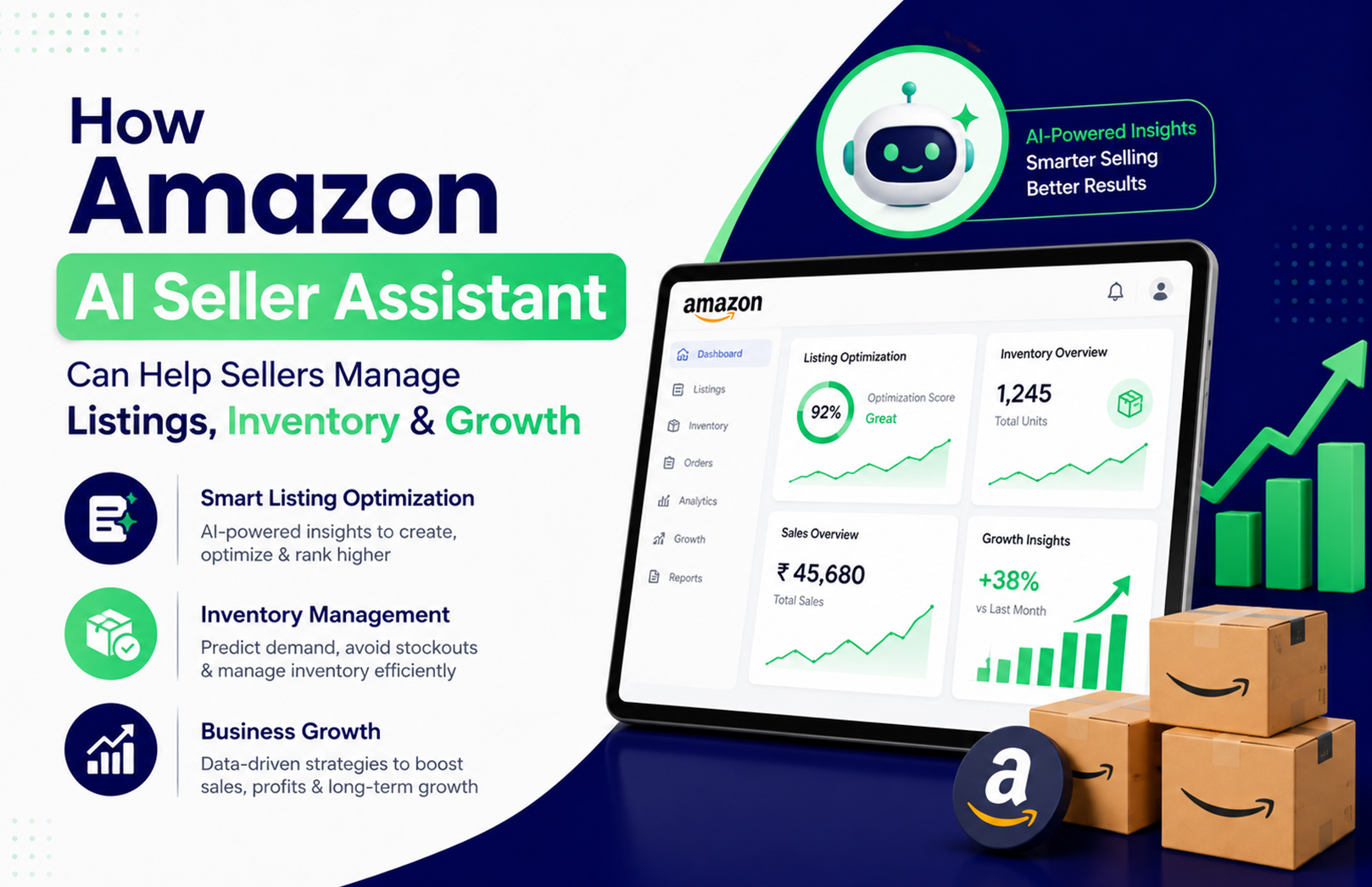
How Amazon AI Seller Assistant Can Help Sellers Manage Listings, Inventory & Growth


Amazon selling in India is becoming increasingly data-driven. Managing product listings, inventory, orders, pricing, advertising and account health manually can quickly become overwhelming, particularly as a seller’s catalogue grows.

Amazon is responding to this complexity with Seller Assistant, an AI-powered, conversational tool designed to help sellers launch, manage and grow their businesses. Amazon says the assistant can provide business insights across areas such as sales performance, inventory management, listings and catalogues, shipments and returns, orders and fees, while also helping sellers take certain actions with their approval.

For Indian sellers, this creates an important opportunity: AI can reduce the time spent analysing Seller Central data and help identify problems and opportunities faster. However, AI should complement not completely replace structured amazon seller account management and marketplace expertise.

What Is Amazon Seller Assistant?

Amazon Seller Assistant is an AI-powered assistant available within the Amazon selling ecosystem. Sellers can interact with it using natural-language questions instead of manually searching through multiple Seller Central reports and menus.

Amazon describes it as an always-on, generative AI and agentic system that can understand seller needs, surface relevant insights and, where supported, take actions with seller approval. Its capabilities cover areas including listings, inventory, sales performance, orders, fees, shipments and returns.

For Indian sellers, Amazon has also introduced Seller Assistant with support for English and Hinglish, making it more accessible to sellers who prefer conversational guidance over complicated dashboards. Amazon says the tool is available at no cost to sellers in India.

How AI Can Improve Amazon Listing Management

Product listings are one of the most important parts of an Amazon business. A seller can have a strong product and competitive price, but poor titles, bullet points, images or product information can still reduce visibility and conversions.

Seller Assistant can help sellers understand listing and catalogue-related issues and obtain guidance about their products. This makes AI particularly useful for sellers managing large catalogues where manually reviewing every ASIN is time-consuming.

However, AI recommendations should be reviewed against keyword strategy, customer intent, competitor positioning and Amazon’s listing requirements. This is where professional amazon listing management services can add significant value.

An experienced team can combine AI-assisted analysis with keyword research, backend keyword optimisation, content improvements and ongoing listing monitoring. HRL Infotechs’ Amazon SEO & Listing Optimization service, for example, focuses on improving listing visibility through listing optimisation, keyword research and backend keyword additions.

Using AI for Better Inventory Management

Inventory problems can quickly turn into lost sales.

Too little stock can create out-of-stock situations, while excessive inventory can tie up working capital and increase storage-related costs. Amazon’s Seller Assistant provides sellers with insights related to inventory management and can help identify actions associated with inventory and business performance.

Indian sellers can use these insights to ask practical questions such as:

  • Which products need immediate replenishment?
  • Which SKUs are selling slower than expected?
  • Where could inventory costs become a concern?
  • Which products require closer monitoring before major sales events?
  • How should inventory decisions align with expected demand?

AI can make the analysis faster, but sellers still need accurate sales history, lead times, supplier information and business context before making purchasing decisions.

Turning Seller Central Data Into Growth Insights

One of the biggest advantages of AI tools for Amazon sellers is the ability to turn large amounts of marketplace data into easier-to-understand insights.

Instead of checking multiple reports individually, sellers can use conversational questions to explore areas such as sales performance, orders, fees, inventory and catalogue performance. Amazon specifically highlights these business-insight capabilities within Seller Assistant.

For example, a seller could investigate why a product’s sales have declined, identify inventory-related concerns or understand which areas require attention.

But growth does not come from data alone. Sellers need to connect those insights with pricing, advertising, content, customer behaviour and profitability.

This is where amazon account management services become valuable. A professional account management team can continuously monitor performance, identify opportunities and coordinate different parts of the Amazon strategy instead of treating each metric separately.

Can AI Replace Amazon Seller Account Management?

Not completely.

AI can significantly reduce repetitive analysis and help sellers access information faster, but successful marketplace growth still requires strategic decision-making.

Professional amazon seller management services can cover areas such as account health monitoring, case management, FBA reimbursement, catalogue management and ongoing marketplace optimisation. HRL Infotechs’ Amazon Account Management service includes account health monitoring, case log management and FBA reimbursement support.

Think of AI as an additional layer of intelligence rather than a replacement for experienced Amazon professionals.

AI can identify a potential issue. A human expert can determine why it happened, assess its commercial impact and decide what should happen next.

Combining AI With Amazon Marketing Services

AI-assisted account management becomes even more powerful when combined with a structured advertising strategy.

A listing with strong organic visibility can still underperform if advertising campaigns are poorly structured. Similarly, increasing ad spend will not necessarily solve a conversion problem caused by weak product content.

Professional amazon marketing services can connect listing optimisation, keyword targeting, PPC management, competitor analysis and conversion improvements into one growth strategy.

An amazon marketing agency can also use Seller Central insights alongside advertising data to determine where budget should be increased, reduced or reallocated.

HRL Infotechs provides Amazon Advertising Services designed around campaign performance, conversions, traffic and ROI.

The Best Approach for Indian Amazon Sellers

For sellers in India, the strongest approach is not simply choosing between AI and human expertise. It is combining both.

A practical Amazon growth system can look like this:

AI insights → human analysis → strategic action → performance monitoring → continuous optimisation

Seller Assistant can help surface information and opportunities. A professional team can then validate those insights against business objectives, margins, competition and marketplace strategy.

This approach is particularly useful for established sellers managing multiple SKUs, advertising campaigns and fulfilment requirements.

Why Sellers Should Start Using AI Now

The Amazon marketplace is becoming increasingly dependent on automation, data and AI-driven experiences. Amazon is already expanding Seller Assistant’s capabilities beyond simple question answering into business insights and approved actions.

For Indian sellers, learning how to work alongside these tools can create an operational advantage.

The objective should not be to automate every decision. Instead, sellers should automate repetitive analysis while keeping important commercial decisions under expert control.

This can help teams spend less time navigating Seller Central and more time improving products, customer experience, profitability and growth.

Final Thoughts

Amazon AI Seller Assistant represents an important development for sellers who want faster access to marketplace insights. From listings and inventory to sales performance and account operations, AI can help simplify many parts of the selling process.

However, AI alone is not an Amazon growth strategy. Sellers still need strong listings, effective advertising, inventory planning, account health management and ongoing optimisation.

The most effective model is therefore a combination of AI tools for Amazon sellers and professional amazon seller account management. AI provides speed and insights, while experienced marketplace specialists provide strategy, context and execution.

If your Amazon business is growing and managing Seller Central is becoming difficult to handle internally, professional support can help you build a more structured and scalable marketplace operation.

Frequently Asked Questions

Q1. What is Amazon Seller Assistant?

Ans. Amazon Seller Assistant is an AI-powered conversational tool that helps Amazon sellers access information, receive business insights and manage aspects of their selling operations. Amazon says it covers areas including sales, inventory, listings, orders, fees, shipments and returns.

Q2. Is Amazon Seller Assistant available to Indian sellers?

Ans. Yes. Amazon India announced Seller Assistant for Indian sellers, with support for English and Hinglish. Amazon describes it as a free AI tool available to sellers in India.

Q3. Can Seller Assistant manage Amazon listings?

Ans. Seller Assistant can provide insights and guidance related to listings and catalogues. Sellers should still review AI-generated recommendations for accuracy, compliance, keyword relevance and brand positioning before implementing important changes.

Q4. Can AI replace Amazon account managers?

Ans. AI can automate and simplify many analytical and repetitive tasks, but it does not eliminate the need for strategic account management. Human expertise remains important for advertising, catalogue strategy, account health, profitability and complex marketplace decisions.

Q5. What are the best AI tools for Amazon sellers?

Ans. Amazon Seller Assistant is one of the key AI tools available within the Amazon seller ecosystem. Sellers can also use specialised AI and analytics solutions for keyword research, listing optimisation, advertising analysis and forecasting, depending on their requirements.

Q6. When should an Amazon seller consider professional account management?

Ans. Professional support becomes particularly valuable when a seller is managing a growing catalogue, increasing advertising spend, experiencing account-health issues, struggling with inventory or lacking the internal resources to monitor Seller Central consistently.

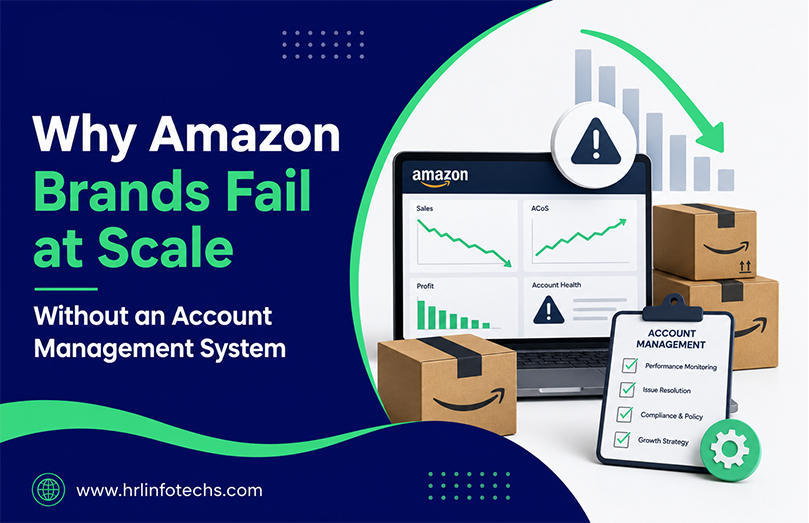
Why Amazon Brands Fail at Scale Without an Account Management System


Most Amazon brands have a good first year.

A product catches on, the ads start performing, and sales climb month over month. Everyone’s happy. Then, somewhere around month eight or nine, things that used to run smoothly start breaking quietly in the background.

Inventory runs out at the worst possible moment. Advertising costs creep up without anyone noticing why. A listing that was ranking well two months ago has slipped to page two. Customer complaints start showing up that nobody has time to chase down properly.

None of this happens because the product got worse. It happens because growth exposed gaps that were always there; they just weren’t visible when order volume was small enough to manage by memory. This is exactly the moment where real Amazon account management services stop being optional and start being the thing that decides whether a brand keeps growing or quietly stalls.

The brands that keep scaling and the ones that plateau usually aren’t separated by who has the better product. They’re separated by who built a system before they needed one.

Why Growth Creates Problems Nobody Saw Coming

In the early days, running a seller account is genuinely manageable solo. A handful of SKUs, a couple of ad campaigns, maybe an hour a day checking on things. That’s fine.

Here’s how it piles up. More ad campaigns mean more daily monitoring. Inventory guesses start carrying real financial weight. Listings demand constant tweaking instead of a one-time setup. Customer questions start overflowing whatever spare time used to exist. Account metrics deserve a much closer look than a glance. Performance data piles up faster than anyone can read it properly. Pricing decisions stop being something you can put off till next week.

Without a real Amazon seller growth strategy behind all of that, these things stop being manageable tasks and start becoming bottlenecks that quietly slow everything down.

The Costs Nobody Budgets For

A lot of sellers assume that more sales automatically mean things are going well. It’s not quite that simple.

Unmanaged growth tends to bring its own problems along with it: stock running out at the wrong time, ad spend climbing without a clear reason, account health numbers slipping, listings getting suppressed out of nowhere, conversion rates quietly dropping, and storage fees piling up on inventory that isn’t moving fast enough.

All of this works directly against sustainable Amazon business scaling, even while the top-line sales numbers might still look fine for a while. The brands without proper systems usually end up spending more time firefighting these issues than actually working on the next stage of growth.

Why Scaling Actually Requires a System

Growing a brand on Amazon isn’t just about selling more units. It’s about staying consistent while the operation gets bigger and messier.

Real growth depends on a few things working together: tight Amazon PPC management that doesn’t bleed budget, Amazon listing optimisation that treats every page as something living rather than set-and-forget, inventory planned instead of reacted to, and an honest read of the data instead of a gut-feel guess.

Without that, brands end up reactive. And here’s the part that catches people off guard: a small mistake that barely matters at ten orders a day becomes a serious problem once you’re doing a thousand. Scale doesn’t just multiply revenue. It multiplies the cost of every small thing you’ve been ignoring.

What an Account Management System Actually Does

A proper account management system puts structure around every part of the business that used to run on memory and good intentions.

Most times it involves watching how listings perform, staying aware of stock condition, tracking ad results closely, noticing price shifts before they cost money, reading what customers are actually saying, checking account numbers regularly, and keeping an eye on what competitors are doing, all gathered neatly in one place, updated consistently, rather than floating loose inside someone’s head.

With things finally clear, attention shifts naturally toward building the company, not just putting out morning emergencies.

The Marketplace Itself Keeps Getting Harder

Amazon today is a genuinely different environment than it was even two years ago.

New sellers show up in every category constantly. Advertising costs keep climbing. The search algorithm keeps shifting. Customers expect more than they used to, faster than they used to.

A sharp Amazon advertising strategy helps brands stay steady through all of that, not by avoiding the chaos, but by having enough operational consistency to absorb it without falling behind. Brands that don’t adapt tend to lose ground quietly to competitors who simply have better systems running underneath them.

Building Something That Actually Lasts

Short-term promotions and discount sprints can move the needle for a week. They don’t build a business.

Real Amazon sales optimisation is built around things that compound profitability, repeat customers, ad spend that’s actually efficient, inventory that’s planned instead of reactive, listings that keep improving, and a brand that’s actually building something recognisable over time.

The brands that focus on operational stability tend to outperform the ones chasing aggressive discounting or ad spend spikes, simply because stability is what survives past the first good quarter.

Why the Small Stuff Matters More Than It Seems

It’s rarely one big disaster that tanks an account. It’s usually a handful of small things compounding quietly.

A weak product title here. Incomplete backend keywords there. Inventory is running a little too low too often. Conversion rates are slowly drifting down. Ad costs are creeping up. A few unanswered negative reviews.

Catching these early is exactly what proper Amazon brand management is supposed to do, not after a quarterly review shows the damage already done, but continuously, before small issues turn into lost sales nobody noticed slipping away.

When It’s Time to Bring in Real Expertise

At some point, the operational demands of running an Amazon brand outgrow what an internal team can reasonably handle alone.

Most times, this is where real expertise across Amazon A+ Content Design, Amazon Storefront Design, advertising, inventory, and account standing actually starts mattering. The goal isn’t to swap out the people who built the brand. It’s to free them up to stay focused on products and customers, while someone else takes charge of the daily operational demands that have grown too heavy to juggle part-time.

A storefront that actually looks built, and A+ Content that actually explains the product properly, are the kind of things that get pushed aside when the team is stretched thin, and they’re exactly the things that quietly cost conversions when they’re missing.

Why This Never Really Stops

Amazon doesn’t sit still. Algorithms shift. Competitors adjust pricing overnight. What customers want changes. Ad costs go up and down without warning.

Real growth management isn’t a project you finish and walk away from. It’s ongoing, constant monitoring, constant small adjustments. The brands still growing two or three years from now will almost certainly be the ones that kept adapting the whole way through, not the ones that set something up once and assumed it would keep working forever.

Conclusion

Most Amazon brands that hit a wall didn’t fail because of a bad product or weak demand. They failed because growth introduced problems that a system would have caught, and they didn’t have one.

Real Amazon account management services give you the structure to handle inventory properly, keep listings sharp, run advertising efficiently, and protect account health before small issues turn into expensive ones.

At HRL Infotechs, this is genuinely what we help brands build: scalable systems backed by real account management, sharp PPC and listing strategy, strong A+ Content and Storefront work, and the kind of operational support that lets a brand grow without quietly falling apart in the background. As the marketplace keeps getting more competitive, the brands that invest properly in this now are the ones that’ll still be growing profitably a few years from today.

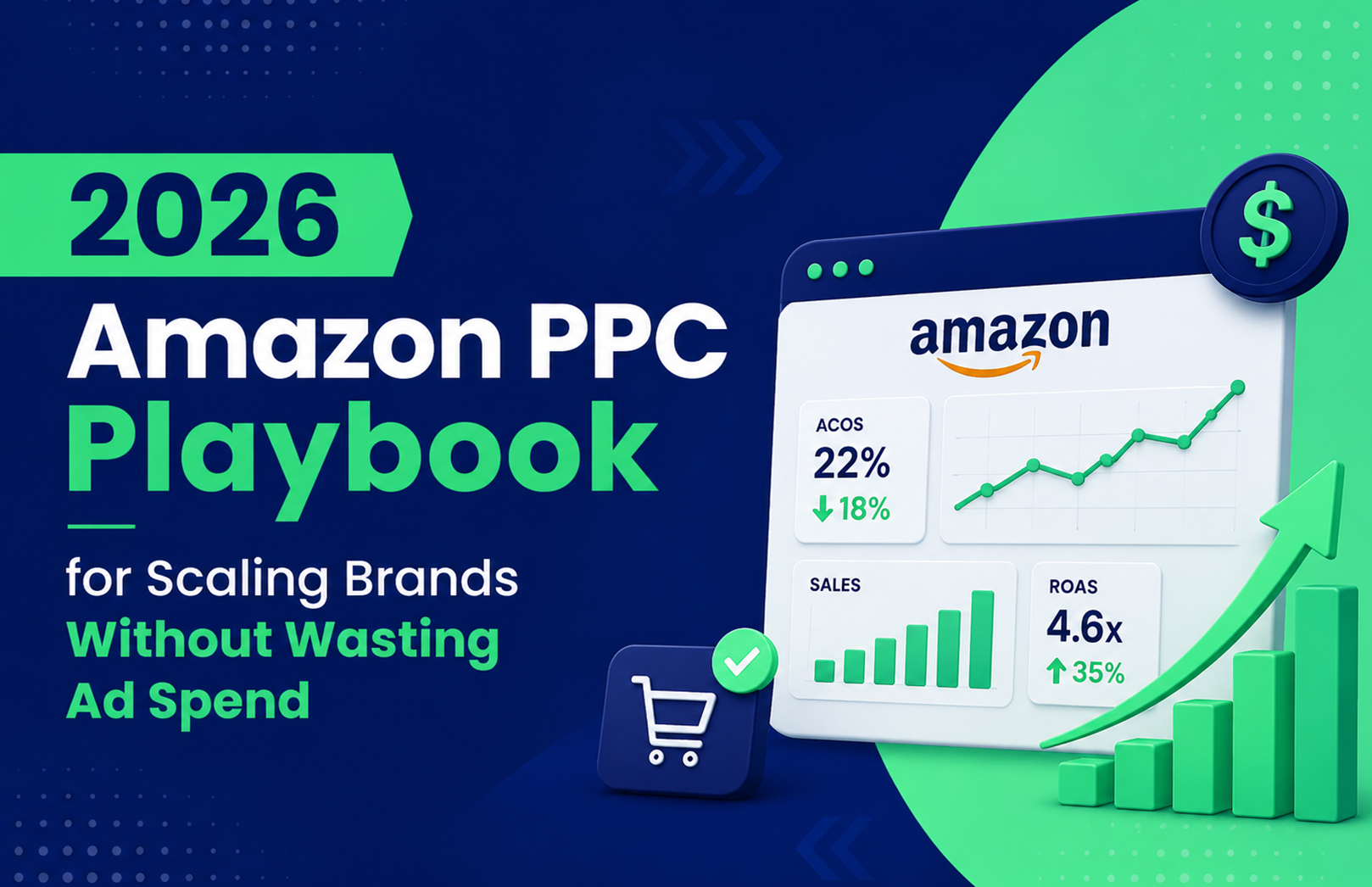
The 2026 Amazon PPC Playbook for Scaling Brands Without Wasting Ad Spend


A kitchenware brand selling on Amazon doubled its monthly ad spend between January and March 2025. Their revenue did not double. It grew 11%. Their ACoS climbed from 18% to 31%. By April, they were generating more gross sales than ever before and taking home less profit than the previous year.

This is the trap most Amazon sellers walk into when competition increases. The instinct is to spend more. The data almost always says spend smarter.

In 2026, the brands outperforming their categories are not the ones with the largest advertising budgets. They are the ones operating with a clear Amazon advertising strategy built around profitability, campaign structure, and continuous optimisation rather than budget increases alone.

Why Traditional Amazon Advertising No Longer Works

Back then, firing up large-scale automated ad runs worked just fine if you bumped budgets toward items showing sales. Less noise in the space meant cheaper clicks. Speed to rank leaned heavily on how much money moved, more than now. Spending power opened doors faster.

That environment no longer exists. Amazon PPC management in 2026 requires structure, intent alignment, and weekly optimisation discipline, as the cost of running unstructured campaigns has compounded alongside rising competition. Brands still running 2022-era campaign architecture in a 2026 competitive environment consistently experience the same outcomes: rising CPCs, declining ROAS, and budgets that generate activity without generating profit.

The playbook has changed. Most sellers have not changed with it.

Build Campaigns Around Business Goals First

The most common structural mistake is building campaigns before defining what success actually means for each product.

A product in the launch phase needs velocity and ranking data, not profitability optimisation. A mature hero product needs margin protection, not aggressive keyword expansion. A seasonal product needs structured planning, not year-round bid stability. Effective Amazon product listing and SEO management starts by defining the objective. Before opening any tools, figure out the goal. A single keyword can shift direction entirely – bidding too high when awareness isn’t needed pulls resources off track. Match type choices behave differently if growth or conversion is the target. Budget spread matters most when aligned with intent. Outcomes hinge not on setup alone but on whether strategy matches actual product stage.

Structure Amazon Sponsored Ads for Control and Measurement

Major difficulties start when every keyword gets dumped into one pile. Budgets get eaten by winners too fast, leaving little for newer ones trying to grow. Losing terms slip through because numbers look okay on paper – until money vanishes. Fixing it late costs more than planning early.

High-performing brands segment Amazon sponsored ads into four distinct layers. Automatic campaigns run continuously to capture new search term data without manual keyword input. Manual exact match campaigns isolate top-performing terms with dedicated budgets and precise bid control. Product targeting campaigns use competitor ASINs and complementary listings to intercept buyers mid-comparison. Brand defence campaigns protect branded search terms from competitor conquest.

One level handles one kind of goal. When needed, it can run faster, slower, or stop altogether. Put together, the pieces form a structure that tracks clearly, responds when nudged, and uses resources far better than lumped-together methods ever could.

Prioritise Amazon ACoS Optimisation Over Raw Spend Reduction

Amazon ACoS optimisation is widely misunderstood. Lower ACoS is not always the goal; it depends entirely on what the product needs at its current stage.

A launch into fresh categories might carry a 45% ACoS for two months – just long enough to gather reviews, lift visibility. Stop ads too soon, though, and the slow climb in natural search fades fast. Chasing the smallest number on performance reports misses the point entirely. What matters sits upstream: decide the correct cost per sale based on where the item stands now, well ahead of any ad run, rather than adjusting later under pressure.

Weekly search term report reviews, negative keyword additions, and bid adjustments based on conversion data rather than impression volume are what move ACoS in the right direction sustainably.

Listing Quality Determines How Far Your Budget Goes

No Amazon sales growth strategy survives a weak product listing. A perfectly structured campaign sending qualified traffic to a listing with poor images, a generic title, and missing social proof is simply an expensive way to generate impressions that do not convert.

Conversion rate is the multiplier on every advertising dollar. A listing converting at 12% generates three times the sales from the same traffic as one converting at 4% at identical ad spend. Start by making sure the product earns more spend first. An effective title packed with clear intent matters most. The main photo must show its worth even when tiny on screen. Bullet points work better when they ease concerns instead of just stating what’s included. Rich visuals and explanations build trust before checkout. Good ratings lower resistance to click buy now.  These are the conversion foundations that make Amazon PPC optimisation produce returns worth measuring.

Make Decisions From Data, Not Assumptions

The gap between brands that scale profitably and those that plateau at unprofitable scale is almost always data discipline, not budget size.

Weekly analysis of placement performance, top of search versus product pages versus the rest of search, reveals where conversion is strongest and where spend should concentrate. Click-through rate analysis identifies titles and primary images, creating search result friction before the listing even gets a chance to convert. Keyword profitability analysis at the individual term level surfaces the 20% of search terms generating 80% of profitable conversions, and the terms consuming budget without contributing revenue.

Small, consistent adjustments made weekly compound into significantly better performance than quarterly campaign overhauls made reactively when results have already deteriorated.

Why Professional Amazon Advertising Services Matter

As campaigns grow in complexity, the management overhead grows proportionally. Brands managing ten SKUs across four campaign types with weekly optimisation requirements across multiple marketplaces are running a specialist operation, not a side function of the marketing manager’s role.

Professional Amazon advertising services bring the structural expertise, platform access, and optimisation discipline that produce consistent performance improvement without requiring internal headcount to develop those capabilities from scratch. Combined with Amazon account management services that keep inventory, listing health, and account compliance supporting rather than undermining campaign performance, professional management typically pays for itself within the first ninety days of engagement.

The 2026 Amazon PPC Playbook

  1. Define the product-level objective before building any campaign
  2. Separate campaigns by intent: auto, manual exact, product targeting, brand defence
  3. Fix the listing conversion rate before scaling the budget
  4. Set ACoS targets based on product stage, not category averages
  5. Review search term reports and adjust bids weekly without exception
  6. Concentrate spending on the 20% of keywords driving 80% of profitable conversions
  7. Measure profitability at the product level, not blended account averages

Conclusion

The kitchenware brand, from the opening, restructured its campaign architecture in May 2025. Same products. Same marketplace. Reduced total ad spend by 22%. Revenue held within 8% of the previous peak. Profit margin returned to target within sixty days.

At HRL Infotechs, we help Amazon brands build exactly this kind of structured, profitable advertising operation combining strategic Amazon campaign management, continuous Amazon ACoS optimisation, and complete marketplace oversight into a growth system that scales revenue without proportionally scaling waste. The brands winning in 2026 are not outspending competitors. They are outthinking them.

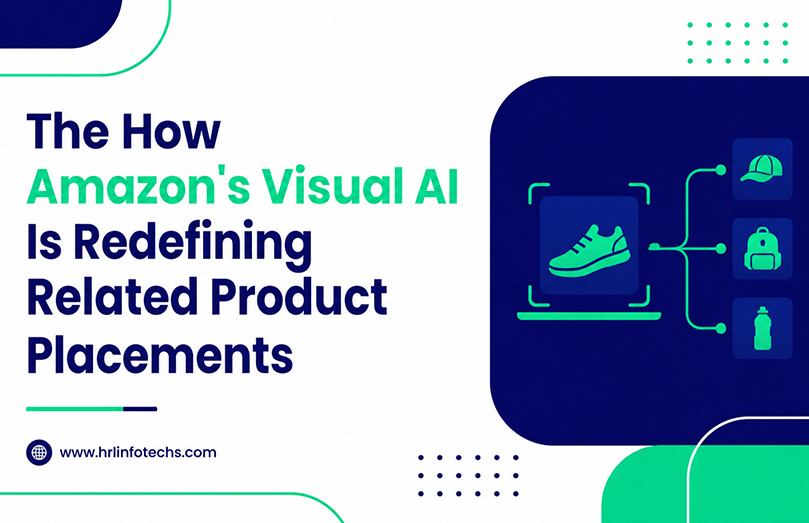
The Cosine Similarity Trap: How Amazon’s Visual AI Is Redefining Related Product Placements explains this


Most sellers building an Amazon product listing optimisation strategy spend months refining keywords, adjusting bids, and polishing copy, then wonder why visibility plateaus despite doing everything right. What they are missing sits in plain sight: the images themselves. Amazon visual AI now evaluates listings the same way shoppers do visually, instantly, and with increasingly sophisticated pattern recognition that determines which products get discovered and which disappear into a crowded cluster of near-identical competitors.

Breaking the Similarity Trap: Five Pillars of Visual Differentiation

The traditional marketplace reliance on text keywords alone is no longer enough to win the category. As search engines evolve into visual recognition ecosystems, brands that rely on look-alike designs face severe visibility caps. True market dominance requires breaking away from the category standard to give algorithmic indexing models a distinct signal. By aligning product aesthetics with visual discovery metrics, we turn baseline listings into high-converting, asset-driven flagships. 

1. Develop Distinctive Packaging

Many sellers unintentionally mirror category leaders. When packaging shares the same shades, shapes, or structural design as the top ten results, it does not signal quality to Amazon’s search algorithm; it signals similarity. And similarity means competition for the same cluster placement rather than discovery in new ones.

2. Invest in Original Lifestyle Photography

Amazon product image optimisation goes considerably further than clean white backgrounds and accurate product representation. The listings that perform best in visual AI indexing are the ones that show something other listings in the category consistently do not.

3. Create Branded Infographics

Infographics have grown well beyond simple conversion tools. They now play a measurable role in how Amazon’s visual recognition systems categorise and cluster products within Amazon marketplace optimisation environments.

This matters for Amazon SEO services performance because visual differentiation feeds click-through rate, which feeds conversion data, which feeds organic ranking signals. Branded infographics are not a cosmetic decision. They are an algorithmic one.

4. Highlight Product Differentiators Visually

Shoppers and Amazon visual AI both rely on what is immediately visible to understand how one product differs from another. Features that are buried in bullet points and never communicated through imagery are effectively invisible to both audiences.

The listings that earn strong positions in discovery and Amazon marketing services for sellers placement programmes are the ones where visual communication does the heavy lifting. Unique features shown clearly in primary and secondary images. Differentiating specifications visualised rather than described.

5. Build a Consistent Visual Identity

Every product in a catalogue tells part of the same story, or it should. From Amazon storefront design services to individual listing images, from Amazon PPC services creative to sponsored brand headers, visual consistency creates the kind of brand recognition that compounds over time.

This consistency directly supports long-term Amazon conversion rate optimisation. Shoppers who recognise a brand convert at higher rates than those encountering it cold. 

A Real-World Look at Visual Similarity on Amazon

Picture three supplement brands selling nearly identical products.

Each listing features:

  • White bottles
  • Green labels
  • Similar typography
  • Matching infographic layouts
  • Comparable lifestyle images

A twist comes with one more name on the shelf. Bright colours catch the eye first. Instead of blending in, it stands apart through images that show real-life moments. Picture after picture tells a quiet tale. Recognition grows without effort because shapes and shades stick in memory. Even though what’s inside works just like the others, how it looks changes everything.

This is what the cosine similarity trap costs in measurable terms. And this is why Amazon SEO services built exclusively around keywords cannot deliver sustainable discovery in categories where visual clustering determines who gets found.

How Amazon Visual AI Influences Customer Purchase Decisions

Most sellers view product images primarily as conversion assets; that is how buyers react. Most sellers think of photos only as tools to close sales, yet their role runs deeper. A shopper decides in seconds, long before checking titles, scanning details, or weighing prices. Eyes land on visuals instantly, shaping choices without words. Because Amazon sees this pattern clearly, it adjusts algorithms steadily, giving space to listings where pictures spark quicker attention. Later on, when shopping online feels different, Amazon’s smart image tools start shaping how things get seen. Instead of people alone deciding what stands out, computers study colours, shapes, and layouts to spot patterns in taste and use. One brand might rise because its photos feel unique – sharp details, clear scenes, or bold framing pull eyes without shouting.

Why Brand Differentiation Is Becoming an Amazon Ranking Advantage

Crowded marketplaces often pack together items that look too much alike – same prices, same functions, same everything. What shifts attention? A product that simply looks different. When everyone speaks the same language online, eyes go to what breaks the pattern. Instead of just tweaking words or chasing clicks, smart sellers shape how things appear. Standing apart visually can matter more than ranking higher. Familiarity fades fast when every listing mirrors the next. Difference sticks. Most people spot a product faster when it looks familiar. Colours stay the same, packages feel alike, pictures match – these things build recognition slowly. Trust grows without saying much, just by showing up consistently.

Why Amazon Visual AI Matters More in 2026 and Beyond

Amazon continues to invest heavily in machine learning, computer vision, and recommendation technologies. As these systems grow more sophisticated, visual signals will carry even greater weight in Amazon product visibility and discovery.

Sellers who adapt their Amazon marketplace optimisation approach to include visual differentiation as a core strategic input, not a design afterthought, will be better positioned as the Amazon search algorithm continues evolving toward richer, more visual forms of product understanding.

Conclusion

As Amazon product listing optimisation becomes increasingly shaped by visual recognition and machine learning, sellers must think beyond traditional text-first tactics. Keywords, pricing, and reviews still matter. But visual differentiation now determines how products are discovered through Amazon AI-powered recommendations, remembered by shoppers, and rewarded by the platform’s recommendation systems.

The cosine similarity trap highlights the real cost of blending in. Brands that invest in distinctive packaging, original lifestyle photography, branded infographics, and consistent visual identity across their catalogue create the algorithmic signals that drive sustainable discovery while building the shopper recognition that drives sustainable conversion.

At HRL, we help Amazon sellers build the visual and strategic differentiation that Amazon’s evolving systems reward, combining Amazon product image optimisation, catalogue positioning, and data-driven marketplace expertise to improve visibility, engagement, and long-term growth. The sellers who treat visual identity as a core part of their growth strategy, not an afterthought, are the ones who will compete effectively as Amazon’s AI continues to see more clearly than ever before.

Why Ujjain Ecommerce Sellers Struggle to Scale Without a Smart Marketplace Marketing Strategy


Many ecommerce sellers in Ujjain launch their online stores with big expectations, list products on marketplaces like Amazon and Flipkart, and then hit a frustrating ceiling. Orders trickle in, ad costs rise, and competitors seem to grow faster despite selling similar products. The missing link is usually not effort, but a clear, smart marketplace marketing strategy.

To scale profitably, sellers need more than basic listings and occasional discounts. They need structured Ecommerce Marketing Services in Ujjain that combine data, content, ads, and account management into one growth engine. When this strategy is missing, growth stalls, margins shrink, and brands struggle to stand out in crowded marketplaces.

Why Ujjain Ecommerce Sellers Struggle To Scale On Marketplaces

Most local sellers start with a product-first mindset, assuming that a good product will automatically sell on Amazon, Flipkart, or other marketplaces. In reality, marketplaces reward visibility, relevance, and performance, not just product quality. Without a strong plan, even great products get buried under competitors with smarter ecommerce marketing strategies.

This is one of the core reasons why ecommerce sellers fail to scale despite being present on multiple platforms. They underestimate how algorithms, ad systems, reviews, and pricing dynamics work. As a result, they rely on guesswork instead of structured Ecommerce Marketing Services in Ujjain tailored to their category and target audience.

Key Reasons Why Ecommerce Sellers Fail To Scale In Ujjain

When you look closely at struggling marketplace accounts, certain patterns repeat. These are not random issues but predictable gaps that can be fixed with the right ecommerce consulting for online sellers. Understanding these gaps is the first step toward building the best ecommerce marketing strategy for sellers in Ujjain.

Most failures are not due to lack of opportunity, but due to lack of clarity and consistency. Sellers often jump from one tactic to another, test random ads, or copy competitors without understanding what actually drives ranking and conversions on Amazon and Flipkart.

Unclear Target Audience And Positioning

Many sellers list products without a defined buyer persona. They do not clearly know who they are targeting, what problems they solve, or how their offer is different from similar listings. This leads to generic titles, weak bullet points, and confusing product descriptions.

Without sharp positioning, even aggressive ad spend fails to convert. A structured approach to Ecommerce Marketing Services in Ujjain starts with audience research, keyword mapping, and messaging that speaks directly to buyer pain points, not just product features.

Poorly Optimized Product Listings

On marketplaces, your listing is your storefront. If titles, images, bullet points, and descriptions are not optimized, your products will not rank or convert well. Many Ujjain sellers still use low-quality images, keyword-stuffed titles, and incomplete product details.

Top-performing sellers invest in listing optimization as a core part of how to grow ecommerce business in Ujjain. They use relevant keywords, clear benefits, lifestyle images, and structured content that improves both search visibility and conversion rate.

Reactive Instead Of Strategic Advertising

Another common issue is random ad spending. Sellers often boost products or run sponsored ads without a clear structure, budget plan, or performance tracking. When results are poor, they stop advertising altogether, assuming ads do not work.

In reality, how to increase sales on Amazon and Flipkart requires a planned ad strategy. This includes keyword research, campaign structuring, A/B testing, and continuous optimization. Professional ecommerce marketing services help sellers move from reactive spending to data-driven advertising.

How To Grow Ecommerce Business In Ujjain With A Smart Strategy

Scaling an ecommerce brand from Ujjain is absolutely possible when you treat marketplaces as performance-driven ecosystems, not just listing platforms. The right approach combines organic visibility, paid reach, and strong operations into a single growth roadmap.

Instead of trying everything at once, successful sellers follow a clear framework. They focus on listing quality, keyword relevance, pricing strategy, and customer experience, supported by expert ecommerce consulting for online sellers who understand marketplace rules and best practices.

Building A Strong Foundation With Listing And Content Optimization

The first pillar of the best ecommerce marketing strategy for sellers is listing optimization. This means crafting keyword-rich yet readable titles, compelling bullet points, and benefit-focused descriptions that answer buyer questions clearly and quickly.

High-quality images, infographics, and A+ style content (where available) also play a major role. When combined with smart use of Ecommerce Marketing Services in Ujjain, this foundation improves click-through rates, boosts conversions, and signals to marketplace algorithms that your product deserves higher ranking.

Strategic Use Of Marketplace Advertising

Paid ads are no longer optional for serious marketplace growth. To truly understand how to increase sales on Amazon and Flipkart, sellers must treat ads as an investment, not an expense. This involves choosing the right ad types, targeting profitable keywords, and monitoring key metrics.

Effective campaigns usually include a mix of branded, category, and competitor keywords. Regular optimization, bid adjustments, and negative keyword management help protect margins while increasing sales velocity, which in turn supports organic ranking growth.

The Role Of Ecommerce Marketing Services In Ujjain

As marketplaces become more competitive, doing everything alone becomes risky and time-consuming. This is where specialized Ecommerce Marketing Services in Ujjain can make a measurable difference. Instead of guessing, sellers gain access to proven playbooks, tools, and experienced account managers.

These services are especially valuable for brands that want to scale beyond a side business and build a sustainable ecommerce operation. With expert support, sellers can focus on product quality and supply chain while specialists handle marketplace strategy and execution.

What A Dedicated Ecommerce Marketing Agency In Ujjain Can Do

A focused ecommerce marketing agency in Ujjain typically offers end-to-end support across strategy, content, advertising, and analytics. The goal is not just more traffic, but profitable, repeatable sales growth across marketplaces.

Core services often include:

  • Keyword research and listing optimization for all key products
  • Amazon account management services and performance monitoring
  • Campaign setup and optimization for sponsored ads
  • Review generation strategies and reputation management
  • Inventory and pricing guidance to maintain healthy margins

By aligning these services with your category and audience, an agency helps you avoid common mistakes and accelerate results.

Specialized Amazon Marketing Agency In Ujjain Support

For many sellers, Amazon is the primary revenue driver. Working with an experienced Amazon marketing agency in Ujjain ensures that your brand follows platform policies, leverages new features, and stays ahead of algorithm changes.

From catalog structuring and brand registry guidance to advanced ad strategies and reporting, this specialized support can transform underperforming accounts into scalable revenue channels, especially when combined with broader ecommerce brand growth services.

Ecommerce Brand Growth Services For Long-Term Scale

Short-term sales spikes are not enough. Sustainable growth requires a long-term view that connects marketplace performance with brand building, customer loyalty, and multi-channel expansion. This is where comprehensive ecommerce brand growth services come into play.

Instead of focusing only on immediate orders, these services help you build a recognizable brand that customers search for by name. Over time, this reduces dependency on discounts and aggressive ads, while improving profitability and resilience against competition.

From Single-Platform Selling To Multi-Channel Presence

Many Ujjain sellers start on a single marketplace and stay there for too long. A smarter strategy gradually expands to multiple platforms while maintaining strong performance on each. This reduces risk and opens new revenue streams.

With the right Ecommerce Marketing Services in Ujjain, sellers can synchronize pricing, inventory, and branding across Amazon, Flipkart, and other channels. This multi-channel approach supports higher sales volume and better brand visibility across India.

Conclusion: Turning Struggle Into Scalable Growth

Marketplace competition will only intensify, but Ujjain-based sellers who embrace structured strategy have a clear advantage. By understanding why ecommerce sellers fail to scale, optimizing listings, using data-driven ads, and leveraging expert ecommerce consulting for online sellers, growth becomes predictable instead of accidental.

If you are serious about learning how to grow ecommerce business in Ujjain and want a partner to design and execute the best ecommerce marketing strategy for sellers, consider working with HRL Infotechs to transform your marketplace presence into a scalable, profitable brand.

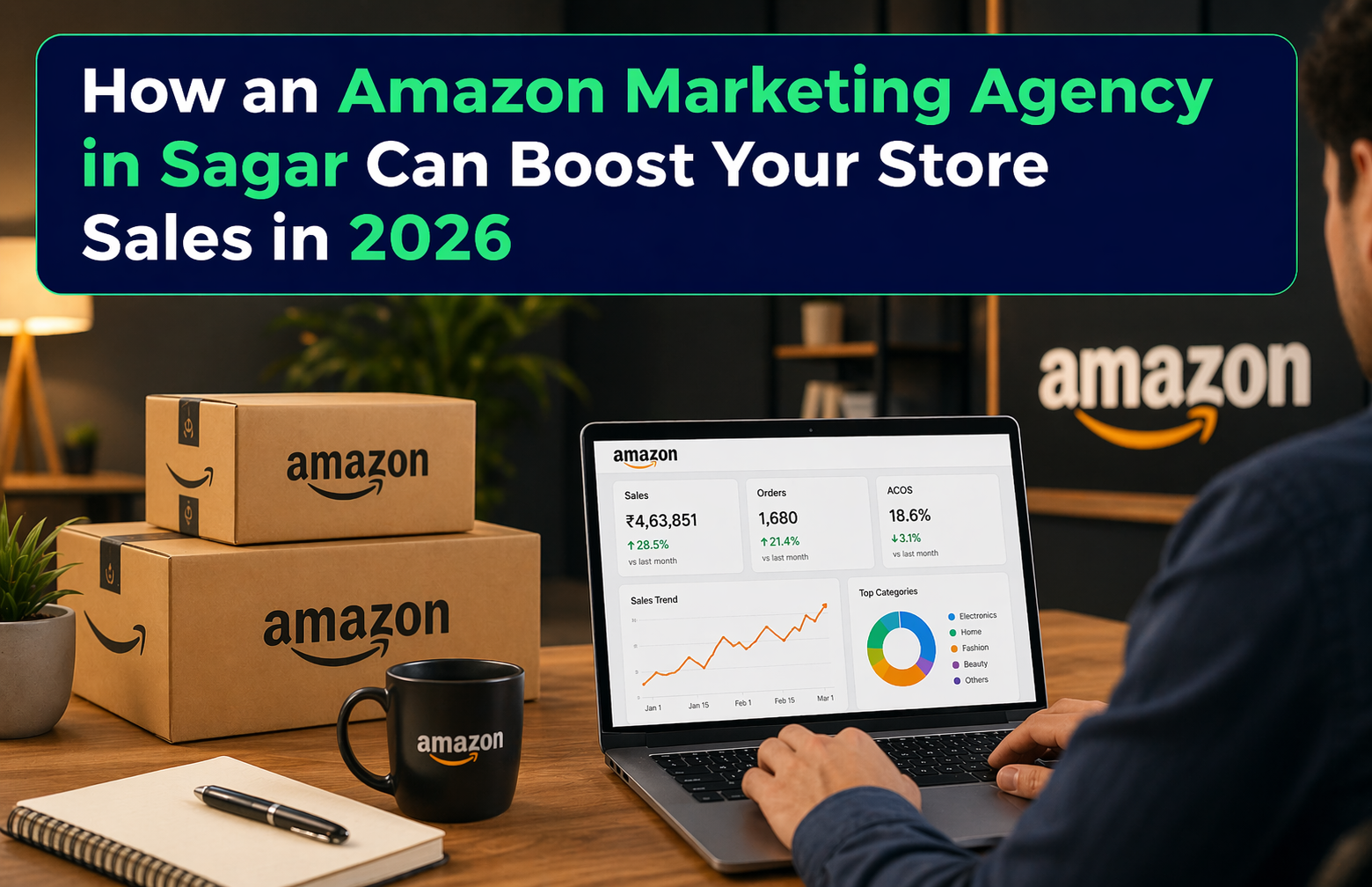
How an Amazon Marketing Agency in Sagar Can Boost Your Store Sales in 2026


Running a profitable Amazon store in 2026 is no longer just about listing products and waiting for sales. Competition is intense, ad costs are rising, and customer expectations are higher than ever. This is exactly where partnering with a specialized Amazon Marketing Agency can transform your store from “getting by” to consistently scaling month after month.

If you are selling on Amazon from Sagar or targeting customers across India, the right strategic support can help you rank higher, win the Buy Box more often, and turn clicks into repeat customers. By understanding how an Amazon Marketing Agency plans, executes, and optimizes every part of your presence, you can finally unlock the growth your store deserves in 2026.

Why Working With an Amazon Marketing Agency Matters in 2026

The Amazon marketplace is evolving quickly, with new policies, ad formats, and algorithm updates shaping how products are discovered. An experienced Amazon Marketing Agency stays ahead of these changes and aligns your store with what actually works now, not what worked two years ago. This expertise directly impacts visibility, conversion rates, and long-term brand growth.

Instead of guessing how to boost Amazon sales in 2026, you get a data-backed roadmap. From keyword research and listing optimization to ad campaigns and review strategies, the agency connects every activity to revenue. This structured approach is what separates top-performing sellers from those stuck at the same sales level every month.

How an Amazon Marketing Agency Increases Sales Strategically

Understanding how an Amazon Marketing Agency increases sales starts with breaking down the entire customer journey on the platform. The agency analyzes how shoppers search, what they click, why they bounce, and what finally convinces them to buy. This insight is then used to refine your listings, pricing, and promotions for maximum impact.

Rather than focusing on random tactics, the strategy is built around measurable goals like higher organic rankings, better click-through rates, and improved conversion percentages. Over time, this leads to more efficient ad spend, stronger brand presence, and a steady increase in both orders and average order value.

Optimized Product Listings That Convert

High-performing listings are the foundation of Amazon success. A skilled Amazon Marketing Agency rewrites your titles, bullet points, and descriptions to align with real search behavior and buyer intent. The focus keyword and related terms are placed naturally so your products are discoverable without sounding forced or spammy.

In addition, the agency improves product images, adds comparison charts, and structures content to answer buyer questions quickly. When shoppers immediately see benefits, features, and proof of quality, they are far more likely to add to cart instead of going back to search results.

Smart Pricing, Promotions, And Buy Box Strategy

Winning the Buy Box consistently is critical if you want to scale Amazon business fast. An agency monitors competitor pricing, stock levels, and promotions to position your offers competitively without destroying your margins. This balance is difficult to maintain without constant tracking and adjustment.

Limited-time deals, coupons, and lightning offers are also planned strategically around seasonal demand and keyword trends. By aligning promotions with peak search periods, your store captures more traffic at the exact moment buyers are ready to purchase.

Key Benefits Of Hiring Amazon Account Management Services

The benefits of hiring Amazon Marketing Agency and dedicated Amazon account management services go far beyond basic listing support. You gain a full-service partner that handles the daily operations, performance monitoring, and optimization tasks that usually consume your time and energy as a seller.

This allows you to focus on product development, supplier relationships, and inventory planning while experts manage the technical and strategic side of Amazon. Over time, this division of work leads to more stable growth, fewer policy issues, and a stronger brand reputation on the marketplace.

End-To-End Amazon Seller Services For Busy Brands

Professional Amazon seller services typically cover everything from account setup and category approvals to catalog management and performance health. When issues like listing suppressions or policy warnings appear, the agency acts quickly to resolve them before they impact your revenue.

These services also include regular performance reviews, reports, and recommendations. You are not left guessing what is working. Instead, you see clear data on traffic, conversions, ad performance, and profit so you can make better decisions about inventory and expansion.

Specialized Amazon PPC Management Services

Advertising is one of the most powerful levers for how to boost Amazon sales in 2026, but it is also one of the easiest ways to waste money. Amazon PPC management services focus on building tightly structured campaigns, selecting high-intent keywords, and continuously optimizing bids and budgets.

By analyzing search term reports, click behavior, and conversion data, the agency cuts out non-performing spend and doubles down on profitable segments. Over time, your cost per sale decreases while your overall sales volume and organic rankings improve due to stronger sales velocity.

Why An Amazon Marketing Agency In Sagar Is A Smart Choice

Working with an Amazon Marketing Agency in Sagar offers a strong mix of local understanding and global marketplace expertise. You get a partner that understands Indian consumer behavior, regional pricing sensitivities, and logistics challenges while still being fluent in Amazon’s global systems.

For sellers based in Sagar or nearby regions, this local connection also makes communication smoother. Strategy discussions, performance reviews, and planning sessions can be more collaborative, which often leads to faster implementation and better results.

Partnering With An Ecommerce Marketing Agency In Sagar

An ecommerce marketing agency in Sagar that specializes in Amazon can also support your multi-channel growth. While Amazon may be your primary sales engine, the same team can guide you on how marketplace performance connects with your website, social media, and other online channels.

This integrated approach ensures your brand messaging, pricing, and positioning stay consistent across platforms. As a result, customers who discover you on Amazon are more likely to trust and buy from you again, whether they return to the marketplace or visit your direct website.

How To Scale Amazon Business Fast With A+ Content And Branding

One of the most effective ways to stand out on crowded product pages is through Amazon A+ Content design services. Enhanced brand content allows you to use rich visuals, comparison tables, and storytelling to communicate value far better than a standard text description.

An Amazon Marketing Agency uses A+ content to highlight your unique selling points, answer objections, and build trust. When done correctly, this not only lifts conversion rates but also strengthens your brand identity, making it easier to launch new products under the same brand in the future.

Building Long-Term Brand Equity On Amazon

While quick wins are important, sustainable success on Amazon comes from building a recognizable brand that customers actively search for. Strategic use of A+ content, storefront design, and consistent messaging across listings helps you achieve this long-term equity.

Over time, more buyers will search directly for your brand name instead of generic keywords. This reduces your dependence on paid ads and price wars, giving you more control over margins and product positioning in a crowded marketplace.

Choosing The Right Partner To Grow Your Amazon Store In 2026

Selecting the right Amazon Marketing Agency is a critical decision that directly affects your revenue and brand reputation. Look for a team that combines strong Amazon account management services, transparent reporting, and a clear process for testing and optimization.

Ask about their experience with your product category, their approach to Amazon PPC management services, and how they handle challenges like returns, reviews, and policy changes. A reliable partner will be able to explain their strategy in simple terms and show how each step connects to your growth goals.

Turning Strategy Into Measurable Growth

Ultimately, the value of an agency relationship is measured in results: higher sales, better profitability, and a stronger brand presence. When you work with a focused Amazon Marketing Agency, every campaign, listing update, and optimization is tied to clear performance metrics.

If you are serious about scaling your Amazon store in 2026 and want expert guidance tailored to the Indian market, partnering with a specialized team like HRL Infotechs can give you the structure, strategy, and execution needed to turn your store into a consistently growing business.

How Jaipur Sellers Scale to 5X Daily Orders on Amazon FBA in 2026


Jaipur’s ecommerce landscape has changed dramatically in the last few years. Local brands that once relied on exhibitions, retail counters, and word of mouth are now scaling to hundreds of daily orders using a clear Amazon FBA growth strategy. The sellers winning in 2026 are not just listing products; they are building systems, data-backed campaigns, and optimized operations that compound every month.

If you are a Jaipur-based seller wondering how to increase orders on Amazon FBA and turn a modest catalog into a scalable business, this guide breaks down the exact levers fast-growing brands are pulling. From listing optimization and PPC to account management and operations, you will see how Jaipur sellers are achieving 5X daily orders on Amazon FBA in 2026.

Why Jaipur Sellers Are Doubling Down on an Amazon FBA Growth Strategy

Jaipur’s manufacturers and traders have a natural edge on Amazon India. They offer strong product design, competitive pricing, and deep category knowledge in niches like home décor, textiles, jewelry, and handicrafts. When these strengths plug into a structured Amazon FBA growth strategy, the result is predictable and scalable order growth, not random spikes in sales.

The dominant search intent around Amazon FBA sales optimization tips is informational with a commercial angle. Sellers want to learn how to get more orders on Amazon, but they also look for expert support, such as Amazon account management services and Amazon FBA consulting services. This is why the most successful Jaipur ecommerce brands on Amazon combine in-house learning with specialist partners to accelerate growth.

Foundation First: High-Impact Listing Optimization for 5X Growth

Every top-ranking guide on how to increase orders on Amazon FBA starts with listings. Before scaling ads or inventory, Jaipur sellers winning in 2026 invest heavily in Amazon listing optimization services. The goal is simple: make every product page convert as efficiently as possible, so each click has maximum revenue potential.

A strong Amazon FBA growth strategy treats listings as digital storefronts. That means keyword-rich titles, compelling bullet points, and benefit-driven descriptions. It also means using high-quality images, infographics, and A+ Content to answer objections before buyers even ask. When listings convert better, the same traffic produces more orders and better organic rankings.

Essential Elements of Conversion-Ready Amazon Listings

Jaipur’s top-performing Amazon sellers follow a consistent structure across their catalog. They research primary and secondary keywords, then weave them naturally into titles, bullets, and descriptions without stuffing. This approach supports both Amazon SEO and user experience, which is crucial for long-term growth.

To increase Amazon daily orders, winning brands focus on clarity and benefits over jargon. They highlight use cases, materials, dimensions, and care instructions in simple language. They also use comparison charts, lifestyle images, and FAQs to reduce returns and boost review quality. Over time, these optimized listings feed into a stronger Amazon FBA growth strategy by improving click-through and conversion rates.

Keyword Strategy Tailored for Jaipur Ecommerce Brands on Amazon

Local brands selling on Amazon India often underestimate the power of localized keyword research. Instead of targeting only broad terms, they also optimize for niche phrases related to Jaipur’s strengths, such as block print bedsheets, ethnic jewelry, or handcrafted décor. This helps them rank faster in less competitive pockets of demand.

Top guides on Amazon FBA sales optimization tips recommend building a keyword universe that includes brand, category, material, style, and occasion-based terms. Jaipur ecommerce brands on Amazon then map these to different sections of the listing and backend search terms. This structured approach supports a sustainable Amazon FBA growth strategy that compounds with every new product launch.

Scaling Traffic: Smart Amazon PPC Services in India for Jaipur Sellers

Once listings are optimized, the next lever in how to get more orders on Amazon is paid traffic. In 2026, Amazon PPC services in Jaipur have become more competitive, but also more data-driven. Jaipur sellers scaling to 5X daily orders treat PPC not as an expense, but as an investment in ranking and market share.

An effective Amazon FBA growth strategy uses PPC to validate keywords, test new products, and defend high-converting search terms. Instead of running broad, uncontrolled campaigns, successful sellers segment their ads by match type, intent, and profitability. This lets them scale winning campaigns while cutting waste from underperforming ones.

Key PPC Structures That Drive 5X Daily Orders

High-growth Jaipur brands typically maintain separate campaigns for auto, broad, phrase, and exact match keywords. Auto campaigns discover new search terms, while exact campaigns focus budget on proven winners. This layered approach supports both exploration and aggressive scaling within a single Amazon FBA growth strategy.

They also use product targeting ads to appear on competitor listings and complementary products. This tactic is especially powerful for Jaipur’s local brands selling on Amazon India in crowded categories. By capturing shoppers already in buying mode, these brands increase Amazon daily orders without relying only on top-of-funnel keywords.

Operational Excellence: Inventory, Pricing, and Reviews

Traffic and listings can only take you so far. The Jaipur sellers reaching 5X daily orders on Amazon FBA in 2026 run tight operations behind the scenes. They monitor inventory levels, lead times, and FBA storage limits to avoid stockouts that kill ranking momentum and waste ad spend.

Pricing strategy is another pillar of a robust Amazon FBA growth strategy. Instead of constant discounting, successful brands use data to set price bands that balance volume and profit. They track competitor pricing, seasonality, and promotion windows, then adjust with clear rules rather than guesswork.

Building Trust Through Reviews and Customer Experience

Every top-ranking article on how to increase orders on Amazon FBA emphasizes reviews. Jaipur sellers that scale fast build systems to encourage genuine feedback, respond to queries quickly, and resolve issues before they escalate. This not only improves ratings but also signals reliability to new buyers.

To support long-term Amazon FBA growth strategy goals, leading brands analyze negative reviews for product improvement ideas. They refine packaging, instructions, and quality checks based on recurring complaints. Over time, this reduces returns, strengthens ratings, and improves conversion rates across the catalog.

When to Bring in Amazon Account Management and Consulting Services

There is a clear pattern among Jaipur’s fastest-growing Amazon sellers. They manage early experiments in-house, then bring in Amazon account management services and Amazon FBA consulting services once they see consistent traction. This shift usually happens when daily orders cross a certain threshold and complexity increases.

Specialist partners help structure catalogs, refine the Amazon FBA growth strategy, and manage PPC, deals, and compliance. They also provide reporting frameworks that show which SKUs, campaigns, and keywords drive the most profit. This outside perspective helps Jaipur ecommerce brands on Amazon avoid costly mistakes and scale with confidence.

Conclusion: Turning Jaipur’s Product Strength into Scalable Amazon Growth

Jaipur sellers already have what many markets lack: distinctive products, strong craftsmanship, and competitive pricing. When these strengths align with a focused Amazon FBA growth strategy, the path to 5X daily orders becomes clear and repeatable. It starts with optimized listings, data-driven PPC, disciplined operations, and a willingness to test, measure, and refine.

If you are serious about turning your Jaipur brand into a leading Amazon player in 2026, now is the time to formalize your strategy, tighten your execution, and, when needed, partner with experts like HRL Infotechs to accelerate your journey from local favorite to national bestseller.

How to Choose the Right Amazon Seller Account Management Agency for Your Business


Amazon is no longer just a sales platform; it has become the cornerstone of many online businesses. With countless sellers vying for the same customers, success on Amazon requires more than simply adding products to your listings. It encompasses maintaining your store efficiently, optimising product listings to be seen, advertising efficiently, and making it all come together seamlessly to provide the consumer with a great buying experience. Amazon account management services come to the rescue here.

Selecting the right agency to fulfill these responsibilities can be the difference between stagnant sales and explosive revenue growth. But if everyone makes delivery promises, which one do you choose? This manual will walk you through everything you need to know to select the optimum Amazon seller account management agency for your business.

Why Amazon Account Management Services are Important

Before talking about choosing an agency, let’s take a minute to discuss why Amazon account management services are needed. Operating an Amazon store has many moving parts: product research, keyword optimisation, campaigns, stock monitoring, pricing methodology, and customer service. Managing it all on top of the leading business can get overwhelming quickly.

Partnering with a seasoned agency specializing in Amazon account management is key to scaling your business. They bring expertise, market knowledge, and proven strategies to boost visibility and conversions. With data-driven approaches tailored to your products and goals, you’ll no longer be left guessing what works.

Signs You Need Professional Amazon Account Management

Most vendors fear engaging experts, believing they could do it alone. As much as that might be true at the onset, telltale indicators emerge when one has to consider outsourcing:

  • Time Constraints: You Spend More Time on Amazon Business than Developing Your Brand.
  • Stalled Growth: Your sales have plateaued despite consistent effort.
  • Very High Competition: You have competing sellers outranking you.
  • Ad Spend Problems: You have ads that do not have a high return on investment.
  • Low Conversion Rates: You have listings with visits that don’t lead to conversions.

If these ring a bell, it might be time to collaborate with a company that offers complete Amazon account management solutions.

Essential Services an Agency Must Offer

When reviewing agencies, ensure they cover all the primary sales aspects on Amazon. These include:

1. Amazon Listing Optimisation Services

Amazon listings optimised to perfection are the key to Amazon’s success. This encompasses titles with keywords, attractive bullet points, descriptive text, and high-resolution images. Amazon listing optimization service agencies ensure the products rank high and become attractive to buyers.

2. Amazon PPC Advertising Services

Advertising is one of Amazon’s leading sales promoters. A good agency should be able to provide professional Amazon PPC management services to create and manage each ad campaign you run and provide longer-term planning. Data-driven targeting can reduce wasted ad spend and maximise sales.

3. Amazon SEO Services for Sellers

Paid advertising and organic rankings go hand-in-hand. Do your research and find an agency offering Amazon SEO services for sellers that will rank your products at the top of Amazon’s search rankings. This includes things like keyword research, backend optimisation, and competitor research.

4. Reporting & Analytics

You need to be able to see the data and keep things transparent. A reputable agency will provide weekly or bi-weekly recap reports that detail your sales, how your ad spend is working for you, and what optimisation work has been completed. This is a way to measure your return on investment and keep both parties accountable.

How to Choose the Best Amazon Seller Account Management Agency

Knowing the services that will follow next, it is time to outline the stages of choosing the right agency for business:

1. Establish Your Goals

Before looking for agencies, be specific about your goals. Do you need to scale sales quickly? Get more product visibility? Lower the cost of ads? Choosing an agency whose strengths align with your goals is more manageable.

2. Verification of Their Amazon Sell Experience

Not all digital marketing agencies are Amazon-competent. Many may be competent with Google or Facebook advertising but lack extensive expertise in the Amazon ecosystem. Only choose an agency with Amazon account management services as the core of its business, and that can show Amazon selling expertise on its resume.

3. Look for Industry-Specific Knowledge

In competitive categories such as health, fashion, and consumer electronics, having an agency that knows your category is necessary. Vendors have various optimization strategies that apply to different sectors, and expertise counts.

4. Evaluate their team and tools

Prospective agencies have professional team members and professional-grade tools. This includes keyword research tools and analytical tools that use artificial intelligence to automate issues and increase your chances of success. Ask how they detail their methods for Amazon listing optimization services or producing or managing ad campaigns.

5. Transparency & Communication

The best agencies are transparent about their operations. You should understand what they are doing, why they are doing it, and how it will benefit your business. Proper communication means regular status checks, well-documented reports, and open, free-flowing communication.

6. Ask for Testimonials and Case Studies

A reputable agency will not tell you about results; they will show you. Ask agencies for case studies or testimonials showing how their Amazon account management service improved visibility, lowered costs, and produced more revenue for another seller.

7. Think About Value and Price

Cost matters, but don’t base the choice of an agency on cost alone. An inexpensive agency that will deliver mediocre work will prove more expensive down the road. Consider the value that they offer better rankings, higher ROI for ads, faster growth—whatever that might be.

Advantages of Recruiting the Top Agency

Collaborate with the right agency that offers Amazon account management services and enjoy these benefits:

  • Time Savings: You can attend to product development and brand-building as professionals care for the store.
  • More Sales: Properly optimised listings and properly managed ads increase conversions.
  • Better ROI: Effective advertising investment translates into receiving the highest possible returns.
  • Scalability: Scalability is more effortless when seasoned individuals are on the team.
  • Competitive Edge: You will be ahead of competitors who remain speculating on what works.

Mistakes to be Avoided

When selecting an agency, be careful of the following errors:

  • Retaining a general advertising agency that has minimal Amazon expertise.
  • Selecting based on mere prices, ignoring outcomes.
  • Not requesting status reports or progress meetings.
  • Not establishing specific objectives before hiring.
  • To have overnight success, Amazon’s development needs continuous effort.

Conclusion

Amazon is the storehouse of unlimited opportunities, but it didn’t become successful overnight by chance. It demands meticulous planning, regular optimisation, and highly advanced management. That’s why picking the appropriate agency that provides Amazon account management service is one of the critical choices you must make as a seller.

By establishing your objectives, verifying expertise, and maintaining transparency, it is possible to have a partner who will manage the account and contribute to your company’s flourishing amidst the competitive Amazon world. Amazon product listing optimisation service, Amazon PPC service management, or Amazon SEO service for Amazon sellers, the appropriate agency will offer the boost that you require to scale constantly and sustainably. When bringing your Amazon store to the next level, it is time to think about Amazon account management services on a professional level. Because today’s marketplace is very competitive, expert guidance is not just an option but necessary.