How to Rank on Amazon in 2026: Voice Search, Rufus AI & the New SEO Rules


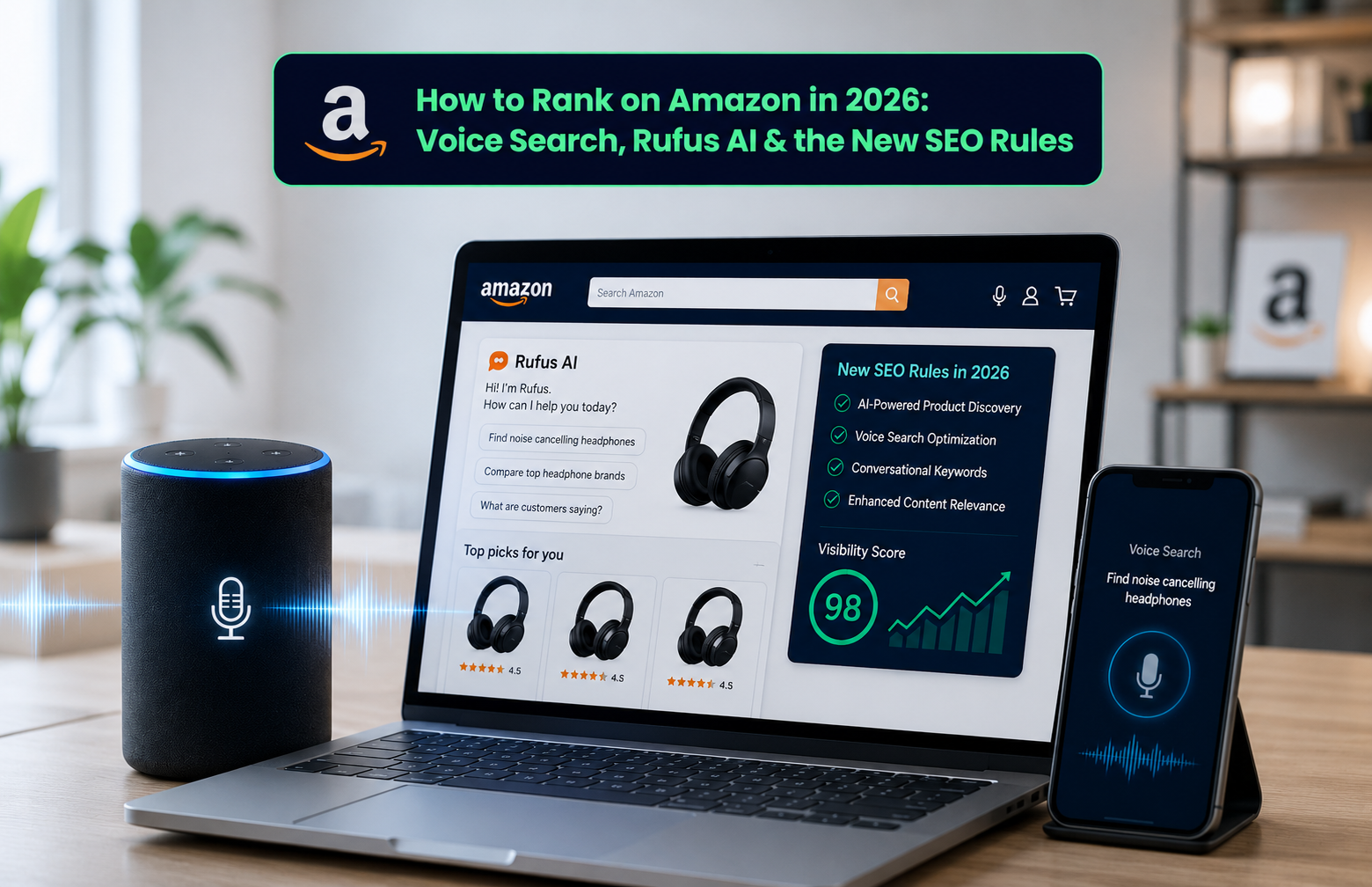
Ranking on Amazon in 2026 is no longer just about stuffing keywords into your product title and hoping for the best. With voice search, Rufus AI, and new Amazon SEO rules shaping how shoppers discover products, sellers need a smarter, data-led strategy to stay visible and profitable.

If you are serious about growth, you must understand how to rank on Amazon 2026 using updated Amazon ranking factors, AI-driven recommendations, and customer intent signals. This guide breaks down what has changed, what still matters, and how to future-proof your Amazon SEO and product listing optimization for the Indian and global marketplace.

Understanding How to Rank on Amazon 2026 After the Latest Algorithm Shifts

To understand how to rank on Amazon 2026, you first need clarity on how the Amazon algorithm evaluates products today. The platform is moving from simple keyword matching to intent-based, AI-enhanced ranking that blends relevance, performance, and customer experience signals.

Recent Amazon algorithm updates focus heavily on whether a listing truly solves the shopper’s need. That means your Amazon SEO and products listing optimization must align with search terms, click behavior, conversion rates, and post-purchase satisfaction. Sellers who ignore these signals will slowly lose visibility, even if their prices look attractive.

Core Amazon Ranking Factors You Cannot Ignore in 2026

Modern Amazon ranking factors are a mix of classic SEO elements and new AI-driven signals. While keywords still matter, the algorithm now evaluates how well your listing performs for those queries over time. This performance-led approach rewards consistent quality and penalizes weak experiences.

Key elements that influence how to rank on Amazon 2026 include:

  • Relevance of title, bullets, description, and backend keywords
  • Click-through rate from search results and ad placements
  • Conversion rate and add-to-cart behavior
  • Pricing competitiveness and promotions
  • Ratings, reviews, and return rates
  • Inventory health and fulfillment method

What the Latest Amazon Algorithm Update Means for Sellers

The most recent Amazon algorithm update integrates more behavioral data and AI scoring into rankings. Instead of treating all listings with similar keywords equally, the system surfaces products that consistently satisfy buyers and match their intent across devices and channels.

For Indian sellers, this means you must track how your listings perform for mobile, desktop, and voice queries. If your listing attracts clicks but fails to convert or gets poor reviews, your visibility will drop. Understanding these shifts is essential if you want to master how to rank on Amazon 2026 in a sustainable way.

Amazon Rufus AI: How Does Amazon Rufus Affect Ranking?

Rufus AI is Amazon’s conversational shopping assistant that helps customers discover products using natural language queries. Instead of typing short keywords, shoppers can ask detailed questions, and Rufus AI recommends products based on context, intent, and historical data.

This changes how to rank on Amazon 2026 because your listing now needs to be understandable not only to the algorithm but also to Rufus AI. The system reads your content, maps it to user questions, and decides whether your product is a strong match for a specific use case or problem.

Rufus Amazon SEO: Optimizing Listings for Conversational Queries

Rufus Amazon SEO focuses on making your content clear, structured, and aligned with real customer language. Instead of only targeting short keywords, you should weave in natural phrases that match how people speak when they ask questions about your product category.

To align with Amazon Rufus AI and improve how to rank on Amazon 2026, consider:

  • Answering common questions directly in bullet points and descriptions
  • Using benefit-led language that explains who the product is for
  • Including use cases, scenarios, and problem-solution statements
  • Structuring content so Rufus can easily extract key details

How Does Amazon Rufus Affect Ranking in Competitive Niches?

In competitive categories like electronics, beauty, and home improvement, Rufus AI can be the difference between being recommended or ignored. When shoppers ask detailed questions, Rufus prioritizes listings that clearly match those needs and have strong performance metrics.

If you want to master how to rank on Amazon 2026 in such niches, you must combine traditional Amazon SEO and products listing optimization with conversational content. Listings that sound human, answer questions, and demonstrate expertise will gain more visibility in Rufus-powered recommendations.

Does Voice Search Impact Amazon SEO in 2026?

Voice search Amazon optimization is no longer optional. With more shoppers using smart speakers and mobile voice assistants, queries are becoming longer, more conversational, and more intent-driven. This directly affects how to rank on Amazon 2026 across categories.

Voice queries often sound like real questions instead of short phrases. Instead of searching for “wireless headphones,” a shopper might say, “Which wireless headphones are best for online classes and calls under 3000 rupees?” Your listing must be ready to match that level of detail.

Best Practices for Voice Search Amazon Optimization

To align with voice search behavior and improve your Amazon SEO, you need to think beyond basic keyword placement. The goal is to make your listing the best possible answer to a spoken question, not just a text query.

Practical steps include:

  • Incorporating long-tail, question-style phrases into bullets and descriptions
  • Highlighting price ranges, use cases, and key benefits clearly
  • Using simple, natural language that voice systems can interpret easily
  • Ensuring your main images and titles quickly confirm relevance after a voice-led click

Advanced Amazon SEO and Products Listing Optimization Strategies

To truly master how to rank on Amazon 2026, you must treat each listing like a conversion-focused landing page. Every element, from title to A+ content, should work together to attract, inform, and convince the shopper to buy.

Modern Amazon SEO and products listing optimization goes beyond keywords. It includes storytelling, trust-building, and data-backed testing. Sellers who continuously refine their content based on performance data will stay ahead of algorithm updates and AI-driven changes.

Structuring High-Converting Product Listings

A strong listing structure is essential for both the algorithm and the shopper. The title should include primary keywords and core attributes, while bullet points should address benefits, features, and objections in a clear order.

Your description and A+ content can then expand on the story, showcase use cases, and build trust. When you align this structure with how to rank on Amazon 2026, you create a listing that performs well for both search and conversion, improving your long-term ranking potential.

Leveraging Data, Reviews, and Content Testing

Data is now central to Amazon ranking factors. Monitoring click-through rate, conversion rate, and review trends helps you understand which parts of your listing resonate and which need improvement. Small changes can lead to meaningful ranking gains over time.

Regularly test variations of titles, images, and bullet points to see how they affect performance. By treating optimization as an ongoing process, you align with the evolving Amazon algorithm update cycle and strengthen your position for how to rank on Amazon 2026.

Amazon Account Management for Seller Growth and Marketing Support

As Amazon becomes more complex, many brands turn to expert support for Amazon account management for seller growth. Managing SEO, ads, inventory, pricing, and compliance together is challenging, especially when you are scaling across multiple marketplaces in India and abroad.

A specialized amazon marketing agency can help you align organic ranking efforts with advertising, promotions, and brand-building. This integrated approach ensures that your strategy for how to rank on Amazon 2026 is not isolated but connected to your overall revenue and profitability goals.

When to Partner With an Amazon Marketing Agency

There comes a stage where DIY optimization is not enough. If you are handling multiple SKUs, facing aggressive competition, or planning to expand into new categories, expert guidance can accelerate your growth and reduce costly mistakes.

An experienced team can support listing audits, keyword research, Rufus Amazon SEO, voice search Amazon optimization, and ongoing Amazon account management for seller growth. This level of support is particularly valuable when you want to scale while staying compliant with every new Amazon algorithm update.

Conclusion: Future-Proof Your Amazon Rankings for 2026 and Beyond

Winning visibility on Amazon now requires a deep understanding of how to rank on Amazon 2026 using AI-aware strategies, voice search readiness, and customer-centric content. Sellers who adapt to Rufus AI, conversational queries, and evolving Amazon ranking factors will secure stronger positions in search results and recommendation carousels.

If you want expert support to align your Amazon SEO and products listing optimization with the latest algorithm changes and growth opportunities in India, partnering with HRL Infotechs can help you turn rankings into predictable, scalable revenue.

Why Amazon SEO Fails in 2026: How Indian FBA Sellers Win with Rufus Use-Case Searches


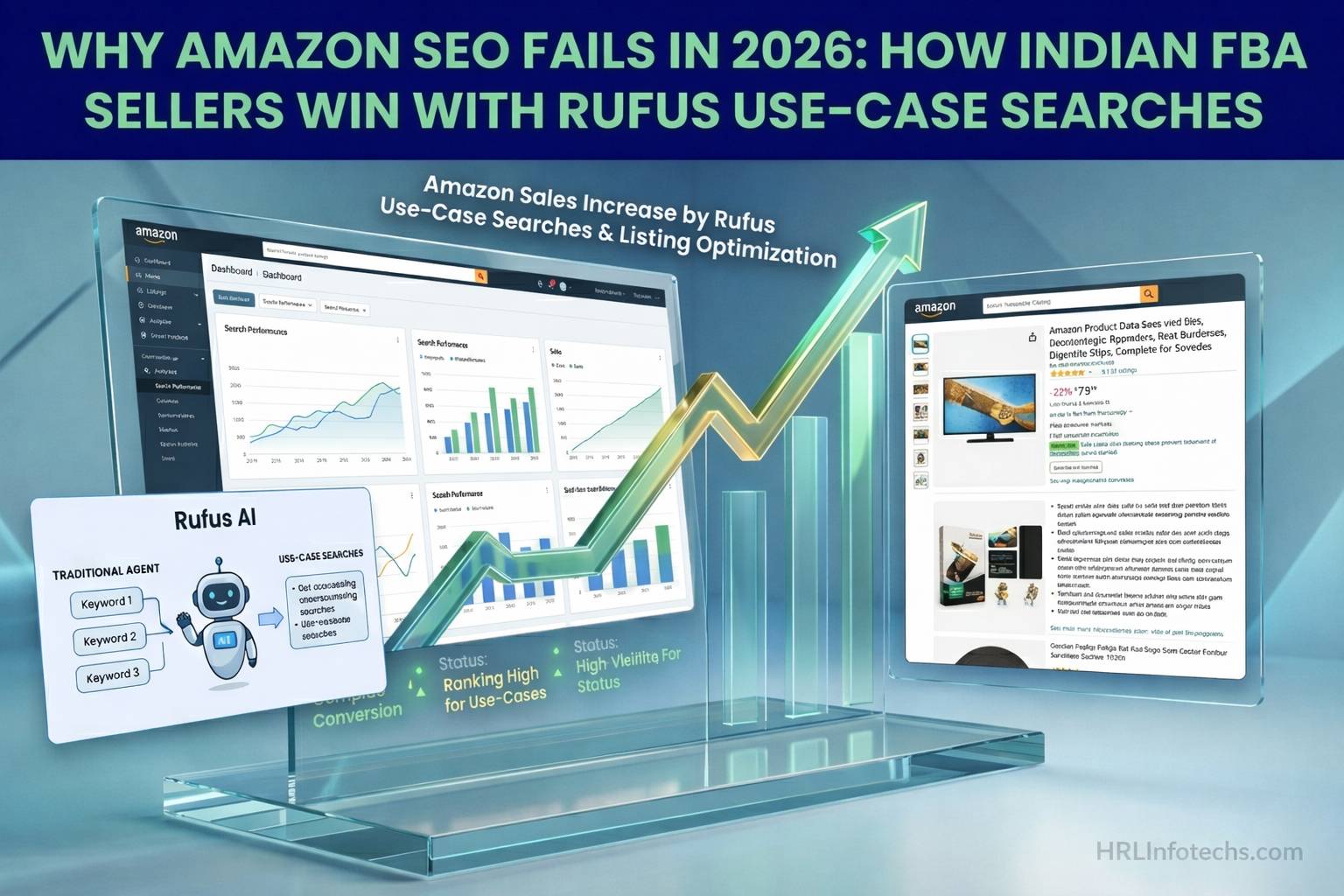
Amazon SEO is changing faster than most sellers can track. What worked in 2023 or 2024 is already losing power in 2026, especially with Amazon’s Rufus AI and use-case driven search. Indian FBA sellers who still rely only on keyword stuffing, generic titles, and broad match ads are watching their visibility drop while smarter competitors quietly take over page one.

To win now, you must treat Amazon SEO as a buyer-intent engine, not just a keyword checklist. That means understanding how customers search on Amazon in 2026, mapping real-life problems to your listings, and aligning Amazon SEO & Listing Optimization with data-driven ecommerce growth strategies. This shift is exactly where most Amazon SEO fails—and where Indian FBA sellers can win big.

Why Traditional Amazon SEO Fails in 2026

Most Amazon SEO frameworks were built for a different era, when exact match keywords and aggressive indexing were enough. In 2026, Amazon’s algorithm reads context, intent, and engagement signals, not just raw keyword density. Listings that ignore buyer language and real use cases get impressions but no clicks or conversions.

This is why many sellers complain that traffic is up but sales are flat. They optimize for search volume instead of problem solving keywords Amazon SEO actually rewards. When titles, bullets, and A+ content fail to answer a clear use case, Rufus and other AI layers push those listings down in favor of products that match how customers search on Amazon 2026.

The New Reality: Use-Case and Problem-Solving Search

Amazon search is shifting from product-first to problem-first. Instead of typing “wireless headphones,” buyers now search like, “headphones for noisy office calls” or “earbuds for gym that don’t fall out.” These are classic amazon use case search examples that reveal clear intent and context.

Amazon SEO for customer intent now means mapping your product to specific situations, pains, and outcomes. When your listing mirrors these phrases in a natural way, you send strong relevance signals. This is how to rank on Amazon with buyer intent: speak to the scenario, not just the category.

How Customers Search on Amazon 2026

Search behavior in 2026 looks more like conversations than short tags. Shoppers type full questions, detailed needs, and even mini-sentences, especially on mobile and voice. Amazon’s AI understands these patterns and surfaces listings that match the underlying use case, not just the core keyword.

To align Amazon SEO with this shift, sellers must research long-tail, intent-heavy phrases and integrate them into titles, bullets, and FAQs. Phrases like “for oily skin in humid weather” or “for small kitchens with limited space” are powerful signals when used strategically and naturally in your Amazon SEO & Listing Optimization.

Examples of Use-Case Driven Keywords

Instead of only targeting generic head terms, modern Amazon SEO requires layering in problem and outcome language. For example, a kitchen organizer can target “kitchen rack for small apartments” or “shelf organizer for under sink clutter.” These are problem solving keywords Amazon SEO tools often overlook.

By building clusters of such phrases, you create a semantic web around your listing. This helps Amazon understand that your product solves multiple micro-problems. Over time, this approach supports better organic ranking, stronger conversions, and lower dependence on pure Amazon PPC & Advertising spend.

Best Amazon SEO Strategy for Conversions, Not Just Clicks

Ranking is useless if your listing cannot convert. The best Amazon SEO strategy for conversions starts with aligning every element of the page to buyer intent. Titles attract the right click, bullets answer objections, and images prove outcomes. This creates a tight funnel from search term to purchase.

In 2026, Amazon SEO is less about tricks and more about structured persuasion. You still need keyword-rich content, but it must be framed around benefits, use cases, and social proof. When your listing reflects how customers search on Amazon 2026, your conversion rate becomes a ranking signal in itself.

Structuring Listings Around Buyer Intent

To optimize Amazon SEO for customer intent, start by mapping your top three to five use cases. For each, identify the problem, desired outcome, and emotional driver. Then, weave these into your title, bullets, and A+ modules with natural Amazon SEO keyword placement.

For example, bullets can follow a clear pattern: problem, solution, proof, and use-case scenario. This structure helps both the algorithm and the shopper understand why your product is the best fit. Over time, this approach supports higher click-through and conversion, which strengthens your Amazon SEO performance.

Integrating Amazon PPC & Advertising with Organic SEO

Many sellers treat Amazon PPC & Advertising as a separate channel from Amazon SEO, but in 2026 they are tightly connected. Paid campaigns generate data on which search terms convert, which then feeds your organic optimization strategy. Ignoring this loop is a major reason Amazon SEO fails.

By mining your PPC search term reports, you can uncover hidden amazon use case search examples and problem phrases that drive sales. These insights should guide your content updates, from titles to backend keywords. This is a key part of data-driven ecommerce growth strategies that top Indian FBA sellers now rely on.

Using PPC Data to Refine Amazon SEO

Instead of chasing vanity metrics like impressions, focus on high-conversion search terms from your ads. These phrases often reveal how to rank on Amazon with buyer intent because they show what real customers type before buying. Prioritize them in your on-page Amazon SEO & Listing Optimization.

Practical steps include updating bullet points with winning phrases, adjusting product descriptions to mirror buyer language, and testing new images that reflect key use cases. Over time, this alignment between PPC and Amazon SEO builds a powerful feedback loop that compounds your organic visibility.

Account Management, FBA Support, and Operational Signals

Even the best Amazon SEO strategy can fail if operational metrics are weak. Late shipments, stockouts, and poor customer service send negative signals to Amazon’s algorithm. In 2026, Account Management & FBA support are not back-end tasks; they are core parts of your Amazon SEO engine.

Strong inventory planning, responsive customer support, and optimized FBA workflows help maintain high seller ratings and fast delivery promises. These factors directly impact your ability to rank, especially in competitive niches. Amazon wants listings that not only match intent but also deliver a reliable experience.

Operational Excellence as an SEO Advantage

Indian FBA sellers who treat operations as a growth lever gain a real edge. Consistent stock, low return rates, and positive reviews all reinforce your Amazon SEO efforts. When combined with intent-driven content, these signals tell Amazon that your listing is a safe bet for top positions.

This is where data-driven ecommerce growth strategies go beyond keywords. Dashboards that track inventory health, review trends, and fulfillment performance help you spot risks early. Fixing these issues protects your rankings and ensures that your Amazon SEO investments keep paying off.

How Indian FBA Sellers Can Win the Rufus Era

Indian FBA sellers are uniquely positioned to leverage the Rufus use-case revolution. Many already operate in price-sensitive, problem-focused markets, which trains them to think in terms of real-life scenarios. Turning that insight into structured Amazon SEO can unlock global growth.

The path forward is clear: focus on how customers search on Amazon 2026, build listings around use cases, and integrate Amazon PPC & Advertising data into your optimization cycle. With disciplined Account Management & FBA support, this approach turns Amazon SEO into a predictable growth system rather than a guessing game.

Turning Strategy into Execution

To move from theory to action, start with an audit of your current listings. Identify where generic product language replaces clear use-case messaging. Then, rebuild titles, bullets, and A+ content around buyer intent while maintaining strong Amazon SEO fundamentals.

Next, align your PPC campaigns with these new themes and monitor which search terms drive the best conversions. Feed those insights back into your content and operational planning. If you need expert support to execute this at scale, partnering with a specialist like HRL Infotechs can help you turn Amazon SEO into a consistent, compounding growth channel.

How to Boost Sales With Amazon SEO Services: Optimize Your Account & Listings


If you’re selling on Amazon, you’re all too familiar with how saturated the market is. With millions of products being listed daily, it’s not so much about how great your product is; it’s about how likely it is even to be found when a customer searches for it. That’s where Amazon SEO services come in. By defining and executing the right optimization strategies, you can get noticed, bring more customers to your product, and sell more.

In this blog, we will guide you through what Amazon SEO services are, why they’re crucial to your business, and how to optimize your account and listings for the best results.

Why Amazon SEO is More Important Than Ever

Think about the last time you searched for a product on Amazon. Did you scroll beyond the first page of results? Most shoppers don’t. Research has shown that the first-page listings get most clicks and conversions. That means that if your product is not on the first page, you’re likely losing sales to another company.

That is where Amazon SEO services step in. They come in to improve the organic ranking of your product so that your listings become more accessible to the target market. In contrast to paid advertisements that only deliver results as long as you pay them, SEO will keep building and working for you for the long run, naturally increasing your store traffic.

What are Amazon SEO Services?

Simply put, Amazon SEO services are methods and procedures employed to drive more visibility of product listings on Amazon’s search engine. Amazon algorithm (A9) ranks products based on relevance, performance, and buyer experience. When you optimize all of these things, there is a much better chance your potential customers will find your products.

Typical Amazon SEO Services Include:

  • Keyword Research: Finding the keywords that customers use to search for products.
  • Listing Optimisation: Optimise product title, bullet points, description, and backend keyword optimisation.
  • Image & A+ Content Optimisations: Making your product attractive and credible.
  • Review & Rating Strategies: How to handle reviews to build your product’s credibility.

Performance Review-Measuring ranking, clicks, and conversions to fully leverage your SEO efforts.

The Foundation for an Amazon SEO Plan for Sellers

One of the most critical aspects of Amazon SEO services is creating a good and effective Amazon SEO plan for sellers. Without a plan, you may make random changes that will not do anything. A successful strategy includes:

Targeting the Right Keywords

Utilise tools and customer information to identify top-ranking keywords. They constitute the foundation of your visibility.

Optimising Titles and Descriptions

Your product name should be natural and readable, but also keyword-friendly. Descriptions should highlight benefits, features, and consumer needs.

Enhancing Product Images

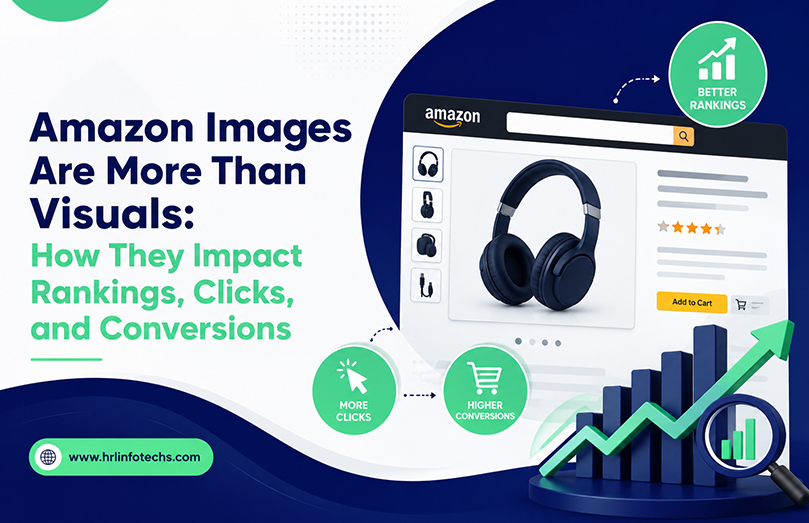
Quality visuals increase click-throughs. Incorporating lifestyle photography enables customers to visualise your product in use.

Build Reviews and Ratings

These kinds of products always sell quickly. A good review management plan is something you should include in your plan.

Utilising this step-by-step Amazon SEO strategy for sellers, you lay the groundwork for sustained growth.

Leveraging Amazon SEO Tools for Sellers

In terms of data-based optimisation, there is nothing better than having the right tools at your disposal. For this reason, Amazon SEO tools designed for sellers are an essential aspect of professional SEO services. They can assist with:

  • Keyword Discovery: Finding the appropriate and profitable keywords.
  • Competitor Analysis: Knowing where top competitors are and how they do business.
  • Listing Quality Checks: Checking for missing items like image(s), keyword(s), product descriptions, etc.
  • Performance Monitoring: Monitoring keyword ranking, clicks, and conversions in real time.

Having Amazon SEO tools for vendors as a component of your workflow allows you to make improved, data-driven decisions instead of guessing.

Amazon Marketplace SEO Tips You Shouldn’t Ignore

Even with paid services, sellers must keep themselves updated with hands-on tips. The following are some Amazon marketplace SEO tips that would make a big difference:

  • Keep Updating Keywords: Consumer search behaviour is continually changing, so your keywords must be updated regularly.
  • Target Backend Keywords: Don’t miss the backend search terms field; it’s a hidden goldmine waiting to be optimised for discoverability.
  • Optimise for Mobile: Most customers purchase from their mobile devices. Make sure your listings are legible and not cluttered on small screens.
  • Use A+ Content: more content enhances conversion rates since it describes your product with images and comparison charts.

Following these Amazon marketplace SEO best practices will allow your optimization to be ongoing and effective long-term.

How Amazon SEO Services Directly Affect Sales

It’s simple: with increased visibility comes increased clicks, and increased clicks generally lead to higher conversions. With Amazon SEO Services, you can:

  • Boost Organic Position: Rank higher in the search engine results and be noticed more.
  • Decrease Dependence On Ads: Spend less money on ads and less on ads.
  • Create Long-Term Stability:  Enjoy continual sales instead of spikes.
  • Win Customer Trust: A well-crafted, optimized listing gives consumers confidence in your business.

Sellers see more traffic and higher conversion rates to their listings because they provide exactly what people seek.

Why Use Experts

You can do it yourself, but an Amazon SEO Services expert will save time and get better results. Experts are much more aware of Amazon’s constantly changing algorithm and have better tools and techniques to keep your business viable against the competition.

Instead of battling trial and error, you have a tailored SEO plan that suits your products, industry, and business goals.

Final Thoughts 

In the current competitive market, visibility is key. Without optimisation, the best product will remain unknown. This is why Amazon SEO services are not optional but required for businesses trying to grow and optimise their profits. After all, if you invest in a good SEO strategy for sellers at Amazon, put the best SEO tools for sellers to use, and are assisted by intelligent Amazon marketing SEO help, you can position products in front of customers who are looking.

The key to success is consistent, data-driven optimisations, and professional help and support as required. Begin prioritising Amazon SEO Services today, and see your sales gradually increase over the next several months.

Solve Keyword Related Problems With Amazon SEO Services


Are you an Amazon seller struggling to get your products noticed among the millions of listings on the platform? You’re not alone. With so much competition, getting your products in front of the right customers cannot be easy. But don’t worry; there’s a solution: Amazon SEO services.

In our blog, we’ll explore how Amazon SEO services can help solve keyword problems, improve your product listings’ visibility and search ranking, and ultimately drive more sales. We’ll dive deeply into the critical steps of optimizing your product listings, from keyword research to optimizing your title and description to backend search terms optimization, image optimization, and performance monitoring. 

You’ll have a better grasp of Amazon SEO services for merchants at the end of this blog. So, whether you’re a seasoned Amazon seller or just starting, read on to discover the power of Amazon SEO services and how they can transform your business on the platform.

Why Keyword Research is Crucial for Amazon SEO?

Keywords are the foundation of SEO and play a vital role in helping you optimize your Amazon product listings.While searching for things on Amazon, customers use specific terms and phrases to locate what they seek. By researching and identifying these keywords, you can utilize them in your product titles, descriptions, and backend search terms to improve the visibility of your products in Amazon search results.

The right keywords can help you in the following ways:

  • Discovering Customer Needs: By researching keywords, you can gain insights into customer needs and preferences. You can discover what customers are searching for and use this information to create products that meet those needs.
  • Optimizing Product Listings: You may enhance your product listing on Amazon by using keywords. Using relevant and high-traffic keywords in your product titles, descriptions, and backend search terms can increase your chances of being discovered by customers searching for similar products.
  • Increasing Visibility: The right keywords can help you increase your visibility in Amazon search results. The search engine algorithm matches terms in your product listing with search queries customers enter when they conduct product searches on Amazon.com. Using the right keywords can enhance your possibility of appearing elevated in search results.
  • Improving Sales and Revenue: It’s possible to increase clicks and purchases using the appropriate keywords in your product listings. Consumers are more inclined to click on and buy your products after finding them in search results. You could increase your Amazon sales and earnings with its assistance.
  • Gaining a Competitive Advantage: You can gain a competitive advantage by researching and using the right keywords. You can use keywords to differentiate your products and make them more appealing to customers, helping you stand out in a crowded marketplace.

7 Keyword Issues That an Amazon SEO Marketing Services Agency Company Can Fix

Amazon is the world’s most extensive online merchant, with millions of products available. It might be difficult for merchants to stand out when so many products are vying for customers’ attention. That’s where an Amazon SEO agency can help. In this article, we’ll look at seven issues that an Amazon SEO company may help you improve your product listings and boost sales.

Time Wastage Cannot be Tolerated

Optimizing your Amazon product listings takes time and effort, and keeping up with the latest trends and best practices can be challenging. An Amazon SEO agency can help you save time by optimizing the process. Thanks to their knowledge and resources, they can effectively improve your product listings, giving you more time to focus on other aspects of your business.

Overusing Keywords Might Have Negative Effects

Using too many keywords in your product listing can be counterproductive. It can make your listing appear spammy and hurt your search rankings. An Amazon SEO agency can help you find the right balance of keywords, ensuring that your product listings are optimized for maximum visibility without going overboard. Worthless Keywords Using 

Worthless Keywords

Keywords that are less relatable can also be harmful to your product listings. These keywords don’t have any search volume or relevance to your products. An Amazon SEO agency can help you identify and remove these keywords, allowing you to focus on the ones that matter. Using irrelevant keywords can also harm your product listings. These keywords don’t match your products or your customers’ search queries. An Amazon SEO agency can help you identify and remove these keywords, ensuring that your product listings are optimized for the right audience. 

Being Left Out Financially Rewarding Keywords

Missing out on profitable keywords can harm your sales. An Amazon SEO agency can help you identify profitable keywords that you might be missing out on. They may also assist you in efficiently targeting these keywords in your product listings through optimization. 

Hire the best experts of amazon SEO services

Winning the Competition

With so many products available on Amazon, it can be challenging to escape from the competition. An Amazon SEO services company can help you win the competition by optimizing your product listings for maximum visibility and sales. They can also help you stay on top of the latest trends and most promising practices to keep ahead of the Competition Competition. 

Some Terms Aren’t Always Relevant

Keywords that aren’t evergreen can become irrelevant over time, hurting your search rankings and sales. Amazon SEO services can help you avoid these keywords by identifying and optimizing for evergreen keywords relevant to your products and customers.

An Amazon SEO agency can help you solve many problems sellers face when optimizing their product listings. From saving time to identifying profitable keywords, an Amazon SEO agency can help you increase your sales and stay ahead of the competition. Consider working with an Amazon SEO professional to optimise your Amazon product listings.

Employ Amazon SEO Services and Tackle Keyword Difficulties

Are you looking to take your Amazon business to the next level? Do you want to boost sales and differentiate yourself from the competition? Look no further than Amazon account management agency HRL Infotechs, your one-stop shop for SEO services for Amazon USA. 

We understand that optimizing your product listings on Amazon can be daunting and time-consuming. That’s why we’re here to help. Our team of expert Amazon SEO professionals has years of experience helping sellers like you optimize their product listings and increase their sales. Whether struggling with keyword research, using too many or worthless keywords or missing out on profitable ones, our Amazon SEO services are tailored to meet your specific needs. We’ll work closely with you to identify the most relevant and profitable keywords for your products, optimize your product listings for maximum visibility, and help you stay ahead of the competition. 

Our Amazon SEO services are designed to save you time and money while providing you with the best possible results. By working with us, you may be sure that your Amazon business is in capable hands. We’ll work tirelessly to ensure that your product listings are optimized to their fullest potential, so you can focus on what you do best – growing your business.

Why then wait? Get in touch with us right away, and we’ll help you expand your Amazon business. With us, you’ll have the peace of mind of knowing that your Amazon SEO needs are taken care of by experts who are dedicated to your success.

Amazon SEO: The Ultimate Guide for Amazon Optimization


The term “Amazon SEO” can be foreign to someone fresh to eCommerce. Even the term “SEO” itself may be utterly foreign to you. However, knowing SEO is essential if you intend to sell through Amazon. We assure you that once we simplify everything for you, it will be simple for you. 

Amazon is, without question, a lucrative market that sales associates cannot ignore, yet the degree of competition today is insane. Businesses must go above and above by following pertinent developments and utilizing the best Amazon account management services and Amazon SEO techniques to stay ahead of their rivals.

The art of search engine optimization can be challenging, especially in a cutthroat online business. This blog offers practical instructions for understanding how Amazon SEO works and directions on creating a successful Amazon SEO technique for your company.

What Does Amazon SEO Mean?

When selling your goods on Amazon, you want them to become as readily available to many individuals. Amazon SEO is the process of improving your product listing so that it shows up at the forefront of consumer search results.

The Amazon SEO strategy entails making formatting, text, and media feature improvements to make your Amazon product listing appealing to Amazon’s search algorithm. By deliberately utilizing Amazon’s A10 algorithm, you can get your goods to show up at the forefront of search results, resulting in increased revenues. Comprehending Amazon’s A10 algorithm is the initial phase in grasping Amazon SEO.

Describe the A10 Algorithm from Amazon

The foundation of the search engine technology for the Amazon marketplace is called Amazon A10. This algorithm corresponded with consumer search requests with the best suitable products.

“Revenue-per-click” is the introductory priority of the A10 algorithm. It indicates that Amazon prioritizes increasing revenue and money and believes that providing customers with the most relevant results for their searches is the most effective method for achieving this. It makes sense that a buyer is swiftly and precisely provided with the specific product they are seeking, so a purchase is now possible.

How Does Amazon SEO Work?

The Amazon Search Bar

The Amazon search function has a fall panel of categories that allows online consumers to find products swiftly. Customers can use the search line at the top of the Amazon webpage to look for products by entering a phrase or a keyword. Additionally, customers can use broad keywords. The client can modify their search to focus on only the most pertinent outcomes after Amazon finds compelling findings again for terms or phrases.

Search Terms

Users can employ a variety of criteria to display search results in a particular sequence while conducting a search, such as:

  • Department
  • The top sellers (the most popular products based on sales)
  • fresh arrival
  • featured products
  • customer feedback
  • Pricey or inexpensive
  • Digital products and content
  • Features and programmes

The Search Results Tab

The following variables can influence search results:

  • Products names
  • Merchandise descriptions
  • Enhanced pictures
  • Product Attributes
  • Affordable prices

To raise your rating in Amazon search engine results, employ SEO to enhance all of these subsequent factors separately. For more information, read the remainder of this post.

Sponsored Products

Cost-per-click (CPC) advertisements, known as Sponsored Products, are ones that merchants having Professional seller accounts registered in Amazon’s brand Directory can utilize to advertise specific product listings in Amazon stores. Advertisements are seen on product descriptions, web pages and browsing outcomes pages.

Ads will be generated and matched by Amazon organically based on shopping inquiries. You may entice more buyers with Sponsored Products who proactively shop for items comparable to the advertised items.

Amazon Sales Position

Various seller evaluation criteria, such as account wellness, ratings, product cost, as well as other elements, are used by Amazon to rate each seller. Your sales power will often increase as your ranking rises.

6 Tips for Amazon SEO Optimization

Consider SEO as a continuous activity that will assist you in connecting with the 290 million Amazon customers. Starting today, incorporate optimization into your whole e-commerce marketing strategy.

1. Use Striking Images

Learning about Amazon’s extensive product image list covers various topics, from technical aspects like pixel measurements to illumination and backdrop colors.

Typically, your product photographs ought to feature a crisp, in-focus, expert-looking picture of your goods against a white background. The product must take up 85% of an image, and there shouldn’t be any more items in it. It’s essential that the product stands apart from the competition in the picture because it’s typically the first element of your listing that the browser notices in search engine results. 

2. Create Persuasive Sales Copy

Your marketing copy should represent your goods to buyers and describe how and why they would meet their demands. It likely will not be challenging to create a complimentary explanation of how a product is so great when you’re marketing one that you believe. Yet, there are some factors to be mindful of:

  • Writing in a straightforward and precise manner comes foremost. Rather than overstating your product, concentrate on the details 

The A10 algorithm must act in your favor to attract the correct individuals to your listing.

  • Next, you should put your keywords in your marketing text, despite avoiding keyword stuffing, attempt to sprinkle a variety of these across your product description.

3. Smart Keyword Use

Ensure you have an adequate keyword list when making the product description. Merely include these keywords within areas of your product points where they may organically appear.

4. Increasing Off-Site Traffic

The A9 algorithm encourages many Amazon merchants to use discounts and bargains to rank highly in search rankings, but the A10 algorithm places less emphasis on it. Instead, concentrate on generating traffic to your goods through places other than Amazon.

In addition to helping you score better on Amazon, building a portfolio of diverse off-site visitors that point to your goods will also assist you in ranking better on Google searches. Encouraging bloggers to evaluate and suggest your product is a fantastic strategy for accomplishing this.

5. Tactical Pricing

Effective pricing entails setting competitive prices for your goods while avoiding making offers that are simply too tempting to be true.

Examining your rivals is a wise move in this regard. Price your product at $19.99 when they are charging $20 for a comparable product with yours. Making sales doesn’t have to mean giving up profitability.

6. Strive to Get Reviews

Positive feedback always includes your ranking in the algorithm A10. The system evaluates every seller’s stats, how sufficiently they meet Amazon consumers’ requirements, and how favorably its clients evaluate them following a buy.

5 Key Practices for Amazon SEO

1. Avoid Keyword Repetition.

  • Concentrate on writing in a conversational style while providing buyers with the details they require to make a decision.
  • It can be detrimental and unproductive to repeatedly use keywords (sometimes referred to as “keyword stuffing”.

2. Target the Consumer in Your Sales Copy.

  • In your product description, respond to queries from customers and past sellers.
  • Instead of thinking about what you want to say about a product, try to think about just what your consumer may wish to know.

3. Enhance Your Rankings

  • Utilize Amazon Fulfillment (FBA).
  • Utilize A+ Content by signing up for Brand Registry.
  • To be eligible for the Premium badge and fast, free delivery, sign up as an Amazon Prime seller, which is generally supported by your registration in FBA. It may attract consumers who frequently use the Prime badge when searching for products.

4. For Listings, Use This Fundamental Styling Advice

  • Be informative yet also succinct and straightforward.
  • Be convincing, but avoid being overbearing or tacky.
  • Be precise and sincere while describing the state and caliber of the product.
  • Refrain from making assertions that are inflated or subjective.

5. For Constructing A Perfect Product Detail Page:

By adhering to advice on what to steer clear of and using uniform layout, you may create outstanding product information pages for:

  • Capital letters, numbers, and titles.
  • Copyrights, logos, and brand names.
  • What should be and shouldn’t be mentioned in product descriptions? 
  • Rules for important feature (bullet point) information.

You may enhance the customer experience, boost your chances of interacting with many more consumers, and drive revenue using these Amazon SEO tips.

Conclusion

Understanding the fundamental ideas behind the SEO procedure is already a big step in your eCommerce success. Although we know that taking this SEO masterclass won’t necessarily make anyone an immediate specialist in Amazon SEO, we believe that it will provide you only with the information you have to start on the correct path.

Looking to hire a seasoned Amazon SEO agency to assist with your SEO requirements. If so, HRL Infotechs, a leading provider of Amazon Storefront Design Services and Amazon SEO Services, will assist you in creating a unique SEO plan for your company. Make an appointment right away! Anytime is an excellent opportunity to arrange a free consultation with us.

Conventional Methods for Amazon Listing Optimization 2022


Amazon Product Detail Pages are the pages buyers see when searching for items on Amazon. It is where a customer discovers any Amazon product. Detail pages are an eternal part of the Amazon catalog, and sellers can create listings for these products on Amazon. The seller must register with a Professional Seller account to create a new Product Detail page.

Each product has its page with detailed product information that includes:-

  • Title
  • Images
  • Bullet points
  • Description
  • Product variations (such as size or color)
  • Customer reviews

Have you ever considered why some products consistently pop up in Amazon searches while others hardly get noticed? Or how do a few product listings maintain getting clicks and have a high sales rate while others don’t?

The mystery revolves around Optimization.

Finding the right product to sell on Amazon is key to success on the site. But even if you’re selling the perfect, high-demand product, an optimized listing will be saleable and glide your business to newer heights.

Amazon Listing Optimization


Amazon Product Listing Optimization is the process of optimizing your listings to inflate conversion. It is one of the most crucial strategies to keep your product on top. It is also the key to a customized experience for buyers. Optimizing your product listing ensures compatibility across branding, messaging, reviews, and ratings while increasing visibility on Amazon’s Search Engine Results page.


Best Practices for Optimizing Product Detail Page

The E-commerce industry is seeing rapid growth, but many brands struggle to boost their e-commerce conversions. Most customers decide whether they want to buy your product or leave your store while they are on your product pages. So, brands need to create high-converting e-commerce product pages as your product detail page is the backbone of your e-commerce strategy. 


E-commerce-Product-page


Few Basic Tips to Optimize Pages:


1.Examine Your E-commerce Product Pages

Run through a few minutes on your product page to analyze numerous elements and recognize the ones that call for work. If you fancy imparting a great experience to your buyers, it’s crucial that you’re thoroughly informed about the display page yourself.

2.Apply Compelling Product Photos

Don’t suppose content as simply text on a page. Graphics/photos play a significant role in engaging your target audience. Product photos help your customers create a first impression of your product. Contrary to retail stores, your customers can’t see, touch, feel, or try your products online. Therefore, you must display your product from multiple angles.

3.Lay Out Comprehensive Product Content

Apart from product images, a prominent e-commerce page should provide essential particulars about the product. It’s the content that briefs customers about the benefits and features of a product. It can persuade them to buy from you. Ensure you use a civil, engaging, and personal touch in your product descriptions.

4.Support Social Evidence to Escalate Reliability

Brand integrity across industries is shrinking, as consumers are losing faith in occasionally pompous claims many companies make about their products. That has led to the rising crucial communication scheme that is social proof. Buyers often refer to what previous buyers have to say about a product. It helps them analyze if it’s the product they’re looking for. Product reviews and ratings build trust, and that trust helps increase conversions.

5.Assign Your E-Commerce Product Page an Appealing Title

Giving your e-commerce product page a catchy and engaging title is crucial. The title is the foremost thing anyone visiting your product detail page will see. Best to make your title stand out. A precise title gives you a greater chance of the right shoppers clicking on your product.

6.Develop Your E-Commerce Product Page for Mobile

Mobile e-commerce or m-commerce is undoubtedly growing faster than e-commerce in general. Moreover, Google announced its mobile-first indexing update. Thus, if your e-commerce product pages aren’t mobile-friendly, you might lose traffic, sales, and revenue. This update has left you no choice but to optimize your site and product pages for mobile devices. 

Mobile-optimized product pages can help you:

  • Improve the overall experience of your customers
  • Help them buy from anywhere, anytime
  • Facilitate faster checkouts with digital wallets


Every product is unique, meaning every product page should be memorable. It takes a lot of time and marketing effort to drive targeted traffic to your e-commerce store. But that will be wasted if you don’t optimize your product pages to boost conversions.

The above points will help you provide a better shopping experience for your customers. Optimizing Product Detail Pages thus can help you increase conversions and make your dollars fly.