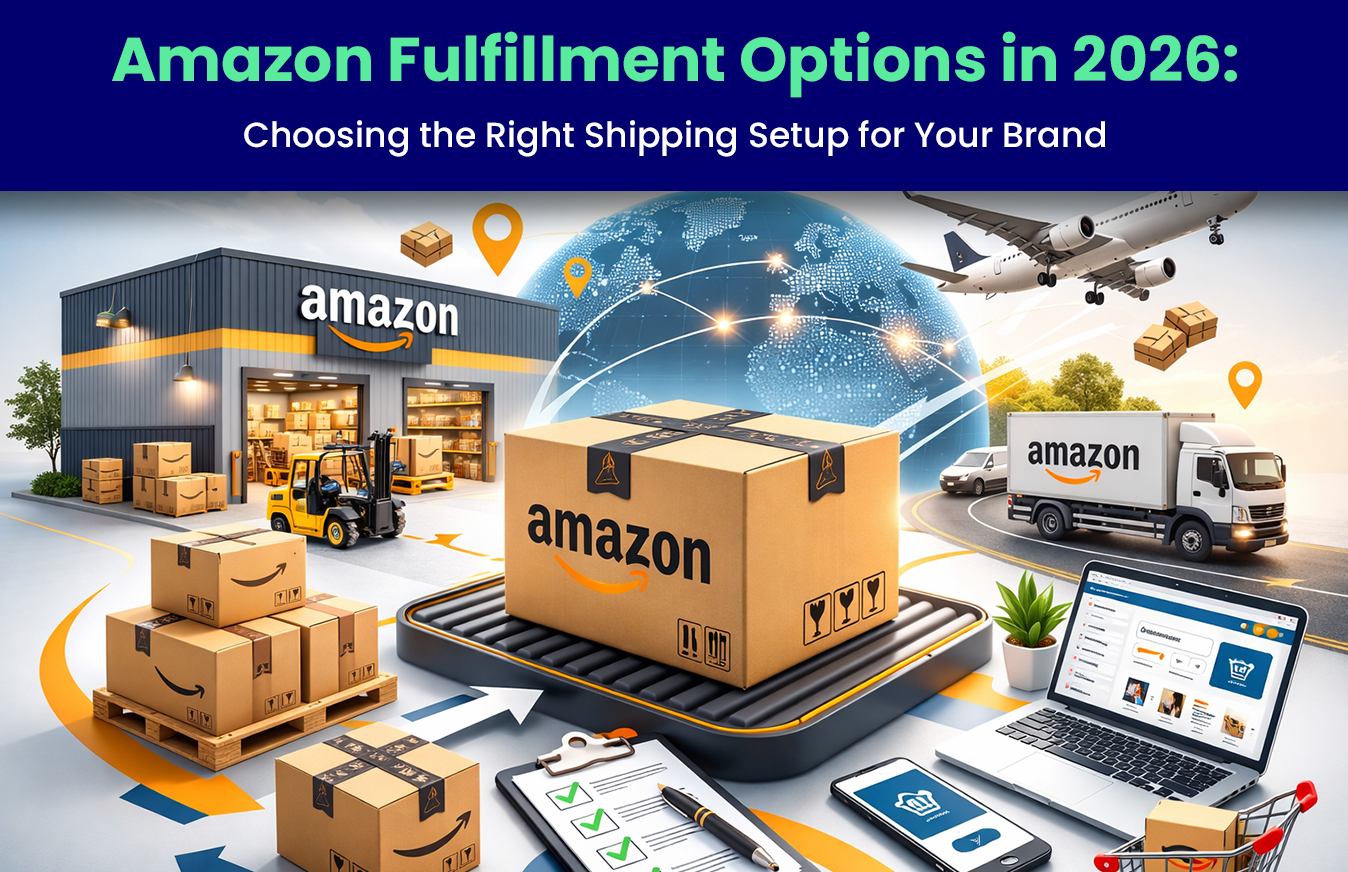
Amazon Fulfillment Options in 2026: Choosing the Right Shipping Setup for Your Brand


Amazon is all about fast delivery, quality products, and a satisfied customer experience. And if you are a seller on Amazon, keeping up with its fast delivery feature can turn out to be quite a challenge; that is why one of the biggest decisions you will make is how to ship your products across the country or worldwide. The Fulfillment method that you choose directly impacts your cost, delivery speed, customer experience, and even the chances of you winning the Buy Box. With every day, competition on this platform is higher than the previous day, and one way to win shoppers’ trust is by delivering on time, whether you are a new seller or an established brand. 

In this blog, we are going to discuss how to choose the Amazon Fulfillment method according to your brand requirements, target audience, and product market, Amazon FBA vs FBM vs 3PL, and many more.

What Are Amazon Fulfillment Options?

There are three Amazon shipping options for sellers provided by the platform. Each has its own advantages and disadvantages. These Amazon Fulfillment options are: 

Fulfillment by Amazon (FBA)

With Amazon FBA, sellers send their products to Amazon Fulfillment centres, where they store, pack, and ship their products while managing returns and customer services as well. This method is widely used, and many brands are working with an Amazon FBA management agency.

Why Choose FBA

  • Faster scaling and delivery of orders
  • Higher chances of winning Buy Box
  • Reduced the burden of operational work 
  • Handled customer services and returns
  • Eligibility for Prime Badge

Who Should Choose FBA

  • Sellers of high-volume products
  • Sellers of small-sized products
  • Products with consistent demand
  • Brands that don’t want an operational burden
  • Sellers aiming to win the Buy Box

What You Pay For

  • Fulfillment fees for picking, packing, and shipping
  • Storage fees, based on stock volume
  • Shipping charges for fast delivery
  • Customer service, return and inquiries
  • Optional services like specialized prep

Fulfillment by Merchant (FBM)

With the FBA method, sellers store the products, handles it’s packing and shipping themselves when an order is placed. This method of Fulfillment is becoming more popular because of the high long-term storage fees of FBA, especially for low-demand and slow-moving inventory. 

Why Choose FBM

  • Complete control over inventory
  • Better profit margins with reduced cost
  • No requirement for Amazon storage fees
  • Better choice for heavy or large products
  • Low Fulfillment cost than FBA for some categories

Who Should Choose FBM

  • Brands selling customized or handmade products
  • Sellers with slow-moving or low-demand inventory
  • Handle with care or fragile products
  • Brands with their own warehouses
  • Businesses that want complete inventory control

Challenges of FBM

  • No Prime badge eligibility without FBA
  • Increased operational workload for the seller
  • Strict product delivery standards need to be maintained
  • Low product visibility, compared to FBA products
  • Increased requirement of the workforce

Third-Party Logistics (3LP)

A 3LP is like Fulfillment by Amazon, but at less cost. In third-party logistics for Amazon sellers, brands outsource services like warehousing, inventory management, order picking, packing, and shipping from a specialized external provider. Some brands use a combination of FBA and 3PL.

Why Choose 3PL

  • More flexible and lower storage pricing than FBA
  • Allows multiple channel Fulfillment
  • Real-time management of inventory
  • Improved customer experience
  • Better chances of global expansion

Who Should Choose 3PL

  • Brands that are scaling fast
  • Businesses selling on multiple platforms
  • Sellers with large or heavy products
  • Sellers wanting an alternative to FBA
  • Brands wanting more control than FBA offers

Challenges of 3PL

  • No eligibility for Prime badge
  • High dependency on external partners
  • Risk of shipping delays, damaged goods, etc.
  • Less priority compared to bigger clients
  • Reduced connection with customers

How to Choose the Right Shipping Setup for Your Brand

Choosing the right shipping setup is not about copying what other sellers are doing. It is about understanding your business needs and selecting a system that supports your growth, profitability, and daily operations. Many brands avail Amazon Seller Account Management services to evaluate their key factors for deciding shipping method, which are:

Understanding Your Product 

Firstly, look at the product you sell and its attributes, such as size and weight. Small, lightweight products work well with Amazon FBA, while large, heavy products work well with FBM or 3PL.

Check Your Profit Margins

Your Fulfillment method directly impacts your profit margins. If you have high margins, choosing FBA is ideal; if your margins are low, evaluate and calculate your costs before deciding. 

Identify Your Product Demand

Products that sell fast are ideal for FBA, as they help avoid long-term storage fees, whereas slow-moving products may sit in warehouses for months, increasing expenses.

Level of Control You Want

Some brands want full control over their inventory, while others don’t want to reduce their operational workload. In that case, choosing FBM and FBA are the ideal options, respectively.

Think About Your Growth Plans

If you want to scale your business quickly, choosing FBA can help you manage most of the work. But if you want gradual growth and cost control, FBM or 3PL is the correct choice for you.

Conclusion

Choosing the right Fulfillment method is not just about delivering products; it is about profit, growth, brand reputation, and leaving the customers satisfied. Before making a decision, make sure to evaluate all aspects of your business to support your business’s future growth.

By working with HRL Infotechs, you can sit back and relax without worrying about shipping delays or damaged products, because we have it handled. 
Amazon’s Shift from Small and Light to Low Price FBA Rates


In the ever-evolving landscape of e-commerce, Amazon has consistently been at the forefront of innovation. To further enhance seller experiences and customer satisfaction, Amazon is making a strategic move to replace the Small and Light program with the new Low Price FBA (Fulfilment by Amazon) rates. This change is poised to offer sellers more flexibility, better pricing, and improved visibility on the platform. Additionally, sellers can now take advantage of our comprehensive Amazon reimbursement services, ensuring that they recover any eligible funds and optimise their financial performance. In this blog, we will delve into the details of this transition and explore the benefits it brings for sellers and consumers alike.

Understanding the Small and Light Program

The Small and Light program was originally designed to assist sellers in reducing costs and streamlining the fulfilment process for small, lightweight products. This program allowed sellers to offer low-cost products with faster and cheaper fulfilment, which appealed to budget-conscious customers. While it served its purpose, Amazon identified areas of improvement to better cater to the evolving needs of sellers and customers.

Introducing the New Low Price FBA Rates

The Low Price FBA rates will replace the Small and Light program, offering an improved and more comprehensive solution to sellers. This new pricing structure aims to provide better incentives for sellers to utilise FBA for products that were previously under the Small and Light program. By transitioning to the Low Price FBA rates, sellers can enjoy enhanced cost savings, broader visibility, and a more seamless fulfilment experience.

Benefits for Sellers

Cost Savings and Improved Profit Margins

The shift to the Low Price FBA rates allows sellers to reduce their fulfilment costs for small and lightweight items significantly. As the cost of fulfilment decreases, sellers can price their products more competitively without compromising profit margins. This cost-effectiveness is particularly advantageous for sellers dealing with low-priced items, as they can now offer better deals to attract price-sensitive customers.

Increased Visibility and Sales Potential

Utilizing the FBA service means products are eligible for Amazon Prime and other benefits, which enhances their visibility among millions of Prime members. This exposure can lead to increased sales potential and the opportunity to reach a wider customer base. Moreover, products under FBA tend to have higher search result rankings, further boosting their visibility on Amazon.

Enhanced Seller Performance Metrics

Fulfilment by Amazon allows sellers to leverage Amazon’s reputation for fast and reliable shipping. As a result, sellers may experience improved seller performance metrics, such as on-time delivery and order defect rates, which can positively impact their overall seller ratings and position in the marketplace.

Outsourced Logistics and Inventory Management

By opting for FBA, sellers can hand over the responsibility of storage, packing, and shipping to Amazon. This not only saves sellers valuable time but also relieves them of the burden of managing complex logistics and inventory. Sellers can focus more on product development, marketing, and customer engagement, leading to enhanced business efficiency.

As sellers navigate this transition, strategic product selection and pricing are crucial to maximise the benefits of the Low Price FBA rates. By embracing the opportunities presented by Amazon’s dynamic marketplace, sellers can thrive and succeed in a competitive e-commerce environment. Moreover, customers can anticipate an enhanced shopping experience, driven by affordability, faster shipping, and a wide array of choices. As Amazon continues to evolve, both sellers and customers stand to gain from its ongoing commitment to innovation and customer-centricity.

The Benefits for Customers

Lower Prices and Better Deals

The introduction of the Low Price FBA rates brings significant cost savings for sellers, particularly for small and lightweight items. By utilising this pricing structure, sellers can optimise their fulfilment costs, ultimately leading to reduced prices for customers. With lower prices and better deals, customers can access products at a more affordable rate, making their shopping experience on Amazon even more enticing. This affordability is particularly appealing to budget-conscious customers who are constantly seeking ways to save on their purchases. As a result, the Low Price FBA rates are likely to resonate well with a wide range of customers looking for pocket-friendly options and great deals.

Faster Shipping and Prime Eligibility

One of the key benefits of utilising Amazon’s FBA service is the faster shipping it offers to customers. With the transition to the Low Price FBA rates, more sellers will opt for this program, leading to a greater number of products becoming eligible for Amazon Prime. As a result, customers can enjoy the perks of faster shipping and other Prime benefits, such as free two-day shipping, access to exclusive deals, and enhanced customer support. Faster delivery times significantly contribute to an improved shopping experience, as customers receive their orders promptly and can rely on the reliability of Amazon’s delivery network. This enhanced convenience and speed are bound to lead to higher levels of customer satisfaction, fostering greater loyalty to the platform.

Diverse Product Range

With the implementation of the Low Price FBA rates, sellers are incentivized to diversify their product offerings, particularly in the small and lightweight category. This shift encourages sellers to expand their inventory and list a more diverse range of products. As a result, customers gain access to an extensive selection of items spanning various categories. This broader product range not only enhances customer choice but also contributes to a more comprehensive and satisfying shopping experience. Customers can explore a wider array of options, discover unique products, and find precisely what they are looking for. As sellers embrace the Low Price FBA rates and showcase a more diverse assortment of products, Amazon’s platform becomes even more attractive and appealing to customers from all walks of life.

Challenges and Considerations for Sellers

While the transition to the Low Price FBA rates presents numerous opportunities, sellers need to carefully assess its impact on their businesses. Some considerations include:

  • Product Suitability: Sellers should evaluate which products will benefit the most from the Low Price FBA rates. Not all items may be suitable for this pricing structure, and sellers need to analyse the impact on their profit margins before making a decision.
  • Competition: As more sellers transition to the Low Price FBA rates, competition within the platform may increase. Sellers must be prepared to compete with others who are offering similar products at competitive prices.
  • Storage and Inventory Management: With FBA, sellers relinquish control over their inventory, relying on Amazon to manage storage and shipping. While this streamlines operations, sellers need to monitor their inventory levels to avoid stockouts and other potential issues.

Final Thoughts

Amazon’s decision to replace the Small and Light program with the Low Price FBA rates demonstrates its commitment to continuous improvement and innovation. This shift brings an array of benefits for both sellers and customers, fostering a more vibrant and competitive marketplace.

For sellers, the transition unlocks opportunities for cost savings, increased visibility, and simplified logistics. Customers, on the other hand, can expect more competitive pricing, faster shipping, and a diverse range of small and lightweight products to choose from.

As Amazon continues to evolve, sellers and customers alike can look forward to an ever-improving e-commerce ecosystem. By embracing change and adapting to the latest advancements, sellers can stay at the forefront of Amazon’s dynamic marketplace, ensuring success and growth in the highly competitive world of e-commerce.

Unlock the potential for unparalleled success in your Amazon advertising campaigns with HRL Infotech. Our expert team specialises in regular monitoring and optimization, ensuring your brand drives outstanding results on the Amazon platform. With our unmatched market knowledge and dedication to exceeding client expectations, we stand as the go-to Amazon agency for effective advertising solutions. Let us bring your growth dreams to reality and help your brand thrive on Amazon. Visit us now on HRL Infotech’s website to unlock the full potential of your Amazon journey!

Why is Fulfillment by Amazon Worth Choosing for Amazon FBA Sellers in Q3 2022?


Reasons Why Amazon FBA Sellers Must Go with Fulfillment by Amazon in Q3 2022

Many people wonder, as the year concludes, are Amazon seller services still worthwhile in 2022 and beyond? In a word, yeah. But let’s discuss why!

Amazon FBA Sellers are responsible for roughly one-quarter (22%) of Amazon’s staggering $469 billion revenue in 2021, up from $386 billion in 2020. To run their Amazon business, 89% of the third-party merchants use Fulfillment by Amazon (FBA). The need for online buying has grown, and while there is more competition on Amazon and other e-commerce markets, 63% of customers start their product searches on Amazon.

This blog will outline the benefits of selling on Fulfillment by Amazon in Q3 2022 for all Amazon FBA Sellers.

Why to Choose Amazon FBA in Q3 2022?

The e-commerce sales in the U.S. soared 14.2% in 2021 over the previous year to $870.8 billion. 41% of all transactions involving those total sales happened on Amazon. Amazon is the undisputed leader in the online retail space. Because of the advantages of Amazon’s end-to-end Fulfillment by Amazon services, as well as its enormous user base. Moreover, it is the ideal location for vendors.

Is Amazon FBA worthwhile for developing e-commerce brands, given that 85% of Amazon’s biggest sellers use it? Definitely! We’ll outline 5 reasons for why Fulfillment by Amazon is worthy for all the Amazon FBA Sellers.

amazon fba

1.Amazon is Most Reliable Marketplace for E-commerce Consumers

By 2021, 71% of shoppers had gone directly to Amazon to look up prices and reviews or make a purchase instead of using Google to research products. This results from consumers’ conditioning to expect ease and centrality from Amazon. They know that searching for competitive price points and conducting product research is possible on Amazon. The fact that third-party merchants have excellent ratings, aggressive pricing, and dependable fulfillment services only increase this.

It only makes sense for businesses to think about starting an Amazon business and utilizing FBA to boost their brand visibility and future growth, as it is predicted that Amazon will continue to increase its market share.

2.Inherent Seller Fulfilled Prime Features and Tools Facilitate Quicker Delivery

Given that the Amazon marketplace now dominates the e-commerce industry, it’s crucial to emphasize how an FBA business-for-sale model aids companies’ expansion and scaling. Your consumers will be able to take advantage of the advantages that only an Amazon store can provide, such as same-day and two-day shipping with an Amazon Prime membership, when you operate an Amazon FBA business.

The Amazon Platform has lately amended the eligibility criteria for its Seller Fulfilled Prime (SFP) program, which commenced on February 1, 2021. The program’s objectives are to assist merchants in more effectively and satisfactorily meeting customer demand, upholding the website’s authority, and drawing even more customers to Amazon as their one-stop online store. A few of these tools are:

  • Shipping Region Automaton. Based on the locations of your preferred shipping services and Amazon warehouses, this function configures delivery locations for one-day and two-day delivery.


  • Delivery Speed Report. The FBA seller network is a wonderful resource for analytics. This analysis enables you to assess which SKUs delay delivery times and what methods should be used to guarantee quick delivery.


  • Automatic Product Classification. Based on the weight and dimensions of your products, Amazon will automatically classify them as standard or oversize.

Customers pay for instant gratification as part of acquiring their Amazon goods as soon as possible. These are just a few tools the Amazon FBA seller dashboard offers to help you optimize delivery times and identify potential flow disruptions. This helps to avoid client unhappiness and warns you about possible effects on your overall delivery approach and business from various products.

3.Simultaneous Delivery & Shipping

A successful online business has many moving elements that you must frequently manage on many platforms. However, Amazon FBA enables you to delegate control over delivery, shipping, and even a portion of your marketing. Your account can handle everything you require for your store. You can concentrate your efforts on product development and sourcing, inventory supply, and brand building through cross-channel advertising.

Interested in learning some insider advice for Amazon FBA sellers? Create an account and list your available products to get started. You can prepare your products before shipping them to the closest Amazon warehouse with the aid of Amazon Seller Central. Because each product needs a different code, description, and other specifications so that Amazon can reliably monitor your products, this calls for attention to detail.

Once you send your items to Amazon, it stores them until someone buys them. Currently, Amazon also handles the packaging, shipping, and customer support inquiries relating to product and delivery satisfaction.

4.Needs Zero Outside Marketing

Most businesses must devote a sizable portion of their budget to marketing. However, FBA eliminates the necessity for external marketing.

How do you employ FBA’s marketing tools? You can set up marketing and Amazon seller tools from your seller account to promote your goods. This comprises

  • Sponsored products
  • Sponsored brands
  • Sponsored displays
  • Stores. 


Each of these Amazon seller services includes built-in templates and dynamic widgets to assist you in creating personalized advertising to promote your product to a specific audience. You may regulate your monthly expenses and instantly assess your return on investment by setting a budget for the maximum amount you wish to spend each day on your ads through Amazon advertising.

5. Clearly Defined Scalability Path

The next phase is encouraging growth once you have control of the fundamentals of running an Amazon FBA business. If you use all of the resources at your disposal consistently and wisely, Amazon FBA is worthwhile. Amazon FBA also gives you the following options besides sponsored posts:


  • Optimize your existing products using analytics
  • Promote discounts and exclusive offers to help your business expand.
  • Make plans for brand marketing and sales during particular peak seasons.

Amazon FBA gives sellers more time to concentrate on other crucial aspects of their businesses by shifting their attention away from fulfillment. But as with any business, how much effort you put into it will determine how fast and effectively it grows. Additionally, after using your FBA dashboard’s tools, you’ll have time to broaden your presence through additional channels to connect with present and potential Amazon customers.

Amazon Selling Tips & Tricks for Success in Q3 2022

Here are some helpful and essential selling pointers for Q3 2022 that you should keep in mind.

1. Understand the Amazon Ranking Algorithm

Fundamentally, Google’s search and Amazon’s ranking algorithms are very similar. They both, for instance, rely on keywords to determine relevance. There are some significant differences, though. Amazon draws customers who are actively shopping and examines conversion and sales stats. That’s because this is a platform for purchases. Amazon PPC (Pay-Per-Click), sales history, organic sales, seller authority, impressions, click-through rate, and internal sales are significant aspects impacting the current Amazon A10 algorithm (Conversion Rate and Off-Site Sales).

amazon fba

2. Research Keywords

Amazon FBA uses natural language processing, an artificial intelligence technique. It creates well-known sentences by combining relevant words. Therefore, a few search terms that describe your goods and clients’ wants must be included in your listing. Consider investing more time in locating the right keywords rather than just adding them if you want your product listings to have greater authority.

amazon ranking algorithm

3. Receive Consumer Feedbacks

Your success as an Amazon fba seller depends heavily on reviews, which can significantly impact your conversion rate. Customer feedback is crucial since it lets you know what they like and dislike. Then, you can enhance your items. There is a Request a Review option on Fulfillment by Amazon. You can use it to persuade others to write product reviews. However, it would be great if you were to keep in mind that this does not imply that individuals will provide favorable reviews. The Amazon ranking algorithm used by Amazon seller services confirms the legitimacy of reviews by preventing paid reviews using sophisticated detection techniques.

e-commerce industry

Final Takeaway!

You are the pioneer of possible success if you enter the market with products already in high demand. Launching or maintaining your position among Amazon FBA sellers will be valuable through 2022 and beyond if you focus on developing your brand and stock and maintaining a consistent approach to optimization and product feedback.

The E-commerce industry is destined to stay and will only continue to develop over time, regardless of whether you’re a newcomer to the world of Amazon FBA or a seasoned business owner looking to extend your possibilities. How you adopt and use it to your benefit is up to you. Reach out to HRL Infotechs if you need any help excelling Fulfillment by Amazon as an Amazon fba seller.