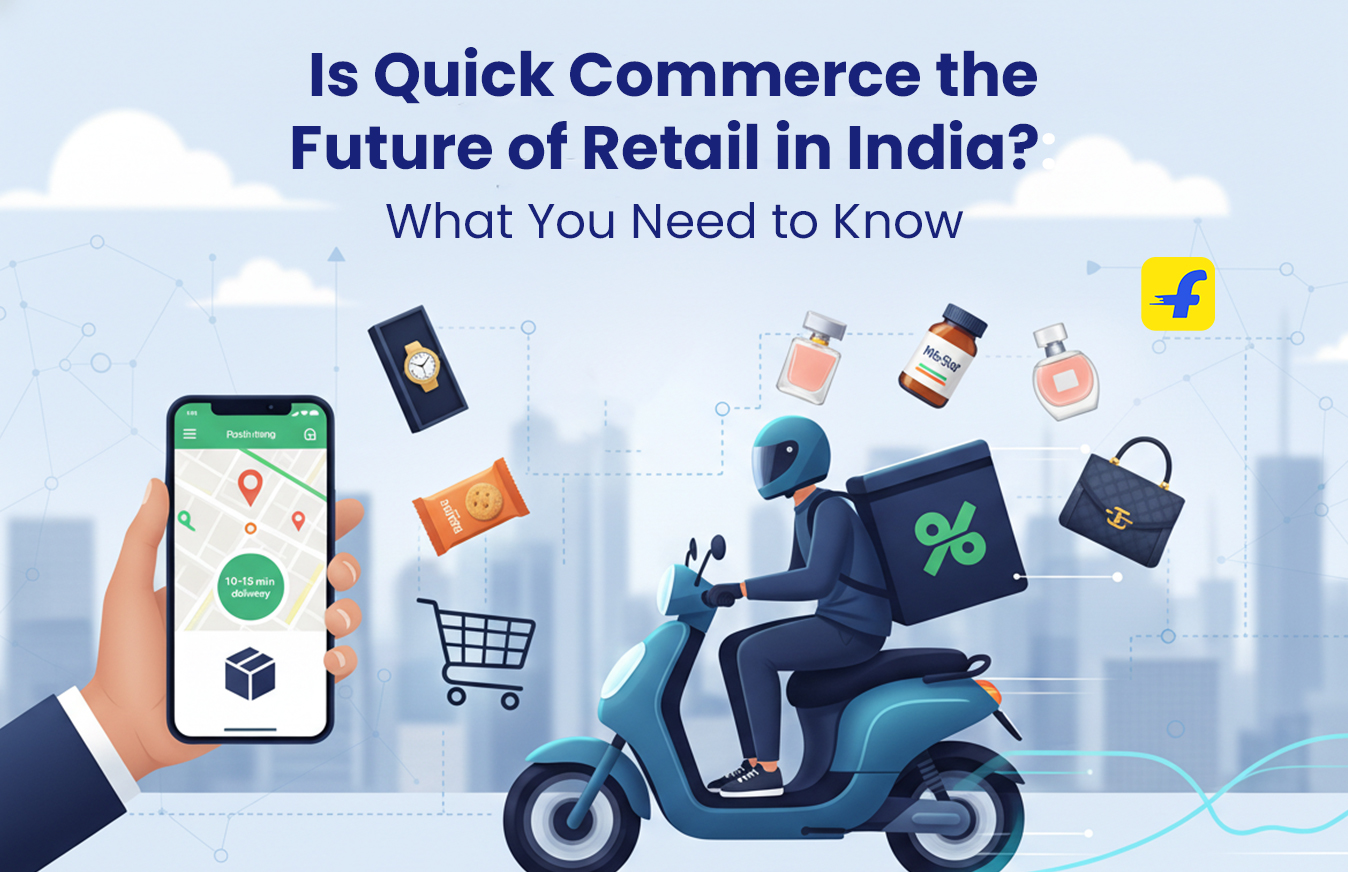
If you’ve been anywhere near the retail or e-commerce world lately, you’ve probably heard the phrase Quick Commerce more times than you can count. And honestly, I get why. As someone working inside a Quick Commerce agency, I see the shift happening up close, right from the way customers think to how brands now plan their supply chain, marketing, and even product packaging.
But is Quick Commerce really the future of retail in India? Or is it just another shiny buzzword that may fade out eventually? Let’s break it down, based on what we’ve been observing across multiple industries, especially in fast-growing markets like Gujarat, Rajasthan, Jaipur, and Tier-1 cities, where on-demand shopping is becoming… well, the norm.
Why Quick Commerce Took Off in India So Quickly
Before we talk about the future, let’s acknowledge the present. India wasn’t traditionally the “I want it right now” kind of market. But look at consumer behaviour today, everything is shortening, be it attention spans, delivery expectations, checkout journeys, and even the patience to compare products.
From groceries to beauty products to medicines, people want things delivered fast. Blame it on busy lifestyles, last-minute plans, or simply convenience, but Quick Commerce stepped in at the right time.
At HRL Infotechs, we’ve seen brands telling us, “We didn’t expect 15-minute delivery to increase our sales this much.” Yet it does. Because once customers know they can get a product almost instantly, they don’t go back to traditional e-commerce timelines.
A Change in Buying Behaviour We Can’t Ignore
Here’s something interesting:
We were studying customer journeys for a skincare client across three cities. Over 40% of repeat purchases happened late evening, between 8 pm and 11 pm. Typically, that’s when traditional stores are closed.
Guess who fulfilled those orders? Quick Commerce platforms.
This is precisely where Quick Commerce in India starts looking less like a “trend” and more like an evolving habit.
Consumers have tasted convenience. And like most comforts in life, once you experience it, it’s hard to let it go.
Brands Are Seeing Quick Commerce as a Revenue Channel, Not an Add-On
A few years back, brands treated Quick Commerce like an experiment. “Let’s try it out,” they’d say.
Today? It’s a full-fledged revenue and visibility channel.
When brands come to us at HRL Infotechs, they don’t ask whether they should be on Quick Commerce platforms; they ask how fast they can scale their presence, optimize listings, manage dark-store supply, and push digital visibility through brilliant paid campaigns.
Quick Commerce is no longer optional. It’s becoming as crucial as marketplaces like Amazon and Flipkart. In some industries like snacks, beverages, and personal care, it’s overtaking them.
Speed Isn’t the Only Selling Point
People assume Quick Commerce is just fast delivery. But honestly, speed is only half the story.
From an agency lens, here’s what we’ve noticed brands really benefit from:
1. Better product visibility
Quick Commerce platforms showcase products within seconds. High-ranking listings lead to high sales simple as that.
2. More impulse buying
This is a big one. Customers don’t “plan” Quick Commerce purchases. That means brands with smart placement and optimized creatives win instantly.
3. Lower cart abandonment
Since the shopping journey barely lasts a minute, drop-offs decrease automatically.
4. Localized demand insights
One of the underrated advantages and one our agency uses heavily is hyperlocal analytics.
What sells in Ahmedabad doesn’t always sell in Jaipur… and Quick Commerce data proves it.
Is This Sustainable? Let’s Be Real.
Now, I’ll be honest. No industry is perfect. Quick Commerce logistics can be intense. Delivery costs matter. Inventory planning is complicated. But even with all that, the model is stabilizing much faster than people expected.
Especially in growing markets, Gujarat, Rajasthan, and metro-adjacent cities, Quick Commerce Industries are innovating rapidly:
- Smaller delivery radiuses
- Micro-warehouses
- Predictive stocking
- One-click reordering
- Automated product recommendations
- AI-powered location-based ads
And agencies like ours are helping brands navigate all of this without drowning in operational work.
Why Brands Need Agencies Now More Than Ever
If you’re thinking, “Okay, but can brands manage Quick Commerce on their own?” they can, but it’s not ideal.
Platforms like Blinkit, Instamart, Zepto… they all have their own processes, ranking algorithms, bidding structures, and inventory cycles. Without optimization, brands get lost in the crowd.
At HRL Infotechs, we’ve seen brands jump from 20 orders a day to 300+ just by fixing their catalogue SEO, pricing strategy, product photography, ad campaigns, and city-level distribution planning.
This is why agencies exist to let brands focus on production and customer experience while we handle the heavy lifting on the digital and operational side.
How Quick Commerce Will Shape the Future of Retail
Let’s talk future because that’s what this blog promised.
Here’s what we believe is coming next in India:
1. Fastest delivery will become standard
Not everywhere, but in metros and upcoming markets like Ahmedabad, Indore, Jaipur, and Surat, absolutely.
2. More niche categories will join the bandwagon
Pet supplies, gifting, electronics accessories… It’s already happening.
3. Offline retail will shift to hybrid models
Local stores will integrate with Quick Commerce platforms to stay competitive.
4. AI-driven demand forecasting will rule inventory
Brands that stock smart will sell more simply because of that.
5. Personalised Quick Commerce ads
Imagine an ad triggered because a platform knows you always order chips after 9 pm. It’s coming.
Conclusion: Is Quick Commerce the Future?
If you ask me or anyone in our agency team, the answer is yes, absolutely. Not because it’s trendy, but because it fits the lifestyle India is moving toward.
Fast, convenient, on-demand retail is becoming normal, not exceptional.
Brands that adapt now will lead the next retail decade. Brands that wait might struggle to catch up later.
And that’s precisely why agencies like HRL Infotechs exist, to help brands step into this new world with strategy, speed, and confidence.