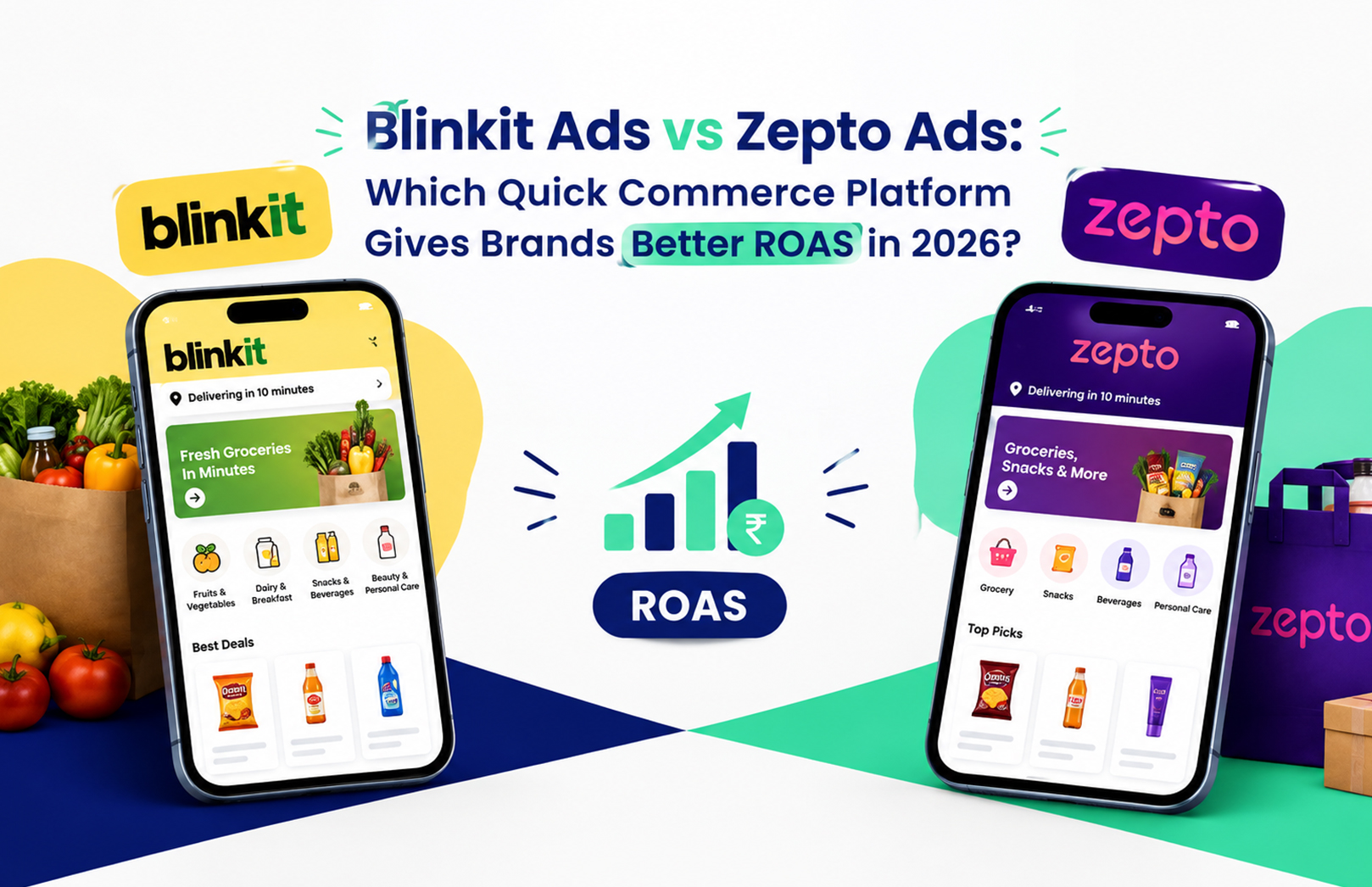
Blinkit Ads vs Zepto Ads: Which Quick Commerce Platform Gives Brands Better ROAS in 2026?


Your Blinkit dashboard says 4.2x ROAS this month. Your Zepto dashboard says 5.1x. Someone on the team suggests pulling budget off Blinkit and pouring it into Zepto, and on paper, that looks obvious. It usually isn’t. Before you move a single rupee, you need to know what each platform actually lets you control, what each ad format costs to run, and which one fits the stage your brand is at right now, not just which dashboard number is bigger this week.

That’s the decision HRL Infotechs works through with D2C and FMCG brands every time a new SKU goes live on quick commerce. This guide breaks down how Blinkit Ads and Zepto Ads work differently, what each format is built for, what a realistic budget looks like, and how to decide where your next rupee should go.

How Do Blinkit Ads Actually Work for Brands?

Blinkit runs advertising through Brand Central, a self-serve dashboard reached from the Ads tab in your Seller Hub. You pick an ad format, set a daily budget and bid, and the campaign goes live without waiting on an account manager. That control is the single biggest reason brands lean on Blinkit Ads first when testing a new category.

Brand Central offers eight formats, and not all of them deserve equal budget. Product Booster sits at the top of search results and category pages, and it’s the workhorse: a new brand should put the bulk of its early spend here because it catches shoppers who are already looking for something in your category. Prime Banner and Brand Spotlight build visibility higher up the funnel, Brand Store gives you a dedicated page within the app, and Recommendation Ads, Product Shelf, E-com Shelf, and Listing Spotlight each target a different moment in the browsing journey. Running all eight on day one spreads a small budget too thin to learn anything useful. Start narrow, see what converts, then widen.

How Does Zepto Advertising Differ From Blinkit’s Setup?

Zepto doesn’t offer the same dashboard-level control. Most sellers set up and manage campaigns through Zepto’s category or brand solutions teams rather than a self-serve portal, which means turnaround on bid changes or new creative can take a few days instead of minutes. If you’re used to Blinkit’s instant edits, this is the adjustment that trips people up first.

What Zepto gives up in speed, it makes up for in placement variety that’s harder to buy elsewhere. Search Takeover lets a brand claim the top result for a specific search term, which is a strong play during a launch week when you want category-defining visibility. Swap and Save targets shoppers at the cart stage, nudging them toward your product as a substitute or add-on right before checkout, a format that plays to impulse buying in a way Blinkit’s search-first formats don’t. If your category lives on impulse purchases, snacks, beverages, personal care, a well-placed Zepto Ads campaign can out-convert a straightforward search ad.

Blinkit Ads vs Zepto Ads: What Do They Actually Cost?

Neither platform publishes an official rate card, and figures quoted by different agencies vary enough that you should treat any number here as a planning range, not a guarantee.

  • Blinkit doesn’t enforce a fixed minimum. Brand Central lets you set a daily budget as low as a few hundred rupees to test, but most agencies find you need somewhere between ₹50,000 and ₹2-3 lakh a month before you’re seeing enough volume to make confident bidding decisions, especially in competitive categories like snacks or personal care.
  • Zepto typically asks for a larger upfront commitment, often bundling homepage banners, in-feed placements, and a brand store into a package, with agency-reported figures starting around ₹5-6 lakh. That’s a judgment call worth making early: a smaller D2C brand testing Zepto for the first time should go in knowing the entry cost is structurally higher than Blinkit’s.
  • Click costs on Product Booster typically fall between ₹2 and ₹15, depending on how contested your category is. Zepto’s search and swap formats tend to sit at the lower end of that range in less competitive categories, though that gap narrows fast once a few national brands start bidding on the same keywords.

Which Platform Gives Brands Better ROAS in 2026?

There isn’t a single winner. Blinkit tends to deliver steadier, more predictable ROAS because of its wider store footprint and the self-serve control that lets you cut a losing keyword the same day you spot it. Zepto tends to win on cheaper clicks and faster trial in the handful of dense metro markets where its dark store network is strongest.

What decides it for most brands we work with comes down to three questions:

  1. Does your demand sit mostly in metros, or does it stretch into tier 2 cities? Blinkit’s broader store network keeps ROAS more consistent outside the top six cities.
  2. Are you launching a new SKU or scaling a proven one? A first-order ROAS under 2x on a new product isn’t a failure signal on either platform. Judge launches on repeat purchase over four to six weeks, not week-one numbers.
  3. What’s your testing budget? If you’re working with under ₹1 lakh a month, Blinkit’s lower entry point and granular controls make it easier to learn fast without overcommitting.

One judgment call that catches newer sellers out: a strong ROAS number on either platform can mask a stock problem. If your product is out of stock at the dark stores closest to where your ads are serving, you’re paying for impressions that can never convert, and raising your bid only makes the math worse. Checking fill rate by pincode before touching a bid is a step worth building into your weekly routine, something we’ve written about in more detail in our guide to reducing out-of-stock penalties on Blinkit and Zepto ads.

How Should You Split Budget Between the Two?

A reasonable starting split for a brand selling nationally is 60-70% on Blinkit and 30-40% on Zepto, then rebalance every two weeks based on which platform is actually returning margin, not just which one shows the bigger ROAS figure. Tilt harder toward Zepto if your sales are concentrated in Mumbai, Bengaluru, or similarly dense metros, or if you’re pushing a new product and want the visibility that Search Takeover buys you during launch week.

The trade-off worth remembering: chasing the higher headline number without checking where your actual customers live is how brands end up overspending on a platform that simply doesn’t reach them. We’ve also found that discount-led campaigns underperform visibility-led ones once a brand has decent reviews in place, a pattern we cover in why visibility matters more than discounts in Zepto ads.

A Practical Starting Checklist

Before you commit a full month’s budget to either platform, run through this sequence:

  1. Pull SKU-level ad data from both dashboards and check fill rate at the pincode level, not just overall stock status.
  2. Put 80-90% of new Blinkit spend into Product Booster on your top two or three SKUs before touching the awareness formats.
  3. Confirm with your Zepto account contact which launch formats, like Search Takeover, are actually open to your brand and category.
  4. Set a review cadence of two weeks, not one, since Zepto’s account-led changes take longer to show results.
  5. Track repeat purchase rate for any new SKU for at least four weeks before calling a launch campaign a win or a loss.

If working through that list surfaces more questions than answers, especially around what your real margin looks like once commission and ad spend are both accounted for, that’s usually the sign to bring in a team that manages this daily rather than guessing with each platform’s dashboard numbers. HRL Infotechs runs this exact audit for brands across both platforms, and you can start with a free quick commerce ads audit to see where your current spend is actually working.

Frequently Asked Questions

Q1. Is Zepto Ads self-serve like Blinkit?
A1. Not fully. Blinkit runs campaigns through Brand Central, a self-serve dashboard where you control bids directly. Zepto advertising has typically gone through category or brand solutions teams, so changes can take a few days rather than minutes. Access terms shift, so confirm the current process with your Zepto contact before setting a testing timeline.

Q2. What is the minimum budget to start advertising on Blinkit?
A2. Blinkit doesn’t publish an official minimum, and Brand Central lets you start with a small daily budget. In practice, most brands need roughly ₹50,000 to ₹2-3 lakh a month to gather enough clicks per keyword to make confident bidding decisions, especially in competitive categories.

Q3. How does Blinkit Brand Central work?
A3. Brand Central is Blinkit’s self-serve advertising platform, reached from the Ads tab in your Seller Hub. It covers eight formats, including Product Booster for search and category placements and Brand Store for a dedicated brand page, and reports impressions, clicks, and ROAS in real time.

Q4. What is Zepto Search Takeover?
A4. Search Takeover is a Zepto ad format that lets a brand claim the top result for a chosen search term, giving it category-defining visibility during that search. It’s commonly used during product launches or sale events when a brand wants to dominate a specific keyword rather than compete for it via standard bidding.

Q5. Should a new product launch on Blinkit or Zepto first?
A5. It depends on where your buyers are concentrated. Brands with strong metro demand often see faster trial on Zepto, helped by formats like Search Takeover. Brands with national or tier 2 reach usually get more consistent results from Blinkit’s wider store network. Many brands launch on both and weight spend by city performance.

Q6. Why might ROAS drop even when bids haven’t changed?
A6. Stock availability is the most common cause. Ads only serve where inventory is physically present at the dark store, so patchy stock wastes impressions and drags down conversion even with an unchanged bid. Checking fill rate pincode by pincode, before adjusting any bid, usually resolves this faster than a bidding fix would.
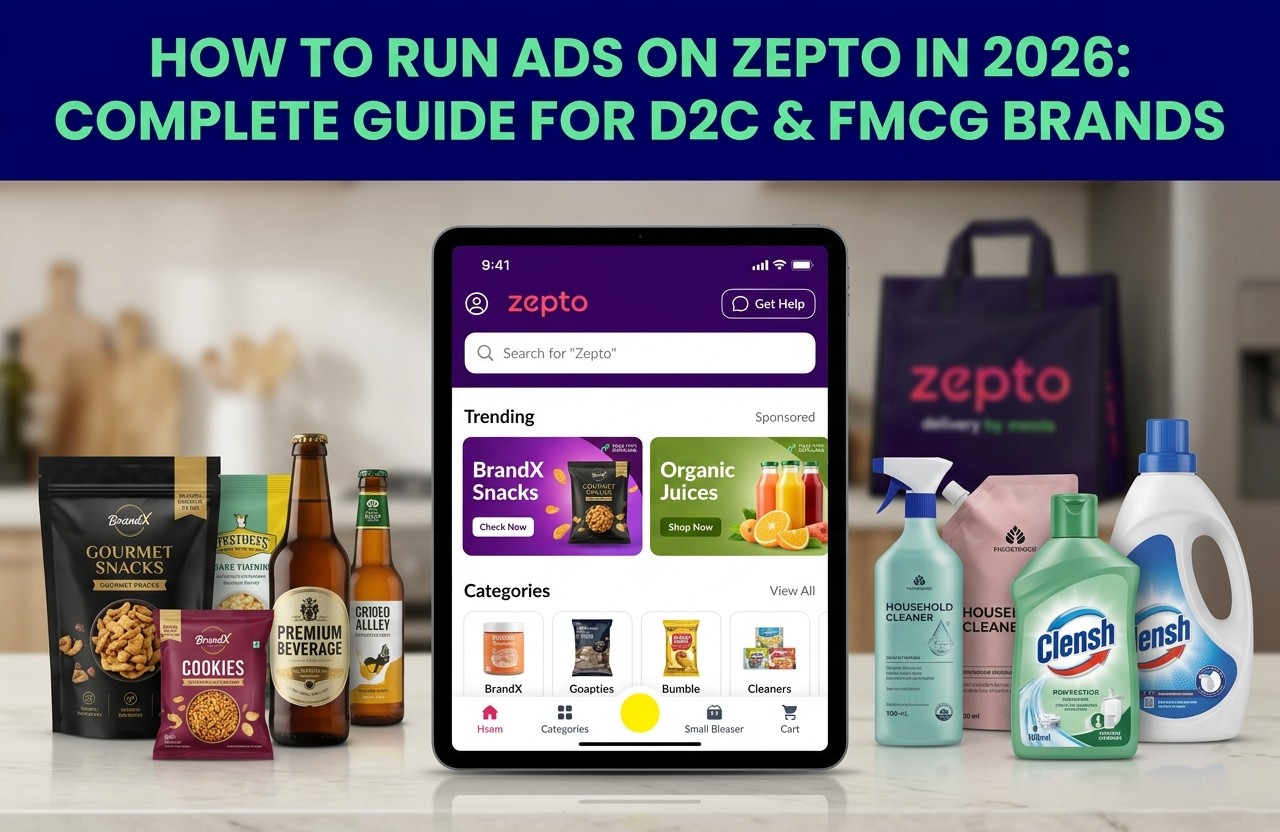
How to Run Ads on Zepto in 2026: Complete Guide for D2C & FMCG Brands


Quick commerce has changed how Indian shoppers discover and buy groceries, snacks, and daily essentials. For D2C and FMCG brands, Zepto is no longer just a delivery app; it is a powerful performance marketing channel where the right zepto ads strategy can drive visibility, trials, and repeat purchases at scale.

If you are planning how to run ads on Zepto in 2026, you need more than a basic overview. You need a practical zepto advertising guide that covers campaign structure, targeting, budgets, and optimization specifically for Indian consumers and retail realities. This complete guide will walk you through everything from seller onboarding to advanced zepto campaign management.

Understanding Zepto Ads Strategy For D2C & FMCG Brands

Before launching campaigns, it is important to understand how a strong zepto ads strategy fits into your broader quick commerce advertising services mix. Zepto is a high-intent platform where users are already in buying mode, which means your ads can influence decisions right at the digital shelf.

Most top-performing brands treat Zepto as a hybrid of marketplace and retail media. Your zepto ads guide 2026 should focus on three pillars: discoverability, share of shelf, and conversion. When these are aligned with your pricing, inventory, and promotions, your media spends start translating into measurable revenue.

Setting Up For Success: Zepto Seller Onboarding & Readiness

Before you think about creative or bids, you must ensure your presence as a seller is strong. Zepto seller onboarding services and zepto account management services are often the foundation for sustainable performance, especially for brands with large catalogs or multiple SKUs.

During onboarding, pay attention to product titles, images, and taxonomy. A winning zepto ads strategy will fail if your listings are incomplete, wrongly categorized, or out of stock. Treat your catalog setup as the first step of your zepto advertising guide, not a back-end task to be rushed.

Catalog Hygiene And Content Optimization

Clean, optimized product data is critical for both organic and paid visibility. When planning how to run ads on Zepto, start by auditing your catalog for naming consistency, pack size clarity, and keyword relevance that matches how Indian shoppers search.

Use clear product titles, high-resolution pack shots, and concise descriptions that highlight benefits such as health, taste, convenience, or value. This approach supports your zepto ads for sellers by improving click-through rates and reducing wasted impressions on irrelevant queries.

Inventory, Pricing, And Availability Alignment

Quick commerce shoppers expect instant fulfillment. If your ads drive traffic to items that are frequently out of stock or overpriced compared to competitors, your zepto ads strategy will underperform. Align inventory planning with campaign calendars and promotional pushes.

Coordinate with your supply and sales teams to ensure priority SKUs have stable stock and competitive pricing. This alignment is especially important for zepto ads for FMCG brands, where competition is intense and shoppers often compare similar items within seconds.

Core Zepto Advertising Formats And Placements

Understanding available formats is central to any zepto advertising guide. While specific names and layouts may evolve by 2026, the core logic of placements remains similar: visibility at search, category, and product levels, plus occasional homepage or banner opportunities.

Each format serves a different role in your zepto ads strategy. Some are better for awareness and share of shelf, while others are designed for bottom-funnel conversion. The right mix depends on your brand maturity, category, and seasonal priorities.

Search And Category Sponsored Listings

Search and category placements are usually the backbone of how to run ads on Zepto effectively. These ads appear when users search for generic terms like “atta” or “chips” or browse within a category such as dairy, beverages, or personal care.

For D2C and FMCG brands, prioritize high-intent keywords and categories where you have strong product-market fit. Use your zepto campaign management data to identify which terms drive the best balance of volume, cost per acquisition, and repeat purchase.

Product Detail Page And Cross-Sell Placements

Product detail page placements help you intercept shoppers who are considering competitor SKUs. These are powerful for brand switching, new launches, and premiumization strategies within your zepto ads strategy.

Cross-sell and recommendation slots are also valuable for basket building. For example, pairing sauces with snacks or beverages with ready-to-eat meals. Use these placements to increase average order value while staying relevant to the shopper’s mission.

Building A High-Performance Zepto Ads Strategy In 2026

Once your foundations are ready, you can design a structured zepto ads strategy that aligns with your business goals. In 2026, data-driven planning and continuous optimization will separate average performers from category leaders on Zepto.

Think of your plan as a living zepto advertising guide that evolves every quarter. As competition grows and consumer behavior shifts, you will need to revisit targeting, budgets, and creative regularly to maintain your edge in quick commerce advertising services.

Defining Objectives, Budgets, And Targeting

Start by defining clear objectives: are you focused on new user acquisition, market share in a specific pin code, or driving trials for a new variant. Your goals will influence how to run ads on Zepto and how aggressively you bid on priority placements.

Allocate budgets by category, city, and product line, then refine based on performance data. Use geo-level insights to prioritize high-potential neighborhoods and store clusters. This structured approach supports scalable zepto ads for sellers across multiple regions.

Creative Strategy And Offer Design

Even in a performance-driven environment, creative matters. Pack visibility, offer clarity, and messaging all impact click-through and conversion. Your zepto advertising guide should include clear rules for using discounts, combo packs, and limited-time offers.

Test different hooks such as “family value packs”, “low sugar”, or “ready in 2 minutes” depending on your category. For FMCG and D2C brands, small creative tweaks can significantly improve results without increasing media spends.

Ongoing Zepto Campaign Management And Optimization

Launching campaigns is only the beginning. Effective zepto campaign management requires weekly and monthly reviews, especially in a dynamic market like India where demand patterns change with festivals, weather, and local events.

Use performance dashboards to track impressions, clicks, conversion rates, and return on ad spend. Over time, this data becomes the backbone of your evolving zepto ads strategy and helps you justify higher investments in winning segments.

Key Metrics And Optimization Levers

Focus on a few core metrics: cost per acquisition, share of voice on priority keywords, and contribution to overall category sales. These indicators show whether your zepto ads for FMCG brands are genuinely moving the needle or just adding noise.

Optimization levers include bid adjustments, negative keyword refinement, creative refresh, and assortment changes. For example, you might shift spends from low-margin SKUs to higher-value packs once you see stable repeat purchase behavior.

When To Consider A Zepto Advertising Agency Partner

As your scale grows, managing everything in-house can become complex. This is where specialized zepto advertising agency partners or zepto marketing services India providers can add value with deeper platform expertise and dedicated resources.

Look for partners who understand both performance marketing and modern trade dynamics. They should help with zepto account management services, campaign planning, reporting, and experimentation so your internal teams can focus on brand and product strategy.

Future-Proofing Your Zepto Ads Strategy For 2026 And Beyond

Quick commerce will continue to evolve, with new formats, data capabilities, and competition. A resilient zepto ads strategy in 2026 will be flexible, insight-led, and closely integrated with your broader ecommerce and offline retail plans.

Invest in building internal knowledge, documenting learnings, and running structured experiments. Over time, your own data will become the most valuable part of your zepto advertising guide, helping you make smarter decisions than competitors who rely only on generic best practices.

Conclusion: Turning Zepto Into A Growth Engine

Zepto offers D2C and FMCG brands a rare combination of high intent, rich shopper data, and rapid experimentation. With the right zepto ads strategy, strong catalog foundations, disciplined zepto campaign management, and smart use of quick commerce advertising services, you can turn the platform into a consistent growth engine.

If you are ready to scale your presence and want expert support on how to run ads on Zepto effectively across India, partnering with a specialist like HRL Infotechs can help you move faster, reduce waste, and unlock the full potential of quick commerce for your brand.

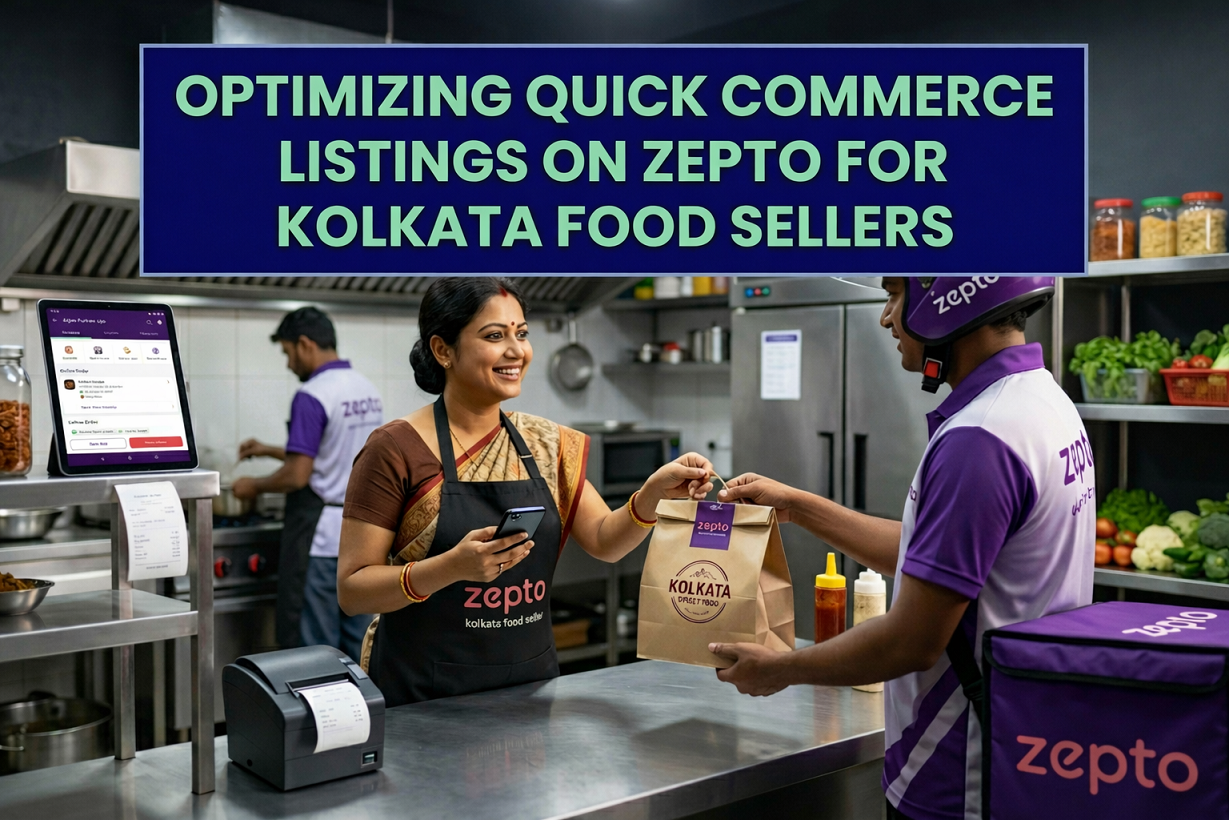
Optimizing Quick Commerce Listings on Zepto for Kolkata Food Sellers


Kolkata’s food scene is booming on quick commerce platforms, and Zepto is fast becoming a preferred channel for discovery and delivery. Yet many local food brands, cloud kitchens, and restaurants still treat Zepto like a simple listing site, not a performance-driven sales engine. With the right zepto seller listing optimization strategy, you can rank higher, get more visibility, and convert more hungry customers in minutes.

This guide breaks down practical, India-specific tactics for quick commerce listing optimization India, tailored for Kolkata food sellers. You will learn how to structure your catalog, optimize content, and use data to boost your presence on Zepto, while aligning with how hyperlocal delivery Kolkata food business models actually work on the ground.

Understanding Zepto’s Quick Commerce Ecosystem for Kolkata Food Sellers

Before you dive into zepto seller listing optimization, it is crucial to understand how Zepto operates as a hyperlocal marketplace. Zepto connects nearby customers with local food brands, grocery stores, and cloud kitchens, prioritizing speed, availability, and relevance. For Kolkata, this means your listings compete within tight delivery radiuses, not against the entire city at once.

The zepto business model India focuses on fast fulfillment and high order frequency, so the algorithm tends to reward sellers who maintain strong inventory, accurate information, and high customer satisfaction. This makes ecommerce product listing optimization India not just a marketing task, but a core operational strategy that directly influences your visibility and sales.

Mapping Search Intent and Customer Behavior on Zepto

Most customers on Zepto are in a high-intent, low-patience mode. They are not browsing for fun; they want to order food or essentials quickly. That is why zepto seller listing optimization must align with transactional and commercial intent, not just informational content. Your titles, descriptions, and images should help users decide in seconds.

In Kolkata, customers often search by cuisine, dish type, or occasion, such as “biryani near me,” “evening snacks,” or “sweet dishes.” When you plan how to sell on zepto India, you should mirror these patterns in your product naming and categorization. This helps Zepto’s internal search surface your items when users type common, intent-driven queries.

Key Intent Signals to Use in Your Listings

To optimize product listings quick commerce style, you must embed intent signals directly into your catalog. Think about what your ideal customer is trying to achieve: a quick lunch, a family dinner, or a late-night snack. Then reflect that intent in your product titles and tags, while keeping them short and scannable.

For example, instead of listing a generic “Chicken Biryani,” you might use “Chicken Biryani – Single Serve Lunch” or “Family Pack Chicken Biryani – 3 to 4 People.” This simple zepto seller strategy India helps customers instantly understand portion size and use case, which improves click-through and conversion rates.

Core Principles of Zepto Seller Listing Optimization

Effective zepto seller listing optimization starts with a clear structure for each item: title, image, description, tags, and pricing. Each element should work together to communicate value, reduce confusion, and match how users search. When done right, quick commerce listing optimization India can significantly improve your ranking within your delivery zone.

Focus on clarity over creativity in your core listing fields. While branding is important, your first priority is to help Zepto’s algorithm and your customers quickly understand what you sell. This is the foundation of ecommerce product listing optimization India, regardless of whether you sell biryani, rolls, sweets, or snacks.

Optimizing Titles and Descriptions for Zepto Search

Your product titles should be concise, descriptive, and keyword-aware without feeling spammy. Include dish name, key attribute, and sometimes portion or occasion. This supports zepto seller listing optimization while keeping the title readable on small screens. Avoid all caps, excessive punctuation, or vague names that do not describe the item.

Descriptions should add context that titles cannot carry. Use one or two short paragraphs to highlight ingredients, spice level, portion size, and any regional specialty angle. This approach to optimize product listings quick commerce style helps reduce returns, complaints, and cart abandonment, because customers know exactly what to expect.

Using High-Impact Images for Faster Conversions

On quick commerce platforms, images often decide whether a user taps your listing or scrolls past. Invest in clear, well-lit photos that show the actual portion and plating style. For Kolkata food sellers, authentic visuals of local dishes can be a powerful differentiator in zepto seller listing optimization.

Avoid cluttered backgrounds or heavy text overlays. Instead, use consistent angles and framing across your catalog, so your storefront looks cohesive. This visual consistency supports your overall zepto seller strategy India and builds trust, especially for new customers who have never tried your brand offline.

Catalog Structuring and Pricing for Quick Commerce Success

Beyond individual items, how you structure your catalog plays a major role in quick commerce listing optimization India. Group items logically by meal type, cuisine, and price bands. This helps users quickly discover relevant options and encourages higher average order values through smart cross-selling.

For example, you can create clear clusters such as “Combo Meals,” “Office Lunch Specials,” and “Evening Snacks.” This structure supports zepto seller listing optimization because it aligns with how customers think and browse under time pressure. It also makes it easier to run targeted promotions around specific use cases.

Smart Pricing and Bundling Strategies

Pricing on Zepto must balance competitiveness with profitability, especially in a price-sensitive market like India. Consider offering tiered portions and combo deals that feel like value upgrades rather than discounts. This is a practical way to apply ecommerce product listing optimization India principles to your menu.

Bundles such as “Roll + Beverage,” “Starter + Main,” or “Dessert Add-on” can increase ticket size without overwhelming the customer. When you design these bundles with clear naming and images, they support zepto seller listing optimization by improving click-through and repeat order rates.

Localizing Your Zepto Strategy for the Kolkata Market

While general advice on how to sell on zepto India is useful, Kolkata has its own flavor preferences, price expectations, and peak order times. Tailoring your zepto seller listing optimization to this local context can give you an edge over national chains that use generic strategies.

Highlight regional favorites like rolls, biryani, fish preparations, and sweets in prominent catalog positions. Use descriptions that reference local tastes, such as “lightly spiced,” “Kolkata-style,” or “Durga Puja special.” This localized quick commerce listing optimization India approach helps your brand feel more relevant to nearby customers.

Aligning with Hyperlocal Delivery Patterns

Hyperlocal delivery Kolkata food business dynamics mean your performance can vary by neighborhood, time of day, and even weather. Track which items sell best in different zones and adjust your catalog accordingly. This data-driven approach strengthens your zepto seller strategy India over time.

For instance, office-heavy areas may respond better to quick lunch combos, while residential zones might favor family packs and evening snacks. By aligning your zepto seller listing optimization with these patterns, you improve both customer satisfaction and operational efficiency.

Measuring, Testing, and Iterating Your Zepto Listings

No zepto seller listing optimization strategy is complete without continuous measurement. Monitor impressions, clicks, conversion rates, and repeat orders for your top items. Small changes to titles, images, or descriptions can produce meaningful improvements in performance.

Adopt a test-and-learn mindset. Try alternative naming structures, new images, or revised descriptions for a subset of products. Over time, this disciplined approach to optimize product listings quick commerce style will compound into higher visibility, stronger rankings, and more stable revenue from Zepto.

Key Optimization Checklist for Kolkata Food Sellers

To keep your efforts organized, maintain a simple checklist you review weekly or monthly. This ensures your zepto seller listing optimization work stays consistent, even as your menu evolves or seasons change. A structured routine also helps new team members follow best practices.

Include tasks such as checking stock accuracy, refreshing images for bestsellers, updating descriptions for clarity, and revisiting pricing or bundles. When you treat quick commerce listing optimization India as an ongoing process, not a one-time project, you build a resilient presence on Zepto that can weather competition and market shifts.

Conclusion: Turning Zepto into a Growth Engine for Your Kolkata Food Brand

Zepto is more than a delivery channel; it can be a powerful growth engine when you approach zepto seller listing optimization strategically. By aligning your titles, images, descriptions, pricing, and catalog structure with local customer intent, you transform casual visibility into consistent orders and loyal repeat buyers.

If you want expert support in quick commerce listing optimization India, from data-backed catalog structuring to conversion-focused content, partnering with a specialized digital team can accelerate your results and help your Kolkata food business dominate hyperlocal delivery. HRL Infotechs can guide you through that journey with proven ecommerce product listing optimization India frameworks tailored to Zepto and other quick commerce platforms.

Why Zepto Advertising Strategies is a Game-Changer for FMCG Brands in Jaipur


If you had told a Jaipur-based FMCG brand five years ago that people would order milk, chips, or toothpaste on their phone and expect it at their door in ten minutes, they’d probably laugh it off. Jaipur doesn’t rush, right?

Well… not anymore.

Something has quietly changed. People still love their local stores, but they’ve also gotten used to convenience. That late-night snack craving, that “we’re out of cooking oil” moment, those aren’t planned purchases anymore. They’re impulse decisions. And that’s exactly where Zepto steps in.

For FMCG brands in Jaipur, Zepto isn’t just another delivery app. It’s turning into one of the most effective marketing touchpoints available right now.

Jaipur’s FMCG Buying Habits Are Shifting, Slowly, Then Suddenly

Jaipur doesn’t change overnight. It never has. But when change happens here, it sticks.

In areas like Mansarovar, Jagatpura, Vaishali Nagar, and Malviya Nagar, Zepto orders have become part of daily routines. Not weekly grocery planning, daily needs. Bread in the morning. Cold drinks in the afternoon. Ice cream at night.

This shift is why Quick commerce advertising works so differently from traditional digital ads. You’re not interrupting someone scrolling mindlessly. You’re showing up when they’re already buying.

That difference matters more than most brands realize.

Why Zepto Advertising Feels Different (Because It Is)

Most platforms focus on discovery. Zepto focuses on urgency.

When someone opens Zepto, they’re not exploring options for fun. They want something now. That makes Zepto advertising for FMCG brands incredibly effective, because the intent is already there.

A sponsored product on Zepto isn’t fighting for attention. It’s simply nudging a decision that’s already in progress. And those nudges convert far better than flashy banners ever will.

Honestly, it feels less like advertising and more like placement, and that’s the sweet spot.

FMCG Marketing on Zepto Fits Real-Life Buying Behavior

Here’s the thing about FMCG marketing on Zepto: it mirrors how people actually shop.

Customers don’t think in terms of “brands” all the time. They think in terms of needs. Cooking oil. Biscuits. Soap. When your product appears right at that moment, the decision is quick and instinctive.

There’s no long comparison. No deep research. Just recognition and trust.

And if your brand shows up consistently? That trust builds faster than you’d expect.

Zepto Ads for FMCG Companies Work Best When They’re Subtle

One mistake brands often make is trying to push too hard.

Zepto doesn’t reward aggressive messaging. It rewards relevance. Zepto ads for FMCG companies perform best when they blend naturally into search results or category views.

A familiar pack size. A reasonable price. A product that feels like the obvious choice.

Sometimes the best-performing campaign doesn’t even look like an ad. And that’s kind of the point.

Hyperlocal Advertising in Jaipur Is Where the Real Advantage Lies

Jaipur isn’t one uniform market. Anyone who’s worked here knows that.

Consumption patterns vary wildly between neighborhoods. A college-heavy area behaves differently from a residential colony. Festive demand shifts from one zone to another.

That’s why Hyperlocal advertising in Jaipur through Zepto is so powerful. Brands can focus spend where demand actually exists, instead of wasting budget across the city.

For regional FMCG players, this levels the playing field. You don’t need national-scale budgets. You need smart local visibility.

Why Working With a Zepto Advertising Agency in Jaipur Helps

Running ads on Zepto isn’t complicated, but running them well takes understanding.

A local Zepto advertising agency in Jaipur brings something dashboards can’t: context. They know which SKUs move faster, which price points work in which localities, and when demand spikes unexpectedly.

They also know when not to advertise, something many brands overlook.

Agencies like HRL Infotechs focus on aligning Zepto campaigns with real FMCG behavior, not just chasing impressions. That practical, ground-level thinking is what keeps campaigns profitable instead of experimental.

Large-scale campaigns are not the focus of Zepto’s marketing strategy.

Loud launches and heavy discounts are rare components of a successful Zepto marketing strategy. Usually, it is based on small, regular choices:

  • Only fast-moving SKUs are promoted
  • Timing visibility around daily demand peaks
  • Staying present consistently rather than in brief spurts
  • Focusing on recurring orders rather than one-time clicks

Although it doesn’t feel thrilling, this kind of approach is effective. Additionally, in FMCG, dull consistency frequently triumphs over ostentatious concepts.

Why Quick Commerce Advertising Makes Sense for FMCG

FMCG products thrive on habit. Zepto thrives on habit too.

That overlap is why the Quick Commerce advertising agency fits FMCG brands so naturally. When people reorder the same essentials every few days, visibility becomes familiarity. Familiarity becomes preference.

Over time, your brand doesn’t need to convince. It just needs to be there.

Jaipur Brands Still Have Time, But Not Forever

Here’s the honest truth: Zepto advertising in Jaipur isn’t overcrowded yet.

Competition exists, but it’s manageable. Costs are still reasonable. Visibility is still achievable without burning budgets.

Brands that start now get time to learn what works, what doesn’t, and which products deserve focus. Brands that wait will enter later, when everyone is fighting for the same space.

Early movers don’t always win, but late movers almost always struggle.

Final Thoughts: Zepto Is Quietly Changing the Game

Zepto isn’t shouting about disruption. It’s just delivering groceries faster and changing behavior along the way.

For FMCG brands in Jaipur, that shift opens up a rare opportunity: high-intent customers, hyperlocal reach, and advertising that feels natural instead of forced.

With the right approach and the right Zepto advertising agency in Jaipur, this isn’t just another channel. It’s a chance to grow where attention is still affordable.

And sometimes, the biggest growth opportunities don’t come with noise.
They arrive quietly in ten minutes.