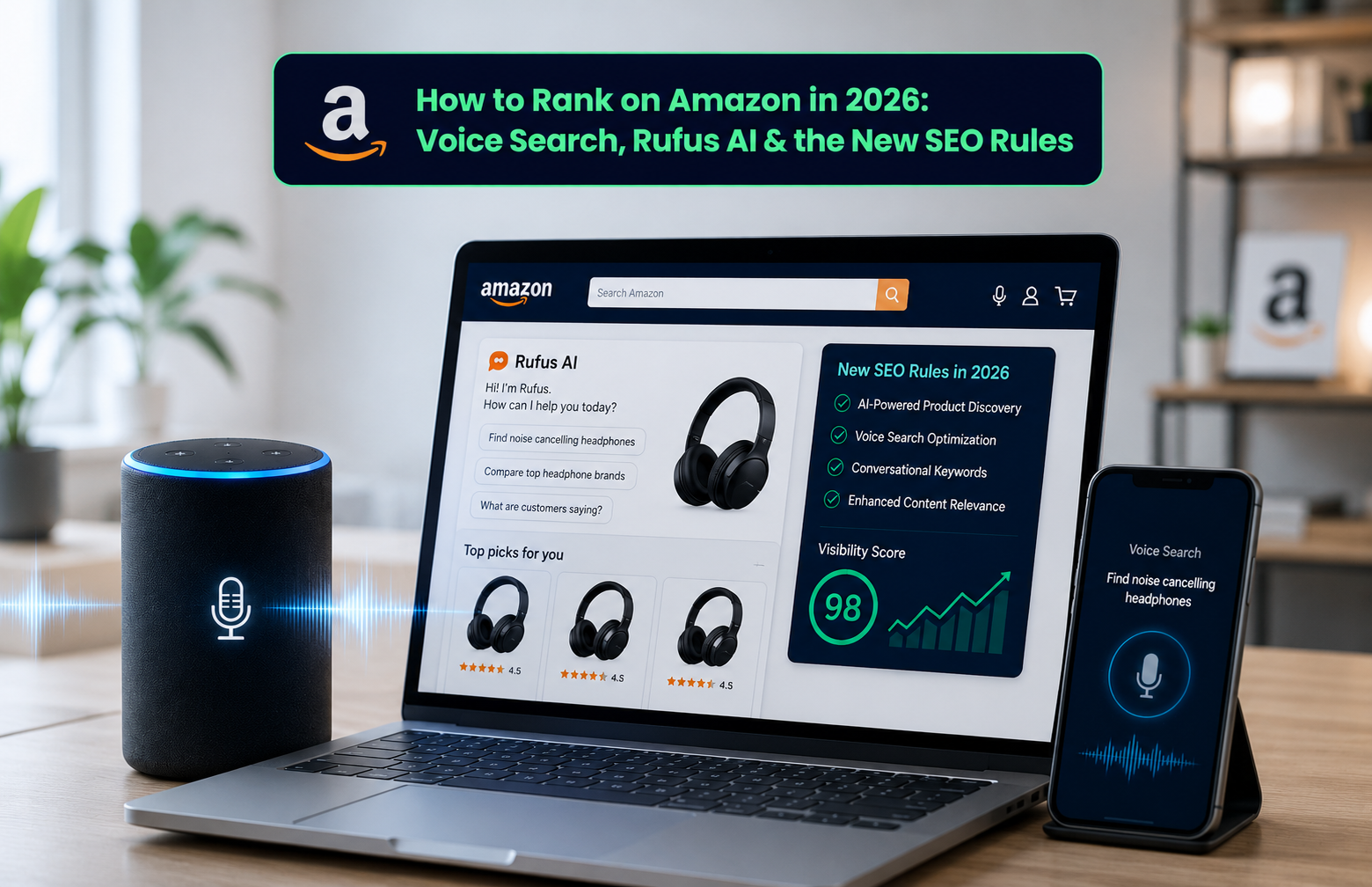
Ranking on Amazon in 2026 is no longer just about stuffing keywords into your product title and hoping for the best. With voice search, Rufus AI, and new Amazon SEO rules shaping how shoppers discover products, sellers need a smarter, data-led strategy to stay visible and profitable.
If you are serious about growth, you must understand how to rank on Amazon 2026 using updated Amazon ranking factors, AI-driven recommendations, and customer intent signals. This guide breaks down what has changed, what still matters, and how to future-proof your Amazon SEO and product listing optimization for the Indian and global marketplace.
Understanding How to Rank on Amazon 2026 After the Latest Algorithm Shifts
To understand how to rank on Amazon 2026, you first need clarity on how the Amazon algorithm evaluates products today. The platform is moving from simple keyword matching to intent-based, AI-enhanced ranking that blends relevance, performance, and customer experience signals.
Recent Amazon algorithm updates focus heavily on whether a listing truly solves the shopper’s need. That means your Amazon SEO and products listing optimization must align with search terms, click behavior, conversion rates, and post-purchase satisfaction. Sellers who ignore these signals will slowly lose visibility, even if their prices look attractive.
Core Amazon Ranking Factors You Cannot Ignore in 2026
Modern Amazon ranking factors are a mix of classic SEO elements and new AI-driven signals. While keywords still matter, the algorithm now evaluates how well your listing performs for those queries over time. This performance-led approach rewards consistent quality and penalizes weak experiences.
Key elements that influence how to rank on Amazon 2026 include:
- Relevance of title, bullets, description, and backend keywords
- Click-through rate from search results and ad placements
- Conversion rate and add-to-cart behavior
- Pricing competitiveness and promotions
- Ratings, reviews, and return rates
- Inventory health and fulfillment method
What the Latest Amazon Algorithm Update Means for Sellers
The most recent Amazon algorithm update integrates more behavioral data and AI scoring into rankings. Instead of treating all listings with similar keywords equally, the system surfaces products that consistently satisfy buyers and match their intent across devices and channels.
For Indian sellers, this means you must track how your listings perform for mobile, desktop, and voice queries. If your listing attracts clicks but fails to convert or gets poor reviews, your visibility will drop. Understanding these shifts is essential if you want to master how to rank on Amazon 2026 in a sustainable way.
Amazon Rufus AI: How Does Amazon Rufus Affect Ranking?
Rufus AI is Amazon’s conversational shopping assistant that helps customers discover products using natural language queries. Instead of typing short keywords, shoppers can ask detailed questions, and Rufus AI recommends products based on context, intent, and historical data.
This changes how to rank on Amazon 2026 because your listing now needs to be understandable not only to the algorithm but also to Rufus AI. The system reads your content, maps it to user questions, and decides whether your product is a strong match for a specific use case or problem.
Rufus Amazon SEO: Optimizing Listings for Conversational Queries
Rufus Amazon SEO focuses on making your content clear, structured, and aligned with real customer language. Instead of only targeting short keywords, you should weave in natural phrases that match how people speak when they ask questions about your product category.
To align with Amazon Rufus AI and improve how to rank on Amazon 2026, consider:
- Answering common questions directly in bullet points and descriptions
- Using benefit-led language that explains who the product is for
- Including use cases, scenarios, and problem-solution statements
- Structuring content so Rufus can easily extract key details
How Does Amazon Rufus Affect Ranking in Competitive Niches?
In competitive categories like electronics, beauty, and home improvement, Rufus AI can be the difference between being recommended or ignored. When shoppers ask detailed questions, Rufus prioritizes listings that clearly match those needs and have strong performance metrics.
If you want to master how to rank on Amazon 2026 in such niches, you must combine traditional Amazon SEO and products listing optimization with conversational content. Listings that sound human, answer questions, and demonstrate expertise will gain more visibility in Rufus-powered recommendations.
Does Voice Search Impact Amazon SEO in 2026?
Voice search Amazon optimization is no longer optional. With more shoppers using smart speakers and mobile voice assistants, queries are becoming longer, more conversational, and more intent-driven. This directly affects how to rank on Amazon 2026 across categories.
Voice queries often sound like real questions instead of short phrases. Instead of searching for “wireless headphones,” a shopper might say, “Which wireless headphones are best for online classes and calls under 3000 rupees?” Your listing must be ready to match that level of detail.
Best Practices for Voice Search Amazon Optimization
To align with voice search behavior and improve your Amazon SEO, you need to think beyond basic keyword placement. The goal is to make your listing the best possible answer to a spoken question, not just a text query.
Practical steps include:
- Incorporating long-tail, question-style phrases into bullets and descriptions
- Highlighting price ranges, use cases, and key benefits clearly
- Using simple, natural language that voice systems can interpret easily
- Ensuring your main images and titles quickly confirm relevance after a voice-led click
Advanced Amazon SEO and Products Listing Optimization Strategies
To truly master how to rank on Amazon 2026, you must treat each listing like a conversion-focused landing page. Every element, from title to A+ content, should work together to attract, inform, and convince the shopper to buy.
Modern Amazon SEO and products listing optimization goes beyond keywords. It includes storytelling, trust-building, and data-backed testing. Sellers who continuously refine their content based on performance data will stay ahead of algorithm updates and AI-driven changes.
Structuring High-Converting Product Listings
A strong listing structure is essential for both the algorithm and the shopper. The title should include primary keywords and core attributes, while bullet points should address benefits, features, and objections in a clear order.
Your description and A+ content can then expand on the story, showcase use cases, and build trust. When you align this structure with how to rank on Amazon 2026, you create a listing that performs well for both search and conversion, improving your long-term ranking potential.
Leveraging Data, Reviews, and Content Testing
Data is now central to Amazon ranking factors. Monitoring click-through rate, conversion rate, and review trends helps you understand which parts of your listing resonate and which need improvement. Small changes can lead to meaningful ranking gains over time.
Regularly test variations of titles, images, and bullet points to see how they affect performance. By treating optimization as an ongoing process, you align with the evolving Amazon algorithm update cycle and strengthen your position for how to rank on Amazon 2026.
Amazon Account Management for Seller Growth and Marketing Support
As Amazon becomes more complex, many brands turn to expert support for Amazon account management for seller growth. Managing SEO, ads, inventory, pricing, and compliance together is challenging, especially when you are scaling across multiple marketplaces in India and abroad.
A specialized amazon marketing agency can help you align organic ranking efforts with advertising, promotions, and brand-building. This integrated approach ensures that your strategy for how to rank on Amazon 2026 is not isolated but connected to your overall revenue and profitability goals.
When to Partner With an Amazon Marketing Agency
There comes a stage where DIY optimization is not enough. If you are handling multiple SKUs, facing aggressive competition, or planning to expand into new categories, expert guidance can accelerate your growth and reduce costly mistakes.
An experienced team can support listing audits, keyword research, Rufus Amazon SEO, voice search Amazon optimization, and ongoing Amazon account management for seller growth. This level of support is particularly valuable when you want to scale while staying compliant with every new Amazon algorithm update.
Conclusion: Future-Proof Your Amazon Rankings for 2026 and Beyond
Winning visibility on Amazon now requires a deep understanding of how to rank on Amazon 2026 using AI-aware strategies, voice search readiness, and customer-centric content. Sellers who adapt to Rufus AI, conversational queries, and evolving Amazon ranking factors will secure stronger positions in search results and recommendation carousels.
If you want expert support to align your Amazon SEO and products listing optimization with the latest algorithm changes and growth opportunities in India, partnering with HRL Infotechs can help you turn rankings into predictable, scalable revenue.