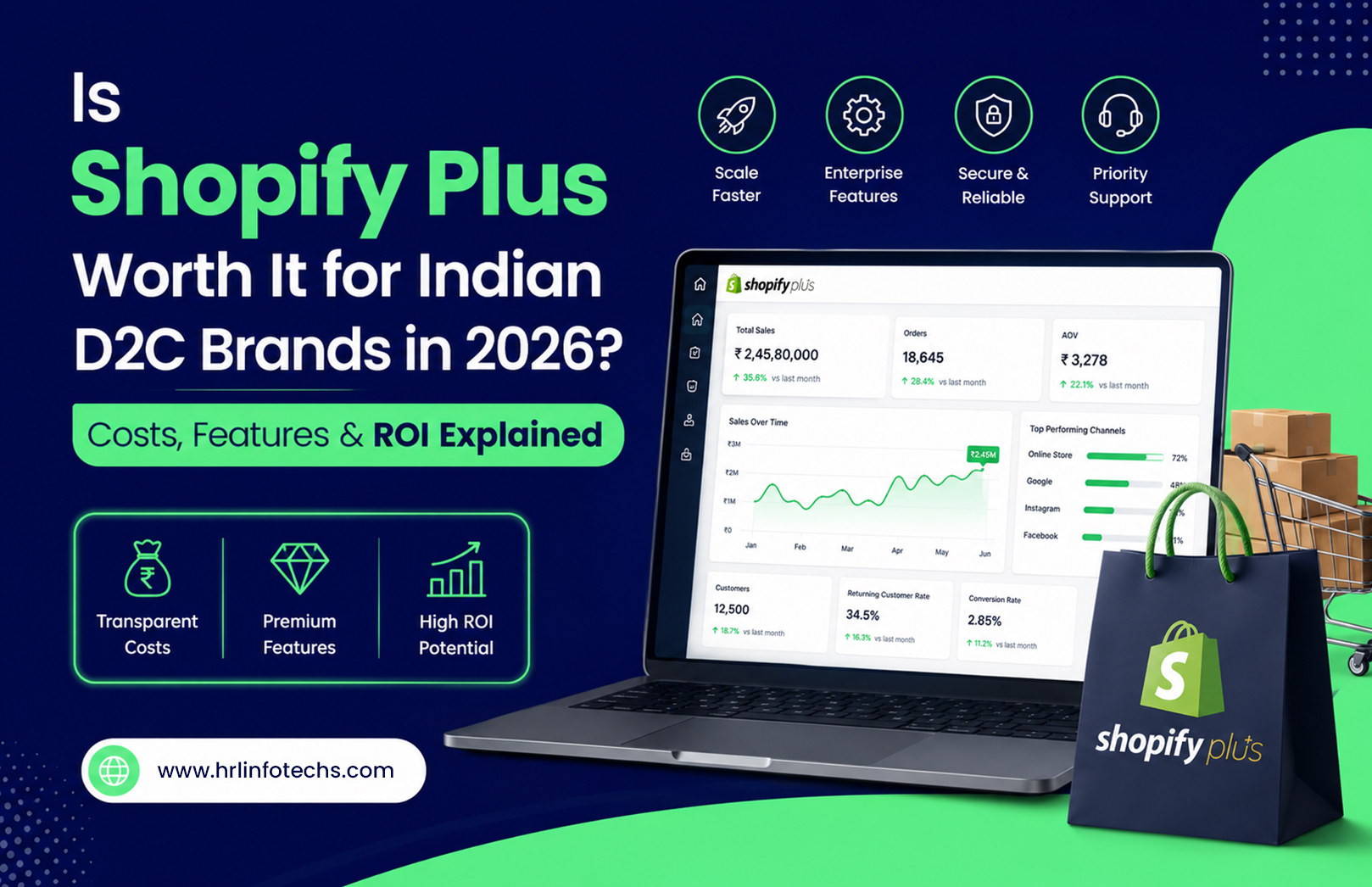
Is Shopify Plus Worth It for Indian D2C Brands in 2026? Costs, Features & ROI Explained


India’s D2C space is moving fast right now. Brands are scaling quicker than most teams can actually keep up with operationally. And at some point, almost every growing business hits the same wall, the platform that worked fine at ₹10 lakh a month starts genuinely struggling at ₹1 crore.

That’s usually when the question comes up: Is Shopify Plus worth it, or is this just an expensive upgrade for features you don’t really need?

It is all relative and depends on the specific use case. Shopify’s standard plans are great for start-ups and small-scale operations, whereas the increased complexity of the catalogue, order-processing volume, and other elements makes the ROI more difficult to achieve. If your business has an aspiration to grow significantly in 2026, understanding whether Shopify Plus for Indian D2C brands actually makes sense is worth thirty minutes of your time.

Why Indian D2C Brands Are Growing This Fast

Consumer behaviour in India has witnessed a dramatic change in the past few years. Internet shopping has penetrated even the remotest parts of the country, and the customers now expect the same seamless digital experience everywhere.

As enterprises continue to evolve in a landscape where they sell across markets, through social commerce, apps, and their website, complexity grows exponentially. Inventory fit for all channels, personalised experiences, frictionless checkout, and marketing automation that actually converts: brands are realising that to scale efficiently, it’s time to consider enterprise solutions to power their growth.

What Shopify Plus Actually Is

Shopify Plus India is the enterprise tier built specifically for brands running large catalogues, heavy traffic, and genuinely complex operations.

It is not about new functionality on the standard plan; it is about customisation, full automation, extended support, and infrastructure for scalability. The idea is to optimise the business process while providing a significantly better customer experience.

Is the Price Actually Justified?

Shopify Plus pricing in India is the number that scares people off before they’ve even looked at the value side of the equation. Enterprise platforms cost more than entry-level tools; that part’s obvious.

But the cost of a subscription is not the only criterion when comparing products. The most important factors should be the increase in efficiency, the reduction of manual processes, conversion rates, and revenue growth after achieving the point where the selected solution is no longer a limiting factor.

For brands doing serious monthly revenue, these gains routinely outweigh what the platform costs. For brands still finding their footing, they usually don’t yet.

What Actually Sets Shopify Plus Apart

A handful of things genuinely separate this from the standard plan.

Real automation. 

Order tagging, inventory workflows, customer segmentation, promotional campaigns, all of it can run without someone manually clicking through it every day.

A checkout that doesn’t lose people.

A faster, smoother checkout genuinely reduces cart abandonment, and that alone can move revenue meaningfully.

Room to actually customise. 

Growing brands often need a storefront that doesn’t look like every other Shopify store out there. Plus gives you the flexibility to build that.

Stability when traffic spikes hard. 

Flash sales, festive campaigns, and a viral influencer moment send traffic through the roof in minutes. Shopify Plus is built to hold steady through that, not buckle under it.

When Does an Upgrade Actually Make Sense?

A Shopify store upgrade becomes worth it when you’re genuinely hitting operational limits, not just when a competitor mentions they upgraded, and you feel like you should too.

The real signs: order volumes growing steadily, multiple warehouses to manage, a catalogue that has grown beyond your current capabilities, marketing complexity that is too time-consuming to manage manually, impending international expansion, or multi-channel selling.

If manual processes are genuinely the thing slowing growth down, upgrading stops being an expense and starts being a strategic move.

What Actually Supports Long-Term D2C Growth

Good product pages alone don’t build a lasting D2C business.

Prominent D2C ecommerce growth requires a tech-stack that is efficient, a website that loads rapidly, a customer experience that is tailored rather than generic, marketing automation that can do the heavy lifting, lean operations, and infrastructure that doesn’t need to be rethought every eighteen months.

Enterprise platforms give you that foundation, so growth doesn’t mean constantly tearing down and rebuilding your tech stack every time you hit a new milestone.

Why the Development Partner You Choose Matters

Picking the right platform is honestly only half the decision.

A genuinely skilled Shopify website development agency is what actually determines whether your store performs well, ranks properly, converts consistently, and can scale later without a rebuild. Done right, that means faster load speeds, solid mobile optimisation, secure integrations, a checkout that actually converts, and an architecture flexible enough to grow with you.

Get the implementation wrong, and even the best platform in the world won’t deliver what it’s capable of.

Why Custom Development Genuinely Matters

No two D2C brands run their business the same way, and this is exactly why custom Shopify development has become so valuable.

Custom functionality refers to making the platform work around the business rather than forcing the business into the software’s default structure. This includes subscription systems, loyalty programs, product personalisation, ERP systems, warehouse management, and internal dashboards for staff. These features enable a company to differentiate itself against competitors that offer the same standard set of functions.

Handling Complexity as You Scale

As revenue grows, so does operational complexity almost without exception.

Solid enterprise Shopify solutions help manage multiple storefronts, international expansion, blended B2B and B2C operations, high-volume order processing, marketing automation, and the kind of reporting that actually informs decisions. Instead of bolting on disconnected tools for every new problem, you get one centralised system that actually talks to itself.

Built to Handle Serious Volume

One of the clearest advantages of Shopify Plus is how well it supports genuinely high-volume ecommerce stores.

Festive season traffic, an influencer post that goes bigger than expected, a product launch that catches fire, these can spike traffic dramatically within minutes. And platform stability during exactly those moments is what protects the revenue you’re actually trying to capture.

Why the Platform Alone Doesn’t Deliver Growth

Even the best platform in the world doesn’t generate revenue by itself. It needs visibility behind it.

Pairing Shopify Plus with genuine ecommerce marketing services, such as SEO, paid advertising, email marketing, conversion optimisation, retention campaigns, and real performance analytics, is what actually turns the platform investment into revenue growth. Technology and marketing genuinely need to work together here. Neither one does the job alone.

So, is Shopify Plus Actually Worth It?

For smaller businesses with relatively modest order volumes, standard Shopify plans are often sufficient. There’s no need to overpay for capacity you’re not using yet.

But for brands experiencing real growth, increasing operational complexity, and ambitious targets ahead, Shopify Plus tends to be a genuinely strong investment better scalability, real operational efficiency, meaningful automation, stronger customer experience, and infrastructure that supports where you’re actually headed, not just where you are today.

Conclusion

Indian D2C brands have entered the stage where customer expectations, operating excellence, and sustainable scalability will define true success. The choice of the right platform has become much more than an infrastructural necessity; it has taken on a strategic role.

If your business is set to scale, grow its catalogue, or experience an increase in order volumes, Shopify Plus can be relied upon to scale alongside it.

At HRL Infotechs, we help brands evaluate, build, and optimise scalable Shopify ecosystems built around their actual growth goals from platform migration and custom development through to performance optimisation and genuinely integrated ecommerce marketing strategy, all built to help brands unlock what enterprise ecommerce can genuinely deliver.

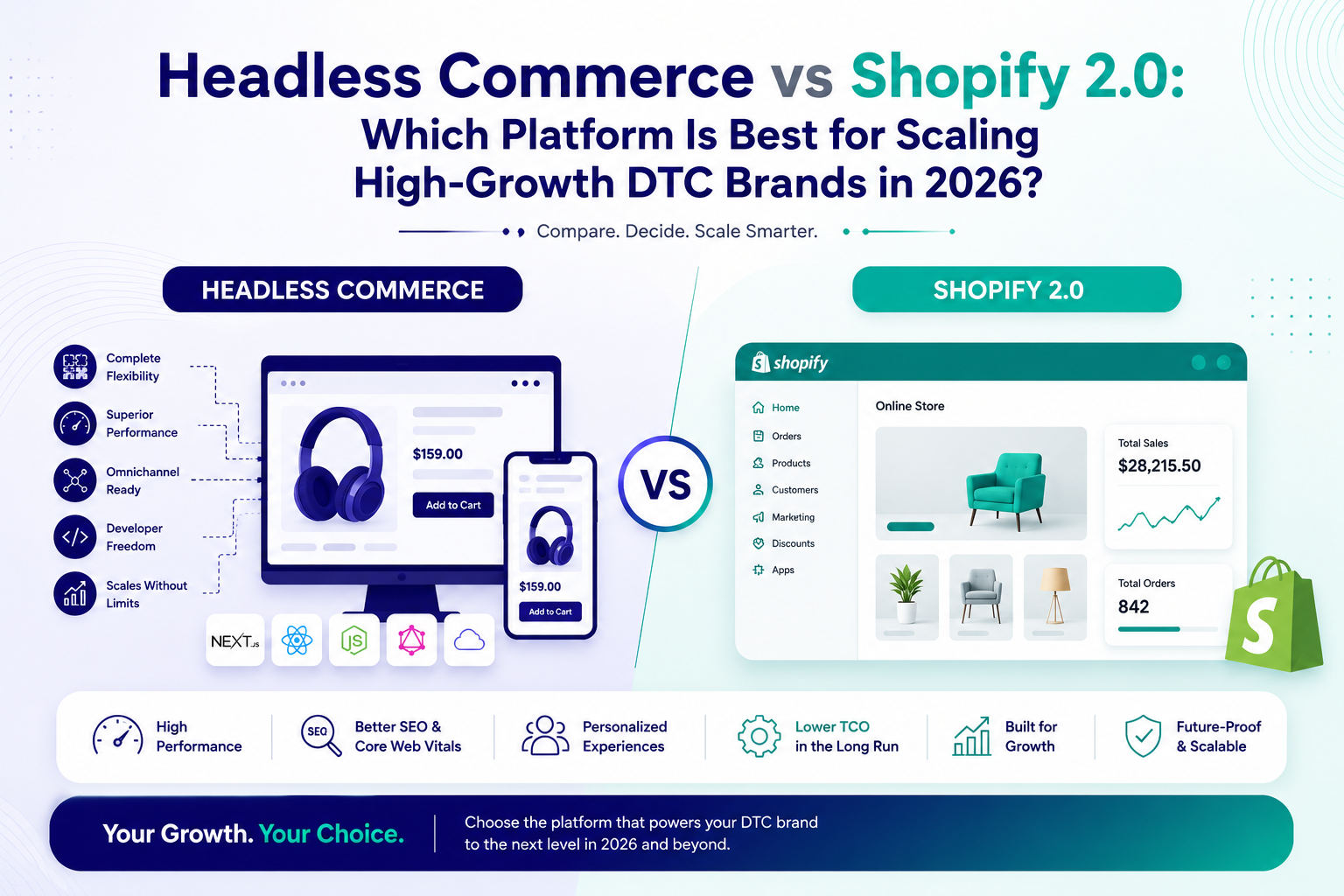
Headless Commerce vs Shopify 2.0: Which Platform Is Best for Scaling High-Growth DTC Brands in 2026?


Scaling a high-growth DTC brand in 2026 is not just about great products. It is about choosing the right ecommerce architecture that can handle traffic spikes, deliver fast experiences, and support advanced marketing. For many founders and CMOs, the big question is whether Shopify 2.0 is enough or if it is time to move to headless commerce.

This guide breaks down Shopify 2.0 vs headless commerce in practical terms, using real-world scenarios for growing brands. You will understand what headless commerce is, when to switch, and whether your Shopify store should go headless or stay on a well-optimized Shopify 2.0 stack.

Understanding Shopify 2.0 For Scaling DTC Brands

Shopify 2.0 is the upgraded version of Shopify’s online store framework, designed to give brands more flexibility, better performance, and improved customization. For many DTC brands in India and globally, Shopify 2.0 is often the first serious ecommerce platform for scaling brands beyond the early stage.

With Shopify 2.0, merchants get improved theme architecture, faster storefront rendering, and more control over sections and blocks. When combined with expert Shopify website development agency support, it can deliver fast ecommerce websites for conversions without needing a complex headless setup.

Key Features That Make Shopify 2.0 Attractive

Shopify 2.0 brings a more modular theme system, better metafields, and improved app integrations. These changes make it easier for marketers to launch landing pages, run campaigns, and test offers without relying heavily on developers for every small change.

For growing DTC brands, this means faster experimentation and better alignment between ecommerce marketing services and the storefront. Shopify performance optimization is also easier with built-in tools, CDN delivery, and a mature ecosystem of performance-focused apps.

When Shopify 2.0 Is Enough For Growing Brands

Many founders ask if Shopify 2.0 is enough for growing brands that are scaling aggressively. In most cases, Shopify 2.0 can comfortably support brands up to mid-market level, especially when the store is well optimized and uses high-quality themes and apps.

If your current challenges are related to basic speed issues, checkout friction, or limited merchandising, improving Shopify performance optimization, cleaning up apps, and working with a specialist agency often solves the problem without needing to go headless.

What Is Headless Commerce In Simple Terms

To decide between Shopify 2.0 vs headless commerce, you need a clear view of what headless actually means. Headless commerce separates the frontend experience from the backend platform, so your storefront is built using modern frameworks while Shopify or another engine manages products, orders, and payments.

In this model, the frontend communicates with the backend via APIs. This gives brands more control over design, performance, and omnichannel experiences. Headless ecommerce for high traffic stores is popular because it can deliver extremely fast, custom experiences tailored to specific audiences and markets.

Headless Commerce Advantages And Disadvantages

Headless commerce advantages and disadvantages must be weighed carefully before making a decision. On the positive side, headless allows pixel-perfect design, lightning-fast page loads, and deep personalization. It is ideal for enterprise ecommerce brands that need unique experiences across web, mobile, apps, and other channels.

However, the disadvantages include higher development costs, more complex maintenance, and greater dependency on engineering teams. For many DTC brands, the question is not just is headless commerce worth it, but whether the team has the capacity to manage a more technical stack over the long term.

Headless Commerce For Enterprise Ecommerce And High Traffic

Headless commerce for enterprise ecommerce shines when brands operate across multiple regions, languages, or storefronts. It allows centralized logic with localized experiences, which is difficult to achieve with a single traditional theme-based store. This is especially relevant for brands planning global expansion.

Headless ecommerce for high traffic stores also helps when performance requirements are extreme, such as flash sales, influencer drops, or large-scale campaigns. In these situations, a decoupled frontend can be tuned for speed and resilience, while the backend handles order processing reliably.

Shopify 2.0 Vs Headless Commerce: How To Decide

Choosing between Shopify 2.0 vs headless commerce should start with your business goals, not just technology trends. The dominant search intent around this topic is informational with a commercial angle, which means leaders want clarity before committing budgets to a new architecture.

Instead of asking only should my Shopify store go headless, it is better to map your current pain points, growth targets, and team capabilities. Then you can match those needs to what Shopify 2.0 or a headless setup can realistically deliver in the next 12 to 24 months.

When To Switch To Headless Commerce

There are clear signals that indicate when to switch to headless commerce. If your brand has hit the limits of Shopify 2.0 themes, needs highly custom user journeys, or is planning a multi-country rollout with complex content, headless may be a strong option.

You should also consider headless if your marketing team needs advanced experimentation that standard Shopify templates cannot support. In these cases, a modern frontend with API-driven content and product data can unlock new growth opportunities and higher conversion rates.

When To Double Down On Shopify 2.0 Instead

On the other hand, if your main issues are slow load times, cluttered apps, or poor UX, Shopify 2.0 is often still the right foundation. A focused Shopify performance optimization project can dramatically improve speed and conversions without a full rebuild.

For many Indian DTC brands, investing in a strong Shopify website development agency, better CRO, and integrated ecommerce marketing services delivers a higher ROI than moving to headless too early. This approach keeps your stack simpler while still supporting aggressive growth.

Practical Evaluation Checklist For DTC Founders

To make a confident decision, it helps to use a structured checklist. This reduces bias and keeps the conversation grounded in numbers, not hype. You can review this list with your internal team and external partners to align on the right path forward.

Consider the following factors before choosing Shopify 2.0 or headless commerce for your next phase of growth. Revisiting this checklist every 6 to 12 months also helps you decide if your current architecture is still serving your goals.

Key Questions To Ask Before Going Headless

Use these questions to clarify whether headless commerce is worth it for your specific situation and stage of growth. Honest answers will prevent overbuilding or underinvesting in your ecommerce platform.

  • Is my current Shopify 2.0 store truly maxed out, or can optimization still deliver gains
  • Do I have or plan to build an in-house or retained engineering team to manage a headless stack
  • Are my performance issues due to architecture or poor implementation and heavy apps
  • Do I need unique experiences across multiple regions, brands, or channels
  • Will a headless build directly support revenue, AOV, or LTV growth in the next 12 months

Which Path Is Best For Scaling In 2026

Looking ahead to 2026, the best ecommerce platform for scaling brands will be the one that balances flexibility, speed, and operational simplicity. For many DTC brands, a well-optimized Shopify 2.0 store, supported by strong partners, will remain a powerful and cost-effective choice.

Headless commerce will continue to grow among larger and more complex brands that need advanced personalization, global rollouts, or highly custom experiences. The key is to avoid rushing into headless just because it is a trend and instead align your technology roadmap with clear business outcomes.

Conclusion: Making A Confident Platform Decision

Deciding between Shopify 2.0 and headless commerce is ultimately a strategic choice, not just a technical one. If your brand is still unlocking growth through better UX, faster pages, and smarter campaigns, doubling down on Shopify 2.0 with expert support is often the smartest move.

When your brand reaches a stage where standard templates and apps limit innovation, exploring headless commerce for enterprise ecommerce can be the next logical step. Partnering with HRL Infotechs can help you evaluate both paths objectively, design a scalable architecture, and build a store that is ready for the demands of high-growth DTC in 2026.

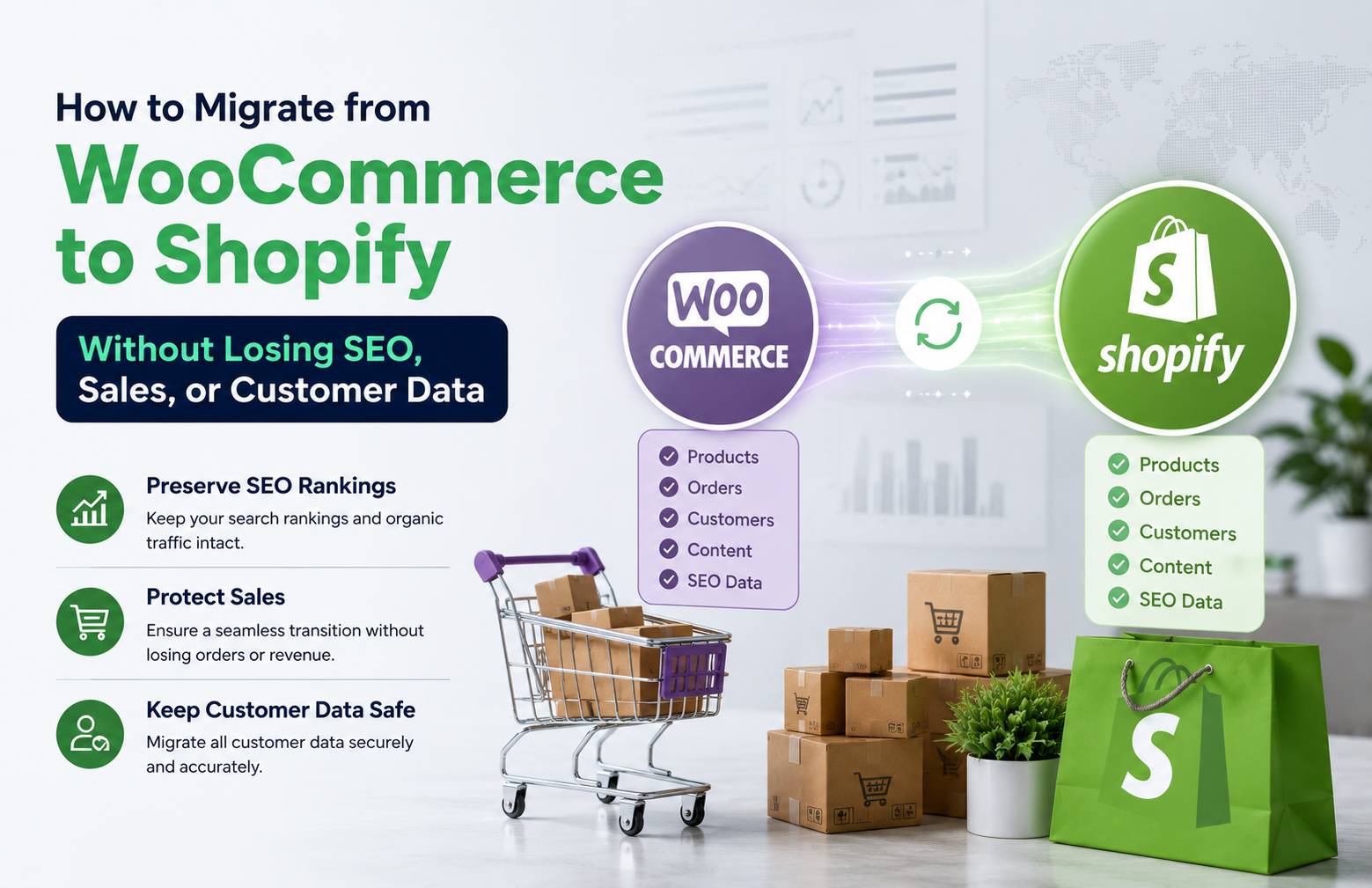
How to Migrate from WooCommerce to Shopify Without Losing SEO, Sales, or Customer Data


Migrating your online store from WooCommerce to Shopify can feel risky, especially when you rely on organic traffic and repeat customers. The good news is that with the right plan, a WooCommerce to Shopify migration can be smooth, secure, and profitable without sacrificing SEO, sales, or customer data.

This guide walks you step by step through how to migrate WooCommerce to Shopify the right way. You will learn how to protect your rankings, preserve order history, and keep your customers buying while you transition to a more scalable ecommerce platform.

Understanding When a WooCommerce to Shopify Migration Makes Sense

Before you move any data, it helps to understand why a WooCommerce to Shopify migration is worth the effort. Many store owners outgrow the flexibility of WordPress and want a more stable, hosted solution that reduces technical headaches and security worries.

Shopify offers a managed infrastructure, built-in payment options, and a large app ecosystem. When you migrate WooCommerce to Shopify, you are often looking for better performance, easier maintenance, and a platform that can handle growth without constant plugin updates and server tuning.

Key Benefits Of Moving From WooCommerce To Shopify

One of the biggest advantages of ecommerce platform migration is simplicity. Shopify centralizes hosting, security, backups, and updates, so your team can focus more on marketing and merchandising instead of technical troubleshooting.

Another benefit is scalability. As your traffic and product catalog grow, Shopify can typically handle spikes more reliably. This makes a WooCommerce to Shopify migration attractive for brands that run frequent campaigns, flash sales, or seasonal promotions.

Risks If You Migrate Without An SEO Strategy

Despite the benefits, a poorly planned WooCommerce to Shopify migration can damage your organic visibility. If URLs change without proper redirects, search engines may treat your Shopify store as a new site and drop your rankings temporarily or permanently.

There is also a risk of losing product metadata, structured data, and internal links. Without a clear WooCommerce to Shopify redirect plan, you might see 404 errors, lower crawl efficiency, and confused customers who land on broken pages instead of live products.

Pre-Migration SEO Audit And Planning

A successful WooCommerce to Shopify migration starts with a detailed SEO audit. This step helps you understand what is currently working so you can preserve it during the move. Skipping this stage often leads to traffic drops that could have been avoided.

Begin by documenting your top-performing URLs, categories, and blog posts. Identify which pages drive the most organic traffic and revenue. These are your priority assets and must be protected with precise WooCommerce to Shopify redirect mappings.

Creating A URL And Redirect Mapping Sheet

To avoid confusion later, build a spreadsheet that lists every important WooCommerce URL and its future Shopify equivalent. Include product pages, category archives, blog posts, and any landing pages used for campaigns or ads.

This mapping sheet becomes the backbone of your WooCommerce to Shopify redirect strategy. When the new store goes live, you will use it to implement 301 redirects so that search engines and users are automatically guided from old URLs to their new locations.

Backing Up Data Before Ecommerce Platform Migration

Before you export WooCommerce products to Shopify, take full backups of your WordPress database and files. This ensures you can restore your store if anything goes wrong during the migration process or testing phase.

Backups should include products, customers, orders, coupons, and media files. A careful ecommerce platform migration always keeps a safety net, so you never lose critical customer data or order history while experimenting with new configurations.

How To Export WooCommerce Products To Shopify

Once your plan is ready, you can start moving actual store data. The core of any WooCommerce to Shopify migration is transferring products, collections, and related content accurately. This is where many store owners rely on migration apps or professional services.

Shopify supports CSV imports and dedicated migration tools that connect directly to WooCommerce. Whichever method you choose, the goal is to export WooCommerce products to Shopify with correct titles, descriptions, prices, variants, and images.

Product, Category, And Media Migration Essentials

When you migrate WooCommerce to Shopify, pay close attention to product handles and collections. These influence your final URL structure and can affect SEO. Try to keep slugs similar to your old URLs when possible to simplify redirect mapping.

Also make sure that product images, galleries, and alt text transfer correctly. Image optimization is a ranking factor and a user experience signal. During ecommerce platform migration, this is a good time to compress large images and standardize naming conventions.

WooCommerce Order History Shopify Import

Preserving customer trust means keeping their purchase records intact. A proper WooCommerce order history Shopify import allows you to maintain accurate reporting, customer lifetime value calculations, and personalized marketing campaigns.

Many migration tools support importing past orders and customer accounts. After the WooCommerce order history Shopify import is complete, test a sample of accounts to confirm that addresses, order totals, and payment statuses match your original WooCommerce data.

Implementing WooCommerce To Shopify Redirects Without Losing SEO

With products and content in place, the next critical step is implementing your WooCommerce to Shopify redirect plan. This is where you protect your SEO equity and ensure that visitors from search engines land on relevant pages instead of dead ends.

Use 301 redirects for all important URLs listed in your mapping sheet. On Shopify, you can configure redirects in the admin panel or via bulk upload. Every old WooCommerce URL should point to the closest matching Shopify page, not just the homepage.

Technical SEO Checks After Migration

After your WooCommerce to Shopify migration goes live, run a full technical SEO audit. Crawl the new site to identify 404 errors, redirect chains, and missing metadata. Fixing these quickly helps search engines understand the new structure faster.

Also verify that canonical tags, XML sitemaps, and robots.txt are correctly configured. Submit updated sitemaps in Google Search Console and monitor indexing coverage. This post-launch phase is essential to stabilizing rankings and preventing long-term traffic loss.

Maintaining Sales And Customer Experience During Migration

Protecting SEO is only part of a successful WooCommerce to Shopify migration. You also need to maintain sales momentum and a seamless customer experience while the transition happens in the background.

Plan your migration timeline during a lower-traffic period if possible. Communicate transparently with customers about any brief maintenance windows. A clear message on your site and email updates can reduce confusion and support tickets.

Testing Checkout, Payments, And Integrations

Before fully switching traffic to Shopify, thoroughly test the checkout flow, payment gateways, shipping rules, and tax settings. A migration that looks perfect on the surface can still fail if customers cannot complete purchases smoothly.

Run test orders with different payment methods and shipping zones. Confirm that transactional emails, such as order confirmations and shipping notifications, are sent correctly. This testing phase ensures your WooCommerce to Shopify migration does not interrupt revenue.

When To Partner With A Shopify Website Development Agency

While small stores can sometimes handle a WooCommerce to Shopify migration on their own, larger or more complex sites often benefit from expert support. A specialized Shopify website development agency can manage both technical and strategic aspects.

These teams can customize themes, optimize performance, and handle advanced integrations such as ERP, CRM, and marketing automation tools. They can also fine tune your WooCommerce to Shopify redirect setup and on page SEO to match or outperform your previous results.

What To Look For In A Migration Partner

When evaluating agencies for ecommerce platform migration, ask about their previous WooCommerce to Shopify projects. Look for case studies that show stable or improved SEO, successful order history imports, and measurable revenue growth after launch.

Also consider their approach to communication and documentation. A reliable partner will provide clear timelines, risk assessments, and post launch support. This reduces stress and helps you stay focused on marketing and operations while experts handle the technical migration.

Conclusion: Turning Migration Into An Opportunity For Growth

A carefully planned WooCommerce to Shopify migration does not have to mean lost rankings, broken links, or frustrated customers. By auditing your current site, mapping URLs, exporting data accurately, and implementing precise redirects, you can protect your SEO while upgrading your ecommerce platform.

With the right strategy and, when needed, support from specialists like HRL Infotechs, your new Shopify store can load faster, convert better, and provide a stronger foundation for long term growth in the competitive Indian ecommerce market.

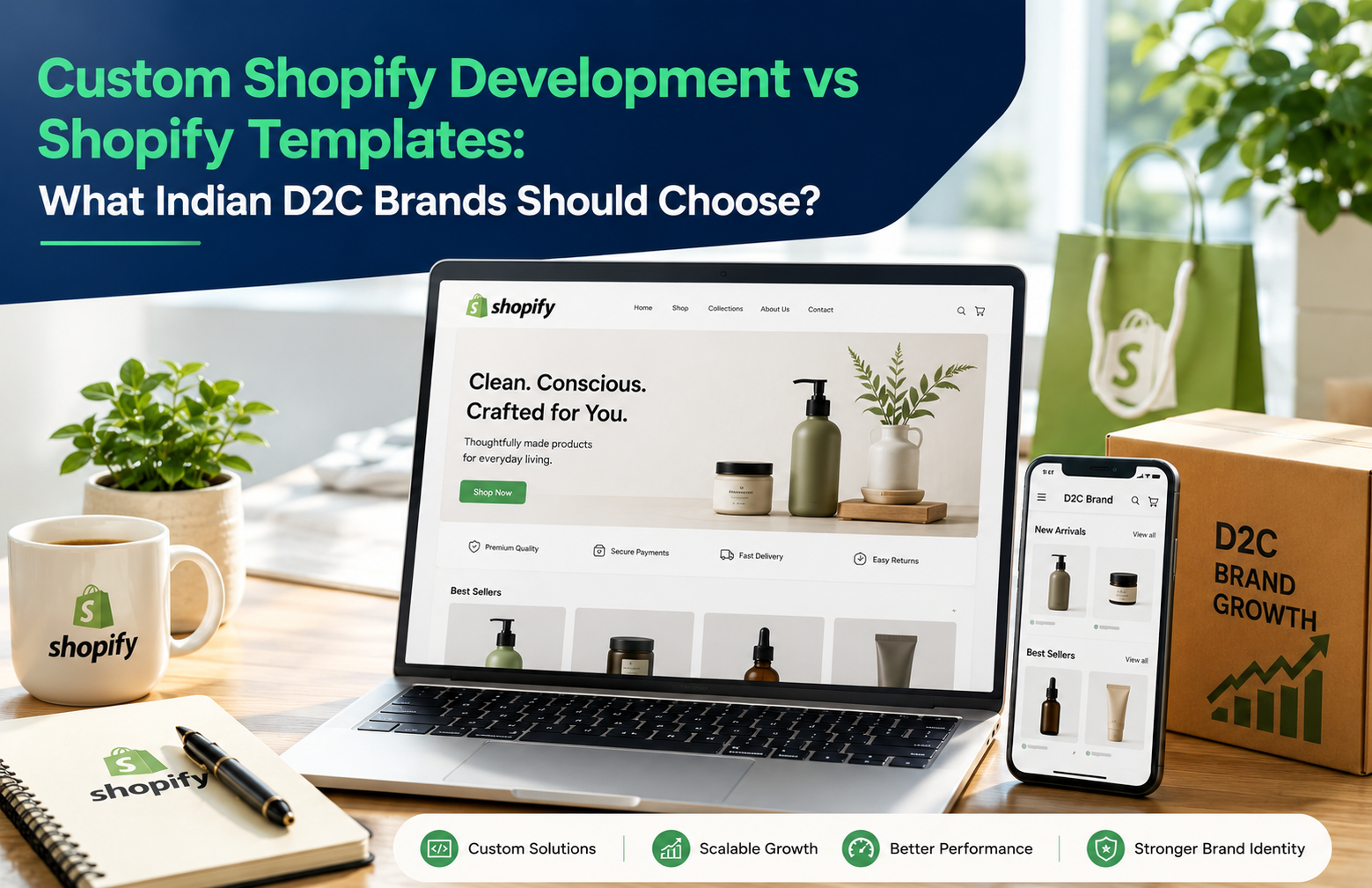
Custom Shopify Development vs Shopify Templates: What Indian D2C Brands Should Choose?


Indian D2C brands are growing faster than ever across categories like fashion, skincare, wellness, jewellery, electronics, and home decor. As competition increases, having a Shopify store is no longer enough. The real difference comes from how the store performs, how customers experience the brand, and how easily the business can scale in the future.

One of the most common questions growing ecommerce brands ask is whether they should use a Shopify template or invest in custom Shopify development.

Both options can work, but they serve different business goals. Choosing the right one can directly impact conversions, customer retention, SEO performance, and long-term growth.

Understanding Shopify Templates

Shopify templates are pre-designed themes that help businesses launch ecommerce stores quickly. These themes already include layouts, product pages, navigation systems, and standard ecommerce functionality.

For startups or businesses entering ecommerce for the first time, templates often seem like the easiest option because they reduce development time and initial investment.

Shopify templates usually include:

  • Ready-made store layouts
  • Mobile responsive designs
  • Product and collection pages
  • Basic customisation settings
  • Standard checkout experiences
  • Built-in e-commerce features

Templates are useful for businesses that want a faster launch without investing heavily in development during the early stage.

Advantages of Shopify Templates

Faster Launch Process

Templates help businesses go live quickly. Instead of building everything from scratch, brands can customise an existing design and start selling faster.

Lower Initial Cost

For businesses with smaller budgets, templates are often more affordable than custom development.

Beginner Friendly Setup

Most Shopify themes are designed for ease of use, making them suitable for founders with limited technical knowledge.

Basic Ecommerce Features

Templates already support essential ecommerce functions such as shopping carts, payment gateways, and product management.

Limitations of Shopify Templates

While templates provide convenience, growing D2C brands often face several challenges as operations expand.

Limited Brand Differentiation

Many businesses use the same popular Shopify themes. As a result, stores can look visually similar, making it difficult for brands to stand out in competitive markets.

For D2C brands, brand identity plays a major role in customer trust and repeat purchases. A generic-looking store may reduce long-term brand recall.

Restricted Customisation

Templates work well for standard ecommerce setups, but limitations become noticeable when brands need advanced functionality such as:

  • Subscription systems
  • Interactive product pages
  • Personalised customer journeys
  • Custom checkout flows
  • Advanced filtering
  • Product recommendation quizzes
  • Region-specific experiences

Adding these features often requires multiple third-party apps, which can increase complexity and reduce website performance.

Website Performance Issues

Many templates contain unnecessary scripts and features that businesses may never use. This extra code can slow down websites and negatively impact:

  • Mobile experience
  • SEO rankings
  • User engagement
  • Conversion rates
  • Core Web Vitals

A slow ecommerce website can increase bounce rates and reduce customer trust.

Scalability Challenges

As businesses grow, they usually require better operational flexibility. Standard templates may struggle to support:

  • Large product catalogues
  • Advanced inventory management
  • Multi location fulfilment
  • ERP integrations
  • Customer segmentation
  • Omnichannel selling

This often forces brands to redesign or rebuild stores later.

What Is Custom Shopify Development?

Custom Shopify development involves building a store specifically around a brand’s business goals, customer behaviour, and operational requirements.

Instead of adapting the business to fit a theme, custom development creates an ecommerce experience tailored to the business itself.

Custom Shopify development may include:

  • Custom UI and UX design
  • Mobile first optimisation
  • Bespoke product pages
  • Advanced integrations
  • Performance optimisation
  • Custom checkout experiences
  • Personalised shopping journeys
  • Automation workflows
  • Multi-language functionality
  • API based integrations

For brands planning long-term growth, custom development often becomes a strategic investment rather than just a design upgrade.

Why Indian D2C Brands Are Moving Towards Custom Development

The Indian ecommerce market has become highly competitive. Customers now expect smooth navigation, fast loading speeds, personalised recommendations, and seamless mobile experiences.

Standard templates may not always support these expectations effectively.

Better Customer Experience

Customer experience directly affects conversion rates and repeat purchases.

Custom Shopify development allows businesses to create shopping journeys based on how customers actually browse and buy products.

This can include:

  • Faster navigation
  • Personalised recommendations
  • Simplified checkout experiences
  • Mobile optimised interfaces
  • Dynamic filtering systems
  • Custom product discovery experiences

Better user experiences often lead to higher engagement and improved retention.

Stronger Brand Identity

D2C brands rely heavily on visual identity and storytelling.

Custom development allows businesses to create a unique store experience that reflects their brand positioning instead of relying on commonly used themes.

A strong brand identity can improve customer trust and help businesses stand out from competitors.

Improved Website Speed and SEO

Website performance plays a major role in ecommerce success.

Custom Shopify stores are typically lighter and more optimised because developers only include features the business actually needs.

This helps improve:

  • Website speed
  • Mobile usability
  • User experience
  • Search engine rankings
  • Core Web Vitals performance

Technical SEO improvements often contribute to better long-term organic visibility.

Advanced Integrations for Indian Businesses

Indian D2C brands frequently require integrations that many global templates do not fully support.

Custom development allows smoother integration with tools such as:

  • Razorpay
  • Shiprocket
  • WhatsApp Business API
  • CRM platforms
  • GST software
  • Inventory systems
  • Marketing automation tools
  • ERP software

These integrations help businesses streamline operations and improve efficiency.

Scalability for Future Growth

As ecommerce brands grow, they need infrastructure that can support increasing traffic and operational complexity.

Custom Shopify development provides scalability for:

  • Expanding product catalogues
  • Multi-city fulfilment
  • International selling
  • Subscription commerce
  • Advanced analytics
  • Customer segmentation
  • Omnichannel experiences

This flexibility helps brands grow without constantly rebuilding their ecommerce systems.

Which Option Is Better for Your Business?

The right choice depends on your current business stage and long-term goals.

Shopify Templates May Be Suitable If:

  • You are launching a new business
  • You need a faster store launch
  • Your budget is limited
  • Your operational requirements are simple
  • You are testing product market fit

Templates can provide a practical starting point for early-stage businesses.

Custom Shopify Development May Be Better If:

  • Your business is scaling rapidly
  • You want stronger brand differentiation
  • Customer experience is a priority
  • You need advanced features and integrations
  • You want long-term e-commerce scalability
  • SEO and performance matter significantly to your growth strategy

For established or growth-focused D2C brands, custom development often delivers stronger long-term value.

Why This Decision Impacts Long-Term Business Growth

Many businesses initially focus only on launching quickly. However, ecommerce growth eventually depends on much more than design alone.

Your Shopify store influences:

  • Customer trust
  • Organic traffic growth
  • Conversion rates
  • Retention performance
  • Operational efficiency
  • Brand perception

A store built only for short-term convenience may create limitations later as customer expectations evolve.

Choosing the right ecommerce foundation early can reduce future development costs and support sustainable growth.

Final Thoughts

Both Shopify templates and custom Shopify development can help businesses build successful ecommerce stores. The right option depends on business goals, operational complexity, and growth expectations.

Templates can work well for startups that want a quick and affordable launch. However, as Indian D2C brands grow, they often need better flexibility, stronger branding, advanced integrations, and improved customer experiences.

Custom Shopify development allows businesses to create ecommerce stores tailored specifically to their audience, products, and long-term vision.

For brands looking to build scalable and performance-focused Shopify stores, HRL Infotechs helps D2C businesses create customised ecommerce solutions designed for growth, customer engagement, and long-term success.