
How AI-Powered Keyword Research Is Helping Amazon Sellers Reduce ACOS in 2026


Amazon advertising has become more competitive than ever in 2026. Rising CPCs, smarter competitors, and changing buyer behavior are forcing sellers to rethink how they manage PPC campaigns. Traditional keyword research methods are no longer enough for brands trying to scale profitably. This is where AI-powered keyword research for Amazon is creating a major shift.

Sellers are now using artificial intelligence to identify high-converting keywords, eliminate wasted ad spend, and improve campaign targeting faster than manual research ever allowed. Instead of spending hours analyzing spreadsheets and search term reports, AI tools are helping advertisers make real-time decisions based on customer intent and performance data.

Recent industry reports show that AI-driven PPC optimization helps sellers uncover hidden search trends, automate keyword clustering, and improve bidding accuracy for better advertising efficiency.

How AI-Powered Keyword Research Works for Amazon PPC

AI-powered keyword research for Amazon uses machine learning and automation to analyze millions of shopper search queries, competitor listings, and ad performance signals. These tools identify patterns that are difficult to detect manually, especially when managing large product catalogs or multiple campaigns.

Unlike traditional Amazon PPC keyword research, AI systems continuously monitor keyword performance and buyer intent. They can quickly identify which search terms generate conversions and which keywords are draining budget without producing sales. This allows sellers to focus only on profitable traffic sources.

Modern Amazon keyword research tools also evaluate seasonal demand trends, click-through rates, search intent, and competitor movements. Instead of relying on guesswork, sellers receive data-backed recommendations that improve campaign precision and help lower ACOS on Amazon.

Why Manual Keyword Research Is No Longer Effective

Manual keyword research may still work for small sellers with limited campaigns, but it becomes inefficient as advertising budgets grow. Managing hundreds of keywords manually often leads to delayed optimizations, irrelevant targeting, and wasted ad spend.

One of the biggest problems with traditional research methods is the inability to process large amounts of search term data quickly. Amazon shoppers constantly change their search behavior, and trends can shift within days. Sellers relying only on spreadsheets or basic reports often react too late.

AI tools for Amazon sellers solve this problem by automating keyword discovery and performance analysis. They instantly identify negative keywords, profitable long-tail terms, and emerging search opportunities. This level of automation helps improve Amazon advertising optimization while reducing unnecessary spending.

How AI Helps Reduce ACOS Amazon PPC Campaigns

Reducing advertising cost of sales requires more than simply lowering bids. Successful Amazon PPC optimization 2026 strategies focus on improving keyword relevance and conversion quality.

AI systems help sellers reduce ACOS Amazon PPC campaigns through:

Smarter Keyword Targeting

AI tools analyze customer intent instead of focusing only on search volume. This helps sellers target keywords with higher purchase probability rather than broad traffic terms that waste budget.

Automated Negative Keyword Detection

Many campaigns lose money because irrelevant search terms continue spending without conversions. AI identifies poor-performing keywords automatically and recommends exclusions to prevent wasted clicks.

Real-Time Bid Adjustments

Advanced Amazon PPC management platforms use AI to optimize bids based on performance trends, competition, and conversion likelihood. This improves ad efficiency without constant manual intervention.

Long-Tail Keyword Discovery

Long-tail keywords usually have lower competition and stronger buyer intent. AI-powered Amazon seller keyword research tools uncover these hidden opportunities faster than manual analysis.

Industry research in 2026 highlights that automated keyword optimization and negative keyword filtering significantly improve PPC profitability for growing sellers.

The Role of Search Term Analysis in Amazon Advertising Optimization

One of the most valuable benefits of AI is advanced search term analysis. Campaign keywords alone do not reveal how customers actually search on Amazon. Search term data provides deeper insight into buyer behavior and conversion intent.

AI platforms analyze thousands of search queries to identify patterns that human analysts often miss. For example, two search terms may appear different but reflect the same purchase intent. AI groups these related terms together to improve targeting efficiency.

This process helps sellers improve:

  • Sponsored Products campaigns
  • Sponsored Brands targeting
  • Product listing optimization
  • Backend keyword relevance
  • Negative keyword management

Better search term analysis also improves overall Amazon advertising optimization because campaigns become more aligned with real customer behavior instead of assumptions.

Best Practices for AI-Driven Amazon PPC Optimization 2026

Using AI alone is not enough. Sellers still need a structured strategy to maximize campaign performance.

Combine AI Insights With Manual Oversight

Automation works best when paired with human decision-making. Sellers should regularly review campaign goals, profit margins, and product performance alongside AI recommendations.

Focus on Conversion Data Instead of Traffic Volume

High search volume keywords do not always generate profitable sales. Prioritizing conversion-focused keywords helps improve ROAS and lower ACOS on Amazon over time.

Build Separate Campaign Structures

Separating branded, non-branded, and competitor campaigns allows AI systems to optimize performance more accurately. Structured campaigns produce cleaner data and better optimization opportunities.

Continuously Refresh Keywords

Buyer behavior changes frequently. AI-powered keyword research for Amazon should be an ongoing process rather than a one-time setup.

Why AI Keyword Research Is Becoming Essential for Amazon Sellers

The Amazon marketplace is becoming increasingly data-driven. Sellers who continue using outdated keyword research methods risk overspending on ineffective traffic while competitors gain better visibility through automation.

AI tools for Amazon sellers are helping businesses scale campaigns more efficiently by improving targeting accuracy, identifying profitable search trends, and reducing wasted spend. This creates a significant advantage in highly competitive categories where every advertising dollar matters.

More importantly, AI helps sellers make faster decisions. Instead of manually reviewing reports for hours, advertisers can quickly act on performance insights and focus on business growth strategies.

Conclusion

Amazon PPC is evolving rapidly, and successful sellers in 2026 are relying on smarter advertising strategies powered by artificial intelligence. AI-powered keyword research for Amazon is helping brands improve targeting precision, discover high-converting search terms, and eliminate wasted ad spend that increases ACOS.

As competition and CPC costs continue to rise, businesses that adopt advanced Amazon PPC optimization 2026 strategies will have a stronger advantage in scaling profitable campaigns. For sellers looking to improve campaign performance, lower ACOS on Amazon, and build a more data-driven advertising strategy, The HRL Infotechs can help deliver smarter Amazon PPC management solutions designed for long-term growth.
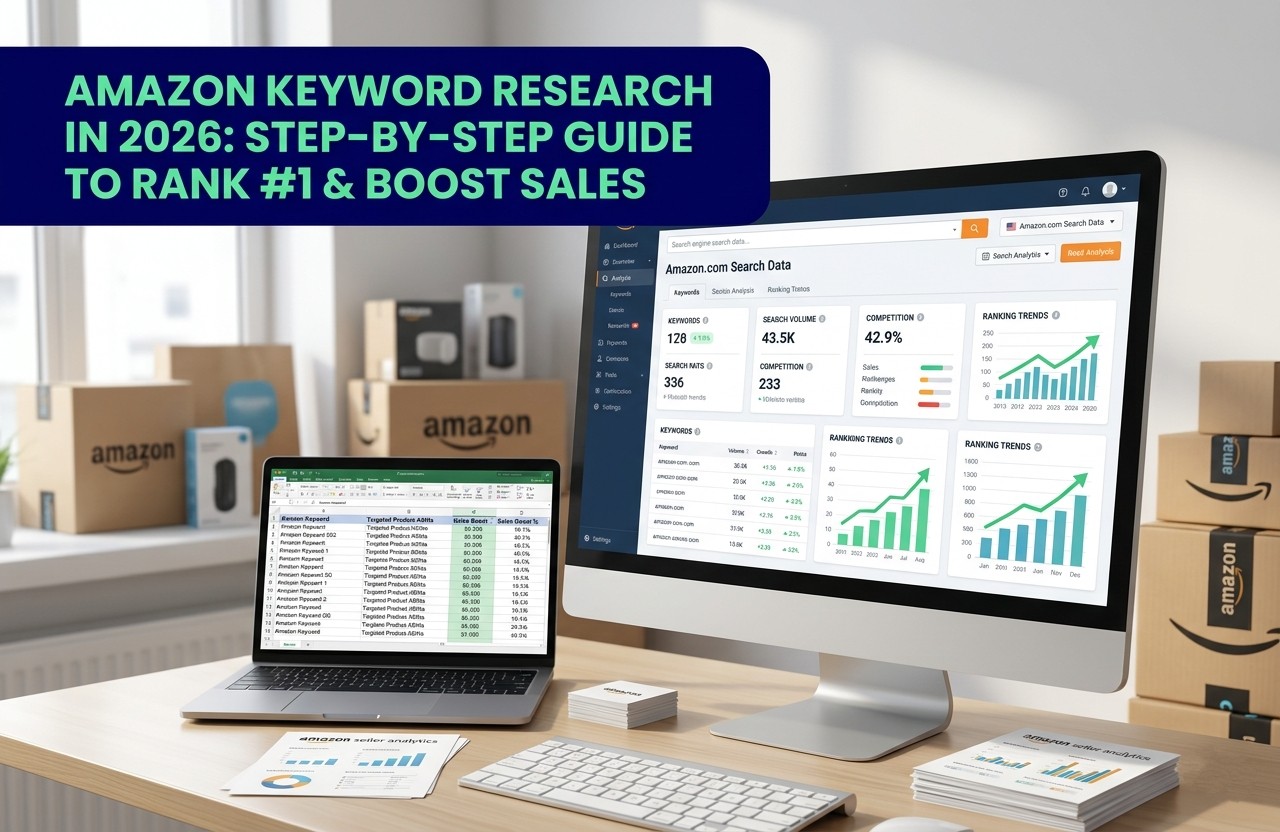

Amazon Keyword Research in 2026: Step-by-Step Guide to Rank #1 & Boost Sales


Winning on Amazon in 2026 is no longer about guessing a few popular search terms and hoping for the best. The marketplace is more competitive, the Amazon search algorithm is smarter, and shoppers are more specific with what they type into the search bar. Strategic Amazon Keywords Research is now the foundation of ranking higher and consistently driving profitable sales.

When you understand exactly how your customers search, you can build listings that match their intent, align with Amazon search algorithm updates, and convert more clicks into orders. This step-by-step Amazon keyword research guide will walk you through a practical, data-backed process tailored for sellers who want to rank #1 and scale their brand in 2026.

Why Amazon Keywords Research Matters More In 2026

Amazon has evolved from a simple product catalog into a powerful search engine with its own rules. In 2026, Amazon keyword research is not just about traffic; it is about finding buyer-intent keywords that lead to real revenue. Sellers who ignore this are left fighting for scraps on generic, low-converting terms.

The latest Amazon search algorithm updates focus heavily on relevance, shopper behavior, and listing quality. This means your Amazon keyword research 2026 strategy must connect the right keywords with compelling content, accurate product details, and strong conversion signals. Done well, it improves organic rankings, ad performance, and overall brand visibility.

Understanding Search Intent Behind Amazon Keywords

Before diving into tools, it is essential to understand why shoppers use certain phrases. Effective Amazon Keywords Research starts with mapping search intent so you can prioritize terms that lead to purchases, not just clicks. This is especially important for competitive categories in the Indian market.

On Amazon, search intent usually falls into a few clear buckets. When you know which bucket a keyword belongs to, you can decide where to place it in your listing and how aggressively to target it with ads or promotions.

Types of Buyer Intent on Amazon

Most high-value terms in Amazon keyword research 2026 can be grouped into three main types. First are discovery keywords, where shoppers are exploring options, such as “best wireless earphones” or “top kitchen mixer”. These are great for visibility but may not convert as strongly as more specific phrases.

Next are comparison and branded keywords, where users already know what they want to compare. Finally, there are purchase-intent keywords like “buy mixer grinder 750W” or “waterproof trekking shoes men”. Your Amazon keyword research guide should prioritize these high-intent phrases in titles, bullets, and ads.

Short-Tail vs Long-Tail Keywords

Short-tail keywords are broad terms like “headphones” or “bedsheet”. They have high search volume but also high competition and mixed intent. Relying only on these in Amazon Keywords Research can drain ad budgets and limit organic ranking potential.

Long-tail keywords, such as “noise cancelling headphones under 3000” or “cotton double bedsheet for summer”, may have lower volume but far higher conversion rates. In 2026, a balanced approach that blends broad and long-tail terms is critical for sustainable growth.

Step-by-Step Process: How To Do Amazon Keyword Research

A structured process helps you avoid random guesswork and build a repeatable system. The following step-by-step framework aligns with how top sellers and Amazon marketing teams approach Amazon keyword research 2026 for serious growth.

Use this as a checklist every time you launch a new product or optimize an existing listing. Over time, you will build a strong keyword asset library that compounds your ranking and Amazon advertising advantages.

Step 1: Start With Real Customer Language

Begin your Amazon Keywords Research by collecting phrases directly from the marketplace. Type your main product term into the Amazon search bar and note the autocomplete suggestions. These are real searches from real shoppers and are extremely valuable.

Next, review top-ranking competitor listings. Look at their titles, bullet points, descriptions, and customer questions. This manual research gives you a strong base list of how buyers describe features, problems, and benefits in your niche.

Step 2: Use Amazon Keyword Research Tools 2026

Once you have a seed list, expand it using reliable Amazon keyword research tools 2026. Modern tools can show estimated search volume, competition level, and related phrases you may never think of manually. This is where your research becomes data-driven instead of guess-based.

Look for tools that provide filters for geography, especially if you are targeting India, and that highlight long-tail, high-converting terms. Combine tool data with your manual insights to build a master keyword sheet grouped by intent and relevance.

Step 3: Prioritize Keywords By Relevance And Revenue Potential

Not every keyword deserves a top spot in your listing. Effective Amazon Keywords Research means ranking your terms by how closely they match your product and how likely they are to drive sales. Overstuffing unrelated keywords can hurt both rankings and conversions.

Create three groups: primary, secondary, and supporting keywords. Primary keywords are highly relevant, high-intent terms that belong in your title and main bullets. Secondary keywords support these in bullets and descriptions. Supporting keywords can be placed in backend search terms and content where they fit naturally.

Implementing Keywords In Your Amazon Listing

Once your Amazon keyword research guide is complete, implementation becomes the next critical step. The goal is to signal strong relevance to Amazon’s algorithm while keeping the listing readable and persuasive for human shoppers.

Focus on strategic placement rather than repetition. Amazon Keywords Research is only effective when the right phrases appear in the right sections of your listing, aligned with clear benefits and accurate product details.

Optimizing Titles, Bullets, And Descriptions

Your product title is the most powerful on-page element for Amazon keyword research 2026. Include your main primary keyword near the beginning, followed by key attributes like size, material, color, and core benefit. Keep it clear, scannable, and compliant with category guidelines.

Use bullet points to integrate secondary keywords while highlighting benefits, not just features. In the description or A+ Content, weave supporting keywords into natural, informative copy that answers common objections and builds trust with Indian shoppers.

Using Backend Search Terms Wisely

Backend search terms are often underused in Amazon Keywords Research. This hidden field allows you to include relevant phrases that may not fit naturally in your visible copy, such as common misspellings, regional variations, or alternate product names.

Avoid repeating keywords already used in your title and bullets. Instead, focus on additional long-tail phrases, Hindi or regional language variations where appropriate, and synonyms that your audience might use while searching.

Aligning Keyword Strategy With Amazon Search Algorithm Updates

Amazon search algorithm updates in 2026 continue to reward listings that balance relevance, performance, and customer satisfaction. That means your Amazon Keywords Research must be part of a broader optimization strategy, not an isolated task.

Keywords help you get discovered, but sales history, click-through rate, conversion rate, and reviews help you stay ranked. Regularly revisiting your keyword list and aligning it with performance data is essential for long-term success.

Ongoing Optimization And Performance Tracking

After implementing your keywords, monitor performance using Amazon reports and your chosen tools. Track which search terms drive clicks and conversions, and which ones attract traffic but fail to convert. This feedback loop is vital for refining your Amazon keyword research 2026 approach.

Update your listing every few months based on new data, seasonal trends, and competitor movements. Remove underperforming phrases, add emerging long-tail terms, and keep your content aligned with shopper behavior and algorithm shifts.

Turning Strong Keyword Research Into Higher Sales

Effective Amazon Keywords Research does more than improve rankings; it shapes your entire growth strategy. When you know what your audience is searching for, you can design better products, create more relevant ads, and build content that resonates across every touchpoint.

For sellers in India aiming to dominate their category in 2026, a disciplined approach to Amazon keyword research, combined with smart listing optimization and ongoing testing, is a powerful competitive edge. If you want expert support in building and executing a winning strategy, partnering with a specialized Amazon marketing agency like HRL Infotechs can accelerate your results and help you scale with confidence.