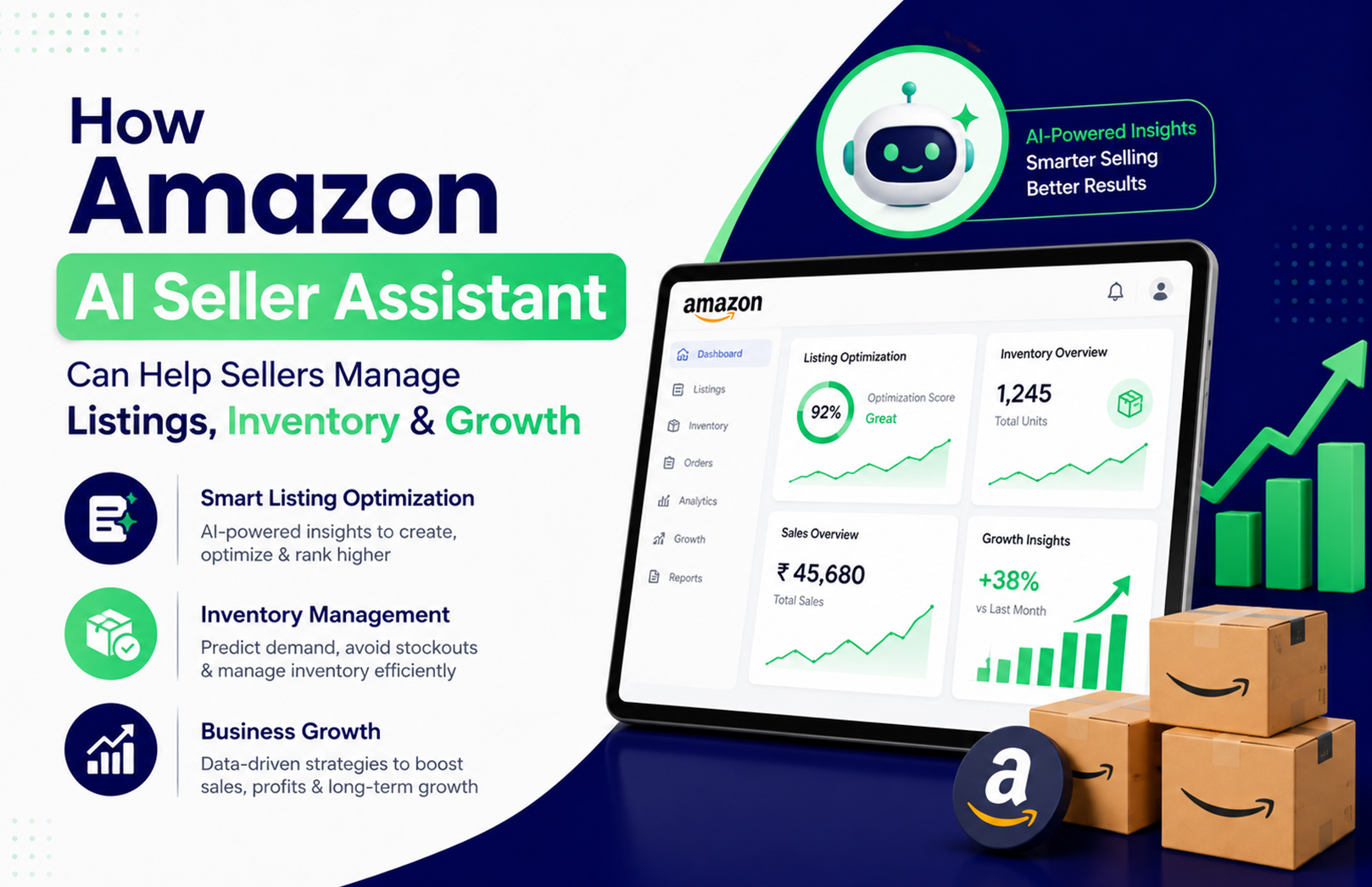
How Amazon AI Seller Assistant Can Help Sellers Manage Listings, Inventory & Growth


Amazon selling in India is becoming increasingly data-driven. Managing product listings, inventory, orders, pricing, advertising and account health manually can quickly become overwhelming, particularly as a seller’s catalogue grows.

Amazon is responding to this complexity with Seller Assistant, an AI-powered, conversational tool designed to help sellers launch, manage and grow their businesses. Amazon says the assistant can provide business insights across areas such as sales performance, inventory management, listings and catalogues, shipments and returns, orders and fees, while also helping sellers take certain actions with their approval.

For Indian sellers, this creates an important opportunity: AI can reduce the time spent analysing Seller Central data and help identify problems and opportunities faster. However, AI should complement not completely replace structured amazon seller account management and marketplace expertise.

What Is Amazon Seller Assistant?

Amazon Seller Assistant is an AI-powered assistant available within the Amazon selling ecosystem. Sellers can interact with it using natural-language questions instead of manually searching through multiple Seller Central reports and menus.

Amazon describes it as an always-on, generative AI and agentic system that can understand seller needs, surface relevant insights and, where supported, take actions with seller approval. Its capabilities cover areas including listings, inventory, sales performance, orders, fees, shipments and returns.

For Indian sellers, Amazon has also introduced Seller Assistant with support for English and Hinglish, making it more accessible to sellers who prefer conversational guidance over complicated dashboards. Amazon says the tool is available at no cost to sellers in India.

How AI Can Improve Amazon Listing Management

Product listings are one of the most important parts of an Amazon business. A seller can have a strong product and competitive price, but poor titles, bullet points, images or product information can still reduce visibility and conversions.

Seller Assistant can help sellers understand listing and catalogue-related issues and obtain guidance about their products. This makes AI particularly useful for sellers managing large catalogues where manually reviewing every ASIN is time-consuming.

However, AI recommendations should be reviewed against keyword strategy, customer intent, competitor positioning and Amazon’s listing requirements. This is where professional amazon listing management services can add significant value.

An experienced team can combine AI-assisted analysis with keyword research, backend keyword optimisation, content improvements and ongoing listing monitoring. HRL Infotechs’ Amazon SEO & Listing Optimization service, for example, focuses on improving listing visibility through listing optimisation, keyword research and backend keyword additions.

Using AI for Better Inventory Management

Inventory problems can quickly turn into lost sales.

Too little stock can create out-of-stock situations, while excessive inventory can tie up working capital and increase storage-related costs. Amazon’s Seller Assistant provides sellers with insights related to inventory management and can help identify actions associated with inventory and business performance.

Indian sellers can use these insights to ask practical questions such as:

  • Which products need immediate replenishment?
  • Which SKUs are selling slower than expected?
  • Where could inventory costs become a concern?
  • Which products require closer monitoring before major sales events?
  • How should inventory decisions align with expected demand?

AI can make the analysis faster, but sellers still need accurate sales history, lead times, supplier information and business context before making purchasing decisions.

Turning Seller Central Data Into Growth Insights

One of the biggest advantages of AI tools for Amazon sellers is the ability to turn large amounts of marketplace data into easier-to-understand insights.

Instead of checking multiple reports individually, sellers can use conversational questions to explore areas such as sales performance, orders, fees, inventory and catalogue performance. Amazon specifically highlights these business-insight capabilities within Seller Assistant.

For example, a seller could investigate why a product’s sales have declined, identify inventory-related concerns or understand which areas require attention.

But growth does not come from data alone. Sellers need to connect those insights with pricing, advertising, content, customer behaviour and profitability.

This is where amazon account management services become valuable. A professional account management team can continuously monitor performance, identify opportunities and coordinate different parts of the Amazon strategy instead of treating each metric separately.

Can AI Replace Amazon Seller Account Management?

Not completely.

AI can significantly reduce repetitive analysis and help sellers access information faster, but successful marketplace growth still requires strategic decision-making.

Professional amazon seller management services can cover areas such as account health monitoring, case management, FBA reimbursement, catalogue management and ongoing marketplace optimisation. HRL Infotechs’ Amazon Account Management service includes account health monitoring, case log management and FBA reimbursement support.

Think of AI as an additional layer of intelligence rather than a replacement for experienced Amazon professionals.

AI can identify a potential issue. A human expert can determine why it happened, assess its commercial impact and decide what should happen next.

Combining AI With Amazon Marketing Services

AI-assisted account management becomes even more powerful when combined with a structured advertising strategy.

A listing with strong organic visibility can still underperform if advertising campaigns are poorly structured. Similarly, increasing ad spend will not necessarily solve a conversion problem caused by weak product content.

Professional amazon marketing services can connect listing optimisation, keyword targeting, PPC management, competitor analysis and conversion improvements into one growth strategy.

An amazon marketing agency can also use Seller Central insights alongside advertising data to determine where budget should be increased, reduced or reallocated.

HRL Infotechs provides Amazon Advertising Services designed around campaign performance, conversions, traffic and ROI.

The Best Approach for Indian Amazon Sellers

For sellers in India, the strongest approach is not simply choosing between AI and human expertise. It is combining both.

A practical Amazon growth system can look like this:

AI insights → human analysis → strategic action → performance monitoring → continuous optimisation

Seller Assistant can help surface information and opportunities. A professional team can then validate those insights against business objectives, margins, competition and marketplace strategy.

This approach is particularly useful for established sellers managing multiple SKUs, advertising campaigns and fulfilment requirements.

Why Sellers Should Start Using AI Now

The Amazon marketplace is becoming increasingly dependent on automation, data and AI-driven experiences. Amazon is already expanding Seller Assistant’s capabilities beyond simple question answering into business insights and approved actions.

For Indian sellers, learning how to work alongside these tools can create an operational advantage.

The objective should not be to automate every decision. Instead, sellers should automate repetitive analysis while keeping important commercial decisions under expert control.

This can help teams spend less time navigating Seller Central and more time improving products, customer experience, profitability and growth.

Final Thoughts

Amazon AI Seller Assistant represents an important development for sellers who want faster access to marketplace insights. From listings and inventory to sales performance and account operations, AI can help simplify many parts of the selling process.

However, AI alone is not an Amazon growth strategy. Sellers still need strong listings, effective advertising, inventory planning, account health management and ongoing optimisation.

The most effective model is therefore a combination of AI tools for Amazon sellers and professional amazon seller account management. AI provides speed and insights, while experienced marketplace specialists provide strategy, context and execution.

If your Amazon business is growing and managing Seller Central is becoming difficult to handle internally, professional support can help you build a more structured and scalable marketplace operation.

Frequently Asked Questions

Q1. What is Amazon Seller Assistant?

Ans. Amazon Seller Assistant is an AI-powered conversational tool that helps Amazon sellers access information, receive business insights and manage aspects of their selling operations. Amazon says it covers areas including sales, inventory, listings, orders, fees, shipments and returns.

Q2. Is Amazon Seller Assistant available to Indian sellers?

Ans. Yes. Amazon India announced Seller Assistant for Indian sellers, with support for English and Hinglish. Amazon describes it as a free AI tool available to sellers in India.

Q3. Can Seller Assistant manage Amazon listings?

Ans. Seller Assistant can provide insights and guidance related to listings and catalogues. Sellers should still review AI-generated recommendations for accuracy, compliance, keyword relevance and brand positioning before implementing important changes.

Q4. Can AI replace Amazon account managers?

Ans. AI can automate and simplify many analytical and repetitive tasks, but it does not eliminate the need for strategic account management. Human expertise remains important for advertising, catalogue strategy, account health, profitability and complex marketplace decisions.

Q5. What are the best AI tools for Amazon sellers?

Ans. Amazon Seller Assistant is one of the key AI tools available within the Amazon seller ecosystem. Sellers can also use specialised AI and analytics solutions for keyword research, listing optimisation, advertising analysis and forecasting, depending on their requirements.

Q6. When should an Amazon seller consider professional account management?

Ans. Professional support becomes particularly valuable when a seller is managing a growing catalogue, increasing advertising spend, experiencing account-health issues, struggling with inventory or lacking the internal resources to monitor Seller Central consistently.
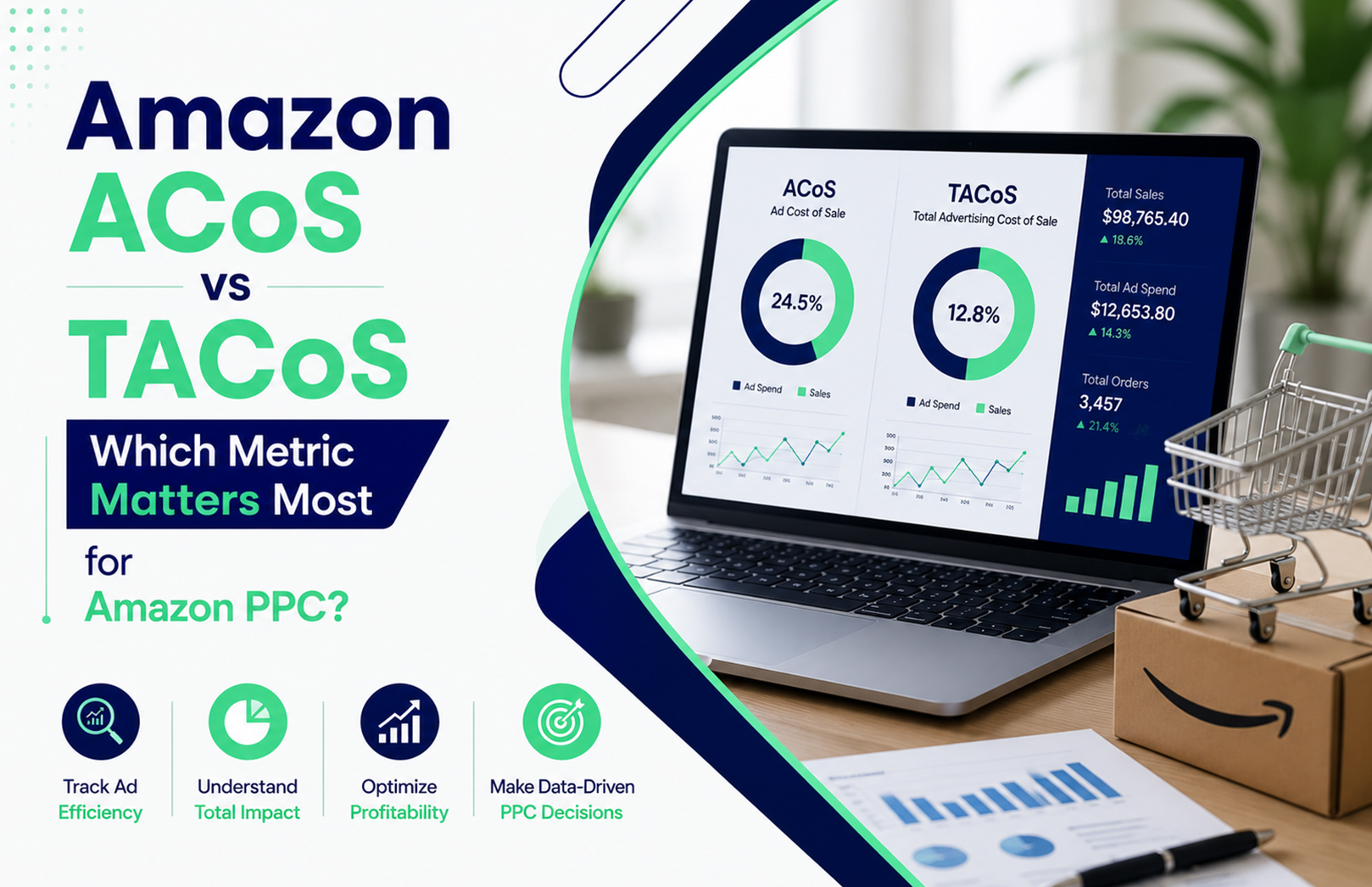
Amazon ACoS vs TACoS: Which Metric Actually Matters?


Ask ten Amazon sellers about their ad performance, and at least nine will be able to quote an ACoS figure without hesitation – 18%, 22% or perhaps a particularly impressive 12% for their best-performing campaign. Ask the same sellers about their TACoS, however, and you’ll be met with blank looks. This information asymmetry is costing Indian sellers millions of rupees in lost profits, as they optimise based on an incomplete view of their advertising costs.

Both metrics matter. But they answer completely different questions, and confusing them is one of the most common reasons Amazon PPC management decisions end up working against a seller’s actual profitability instead of for it.

What ACoS Actually Tells You

Advertising Cost of Sales (ACoS) is a metric that reflects the ratio of advertising spend to the revenue generated by those advertisements. For example, if you spend 10,000 INR on Sponsored Products ads and get 50,000 INR in sales, your ACoS will be 20%.

This figure is useful at the campaign level and really helps understand how a given campaign, ad group, or keyword is performing in terms of profitability. But sellers sometimes make a big mistake applying ACoS as the ultimate indicator of business performance, which it actually was never meant to be.

What TACoS Actually Tells You

Total Advertising Cost of Sales flips the denominator. Instead of comparing ad spend to ad-attributed sales alone, TACoS compares ad spend to your total sales, organic and paid combined. Same ₹10,000 ad spend, but now measured against your entire revenue for that period, including sales that came from organic search, repeat customers, or external traffic.

This is the metric that determines if your advertising is driving actual business growth for you – for the money you’re spending on ads. A campaign might demonstrate a healthy ACoS while failing to provide tangible value if your overall sales are stagnant – in other words, if your ad spend isn’t fueling real growth, but rather simply redirecting would-be organic sales to your ads, making effective marketplace performance optimisation critical to true long-term profitability. 

Why This Distinction Actually Matters for Amazon ACoS vs TACoS

Here’s where the confusion causes real damage. A seller chasing a lower ACoS will often decrease spend on marketing campaigns as soon as the metric begins to rise, even if a particular channel was responsible for bringing new customers to the brand, which then begin to contribute organically to the overall TACoS in the long run.

Amazon ACoS vs TACoS isn’t really a competition between two metrics; it’s a question of timeframe and purpose. ACoS answers “was this specific ad spend efficient?” TACoS answers “is my advertising, taken as a whole, actually reducing my dependency on paid traffic as my organic presence strengthens?” Sellers optimising for ACoS alone frequently end up trapped paying for the same sales indefinitely because they never let campaigns build the organic momentum that would eventually allow them to spend less.

Where Amazon Sponsored Products Fits Into Both Numbers

Amazon Sponsored Products campaigns are usually the biggest lever pulling both metrics in either direction, since they typically represent the largest share of a seller’s ad spend. A properly executed Sponsored Products campaign, which targets the right set of keywords, should be able to generate a healthy ACoS, on its own, while simultaneously boosting organic ranks (thereby driving sales via non-paid channels) due to the inherent velocity of sales that Sponsored Products campaigns are capable of generating, thus further lowering your ACoS months down the line, despite the same level of ad spend.

This is why judging a Sponsored Products campaign purely on its 30-day ACoS misses the longer compounding effect it may be having on organic visibility, an effect that only shows up when you’re actually tracking TACoS alongside it.

Why Advertising Optimisation Needs Both Numbers, Not One

Genuine Amazon advertising optimisation requires holding both metrics in view simultaneously rather than picking a favourite. ACoS tells you where to trim inefficient spend at the keyword and campaign level. TACoS tells you whether your overall advertising strategy is building sustainable, less ad-dependent growth or simply maintaining an expensive treadmill.

Sellers who fixate on ACoS optimise themselves into a smaller and smaller set of campaigns that shrink towards an ever-lower ACoS, potentially sacrificing long-term organic growth by reducing spend that would build future volume. Sellers who fixate on TACoS miss the nuanced ability to identify truly wasteful spend at the keyword level.

The Role of PPC Optimisation in Balancing Both Metrics

Effective Amazon PPC optimisation isn’t about hitting an arbitrary ACoS target in isolation; it’s about understanding which campaigns are worth a temporarily higher ACoS because of what they’re doing for TACoS, and which campaigns show a low ACoS but are contributing nothing to genuine business growth.

A product launch campaign, for instance, often runs a deliberately higher ACoS in its first sixty days, which is expected and often correct, provided TACoS shows organic sales beginning to climb as a result. Cutting that campaign early because ACoS looks uncomfortable can quietly kill the exact momentum that campaign was meant to build.

Why Listing Quality Determines How Efficiently Either Metric Improves

No advertising strategy compensates for a weak product page. Strong Amazon products listing optimisation clear titles, complete bullet points, quality imagery, solid reviews directly improves conversion rate, and conversion rate improvement is one of the few levers that genuinely improves both ACoS and TACoS simultaneously, since better-converting traffic requires less spend to produce the same sales.

Sellers chasing metric improvements purely through bid adjustments while ignoring listing quality are optimising the wrong end of the funnel.

Why This Requires Ongoing Account-Level Attention

Getting this balance right isn’t a one-time calculation; it requires consistent Amazon seller account management that tracks both metrics together over rolling periods, not isolated snapshots. A single week’s ACoS spike means little in isolation. A sustained TACoS trend over several months tells a genuinely useful story about whether the business is becoming healthier or more dependent on ad spend.

This is exactly the kind of performance optimisation that separates sellers scaling sustainably from sellers stuck spending more each year just to maintain the same sales level.

Conclusion

ACoS and TACoS were never meant to compete for your attention; they’re meant to work together, each answering a question the other one can’t. Chase ACoS alone and you risk starving the campaigns quietly building your organic future. Chase TACoS alone and you lose the precision needed to catch real waste before it adds up.

At HRL Infotechs, this dual-metric approach is exactly what shapes how we build ecommerce growth services for Amazon sellers because sustainable growth on the platform has never been about optimising one number in isolation. It’s about understanding what each one is actually telling you, and building a strategy around both.

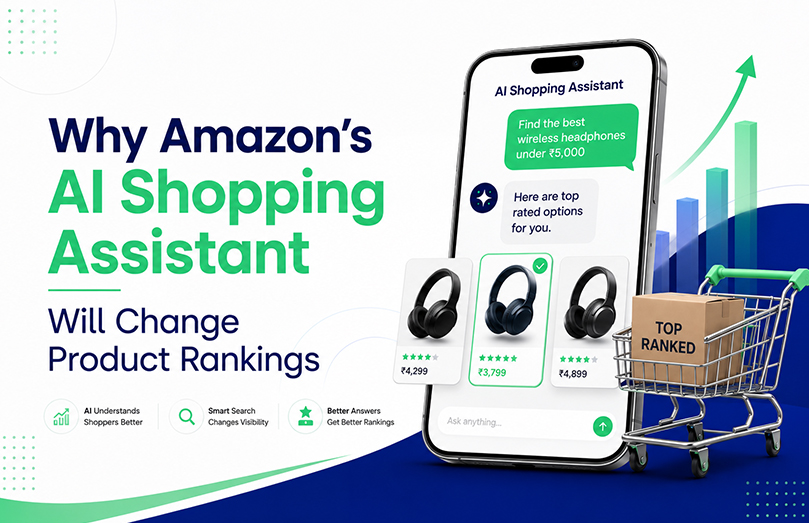
Why Amazon’s AI Shopping Assistant Will Change Product Rankings


Fifty products used to compete for one shopper’s attention. Now it’s five.

That’s the actual shift happening on Amazon right now, and most sellers still haven’t registered how large it is. A traditional Amazon search returns a full page of results dozens of products, endless scroll, plenty of room for a mediocre listing to still get found eventually. Amazon AI shopping assistant does something fundamentally different: ask it a question, and it narrows that same field down to roughly five named products. If your product isn’t one of those five, it simply doesn’t exist for that shopper; there’s no scroll to fall back on.

As of May 2026, Amazon officially renamed this assistant from Rufus to Alexa for Shopping, unifying it with Alexa+’s personalisation across the app, website, and Echo devices. The underlying system the one reading listings, reviews, and Q&A to decide who makes that shortlist of five hasn’t changed. What’s changed is how central it’s becoming to how Indian shoppers actually find products.

Why This Isn’t Just Another Feature Update

Amazon reported over 300 million monthly users engaging with this assistant by the end of 2025, and during Black Friday alone, it was involved in 38% of all Amazon shopping sessions. This isn’t a niche feature a handful of early adopters are testing; it is the new frontier for Amazon product ranking optimisation. It’s rapidly becoming a primary discovery channel, sitting alongside and, in growing cases, replacing traditional search entirely.

For sellers, the implication is straightforward and slightly uncomfortable: the rules that got a product ranking well in classic search results don’t automatically translate into getting recommended by an AI system deciding who makes a shortlist of five.

How the Underlying Logic Actually Differs

Amazon’s traditional Amazon search algorithm, the system most sellers spent years learning to optimise for, is heavily driven by keyword matching, sales velocity, and click-through data. It’s mechanical in a genuinely learnable way.

The AI shopping assistant works differently. Instead of matching typed keywords, it interprets intent from a conversational question, then reads across your entire listing title, bullets, description, A+ content, customer reviews, and the Q&A section to synthesise whether your product genuinely fits what the shopper actually asked. A listing stuffed with repeated keywords but thin on real explanation tends to get recommended less. A listing that reads naturally and actually answers the kind of question a real person would ask tends to surface more often.

This is precisely why real product ranking optimisation in 2026 can’t stop at backend keyword fields the way it used to. The system is reading for meaning now, not just matching strings of text.

What Actually Changes in How Listings Get Built

Solid Amazon listing optimisation going forward means writing content that could genuinely answer a spoken question, not just satisfy a search algorithm scanning for keyword density.

If someone asks the assistant “which of these blenders is quiet enough to use early morning without waking the house,” a listing that’s proactively addressed noise level in the bullets, in the A+ content, ideally reinforced by review content mentioning it has a real shot at being one of the five names returned. A listing that only lists wattage and blade count, however keyword-optimised, genuinely doesn’t.

Why Reviews and Q&A Matter More Than They Used To

Here’s a detail most sellers haven’t fully internalised yet: this assistant doesn’t rely solely on what the seller wrote. It’s actively reading review content and Q&A sections as source material for its own answers.

That means a thin Q&A section the one most sellers genuinely ignore after launch is now a real ranking gap, not just a minor oversight. Proactively seeding a handful of genuinely useful Q&A entries, and actively encouraging detailed reviews that mention specific use cases, has become a real lever for visibility, not just a nice-to-have for social proof.

Why This Reshapes Advertising Strategy Too

Getting genuine Amazon advertising optimisation right now means thinking beyond simply winning a sponsored placement in a search results grid.

If the AI assistant is increasingly deciding the shortlist a shopper actually sees, ad spend that only targets classic search placement is fighting for a shrinking share of real discovery. Smart advertising strategy in 2026 increasingly means making sure the listing itself is strong enough to earn assistant recommendations organically, with paid placement supporting that visibility rather than trying to substitute for it entirely.

Why Account Health Quietly Feeds Into This Too

Sound Amazon seller account management affects this system just as directly as it always affected classic search. Inconsistent stock, unresolved account health flags, or thin catalogue data all undermine the confidence signals the AI assistant is reading before it decides whether to recommend a product at all.

A technically strong listing sitting inside a poorly managed account doesn’t get the benefit of the doubt. The assistant is synthesising trust signals across the whole account experience, not evaluating one listing in complete isolation from everything else.

Why This Extends Well Beyond a Single Listing

This shift is really part of a much broader move toward genuine Amazon marketplace optimisation because a shopper’s experience spans the whole account, not one product page in isolation.

Brands with consistent quality across their entire catalogue, not just their single bestseller, tend to build the kind of trust signals an AI system can actually pick up on across multiple interactions, rather than betting everything on one hero listing carrying the whole brand.

What This Means Beyond Amazon Specifically

The pattern showing up here AI systems narrowing choice down to a handful of recommendations instead of a full results page isn’t unique to Amazon. It’s the same shift reshaping ecommerce marketplace optimisation broadly, as Flipkart, Myntra, and other platforms increasingly build their own AI-assisted discovery layers following the same logic.

Brands that learn to write for genuine intent now, rather than pure keyword density, are building a skill that transfers directly across every marketplace moving in this direction, not just the one that got there first.

Conclusion

The shift from fifty visible results to five AI-recommended ones is the biggest change to Amazon discoverability since the platform introduced sponsored ads. Sellers still optimising purely for classic keyword-matching are optimising for a shrinking share of how shoppers actually find products in 2026.

At HRL Infotechs, real Amazon SEO services now mean building listings, review strategy, and account health together, treating the AI shopping assistant as the primary discovery layer it’s rapidly becoming, not an experimental feature to revisit later once it’s “proven itself.” By the time it’s proven itself to everyone, the sellers who prepared early will already own the shortlist.

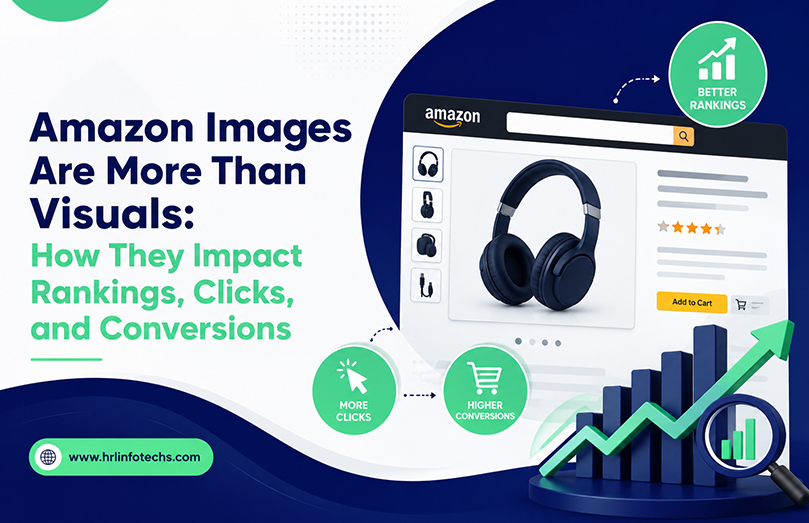
Amazon Images Are More Than Visuals: How They Impact Rankings, Clicks, and Conversions


Scroll through Amazon on your phone for 30 seconds and count how many product titles you have read in full. Realistically, not a single one of them probably caught your eye. What determined whether you continued scrolling or stopped to read more? The image beside the title, which most sellers continue to overlook, despite being their most important tool.

That’s the gap worth talking about, because it touches nearly every part of how a listing actually performs, not just how it looks.

Why Images Are Doing More Work Than Sellers Realise

Most sellers think of Amazon listing optimisation as a title-and-bullet-points exercise, with images treated as decoration added at the end once the copy is finalised.

That’s backwards. On a results page full of dozens of similar products, the image is the first and sometimes only information the shopper takes in before clicking through to your product detail page. Get it wrong, and no one will see your great title at all.

The Click Decision Happens Before Anyone Reads Anything

Real Amazon product image optimisation starts with understanding a simple, slightly uncomfortable truth: shoppers judge a product visually before they judge it rationally.

A messy main image, poorly lit product, or oddly framed shot in an otherwise perfect ad could cause a visitor to pause for half a second – just long enough to go back and pick a competitor instead. Your main image is all it takes to sell someone on your service before they’ve read a single word of your ad.

Why This Connects Directly to Search Visibility

Here’s the part most sellers genuinely don’t expect: images influence Amazon SEO services work more than people assume, because click-through rate is a ranking signal Amazon’s algorithm actively tracks.

A snippet that is clicked on more often than not will steadily improve its position in results, as it’s rewarded by higher levels of traffic. In other words, a well-performing snippet will continue doing well for months to come as a result of being clicked on more often than not.

Getting the Technical Side Right

Good Amazon image optimisation isn’t just about creative quality; it’s also about meeting Amazon’s actual technical requirements properly, something a surprising number of listings still get wrong.

That means using the full 85% of the frame Amazon recommends, keeping the background genuinely pure white on the main image, uploading at a resolution high enough to support zoom, and using every available image slot instead of stopping at three or four of the seven or nine available slots. Each unused slot is a missed opportunity to answer a question a shopper hasn’t asked yet.

Why Images Are the Real Conversion Lever

Traffic getting a shopper to your page is only half the job. The other half genuinely the harder half is convincing them to actually buy once they’ve arrived, and this is where Amazon conversion optimisation lives or dies.

Infographic-style images explaining size, material, or use case answer objections before a shopper has to type a question into the Q&A section. Lifestyle images showing the product genuinely in use build a kind of confidence that specification text alone simply can’t replicate. A shopper who can picture themselves actually using the product converts at a meaningfully higher rate than one left to imagine it purely from a bullet list.

Why This Needs Ongoing Attention, Not a One-Time Fix

A lot of sellers treat product imagery as something you do once at launch and never revisit, which is exactly where professional Amazon listing management services genuinely earn their value.

Seasonal changes, experimenting with alternate lifestyles, refreshing your image, studying the results to determine which image drives traffic and which one is a dud- they all add up to work that most solo sellers can not afford to do regularly.

The Bigger Picture Beyond a Single Listing

Zoom out, and this is really part of a much broader conversation about Amazon marketplace optimisation because images don’t function in isolation from everything else happening on your account.

A brand that leverages strong imagery across its catalogue – not just for the bestseller, but for everything else – can build an image appeal that its buyers will recognise across their purchases. This creates a powerful competitive advantage in a crowded product category, where multiple offerings have similar descriptions and target the same search queries.

Why Account Health Quietly Affects This Too

Here’s a connection most sellers don’t immediately see: solid Amazon seller account management directly supports how well your imagery actually gets to perform in the first place.

Hidden listings, policy issues, or faulty catalogue entries may bury even the most compelling images deep within the search maze, rendering them invisible to potential buyers despite your best efforts. After all, if there is no healthy and compliant account to showcase them on in the first place, all that creative energy goes to waste.

Why This Extends Beyond Amazon Specifically

This isn’t purely an Amazon-specific conversation either. The same visual principles apply directly to broader ecommerce marketplace optimisation across Flipkart, Myntra, and other platforms where Indian sellers increasingly operate simultaneously.

A brand that’s built a genuinely strong visual system for one marketplace can adapt that same underlying strategy across every other platform it sells on rather than starting the entire creative process over from scratch for each channel.

Conclusion

Product images on Amazon were never just visuals sitting next to a title. They’re doing real, measurable work across click-through rate, search ranking, conversion rate, and long-term brand perception, often more work than the copy surrounding them.

Sellers still treating imagery as a final, cosmetic step are consistently leaving performance on the table that better-optimised competitors are already capturing.

At HRL Infotechs, we help Indian sellers treat product imagery as the genuine strategic asset it actually is, building visuals that don’t just look good, but measurably move rankings, clicks, and conversions together, across every marketplace where a brand actually sells.

How Professional Amazon Seller Account Management Improves Buy Box Winning Rate


Winning the Amazon Buy Box is no longer optional for serious sellers. It is where most customers click, compare, and complete their purchase. Yet many brands still treat Amazon Seller Account Management as a side task instead of a strategic growth engine that directly impacts Buy Box win rate and long-term profitability.

When your Amazon Seller Account Management is handled professionally, every lever that influences the Buy Box is monitored, optimized, and aligned with your business goals. From pricing and inventory to Amazon listing optimization and advertising, a structured approach can dramatically increase Buy Box percentage on Amazon and protect your margins at the same time.

Why the Buy Box Matters for Serious Amazon Sellers

The Buy Box is the default purchase option on a product detail page. Most shoppers click “Add to Cart” without checking other offers. That means your Buy Box win rate directly controls how many of your product views convert into sales. Even small improvements in Buy Box percentage Amazon can translate into significant revenue growth.

Professional Amazon Seller Account Management focuses on this reality. Instead of chasing random tactics, it builds a consistent Amazon Buy Box strategy for sellers. The goal is simple: keep your offers eligible, competitive, and profitable, while maintaining strong operational performance that Amazon’s algorithm rewards.

How Amazon Decides Who Wins the Buy Box

Amazon uses a complex algorithm to determine which seller wins the Buy Box at any moment. Price is important, but it is not the only factor. The system also weighs fulfillment method, delivery speed, seller performance metrics, and stock availability. Sellers who ignore these elements often see their Buy Box share drop without understanding why.

With structured Amazon Seller Account Management, these factors are tracked and improved continuously. Instead of reacting when Buy Box share falls, you proactively manage pricing rules, fulfillment options, and service levels. This data-driven approach helps stabilize and increase Buy Box percentage Amazon over time.

Core Elements of Professional Amazon Seller Account Management

Effective Amazon Seller Account Management is not just about logging in daily. It is a disciplined process that combines strategy, analytics, and execution. Each area of your account is reviewed and optimized to support Buy Box performance and profitable growth.

When these elements work together, your account becomes more resilient to competition and marketplace changes. You are not just fighting for today’s sales; you are building a sustainable presence that consistently wins the Buy Box and attracts repeat customers.

Account Health and Performance Metrics

Amazon’s algorithm favors reliable sellers. That means order defect rate, late shipment rate, and cancellation rate must stay within strict thresholds. Professional account management monitors these metrics daily and addresses issues before they trigger penalties or Buy Box suppression.

In addition, proactive communication with buyers, fast response to messages, and effective returns handling all contribute to stronger seller performance. Over time, this operational discipline supports a higher Amazon buy box win rate and protects your brand reputation on the marketplace.

Pricing Strategy and Automated Repricing

Price is a major driver of the Buy Box, but racing to the bottom destroys margins. A professional Amazon Buy Box strategy for sellers uses intelligent repricing rules instead of constant manual changes. These rules consider competitor offers, fees, and your minimum acceptable margin.

By combining pricing tools with expert oversight, Amazon Seller Account Management can keep your offers competitive without undercutting your profitability. This balance is crucial if you want to increase Buy Box percentage Amazon while still scaling a healthy business.

Amazon Listing Optimization That Supports Buy Box Wins

Many sellers focus only on price and ignore product detail pages. Yet strong Amazon listing optimization improves both traffic and conversion, which indirectly supports Buy Box performance. Amazon wants to feature offers that give shoppers a great experience and clear information.

Optimized listings also help you rank for more relevant search terms, bringing in higher intent buyers. When your content, images, and keywords align with shopper expectations, your conversion rate improves. This stronger performance can help your offers remain competitive in the Buy Box rotation.

High-Converting Content and Keyword Strategy

Professional Amazon Seller Account Management includes detailed keyword research and content refinement. Titles, bullet points, and descriptions are crafted to include primary and family keywords naturally, such as amazon buy box win rate and amazon storefront optimization. This supports both search visibility and clarity for shoppers.

At the same time, content must stay readable and persuasive. Clear benefits, use cases, and differentiators help buyers decide faster. When listings convert well, Amazon’s algorithm sees your offers as more valuable, which can positively influence Buy Box share.

Visual Assets and A+ Content

Images and enhanced content are critical for building trust. Professional listing optimization ensures you have high-resolution images, lifestyle shots, and infographics that answer common questions visually. This reduces hesitation and cart abandonment, improving conversion rates.

A+ Content and brand storytelling further differentiate your products from generic competitors. When shoppers stay longer on your page and interact with your content, it sends positive engagement signals. Over time, this engagement supports stronger search rankings and a healthier Amazon buy box win rate.

Leveraging Amazon Seller Ad Services in India for Buy Box Growth

Advertising and Buy Box performance are closely linked. When you win the Buy Box, your Sponsored Products ads can show more often and convert better. Professional Amazon seller Ad services India help align your ad strategy with your Buy Box goals, not just clicks or impressions.

By targeting the right keywords and optimizing bids, you can drive qualified traffic to listings that are already Buy Box eligible. This combination of visibility and eligibility can significantly increase Buy Box percentage Amazon, especially in competitive categories.

Integrated PPC and Organic Strategy

Advanced Amazon Seller Account Management treats advertising and organic optimization as one system. Keyword data from ads informs listing content, while strong organic rankings reduce your long-term cost per acquisition. This integrated approach maximizes return on ad spend and supports sustainable growth.

Additionally, continuous bid optimization, negative keyword management, and campaign restructuring keep your ads efficient. When your campaigns focus on profitable terms and high-intent searches, you attract buyers who are more likely to convert when you hold the Buy Box.

Amazon Storefront Optimization and Brand Control

Beyond individual listings, your Amazon Storefront acts as a branded hub. Effective amazon storefront optimization helps present your full catalog in a structured, visually appealing way. This improves cross-selling, average order value, and brand recall among repeat customers.

When your storefront, listings, and ads all share a consistent strategy, it becomes easier to protect your brand from unauthorized sellers and pricing chaos. Strong brand control supports stable pricing and inventory, which are both essential for maintaining a healthy Amazon buy box win rate.

Data-Driven Decisions and Continuous Improvement

The most successful sellers treat Amazon Seller Account Management as an ongoing optimization process. They rely on dashboards, reports, and marketplace insights to guide decisions on pricing, inventory, and advertising. This data-driven mindset helps them react quickly to competition and demand shifts.

By reviewing Buy Box share, session data, and conversion trends regularly, you can identify which products need attention first. Over time, this disciplined approach compounds, leading to higher Buy Box coverage, stronger rankings, and more predictable revenue from Amazon.

Conclusion: Turning Account Management into a Buy Box Growth Engine

Winning the Buy Box consistently is not about luck or one-time tricks. It is the result of structured Amazon Seller Account Management that connects pricing, performance, content, ads, and brand control into one cohesive strategy. When each of these areas is professionally managed, your Amazon buy box win rate improves, and your business becomes more resilient to marketplace volatility.

If you are ready to turn your Amazon presence into a predictable growth channel and increase Buy Box percentage Amazon across your catalog, partnering with a specialist like HRL Infotechs can help you implement the systems, processes, and optimizations needed to stay ahead of competitors and convert more of your traffic into profitable sales.

Amazon FBA Management Services in Vadodara: What’s Included & How Much It Costs


Running a profitable Amazon business today is far more complex than just listing products and waiting for sales. From inventory planning and PPC campaigns to account health and customer experience, every element needs expert attention. That is why many sellers now rely on professional Amazon FBA Management Services in Vadodara to scale faster, reduce risks, and protect margins in a highly competitive marketplace.

Vadodara has quickly become a hub for eCommerce talent in India, offering specialized Amazon seller account management and Amazon FBA consulting services tailored for both new and established brands. If you are wondering what exactly is included in these services and how much they cost, this guide breaks down everything you need to know before choosing an Amazon store management services agency in India.

Why Sellers in Vadodara Need Amazon FBA Management Services

Competition on Amazon India and global marketplaces has grown aggressively, and small mistakes can lead to account suspensions or wasted ad spend. Professional Amazon FBA Management Services in Vadodara help sellers navigate complex policies, optimize listings, and manage logistics so they can focus on sourcing and brand building. This support is especially valuable for manufacturers and wholesalers entering Amazon for the first time.

Local agencies in Vadodara understand both Indian supply chains and Amazon’s global standards, which creates a strong advantage. They combine Amazon seller account management expertise with knowledge of GST, packaging norms, and regional courier networks. As a result, sellers can launch faster, avoid compliance issues, and maintain healthy profit margins even in competitive categories.

Core Components of Amazon FBA Management Services in Vadodara

Most top agencies follow a structured approach to Amazon FBA Management Services covering the full lifecycle of your Amazon business. While each provider has its own process, the core building blocks remain similar across leading service partners. Understanding these components helps you compare proposals and avoid paying for incomplete solutions.

Comprehensive Amazon store management services in India usually include strategic planning, daily operational management, and performance optimization. This ensures that your Amazon presence is not just set up correctly but also continuously improved based on data, seasonality, and changing competition.

Account Setup and Amazon Seller Account Management

For new sellers, the first step is proper account setup and verification. Agencies guide you through documentation, brand registry, tax details, and marketplace selection. Effective amazon seller account management ensures your account is compliant from day one, reducing the risk of holds or suspensions later.

Ongoing management includes monitoring account health, handling performance notifications, responding to Amazon support, and maintaining policy compliance. In practice, this means fewer surprises, faster resolution of issues, and a more stable foundation for scaling your Amazon FBA operations.

Listing Creation, Optimization, and Catalog Management

High-converting product listings are at the heart of successful Amazon FBA Management Services in Vadodara. Agencies conduct keyword research, competitor analysis, and category mapping to craft optimized titles, bullet points, and descriptions. They also ensure images, A+ Content, and brand stories meet Amazon’s guidelines while appealing to your target audience.

Catalog management covers variation setup, parent-child relationships, pricing updates, and regular content refreshes. With structured catalog control, your products appear correctly in search, avoid duplication, and maintain consistent branding across marketplaces, including Amazon.in and international platforms.

Inventory Planning and FBA Operations

Stockouts and overstocking both hurt profitability, which is why inventory planning is a key part of amazon fba consulting services. Agencies forecast demand using sales history, seasonality, and promotional plans. They then recommend reorder points and shipment schedules to Amazon fulfillment centers to maintain healthy inventory levels.

On the operational side, experts manage FBA shipment creation, labeling requirements, packaging standards, and reconciliation of lost or damaged inventory. This level of operational control reduces penalties, storage fees, and customer dissatisfaction due to delayed or canceled orders.

Amazon Marketing Services and PPC Management

Even the best listings struggle without visibility, which is why Amazon Marketing Services and PPC campaigns are central to modern Amazon strategies. Agencies in Vadodara design advertising structures that balance aggressive growth with controlled ACoS, ensuring your ad spend converts into profitable sales. They also align campaigns with product launches, seasonal events, and deal periods.

Typical Amazon store management services in India include Sponsored Products, Sponsored Brands, and Sponsored Display campaigns. Experts handle keyword research, bid optimization, negative keyword management, and daily performance monitoring. Over time, this data-driven approach improves rankings organically while keeping your advertising budget under control.

Promotions, Deals, and Brand Visibility

Beyond PPC, Amazon FBA Management Services in Vadodara often include planning and execution of promotions and deals. This may involve Lightning Deals, coupons, price drops, and participation in major sale events. The goal is to boost sales velocity without eroding margins unnecessarily.

Agencies also work on enhancing brand visibility through Stores, Posts, and review generation strategies that comply with Amazon policies. When combined with strong advertising and optimized listings, these efforts create a powerful flywheel effect for long-term growth.

Analytics, Reporting, and Strategic Consulting

Data-driven decision-making is a hallmark of professional amazon fba consulting services. Agencies track key performance indicators such as conversion rate, click-through rate, organic ranking, and repeat purchase behavior. Regular reporting keeps you informed about what is working and where improvements are needed.

Strategic consulting goes beyond numbers to include product expansion planning, pricing strategy, and marketplace diversification. With this guidance, sellers can decide when to launch new SKUs, test bundles, or expand from Amazon India to global marketplaces while maintaining operational stability.

Customer Experience and Reputation Management

Customer satisfaction directly impacts your rankings and Buy Box share. As part of Amazon FBA Management Services in Vadodara, agencies monitor reviews, ratings, and customer messages. They help you respond quickly to issues, process returns smoothly, and identify recurring product problems that need attention.

Reputation management also involves proactive measures such as improving packaging, clarifying product descriptions, and refining post-purchase communication. Over time, this leads to higher ratings, stronger social proof, and more organic conversions from browsing customers.

How Much Do Amazon FBA Management Services in Vadodara Cost?

Pricing for Amazon FBA Management Services in Vadodara varies based on scope, catalog size, and sales volume. Most agencies follow one of three models: fixed monthly retainers, percentage of sales, or hybrid structures. Entry-level plans for small catalogs usually start at a modest monthly fee, while advanced, multi-marketplace management commands higher retainers.

When evaluating cost, it is important to look beyond the headline price and focus on return on investment. A capable Amazon store management services agency in India should help increase revenue, reduce wasted ad spend, and prevent costly account issues. In many cases, the incremental profit generated far exceeds the management fee.

  • Fixed monthly retainers for ongoing management and optimization
  • Performance-based fees linked to sales or ad spend
  • Project-based pricing for launches, audits, or account recovery

Before signing, request a clear breakdown of deliverables, reporting frequency, and communication channels. This transparency helps you compare providers fairly and ensures expectations are aligned from the start.

Choosing the Right Amazon Store Management Services Agency in India

Selecting the right partner for Amazon FBA Management Services in Vadodara requires more than just comparing prices. You should evaluate experience in your product category, understanding of Amazon policies, and the depth of their analytics capabilities. Ask for case studies, sample reports, and a walkthrough of their optimization process.

It is also wise to check how the team handles communication, escalation, and strategic planning. The best Amazon seller account management partners act as an extension of your internal team, not just a vendor. They proactively suggest improvements, test new tactics, and keep you updated on Amazon’s frequent policy and algorithm changes.

When to Invest in Professional Amazon FBA Consulting Services

If you are spending too much time on daily Amazon tasks or your growth has plateaued, it may be time to invest in expert support. Professional amazon fba consulting services are especially valuable when you are preparing for major sales events, launching new product lines, or expanding to new marketplaces.

By partnering with a specialized agency, you gain access to proven playbooks, advanced tools, and experienced strategists. This combination allows you to scale faster, protect your brand, and compete effectively with larger sellers and established brands.

Conclusion: Turn Amazon into a Scalable Growth Channel

Building a profitable, sustainable Amazon business requires more than basic listing setup or occasional ad campaigns. Comprehensive Amazon FBA Management Services in Vadodara bring together strategy, operations, marketing, and analytics to create a scalable growth engine. With the right partner, you can reduce operational stress, protect your account, and unlock new revenue opportunities across Amazon marketplaces.

If you are ready to treat Amazon as a serious growth channel rather than a side experiment, consider partnering with an experienced team like HRL Infotechs to manage, optimize, and scale your store with confidence.

Amazon Account Management Services in Gujarat for Scalable Growth


If you talk to Amazon sellers in Gujarat long enough, a familiar pattern emerges. Sales start well. A few products gain traction. Reviews come in. Then… growth stalls. Ads get expensive. Listings slip down the rankings. Account health warnings pop up at the worst possible time.

At that point, most sellers realise something important: running an Amazon business is no longer a side task. It’s an operation. And operations need systems, experience, and constant attention.

That’s precisely where Amazon Account Management services come into the picture, especially for businesses in Gujarat that want scalable, sustainable growth rather than short-term spikes.

Why Gujarat Sellers Are Turning to Amazon Experts

Gujarat has long been a hub for trade. Textiles, jewellery, manufacturing, private labels, and entrepreneurship are part of the culture here. Naturally, many local brands have moved to Amazon to reach a national (and global) audience
.

But Amazon in 2025 is not Amazon from five years ago. Today, success depends on understanding algorithms, advertising efficiency, compliance, account health, and making data-driven decisions.

This is why Amazon account management services in Gujarat are no longer “nice to have.” They’re becoming essential for sellers who want to compete seriously.

What Amazon Account Management Actually Covers

Many sellers assume account management means uploading products and checking orders. That’s a small slice of the pie.

Professional Amazon seller account management is a combination of strategy, execution, and daily optimisation. It usually includes:

  • Product listing creation and maintenance
  • Keyword research and ranking strategy
  • Advertising setup and optimisation
  • Inventory and pricing coordination
  • Performance tracking and reporting
  • Policy compliance and issue resolution

Think of it less as outsourcing work and more as adding a specialised Amazon team to your business.

The Real Value of Local Expertise in Gujarat

Here’s something sellers often overlook: local context matters.

Agencies that understand Gujarat’s business ecosystem know:

  • Seasonal demand patterns
  • Common supplier and logistics challenges
  • Pricing sensitivities in competitive categories
  • How fast-growing local brands operate

When you work with a team like HRL Infotechs, that local understanding blends with platform expertise. It’s not generic advice; it’s practical, market-aware execution.

Amazon Listing Optimisation: Where Growth Usually Starts

Most underperforming Amazon accounts share one issue: weak listings. Not bad listings. Just average ones. Effective Amazon listing optimisation services go beyond adding keywords. They focus on:

  • Search intent, not keyword stuffing
  • Conversion-focused titles and bullet points
  • Straightforward visual storytelling through images
  • Backend search term optimisation

Small changes here often lead to noticeable improvements in both organic ranking and ad performance. It’s usually the fastest win for struggling accounts.

Amazon PPC Management: Controlling Spend, Not Just Traffic

Ads are powerful. Ads are expensive. Both statements are factual.

Without proper management, Amazon PPC becomes a money drain. With the right approach, it becomes a growth engine.

Professional Amazon PPC management services focus on structuring campaigns logically, identifying high-converting keywords, cutting wasted spend early, and scaling only what’s proven.

A good PPC isn’t about spending more. It’s about spending smarter and knowing when to pause instead of pushing.

Store Management: Scaling Without Chaos

As product counts grow, complexity increases. Inventory issues, suppressed listings, and pricing mismatches don’t announce themselves. They quietly damage performance.

That’s where Amazon store management services come in.

Daily monitoring ensures:

  • Listings stay compliant
  • Stock levels remain balanced
  • Buy Box issues are resolved quickly
  • Account health metrics stay in the safe zone.

For growing Gujarat-based sellers, this kind of oversight often prevents costly disruptions before they happen.

Why DIY Amazon Management Stops Working at Scale

Many sellers start out managing Amazon themselves. And honestly, that’s fine, at the beginning.

But as order volumes increase, the margin for error shrinks.

  1. One missed policy update.
  2. One poorly optimised ad campaign.
  3. One ignored performance notification.

Suddenly, revenue dips or accounts face restrictions. Professional Amazon Account Management exists to reduce these risks while freeing business owners to focus on sourcing, branding, and expansion.

How Amazon Account Management Supports Scalable Growth

Scalability isn’t just about selling more units. It’s about building systems that can handle growth without breaking.

Strong Amazon account management helps by:

  • Creating repeatable optimisation processes
  • Using data to guide decisions
  • Preparing accounts for seasonal spikes
  • Planning ad budgets strategically
  • Supporting category expansion

Growth feels less chaotic when someone is watching the dashboard every day.

Choosing the Right Amazon Partner in Gujarat

Not all service providers are equal. Before committing, sellers should look for transparent reporting, clear communication, proven Amazon-specific experience, and custom strategies (not templates)

HRL Infotechs focuses on building long-term partnerships rather than one-size-fits-all solutions, something that matters when your Amazon store becomes a significant revenue channel.

Common Myths About Amazon Account Management

“It’s only for big sellers.”

Not true. Many small and mid-sized sellers benefit the most because they can’t afford mistakes.

“I’ll lose control of my account.”

A good partner works collaboratively, not secretly.

“Results should be instant.”

Amazon’s growth is cumulative. Sustainable results take consistency, not shortcuts.

Final Thoughts: Amazon Growth Is a Process, Not a Hack

Selling on Amazon today is less about luck and more about execution. The platform rewards structure, relevance, and discipline.

For Gujarat-based businesses aiming to grow beyond trial-and-error selling, professional Ecommerce account management services in Gujarat provide clarity in a complex ecosystem.

With the right mix of listing optimisation, advertising control, and daily management, Amazon becomes what it’s meant to be: a scalable growth channel, not a constant stress point.

And when growth starts feeling organised instead of overwhelming, that’s usually a sign you’re doing something right.