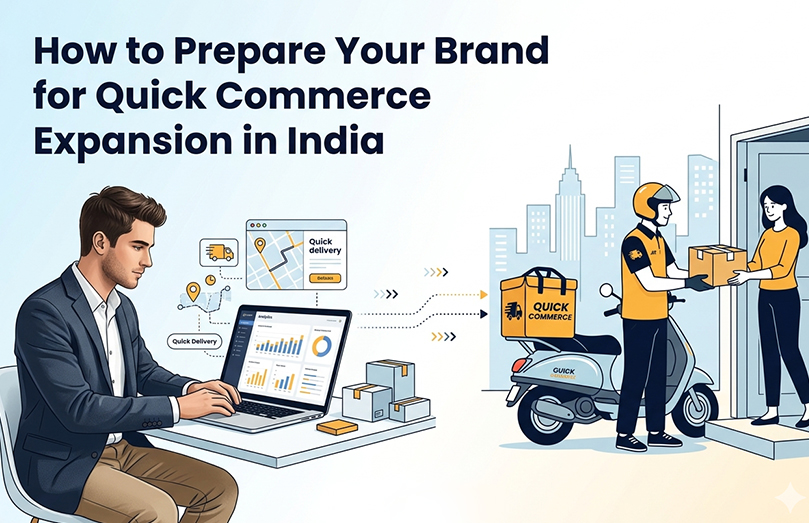
Quick commerce is reshaping how Indian consumers discover, evaluate, and buy everyday products. For brands, this shift is not just about faster delivery; it is about building visibility and preference at the exact moment of purchase. As quick commerce platforms grow across India, brands that prepare early will capture disproportionate market share and long-term loyalty.
However, winning in quick commerce requires more than listing products on Blinkit, Zepto, or Swiggy Instamart. It demands a clear quick commerce strategy, tailored content, optimized assortments, and performance-led campaigns. This guide breaks down how to prepare your brand for quick commerce expansion in India with practical, market-ready steps.
Understanding Quick Commerce in India and Why It Matters Now
Quick commerce in India refers to ultra-fast delivery models, usually within 10–30 minutes, powered by dark stores and hyperlocal logistics. Categories like groceries, personal care, snacks, beverages, and household essentials are leading this quick commerce growth in India, but more categories are joining every quarter. For brands, this channel is no longer experimental; it is becoming a core part of the digital shelf.
The rise of quick commerce is driven by urban convenience, rising disposable incomes, and a mobile-first consumer base. Shoppers are searching, comparing, and buying directly within quick commerce apps, often without visiting marketplaces or brand websites. This means your quick commerce strategy for brands must focus on visibility, availability, and impulse triggers at the point of decision.
Defining the Right Quick Commerce Expansion Strategy for Your Brand
Before jumping into listings, define what quick commerce should achieve for your brand. Is the goal incremental sales, higher market share in key cities, or trial for new launches? A clear objective will shape your quick commerce expansion strategy and help you prioritize platforms, budgets, and product focus. Without this clarity, efforts often become fragmented and hard to scale.
Start by mapping your core consumer segments and their quick commerce behavior. Identify which cities, pin codes, and platforms show the highest relevance for your category. Then, align internal stakeholders across sales, marketing, supply chain, and finance so that quick commerce in India is treated as a strategic channel, not just another listing exercise.
Choosing the Right Quick Commerce Platforms
Each quick commerce platform has a different audience mix, category strength, and promotional ecosystem. For example, Blinkit is strong in metros and high-frequency grocery baskets, while Zepto and Swiggy Instamart are rapidly expanding into Tier 1 and emerging Tier 2 markets. Your quick commerce strategy for brands should reflect these nuances instead of treating all platforms the same.
Evaluate platforms based on category relevance, serviceable locations, ad formats, and data access. Prioritize 2–3 core partners for the first phase of quick commerce expansion in India. This focused approach allows you to test, learn, and optimize faster before scaling to additional platforms.
Aligning Pricing, Promotions, and Trade Terms
Quick commerce shoppers are highly price-aware and promotion-sensitive. At the same time, platforms expect competitive pricing and attractive offers to drive conversion. Your quick commerce expansion strategy must balance margin protection with aggressive visibility. Avoid deep discounting without a clear payback model or long-term plan.
Design promo mechanics that support trial and repeat: combo packs, limited-time offers, and cart-level deals. Ensure price parity with other online channels where possible to avoid consumer confusion. Finally, build in measurement frameworks to track how these promotions impact both sales and brand equity over time.
Optimizing Product Assortment for Quick Commerce Growth in India
Not every SKU in your portfolio is suited for quick commerce. Start with high-velocity, high-repeat products that fit quick missions like top-ups, cravings, or last-minute needs. These SKUs will anchor your presence and fuel quick commerce growth in India. Over time, you can layer in premium or niche variants to increase basket value.
Think in terms of missions and occasions, not just categories. For example, “movie night,” “breakfast rush,” or “weekend cleaning” can guide which SKUs to prioritize. Use platform data and sales reports to refine your quick commerce strategy for brands, dropping underperforming SKUs and doubling down on winners.
Packaging and Formats That Win in Quick Commerce
Quick commerce favors SKUs that are easy to stock, pick, and deliver. Smaller packs, multi-packs, and ready-to-use formats often perform better than bulky or fragile items. Consider creating quick commerce-exclusive bundles that solve a complete consumer need, such as a snack combo or cleaning essentials kit.
Packaging should also be optimized for on-screen visibility. Clear product images, legible labels, and strong color blocking help your brand stand out in crowded quick commerce search results. This is especially important when consumers scroll quickly and make decisions in seconds.
Ensuring Availability and Operational Readiness
Nothing kills quick commerce performance faster than out-of-stock issues. Align your supply chain and distributor partners with platform demand forecasts and seasonal spikes. Ensure that dark stores in priority pin codes are consistently stocked with your core SKUs to support sustainable quick commerce growth in India.
Set up regular reviews with platform account managers to track fill rates, stock-outs, and replenishment cycles. Integrate these insights into your broader quick commerce expansion strategy so that marketing investments are always backed by reliable availability on the shelf.
How to Sell on Quick Commerce Platforms Effectively
Listing your products is only the first step. To truly understand how to sell on quick commerce platforms, you must treat each product page as a mini landing page. Optimize titles, descriptions, and images with relevant keywords like quick commerce, quick delivery, and category-specific terms, while keeping language natural and consumer-friendly.
Use benefit-led copy that highlights speed, convenience, and usage occasions. Add clear claims, certifications, and differentiators that support your E-E-A-T profile and build trust. Regularly A/B test creatives and descriptions to see what drives higher click-through and conversion across platforms.
How to Sell on Blinkit: Practical Considerations
When planning how to sell on Blinkit, focus on search visibility and banner placements. Consumers often use generic category searches, so ranking high for those terms is critical. Optimize product titles with brand, variant, size, and key benefits while keeping them readable and concise.
Participate in Blinkit-led events, theme days, and seasonal campaigns to gain incremental visibility. Track performance by city, store, and placement type, then refine your quick commerce strategy for brands based on what actually moves the needle on Blinkit.
Marketing Strategy for Zepto and Swiggy Instamart
A strong marketing strategy for Zepto should combine always-on visibility with tactical bursts. Use sponsored listings, in-app banners, and homepage placements to secure top-of-shelf presence. Complement this with occasion-based campaigns such as festivals, exam season, or weather-driven triggers.
For Swiggy Instamart, build a quick commerce ads strategy that leverages audience targeting and time-of-day insights. Promote relevant SKUs during peak demand windows, such as evenings for snacks or mornings for breakfast essentials. Continuously refine your quick commerce ads strategy based on ROAS, new-user acquisition, and repeat purchase metrics.
Measuring and Scaling Your Quick Commerce Strategy
To scale quick commerce in India, you must move beyond vanity metrics and focus on actionable KPIs. Track share of search, share of shelf, conversion rate, repeat purchase, and average order value. These indicators reveal whether your quick commerce expansion strategy is building both sales and brand strength.
Set up dashboards that integrate platform data, internal sales reports, and campaign performance. Review them monthly with cross-functional teams to decide where to invest more, where to optimize, and where to exit. This disciplined approach will help you build a resilient quick commerce strategy for brands in a competitive market.
Conclusion: Turning Quick Commerce into a Growth Engine
Quick commerce is no longer a side channel; it is a frontline battleground for consumer attention and loyalty in India. Brands that invest in the right assortment, operational readiness, and platform-specific marketing will capture outsized gains as quick commerce growth in India continues. The key is to treat quick commerce as a strategic pillar, not a short-term experiment.
By aligning your teams, refining your quick commerce expansion strategy, and executing sharply on platforms like Blinkit, Zepto, and Swiggy Instamart, you can turn ultra-fast delivery into a sustainable growth engine. Partnering with specialists like HRL Infotechs can further accelerate this journey, ensuring your brand is fully prepared to win in the evolving quick commerce landscape.