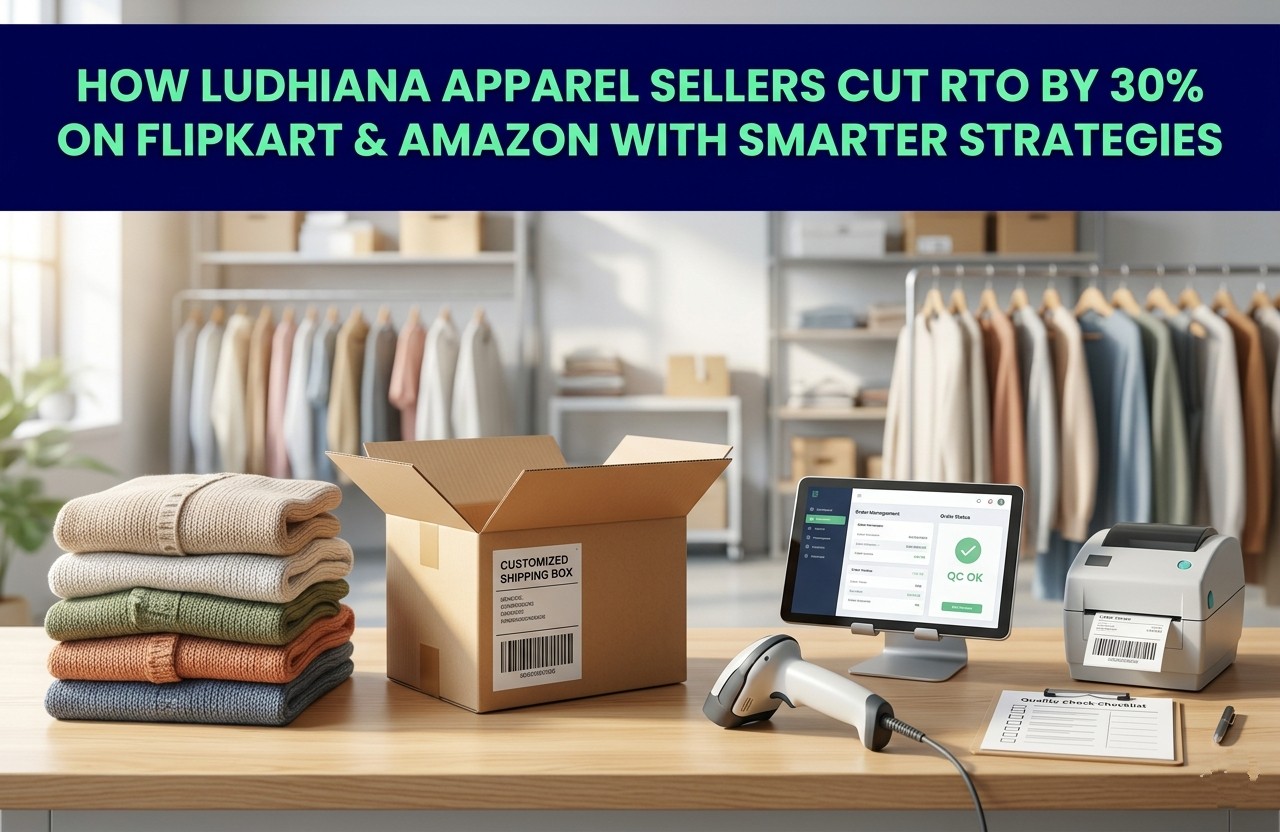
Ludhiana’s apparel sellers live in one of the most competitive ecommerce environments in India. Margins are tight, customer expectations are high, and one metric quietly eats profits every single day: Return to Origin (RTO). When RTO spikes on Flipkart and Amazon, it does not just hurt revenue, it also damages seller ratings and visibility.
The good news is that RTO is not random. With the right data-backed approach, it can be controlled and significantly reduced. By using smarter catalog, logistics, and marketplace strategies, many Ludhiana apparel sellers have been able to reduce RTO in ecommerce by 25–30% and protect their cash flow while scaling.
Why High RTO Happens In Ecommerce For Apparel Sellers
Before you can reduce RTO in ecommerce, you need to understand why it happens so frequently, especially in fashion and apparel. Most Ludhiana sellers see high RTO on COD orders, size-sensitive products, and listings where expectations do not match reality. These patterns are consistent across Flipkart and Amazon India.
Common reasons for high RTO in ecommerce India include wrong or incomplete addresses, customers not answering calls, size or fit issues, poor product photos, misleading titles, and delayed deliveries. Each of these can be fixed with structured ecommerce return rate reduction strategies that are tailored to marketplace rules.
Key RTO Triggers Specific To Flipkart And Amazon India
On Flipkart, RTO often spikes when listings are not aligned with platform guidelines or when sellers ignore Flipkart account management services recommendations. Incorrect category mapping, weak product attributes, and non-optimized titles can attract the wrong audience, which leads to cancellations and returns.
On Amazon India, RTO is heavily influenced by search visibility and expectation management. If Amazon SEO & Product Listing Optimization is weak, products may show up for irrelevant queries. Customers order based on partial information, and when the product arrives, they cancel or return, driving up RTO and hurting listing health.
Impact Of High RTO On Profitability And Growth
High RTO does not just mean a lost order. Sellers pay for packaging, shipping, manpower, and sometimes return logistics, all without earning a rupee. For Ludhiana apparel brands, even a 5–10% increase in RTO can wipe out monthly profits, especially on low-margin SKUs.
Additionally, Flipkart and Amazon algorithms track cancellations, returns, and delivery attempts. High RTO can reduce Buy Box chances, limit visibility in search, and even trigger penalties. That is why serious sellers treat reduce RTO in ecommerce as a core business strategy, not just an operational issue.
How To Reduce RTO On Flipkart With Smarter Listing & Operations
Flipkart buyers are highly price-sensitive, but they also respond well to clear, accurate information. To reduce RTO in ecommerce on Flipkart, Ludhiana apparel sellers need to optimize listings, strengthen order confirmation processes, and refine logistics choices. This is where structured flipkart account management services can make a measurable difference.
Start by auditing your top 50 SKUs with the highest RTO. Check titles, images, bullet points, size charts, and reviews. Often, a few targeted changes in flipkart product listing & SEO Optimization can reduce confusion, set correct expectations, and cut returns without heavy discounts.
Flipkart Product Listing & SEO Optimization Best Practices
Effective flipkart product listing & SEO Optimization focuses on clarity, relevance, and search intent. Use precise product titles with fabric type, fit, gender, and use case. For example, instead of a generic “Men’s Shirt”, use a detailed title that matches how buyers search and reduces ambiguity.
Include high-quality images from multiple angles, close-ups of fabric, and real model shots where possible. Add accurate size charts and highlight key benefits in bullet points. These steps reduce RTO in ecommerce by ensuring buyers know exactly what they are ordering, which is critical in apparel categories.
Operational Tactics To Reduce COD Returns On Flipkart
COD orders are a major driver of RTO. To address how to reduce COD returns in India on Flipkart, many successful sellers use a simple but effective confirmation workflow. They verify high-value or risky COD orders via automated calls or WhatsApp before dispatching.
Additional tactics include limiting COD for pin codes with historically high RTO, using reliable courier partners for those regions, and offering small prepaid discounts. Over time, these operational tweaks help reduce RTO in ecommerce India and stabilize cash flow for apparel sellers.
How To Reduce Returns On Amazon India With Data-Led Optimization
Amazon India is heavily algorithm-driven, so the way you structure your catalog and content directly affects both sales and RTO. To reduce RTO in ecommerce on Amazon, you must align your listings with buyer intent and continuously monitor return reasons from the Voice of Customer dashboard.
When sellers invest in Amazon marketing Services and strong Amazon SEO & Product Listing Optimization, they attract more qualified traffic. That means fewer impulse purchases from the wrong audience and fewer returns due to mismatch between expectations and the delivered product.
Using Amazon SEO & Product Listing Optimization To Cut RTO
Start with keyword research focused on apparel-specific queries in India. Integrate primary and secondary keywords naturally into titles, bullet points, and descriptions. This helps reduce RTO in ecommerce by ensuring your products appear for the right searches, not just high-volume generic terms.
Next, refine your A+ content and images to answer common pre-purchase questions: fabric feel, stretch, transparency, fit, and wash care. When customers understand these details before buying, they are less likely to return items. This is one of the most reliable ecommerce return rate reduction strategies for fashion.
Leveraging Amazon Marketing Services Without Increasing RTO
Many sellers worry that scaling ads through Amazon marketing Services will increase RTO. That only happens when campaigns are poorly targeted. Instead, focus on high-intent keywords, remarketing to past buyers, and promoting bestsellers with historically low RTO and strong reviews.
Monitor search term reports and return reasons together. If a campaign drives traffic that converts but returns spike, refine your targeting or improve listing clarity. This integrated view helps reduce RTO in ecommerce while still growing overall order volume.
Practical Ecommerce Return Rate Reduction Strategies For Apparel
Beyond marketplace-specific tactics, there are universal strategies that help reduce RTO in ecommerce India across both Flipkart and Amazon. Apparel sellers in Ludhiana who apply these consistently see a compounding effect over a few months, with RTO dropping and repeat purchase rates rising.
These strategies focus on pre-purchase clarity, post-purchase communication, and smart policy design. When combined, they directly address why high RTO happens in ecommerce and create a smoother experience for both buyers and operations teams.
Improve Size Accuracy And Product Expectations
Size and fit are the top reasons for returns in apparel. To reduce RTO in ecommerce, use detailed size charts with actual garment measurements, not just generic S, M, L labels. Add guidance like “If you are between sizes, choose one size up” based on real customer feedback.
Also, be transparent about fabric thickness, stretch, and fit type. If a shirt is slim fit or a kurti is slightly sheer, mention it clearly. This honesty may slightly reduce conversion in the short term but will significantly lower returns and build long-term trust.
Strengthen Communication And Delivery Experience
Another powerful way to reduce RTO in ecommerce India is to improve communication from order to delivery. Use automated SMS or WhatsApp updates to confirm orders, share tracking links, and remind customers about delivery attempts, especially for COD orders.
Additionally, work closely with courier partners to optimize delivery slots and reduce fake “customer not available” tags. When customers feel informed and prepared, they are more likely to accept deliveries and less likely to cancel at the doorstep.
How Ludhiana Apparel Sellers Achieved 30% RTO Reduction
Ludhiana apparel sellers who successfully reduced RTO in ecommerce by around 30% did not rely on a single trick. They implemented a structured roadmap that combined listing optimization, COD risk control, and marketplace-specific strategies for Flipkart and Amazon India.
Typically, the journey started with a detailed RTO audit: identifying high-risk SKUs, pin codes, courier partners, and order types. Then, they rolled out targeted changes in flipkart product listing & SEO Optimization, Amazon SEO & Product Listing Optimization, and operational workflows, measuring impact every 15–30 days.
Key Steps In Their RTO Reduction Playbook
Most winning playbooks included a few common steps that any serious apparel seller can replicate. These steps are practical, measurable, and aligned with how to reduce RTO on Flipkart and how to reduce returns on Amazon India without hurting growth.
- Audit top RTO SKUs and pin codes across both marketplaces
- Fix titles, images, and size charts for clarity and accuracy
- Introduce COD confirmation flows for risky orders
- Limit COD in historically high-RTO regions
- Align ad campaigns with low-RTO, high-review products
- Track RTO weekly and refine strategies continuously
Conclusion: Turn RTO Control Into A Competitive Advantage
For Ludhiana apparel sellers, learning how to reduce RTO on Flipkart and how to reduce returns on Amazon India is not optional anymore. It is a core part of building a profitable, scalable ecommerce business. When you reduce RTO in ecommerce, every rupee spent on ads, packaging, and logistics starts working harder for you.
If you want expert support in implementing these marketplace-focused strategies, from flipkart account management services to Amazon marketing Services and advanced listing optimization, partnering with a specialized ecommerce growth team like HRL Infotechs can help you move from reactive firefighting to predictable, data-driven growth.