Why Quick Commerce Requires a Different Marketing Strategy Than Amazon


Quick commerce has changed how consumers discover and buy everyday products. Unlike traditional marketplaces, these 10–30 minute delivery apps compress the entire journey from awareness to purchase into a few taps. That speed is exciting for brands, but it also means your quick commerce marketing strategy cannot simply copy what works on Amazon.

To win on these platforms, brands must rethink how they show up, how they spend, and how they measure success. The rules of search, visibility, and impulse buying are different. Understanding these differences is the first step to building a marketing strategy for quick commerce platforms that actually drives profitable growth.

Why Quick Commerce User Behavior Differs From Amazon

On Amazon, shoppers usually arrive with a clear intent. They search, compare, read reviews, and often build a cart across categories. The journey is more considered, and price, ratings, and detailed content play a major role in conversion. This shapes the classic Amazon marketing strategy most brands follow today.

Quick commerce users behave differently. They open the app to solve an immediate need: missing ingredients, snacks, last-minute essentials, or impulse treats. Session times are shorter, browsing is lighter, and decisions are faster. As a result, your quick commerce marketing strategy must prioritize speed of impact over depth of information.

Quick Commerce vs Amazon: Core Marketing Differences

When comparing quick commerce vs Amazon, the most important difference is context. Amazon is a search-led marketplace, while quick commerce is a mission-led convenience channel. This shift changes how you should think about assortment, pricing, and media investments.

On Amazon, you optimize for keywords, category rankings, and long-term review building. On quick commerce, you optimize for visibility on home screens, mission-based shelves, and real-time availability. Your quick commerce advertising strategy must therefore be built around micro-moments rather than long research cycles.

From Search-First to Mission-First Experiences

Amazon journeys usually start with a typed search, which makes search term optimization and product detail pages critical. Brands invest heavily in titles, bullets, A+ content, and review generation to win the algorithm. This is the backbone of a classic Amazon marketing strategy.

Quick commerce journeys often start from curated missions like “Breakfast,” “Movie Night,” or “Party Essentials.” Users tap into these missions instead of typing long queries. A strong quick commerce marketing strategy must therefore align products and promotions with these missions, not just with generic category keywords.

Impulse-Driven Baskets and Smaller Decision Windows

Quick commerce baskets are smaller and more impulsive. Shoppers add what they see in the first few screens, often influenced by discounts, badges, and visual cues. This makes top-of-shelf and banner placements disproportionately powerful for brands.

Because decision windows are short, your brand has only seconds to win attention. A winning marketing strategy for quick commerce platforms focuses on simple messaging, recognizable packs, and clear price cues that can convert at a glance.

Building a High-Impact Quick Commerce Marketing Strategy

To design a winning quick commerce growth strategy India or in any market, brands must align media, assortment, and operations. The goal is to be visible, available, and relevant at the exact moment of need. This requires a more integrated approach than simply running isolated ads.

A strong quick commerce marketing strategy usually combines three pillars: always-on visibility, mission-based activation, and operational excellence. When these work together, brands can turn quick commerce from a pure discount channel into a sustainable growth engine.

Always-On Visibility and Share of Screen

On quick commerce, “share of screen” matters more than share of shelf. You need consistent presence across home screens, category pages, and search results. This is where a structured quick commerce advertising strategy becomes critical.

Key tactics often include:

  • Sponsored listings on high-intent keywords and mission pages
  • Homepage banners during key consumption moments and festivals
  • Badges such as “Bestseller,” “Trending,” or “Value Pack” to drive clicks

These placements ensure that your brand is seen first, which is often enough to win the basket in a quick commerce environment.

Assortment, Packs, and Price Architecture

Quick commerce favors smaller, high-rotation packs that fit urgent or impulse needs. Large family packs or slow-moving SKUs often underperform. Your quick commerce growth strategy India should therefore start with a tailored assortment, not a copy-paste of your Amazon catalog.

Brands that win usually design:

  • Occasion-based bundles (movie combos, party packs, breakfast kits)
  • Entry price packs for trials and low-risk impulse purchases
  • Premium variants for late-night or indulgence missions

This approach aligns your quick commerce marketing strategy with real consumer missions, improving both conversion and repeat purchase.

How Brands Grow on Quick Commerce Platforms

Growth on quick commerce is not just about discounts. It is about building mental availability and habit. When shoppers repeatedly see and choose your brand for specific missions, you start owning those occasions. This is how brands grow on quick commerce in a sustainable way.

To achieve this, brands must combine performance media with brand-building levers inside the app. Over time, this creates a flywheel where visibility drives trials, trials drive reviews and ratings, and ratings further improve visibility.

Occasion Ownership and Mission Mapping

One of the most effective strategies is to map your brand to specific missions. For example, a beverage brand might focus on “Game Night,” “Weekend Chill,” and “Party Starter” missions across platforms. This gives structure to your quick commerce advertising strategy.

By consistently appearing in these missions with tailored creatives and bundles, your brand becomes the default choice for that occasion. This is more powerful than generic discounting and builds long-term loyalty on quick commerce platforms.

Measurement, Attribution, and Incremental Growth

Measuring success on quick commerce requires a different lens than Amazon. Traditional metrics like organic rank and detail page views still matter, but they are not enough. You also need to track mission-level performance and repeat rates.

Strong quick commerce marketing strategy frameworks usually track:

  • Incremental sales from media versus baseline demand
  • New buyer acquisition versus repeat purchase growth
  • Share of category on key missions and time slots

These insights help refine both your quick commerce vs Amazon investment mix and your in-app activation plans.

Integrating Amazon and Quick Commerce in One Growth Plan

Amazon and quick commerce should not compete for attention inside your organization. Instead, they should play different roles in your digital commerce strategy. Amazon can remain the research-heavy, wide-assortment destination, while quick commerce becomes the instant gratification and top-up channel.

When you design a unified plan, your Amazon marketing strategy can focus on depth, education, and long-tail search, while your quick commerce marketing strategy focuses on speed, missions, and impulse. Together, they cover the full spectrum of consumer needs across the month.

Balancing Budgets and Creative Across Platforms

Because the roles of each channel differ, your creative and budget allocation should also differ. Long-form content, comparison charts, and review-building tactics fit Amazon better. Short, bold, and occasion-led creatives perform best on quick commerce.

Brands that win usually set clear objectives for each channel, then align media, content, and packs accordingly. This disciplined approach ensures that investments in quick commerce platforms complement, rather than cannibalize, your marketplace efforts elsewhere.

Conclusion: Turning Quick Commerce Into a Strategic Growth Engine

Quick commerce is no longer just an experimental channel. It is a core part of how consumers discover and buy everyday brands, especially in urban India. To unlock its full potential, you need a dedicated quick commerce marketing strategy that respects how different these platforms are from Amazon.

By aligning missions, assortments, media, and measurement, brands can turn quick commerce into a powerful driver of incremental growth and market share. Partnering with experts like HRL Infotechs can help you design and execute a strategy that connects Amazon, quick commerce, and broader digital commerce into one cohesive growth engine.
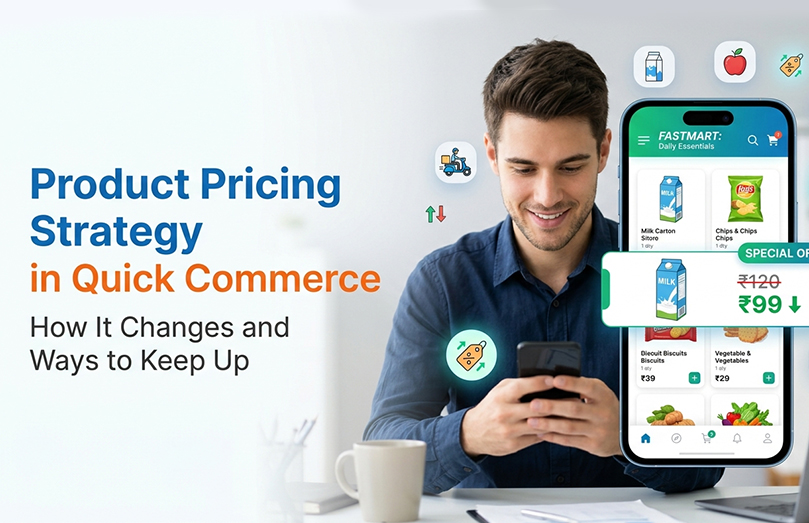
Product Pricing Strategy in Quick Commerce: How It Changes and Ways to Keep Up


Quick commerce has changed how consumers discover, compare, and buy everyday products. With platforms like Blinkit, Zepto, and JioMart promising deliveries in minutes, brands can no longer rely on traditional pricing playbooks. The right quick commerce marketing strategy now demands dynamic, data-driven pricing that adapts to demand, competition, and customer expectations in real time.

As more sellers join these platforms, competition intensifies and margins shrink. To stay profitable while still winning the digital shelf, you need a clear product pricing strategy in quick commerce that aligns with your overall growth goals. This guide breaks down how pricing works in q commerce, how it keeps changing, and practical ways to keep up.

Understanding Quick Commerce Marketing Strategy and Pricing Dynamics

A strong quick commerce marketing strategy starts with understanding how consumers behave on instant delivery apps. Shoppers are highly impulsive, compare prices quickly, and expect convenience, speed, and value in a single experience. This means your q commerce pricing strategy must support both visibility and conversion, not just margin.

Unlike traditional eCommerce, quick commerce marketplace pricing changes faster due to limited inventory, hyperlocal demand, and frequent platform-led promotions. Pricing strategy for Blinkit and Zepto, for example, must consider local competition, delivery radius, and time-based demand spikes such as evenings or weekends.

Key Components of a Product Pricing Strategy in Quick Commerce

To build a winning product pricing strategy in quick commerce, you need to balance three pillars: competitiveness, profitability, and brand positioning. Focusing only on low prices can erode margins, while ignoring competition can push you off the first page of search results within the app.

A robust quick commerce seller strategy should define clear pricing rules for each category, pack size, and region. This includes base price, discount thresholds, and participation in platform campaigns. When aligned with your broader quick commerce marketing strategy, these rules help you scale without losing control over profitability.

Base Price Architecture for Q Commerce Platforms

Your base price is the foundation of your q commerce pricing strategy. It should reflect your offline MRP, cost structure, and desired margin, while staying flexible enough to adapt to platform dynamics. A rigid approach often leads to lost visibility or forced heavy discounting later.

For pricing strategy for Blinkit and Zepto, brands often create a differentiated price ladder across SKUs. Smaller packs may carry slightly higher per-unit margins due to convenience, while larger packs can be priced more aggressively to drive basket value and repeat orders.

Discounts, Offers, and Platform-Led Promotions

Quick commerce marketplace pricing is heavily influenced by ongoing offers and promotions. Platforms frequently run category sales, bank offers, and coupon-based discounts to drive app engagement. Your quick commerce marketing strategy must decide when to participate and at what depth.

Instead of flat discounts across all SKUs, focus on hero products and high-frequency items. This approach keeps your brand visible in promotional slots while protecting margins on long-tail SKUs. It also helps align with Blinkit marketing strategy or Zepto marketing strategy initiatives without over-subsidizing every product.

Regional and Hyperlocal Price Differentiation

Demand, competition, and willingness to pay can vary sharply between neighborhoods. A refined product pricing strategy in quick commerce often includes regional or hyperlocal price variations. This is especially relevant for essentials, premium categories, or seasonal products.

By aligning your q commerce pricing strategy with local market realities, you can stay competitive where it matters most. This also supports better collaboration with dark stores, local warehouses, and last-mile partners to maintain healthy unit economics.

How Pricing Strategy Differs Across Blinkit, Zepto, and JioMart

Each quick commerce platform has its own user base, positioning, and promotional playbook. As a result, your pricing strategy for Blinkit and Zepto cannot be a simple copy-paste of your JioMart approach. You need platform-specific rules that still align with your central quick commerce seller strategy.

Blinkit marketing strategy often emphasizes speed and convenience for urban consumers, while Zepto marketing strategy leans into youthful branding and discovery. Jio Mart marketing services, on the other hand, may focus more on value and assortment. Your quick commerce marketing strategy should adapt prices and offers to match these different expectations.

Aligning with Blinkit and Zepto User Behavior

On Blinkit and Zepto, many shoppers add products during quick, need-based sessions. They are often less price-sensitive on urgent items but more price-aware on staples. Your q commerce pricing strategy should reflect this by segmenting SKUs into urgency-based and value-based buckets.

For urgency-based products, focus on availability and visibility with moderate discounts. For value-based products, sharpen your quick commerce marketplace pricing to stay within the competitive band. This balance helps you capture both impulse and planned purchases.

Leveraging JioMart Marketing Services for Value Positioning

Jio Mart marketing services typically appeal to value-seeking households that plan their baskets more carefully. Here, your product pricing strategy in quick commerce should emphasize multi-pack offers, combo deals, and consistent everyday pricing rather than frequent deep discounts.

By aligning your quick commerce marketing strategy with JioMart’s value-driven audience, you can build loyalty and higher average order values. This also allows you to maintain stable margins while still appearing attractive in price comparisons within the app.

Data-Driven Ways to Keep Up with Fast-Changing Q Commerce Pricing

Because prices and offers change so quickly, manual adjustments are no longer sustainable. A modern quick commerce marketing strategy relies on data, automation, and continuous testing to stay ahead. The goal is to react faster than competitors while protecting profitability.

To strengthen your q commerce pricing strategy, track key signals such as buy box wins, search ranking, conversion rate, and cart abandonment. These metrics reveal when your quick commerce marketplace pricing is either too aggressive or not competitive enough.

Practical Tactics to Stay Competitive

Brands that win in quick commerce use a mix of tactical and strategic levers. These tactics help them respond to competitors, seasonality, and platform campaigns without losing control of margins or brand perception.

Consider integrating the following into your quick commerce seller strategy:

  • Set pricing guardrails for minimum and maximum discounts per SKU.
  • Use A/B tests on price points to find the optimal conversion band.
  • Align promo calendars with platform events and paydays.
  • Bundle complementary products to increase basket size.
  • Review competitor pricing weekly at a category and region level.

Building a Future-Ready Quick Commerce Seller Strategy

The future of quick commerce will be even more dynamic, with AI-driven recommendations, personalized offers, and tighter delivery SLAs. Your product pricing strategy in quick commerce must be flexible enough to plug into these innovations while still serving your brand’s long-term goals.

As platforms evolve, a strong quick commerce marketing strategy will integrate assortment planning, inventory visibility, and pricing intelligence into one unified engine. This will help you maintain consistent brand value across Blinkit, Zepto, JioMart, and emerging q commerce platforms.

From Reactive Discounting to Strategic Pricing

Many brands still treat quick commerce as a discount-heavy channel to clear inventory. This reactive approach can damage brand equity and train customers to wait for offers. Instead, shift towards a strategic q commerce pricing strategy that defines clear roles for every SKU.

Classify products as traffic drivers, margin builders, or loyalty anchors, and price them accordingly. Over time, this structured quick commerce marketplace pricing model will deliver more predictable revenue, healthier margins, and stronger customer retention.

Conclusion: Turning Pricing into a Competitive Advantage

Quick commerce is no longer just about being present on Blinkit, Zepto, or JioMart. To win, you need a sharp, data-led product pricing strategy in quick commerce that aligns with your broader growth ambitions. When your quick commerce marketing strategy connects pricing, promotions, and platform behavior, every rupee you discount works harder for your brand.

By investing in structured pricing rules, platform-specific strategies, and continuous optimization, you can turn q commerce pricing from a margin drain into a competitive advantage. If you are ready to professionalize your approach and scale profitably across instant delivery platforms, HRL Infotechs can help you design and execute a future-ready quick commerce seller strategy tailored to your business.

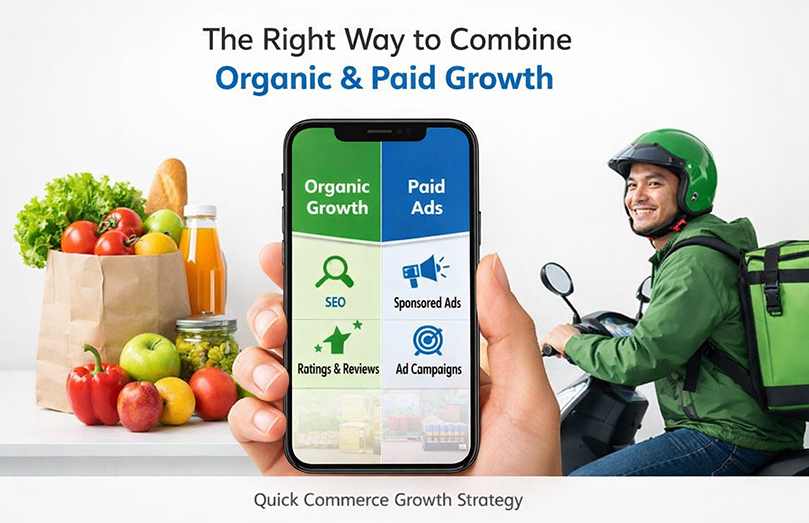
The Right Way to Combine Organic and Paid Growth on Quick Commerce


Quick commerce has changed how consumers shop, and how brands grow. But many brands still treat organic and paid growth as separate tracks, missing out on the real power of an integrated quick commerce growth strategy. When organic and paid work together, brands can scale faster, lower acquisition costs, and build long-term loyalty on platforms like Blinkit, Zepto, Instamart, and JioMart.

This guide breaks down the right way to combine organic and paid growth on quick commerce platforms. You will learn how to design a quick commerce marketing strategy that aligns content, performance ads, and marketplace optimization into one unified quick commerce growth engine.

Understanding Quick Commerce Growth and Today’s Search Intent

Quick commerce growth is no longer just about being visible on a few platforms. It is about owning high-intent moments when customers search, browse, and reorder. Most decision-makers now search for proven quick commerce growth strategy frameworks, not just generic tips or platform overviews.

The dominant search intent around quick commerce growth is commercial and informational. Leaders want to know what works, how to structure budgets, and how to blend organic and paid growth strategy into a single, measurable roadmap that drives revenue, not vanity metrics.

Why You Must Combine Organic and Paid Growth on Quick Commerce

Relying only on paid ads can drive short-term spikes but weak long-term profitability. On the other hand, depending only on organic visibility can slow down scale, especially in competitive categories. The most successful quick commerce growth strategies blend both in a coordinated way.

When organic and paid are aligned, your quick commerce marketing strategy can achieve three key outcomes: higher share of search, better conversion rates, and more efficient quick commerce customer acquisition. This is especially critical on platforms where rankings, visibility, and ad auctions are tightly connected.

The Compounding Effect of Organic Visibility

Strong organic presence on quick commerce platforms improves your baseline performance. Better content, reviews, and merchandising increase click-through and conversion rates. This, in turn, makes your paid campaigns more efficient because ads drive traffic to high-converting product pages.

Over time, this compounding effect reduces your cost per acquisition. Your quick commerce growth strategy should treat organic optimization as the foundation, not an afterthought. Paid media then becomes an accelerator layered on top of a strong organic base.

Paid Media as a Strategic Accelerator

Paid campaigns on quick commerce platforms help you win critical moments: launches, seasonal peaks, and competitive pushes. With the right organic and paid growth strategy, you can use ads to defend branded searches and capture generic category demand at scale.

Instead of running isolated campaigns, align your paid efforts with organic signals. Use paid to test new keywords, validate demand pockets, and then build organic content and merchandising around what performs best. This is how quick commerce growth becomes data-driven and sustainable.

Designing a Full-Funnel Quick Commerce Marketing Strategy

A high-performing quick commerce marketing strategy must cover the full funnel: awareness, consideration, conversion, and retention. Each stage should use a mix of organic and paid tactics tailored to how customers behave on specific platforms.

Think beyond single campaigns. Build a repeatable quick commerce growth framework that you can apply across Blinkit, Zepto, Instamart, and JioMart. While each marketplace has unique tools, the underlying growth principles remain consistent.

Top-of-Funnel: Discoverability and Awareness

At the top of the funnel, your goal is to make your brand and products discoverable. Focus on category-level keywords and generic search behavior that signals early interest. This is where your quick commerce growth strategy starts building reach.

Key tactics include optimizing titles, images, and descriptions for high-volume keywords, and running sponsored placements on category and search result pages. Combine these with off-platform awareness campaigns that drive branded searches directly into quick commerce listings.

Mid-Funnel: Consideration and Differentiation

In the consideration stage, shoppers compare options. Your quick commerce marketing strategy should highlight differentiation through content, packaging, and social proof. This is where strong organic presence and smart paid targeting intersect.

Use A/B testing on creatives, benefit messaging, and pricing bundles. Retarget engaged users with tailored offers and emphasize ratings, reviews, and trust signals. The goal is to move shoppers from browsing to adding your products to cart.

Bottom-Funnel: Conversion and Repeat Purchases

At the bottom of the funnel, your quick commerce growth strategy must remove friction. Ensure inventory reliability, competitive pricing, and clear delivery promises. Paid campaigns should focus on high-intent keywords and cart recovery.

Post-purchase, use platform tools such as subscription prompts, reorder nudges, and personalized recommendations. This is where quick commerce customer acquisition turns into long-term customer value, driving profitable growth over time.

Platform-Specific Tactics: Blinkit, JioMart, Zepto, and Instamart

While the core principles of quick commerce growth apply everywhere, each platform offers unique levers. Tailoring your approach to each ecosystem can unlock incremental gains and protect your share against aggressive competitors.

Instead of copying one playbook across platforms, design a modular quick commerce growth strategy. Keep your brand positioning consistent but adapt creatives, offers, and bidding strategies to each marketplace’s algorithms and user behavior.

Optimizing Blinkit Marketing Strategy

An effective Blinkit marketing strategy starts with strong catalog hygiene. Ensure accurate categorization, sharp product imagery, and benefit-led titles that match how users search on the app. This improves both organic rankings and ad performance.

Layer in targeted promotions during peak hours and local events. Use performance data to identify top-performing SKUs and then push them harder with sponsored listings. Over time, this integrated approach compounds your quick commerce brand growth on Blinkit.

Scaling JioMart Marketing Strategy

A winning JioMart marketing strategy leans on breadth and depth. Optimize for regional preferences, pack sizes, and price points that resonate with value-conscious shoppers. Strong organic visibility in key categories can significantly lift your baseline sales.

Combine this with smart bidding on high-intent keywords and cross-selling opportunities. Use insights from JioMart campaigns to refine your overall quick commerce growth strategy, especially for markets where omnichannel behavior is strong.

Building a Zepto Seller Growth Strategy

A robust Zepto seller growth strategy focuses on speed, availability, and assortment. Ensure your top SKUs are always in stock and well-positioned in relevant categories. Organic optimization here supports both discovery and repeat orders.

Use paid placements to launch new SKUs, test bundles, and defend your bestsellers. Over time, integrate these learnings into your broader organic and paid growth strategy so that Zepto becomes a reliable growth pillar, not just an experimental channel.

Refining Instamart Advertising Strategy

An effective Instamart advertising strategy blends precision targeting with strong creative. Focus on high-intent search terms and contextual placements near complementary categories. This helps you capture shoppers who are ready to buy.

Pair this with optimized product pages, clear benefits, and compelling pack sizes. As your campaigns mature, feed performance insights back into your quick commerce growth strategy to improve both organic ranking and paid efficiency across all platforms.

Measuring and Optimizing Your Quick Commerce Growth Engine

To sustain quick commerce growth, you must measure beyond impressions and clicks. Track contribution to revenue, share of search, repeat purchase rates, and blended customer acquisition cost across platforms and campaigns.

Set up a unified reporting framework that compares performance across Blinkit, Zepto, Instamart, and JioMart. Use these insights to reallocate budgets, refine creatives, and continuously improve your quick commerce marketing strategy.

Conclusion: Turning Quick Commerce Growth into a Competitive Advantage

Quick commerce growth is no longer optional for consumer brands; it is a core competitive battlefield. The brands that win are those that treat organic and paid not as separate teams, but as a single, integrated growth engine tuned for each platform and each stage of the funnel.

By aligning your quick commerce marketing strategy, platform-specific tactics, and measurement framework, you can turn quick commerce customer acquisition into sustained profitability and market leadership, especially when partnered with a specialist like HRL Infotechs.