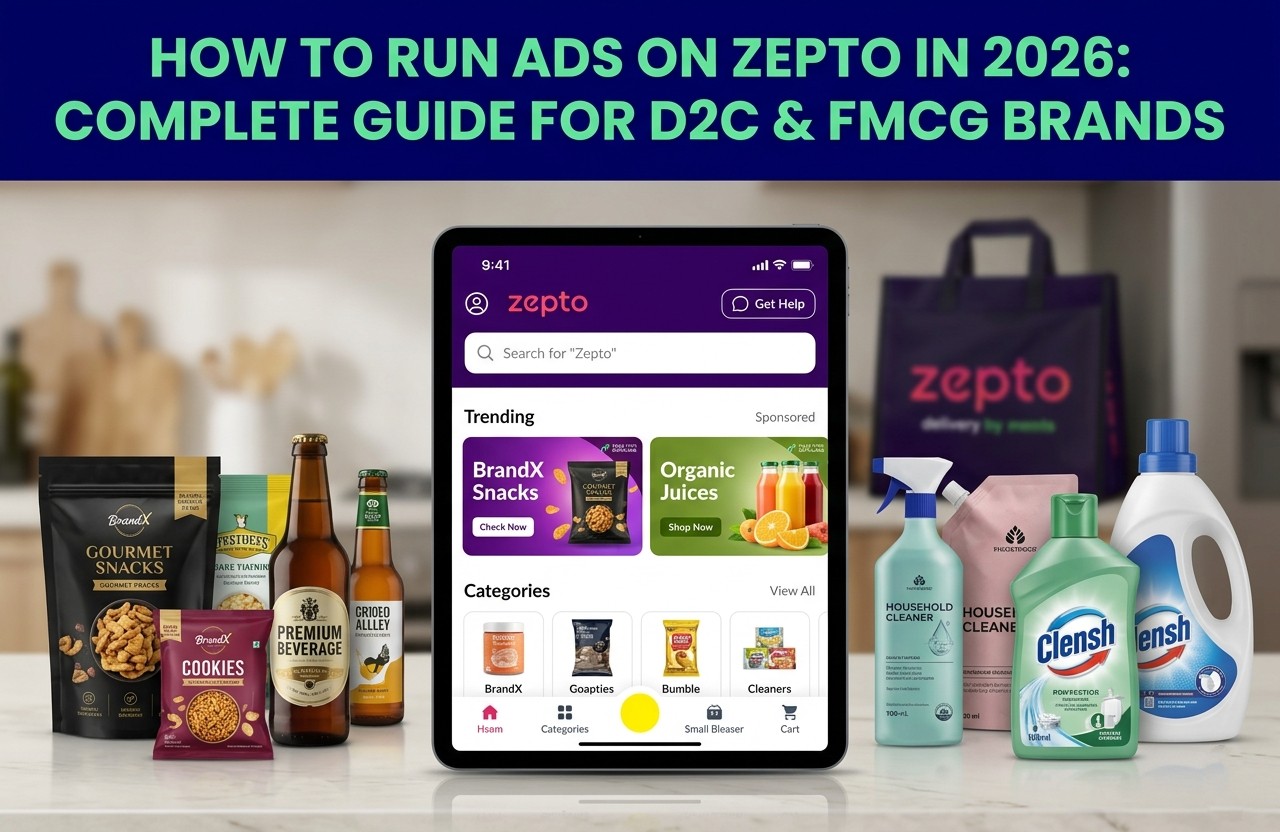
How to Run Ads on Zepto in 2026: Complete Guide for D2C & FMCG Brands


Quick commerce has changed how Indian shoppers discover and buy groceries, snacks, and daily essentials. For D2C and FMCG brands, Zepto is no longer just a delivery app; it is a powerful performance marketing channel where the right zepto ads strategy can drive visibility, trials, and repeat purchases at scale.

If you are planning how to run ads on Zepto in 2026, you need more than a basic overview. You need a practical zepto advertising guide that covers campaign structure, targeting, budgets, and optimization specifically for Indian consumers and retail realities. This complete guide will walk you through everything from seller onboarding to advanced zepto campaign management.

Understanding Zepto Ads Strategy For D2C & FMCG Brands

Before launching campaigns, it is important to understand how a strong zepto ads strategy fits into your broader quick commerce advertising services mix. Zepto is a high-intent platform where users are already in buying mode, which means your ads can influence decisions right at the digital shelf.

Most top-performing brands treat Zepto as a hybrid of marketplace and retail media. Your zepto ads guide 2026 should focus on three pillars: discoverability, share of shelf, and conversion. When these are aligned with your pricing, inventory, and promotions, your media spends start translating into measurable revenue.

Setting Up For Success: Zepto Seller Onboarding & Readiness

Before you think about creative or bids, you must ensure your presence as a seller is strong. Zepto seller onboarding services and zepto account management services are often the foundation for sustainable performance, especially for brands with large catalogs or multiple SKUs.

During onboarding, pay attention to product titles, images, and taxonomy. A winning zepto ads strategy will fail if your listings are incomplete, wrongly categorized, or out of stock. Treat your catalog setup as the first step of your zepto advertising guide, not a back-end task to be rushed.

Catalog Hygiene And Content Optimization

Clean, optimized product data is critical for both organic and paid visibility. When planning how to run ads on Zepto, start by auditing your catalog for naming consistency, pack size clarity, and keyword relevance that matches how Indian shoppers search.

Use clear product titles, high-resolution pack shots, and concise descriptions that highlight benefits such as health, taste, convenience, or value. This approach supports your zepto ads for sellers by improving click-through rates and reducing wasted impressions on irrelevant queries.

Inventory, Pricing, And Availability Alignment

Quick commerce shoppers expect instant fulfillment. If your ads drive traffic to items that are frequently out of stock or overpriced compared to competitors, your zepto ads strategy will underperform. Align inventory planning with campaign calendars and promotional pushes.

Coordinate with your supply and sales teams to ensure priority SKUs have stable stock and competitive pricing. This alignment is especially important for zepto ads for FMCG brands, where competition is intense and shoppers often compare similar items within seconds.

Core Zepto Advertising Formats And Placements

Understanding available formats is central to any zepto advertising guide. While specific names and layouts may evolve by 2026, the core logic of placements remains similar: visibility at search, category, and product levels, plus occasional homepage or banner opportunities.

Each format serves a different role in your zepto ads strategy. Some are better for awareness and share of shelf, while others are designed for bottom-funnel conversion. The right mix depends on your brand maturity, category, and seasonal priorities.

Search And Category Sponsored Listings

Search and category placements are usually the backbone of how to run ads on Zepto effectively. These ads appear when users search for generic terms like “atta” or “chips” or browse within a category such as dairy, beverages, or personal care.

For D2C and FMCG brands, prioritize high-intent keywords and categories where you have strong product-market fit. Use your zepto campaign management data to identify which terms drive the best balance of volume, cost per acquisition, and repeat purchase.

Product Detail Page And Cross-Sell Placements

Product detail page placements help you intercept shoppers who are considering competitor SKUs. These are powerful for brand switching, new launches, and premiumization strategies within your zepto ads strategy.

Cross-sell and recommendation slots are also valuable for basket building. For example, pairing sauces with snacks or beverages with ready-to-eat meals. Use these placements to increase average order value while staying relevant to the shopper’s mission.

Building A High-Performance Zepto Ads Strategy In 2026

Once your foundations are ready, you can design a structured zepto ads strategy that aligns with your business goals. In 2026, data-driven planning and continuous optimization will separate average performers from category leaders on Zepto.

Think of your plan as a living zepto advertising guide that evolves every quarter. As competition grows and consumer behavior shifts, you will need to revisit targeting, budgets, and creative regularly to maintain your edge in quick commerce advertising services.

Defining Objectives, Budgets, And Targeting

Start by defining clear objectives: are you focused on new user acquisition, market share in a specific pin code, or driving trials for a new variant. Your goals will influence how to run ads on Zepto and how aggressively you bid on priority placements.

Allocate budgets by category, city, and product line, then refine based on performance data. Use geo-level insights to prioritize high-potential neighborhoods and store clusters. This structured approach supports scalable zepto ads for sellers across multiple regions.

Creative Strategy And Offer Design

Even in a performance-driven environment, creative matters. Pack visibility, offer clarity, and messaging all impact click-through and conversion. Your zepto advertising guide should include clear rules for using discounts, combo packs, and limited-time offers.

Test different hooks such as “family value packs”, “low sugar”, or “ready in 2 minutes” depending on your category. For FMCG and D2C brands, small creative tweaks can significantly improve results without increasing media spends.

Ongoing Zepto Campaign Management And Optimization

Launching campaigns is only the beginning. Effective zepto campaign management requires weekly and monthly reviews, especially in a dynamic market like India where demand patterns change with festivals, weather, and local events.

Use performance dashboards to track impressions, clicks, conversion rates, and return on ad spend. Over time, this data becomes the backbone of your evolving zepto ads strategy and helps you justify higher investments in winning segments.

Key Metrics And Optimization Levers

Focus on a few core metrics: cost per acquisition, share of voice on priority keywords, and contribution to overall category sales. These indicators show whether your zepto ads for FMCG brands are genuinely moving the needle or just adding noise.

Optimization levers include bid adjustments, negative keyword refinement, creative refresh, and assortment changes. For example, you might shift spends from low-margin SKUs to higher-value packs once you see stable repeat purchase behavior.

When To Consider A Zepto Advertising Agency Partner

As your scale grows, managing everything in-house can become complex. This is where specialized zepto advertising agency partners or zepto marketing services India providers can add value with deeper platform expertise and dedicated resources.

Look for partners who understand both performance marketing and modern trade dynamics. They should help with zepto account management services, campaign planning, reporting, and experimentation so your internal teams can focus on brand and product strategy.

Future-Proofing Your Zepto Ads Strategy For 2026 And Beyond

Quick commerce will continue to evolve, with new formats, data capabilities, and competition. A resilient zepto ads strategy in 2026 will be flexible, insight-led, and closely integrated with your broader ecommerce and offline retail plans.

Invest in building internal knowledge, documenting learnings, and running structured experiments. Over time, your own data will become the most valuable part of your zepto advertising guide, helping you make smarter decisions than competitors who rely only on generic best practices.

Conclusion: Turning Zepto Into A Growth Engine

Zepto offers D2C and FMCG brands a rare combination of high intent, rich shopper data, and rapid experimentation. With the right zepto ads strategy, strong catalog foundations, disciplined zepto campaign management, and smart use of quick commerce advertising services, you can turn the platform into a consistent growth engine.

If you are ready to scale your presence and want expert support on how to run ads on Zepto effectively across India, partnering with a specialist like HRL Infotechs can help you move faster, reduce waste, and unlock the full potential of quick commerce for your brand.
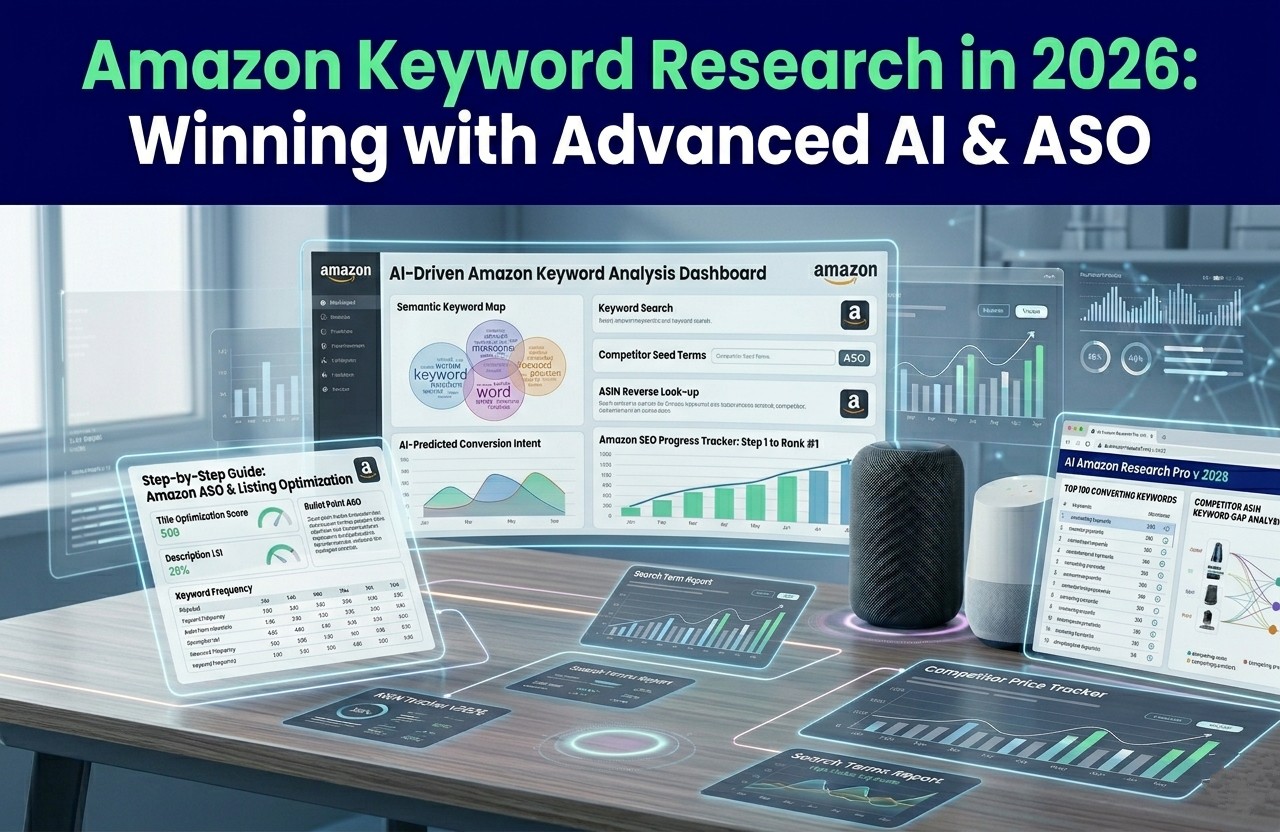

Ecommerce Trends 2026: What Smart Brands Are Doing to Win on Amazon & AI Search


Ecommerce in 2026 will not look like the ecommerce you know today. AI-driven search, new buyer expectations, and Amazon’s evolving ecosystem are reshaping how brands attract, convert, and retain customers. Smart teams are already adapting their ecommerce growth strategies to stay ahead of the curve.

If you sell on Amazon or run a D2C brand, understanding the key Ecommerce Trends 2026 is no longer optional. It is the difference between being visible in AI search results and disappearing behind competitors who know how to optimize, experiment, and scale with data.

Why Ecommerce Trends 2026 Matter For Every Brand

The brands winning online in 2026 will be those that read the signals early and act decisively. Ecommerce Trends 2026 are not just buzzwords; they reflect real shifts in how customers search, compare, and buy across Amazon and other digital channels. Ignoring these shifts can quietly erode your margins and market share.

At the same time, these trends open powerful opportunities. When you align your ecommerce growth strategies with how platforms like Amazon and AI search tools rank and recommend products, you can lower acquisition costs, improve conversion rates, and build a more resilient revenue engine.

AI Search And The Impact Of Amazon Rufus

One of the most important Ecommerce Trends 2026 is the rise of conversational and AI-driven search. Amazon Rufus AI search impact is already visible in how shoppers discover products using natural language queries instead of short, keyword-only searches. This changes how brands must structure and optimize their product content.

Instead of focusing only on exact-match keywords, brands need richer, more descriptive content that answers real questions. When your listings mirror how people speak and search, Amazon’s AI can better understand your products and surface them for more relevant, high-intent queries.

How Brands Are Winning On Amazon With AI-Led Discovery

Understanding how brands are winning on Amazon in 2026 starts with embracing AI search behavior. High-performing sellers are building detailed product pages that clearly explain benefits, use cases, and differentiators, not just features. This helps Amazon Rufus and other AI systems match products to nuanced shopper needs.

These brands also monitor search term reports and customer questions to refine their copy. By aligning language with real customer phrases, they improve relevance signals and increase the chances of appearing in AI-powered recommendation carousels and voice search results.

Structuring Content For AI Search Relevance

To ride the wave of Ecommerce Trends 2026, your product pages should be structured for both humans and algorithms. That means clear titles, scannable bullet points, and detailed descriptions that naturally include focus terms like Ecommerce Trends 2026 and related phrases without sounding forced.

Brands that succeed here usually follow a simple framework: lead with the main benefit, support with specific features, and close with proof such as reviews or certifications. This structure helps AI models understand context while giving shoppers the clarity they need to make confident decisions.

Optimizing Amazon Listings For 2026: What Actually Works

With competition intensifying, you cannot rely on basic listing setups anymore. To truly optimize your Amazon listings with experts or internal specialists, you need a data-backed approach that aligns with the latest Ecommerce Trends 2026 and Amazon’s evolving ranking factors.

Winning brands treat each listing as a high-converting landing page. They test different angles, visuals, and messaging to see what resonates best with their target audience, especially in India where regional preferences, price sensitivity, and trust signals can vary significantly.

Essential Elements Of High-Converting Amazon Listings

Top-performing sellers focus on a few critical building blocks. First, titles are crafted to be clear, benefit-led, and keyword-rich without becoming unreadable. Second, bullet points highlight real-life outcomes, not just technical specs, so shoppers can quickly see why the product fits their needs.

Third, images and A+ Content are used to tell a story. Lifestyle photos, comparison charts, and FAQs reduce friction and objections. When combined with strong reviews and social proof, these elements align with Ecommerce Trends 2026 by building trust and improving conversion rates in a crowded marketplace.

Using Data To Continuously Improve Listings

Another pattern among brands winning on Amazon is relentless optimization. They track click-through rates, conversion rates, and keyword rankings to identify which elements of a listing need refinement. This data-first mindset is central to modern ecommerce growth strategies.

Instead of guessing, they run structured tests on titles, main images, and pricing. Over time, these incremental gains compound, helping them stay ahead even as Amazon Rufus AI search impact and algorithm updates shift the competitive landscape.

Amazon PPC Strategy 2026: Smarter Spend, Higher Returns

Paid visibility is still essential, but the best ecommerce strategies for D2C brands in 2026 treat Amazon PPC as a precision tool, not a blunt instrument. With rising ad costs, brands must design an Amazon PPC strategy 2026 that balances aggressive growth with sustainable profitability.

Instead of chasing every keyword, leading advertisers prioritize intent and relevance. They invest more in terms that align with Ecommerce Trends 2026, such as long-tail, conversational queries that signal clear purchase intent and often deliver better return on ad spend.

Key Components Of A Modern Amazon PPC Strategy

Successful campaigns typically combine automatic and manual targeting. Automatic campaigns help uncover new search terms, while manual campaigns focus budget on proven performers. This structure allows brands to adapt quickly as shopper behavior and AI search patterns evolve.

They also segment campaigns by product lifecycle, separating launches from mature products. New items may require higher bids and broader targeting, while established winners can be optimized for efficiency. This layered approach aligns with broader ecommerce growth strategies that prioritize both scale and margin.

Best Ecommerce Strategies For D2C Brands In 2026

D2C brands in India face a unique mix of opportunity and complexity. On one side, digital adoption and online spending keep rising. On the other, competition from global and local players is intense. The best ecommerce strategies for D2C brands in 2026 recognize that marketplaces and owned channels must work together.

Rather than treating Amazon as a rival to their own website, leading brands use it as a powerful acquisition engine. They leverage the trust and reach of Amazon while building deeper relationships through email, communities, and loyalty programs on their own platforms.

Blending Marketplaces, D2C Sites, And AI Search

One of the defining Ecommerce Trends 2026 is the convergence of channels. Shoppers might discover a product through AI search, compare it on Amazon, and finally purchase from a brand’s D2C site. To capture this journey, your messaging, pricing, and positioning must stay consistent across touchpoints.

Brands that manage this well use unified analytics to understand where customers first interact and where they finally convert. This helps them allocate budgets more intelligently and refine both marketplace strategies and on-site experiences for maximum lifetime value.

Building Resilient Ecommerce Growth Strategies For The Future

Looking ahead, the most resilient ecommerce growth strategies will be those that combine strong fundamentals with adaptability. Clear positioning, compelling offers, and reliable fulfillment remain non-negotiable. What changes is how you surface these strengths in an environment dominated by AI search and evolving customer expectations.

To stay aligned with Ecommerce Trends 2026, brands should invest in better product data, richer content, and continuous experimentation. When you treat every listing, campaign, and landing page as a living asset that can be improved, you create a system that keeps learning and compounding results over time.

Conclusion: Turning Ecommerce Trends 2026 Into Competitive Advantage

Ecommerce Trends 2026 are already reshaping how products are discovered, evaluated, and purchased on Amazon and across AI-driven search experiences. Brands that respond early by upgrading their content, refining their Amazon PPC strategy 2026, and aligning D2C and marketplace efforts will gain a durable edge in visibility and profitability.

If you are ready to translate these trends into practical action, from optimizing your Amazon listings with experts to designing smarter campaigns for the Indian market, partnering with HRL Infotechs can help you move faster, reduce guesswork, and build an ecommerce engine designed for the next wave of digital growth.

7 Proven Ways Indore Sellers Can Generate Authentic Reviews on Amazon, Flipkart & Quick Commerce


Indore sellers today know one hard truth: without strong product reviews, your listings simply don’t move. Whether you sell on Amazon, Flipkart, or quick commerce platforms like Zepto, Blinkit, or Swiggy Instamart, you must consistently increase product reviews ecommerce-wide to build trust, rank higher, and convert more visitors into buyers.

The good news is that you don’t need fake or risky tactics. With the right amazon review generation strategy, Flipkart seller reviews strategy, and quick commerce reviews strategy, you can generate authentic, compliant feedback that boosts product rating improvement ecommerce and drives long-term growth.

Why Authentic Reviews Are Critical for Ecommerce Growth in India

On every marketplace, the algorithm rewards listings that have high ratings and frequent, recent reviews. When you increase product reviews ecommerce platforms treat your products as more relevant and trustworthy, which improves search visibility and click-through rates. More visibility leads to more orders, and more orders create a flywheel of genuine feedback.

Indian shoppers rely heavily on social proof before buying, especially on Amazon India and Flipkart. They compare star ratings, read recent comments, and check photos or videos from real buyers. If your listing has few reviews or mixed ratings, even aggressive ads from Amaozn Marketing Services in Indore or other regions will underperform because users hesitate to buy.

Aligning Review Generation with Marketplace Policies

Before applying any amazon review generation strategy or Flipkart seller reviews strategy, you must stay 100% compliant with platform rules. Amazon and Flipkart strictly prohibit incentivized or manipulated reviews, including cashbacks, gifts, or discounts in exchange for positive feedback. Violations can lead to listing suspension or account bans.

Instead, focus on structured, policy-safe methods to increase product reviews ecommerce sellers can rely on long term. This includes optimizing post-purchase communication, improving packaging inserts, and using built-in tools like Amazon’s Request a Review feature. When you respect guidelines, your review profile grows steadily and safely.

7 Proven Ways Indore Sellers Can Increase Product Reviews Ecommerce-Wide

To compete across Amazon, Flipkart, and quick commerce, you need a multi-channel review framework. The following seven methods are tailored for Indian marketplaces and are proven to increase product reviews ecommerce sellers care about while improving overall customer experience.

Combine these strategies instead of relying on just one. When executed together, they create a powerful system that drives consistent product rating improvement ecommerce and builds durable brand trust.

1. Optimize Listings to Match Real Buyer Expectations

Authentic reviews start with accurate, persuasive listings. If your title, bullets, and images overpromise, you will attract returns and negative feedback. To increase product reviews ecommerce sellers must first reduce disappointment by aligning content with reality. Clear information leads to happier customers and more positive ratings.

Use high-quality images, size charts, and honest descriptions that answer common questions. Study top competitors on Amazon India and Flipkart to see how they structure benefits, specifications, and FAQs. When buyers get exactly what they expect, they are far more likely to leave a 4 or 5-star review without any prompting.

2. Use Compliant Post-Purchase Follow-Ups

Smart, policy-compliant follow-ups are one of the most effective ways to increase product reviews ecommerce sellers often overlook. On Amazon, use the Request a Review button or approved templates within the messaging system. On Flipkart, leverage order updates and polite reminders where allowed by policy.

Keep messages short, neutral, and helpful. Avoid asking for “positive” reviews; instead, request honest feedback and offer support if there is any issue. This approach not only generates more reviews but also reduces negative ratings because customers feel heard and supported.

3. Add Helpful, Non-Incentivizing Packaging Inserts

Thoughtful inserts can significantly boost review volume when used correctly. Include a small card that thanks the customer, explains how to use the product, and invites them to share their experience on the marketplace. This simple step can increase product reviews ecommerce brands receive without breaking any rules.

Make sure the insert does not promise discounts, gifts, or rewards in exchange for reviews. Instead, focus on education and support. For example, share quick tips, QR codes linking to usage videos, or customer care contact details. When buyers feel guided, they are more inclined to leave a positive rating.

4. Deliver Fast, Reliable Service on Quick Commerce Platforms

Quick commerce reviews strategy requires a slightly different approach because customers expect speed and accuracy above all. Delays, wrong items, or poor packaging quickly lead to low ratings on instant delivery apps. To increase product reviews ecommerce sellers must tighten operations for these channels.

Standardize packaging, double-check SKUs, and ensure inventory accuracy across all partner apps. Encourage delivery partners to handle parcels carefully. When the experience is consistently smooth, customers naturally leave higher ratings, which improves your visibility inside quick commerce platforms.

Leveraging Marketing Services to Boost Review Volume

Beyond organic methods, structured marketing support can accelerate your review growth. Many Indore brands now combine Amaozn Marketing Services in Indore with listing optimization and review management to scale faster. Paid traffic, when aligned with strong listings, brings more orders and therefore more review opportunities.

Similarly, Flipkart Marketing Services campaigns can be tuned to push high-margin or high-potential SKUs that already have a solid base of feedback. As these listings gain more sales, you can systematically increase product reviews ecommerce-wide by driving traffic to products most likely to delight customers.

5. Run Targeted Ad Campaigns Around High-Conversion SKUs

Instead of promoting every product equally, focus ad budgets on SKUs with strong initial ratings and low return rates. This approach helps increase product reviews ecommerce brands collect from satisfied buyers, not from risky or untested listings. More happy customers means more organic, positive feedback.

On Amazon and Flipkart, use automatic and manual campaigns to identify winning keywords and placements. Once you see which products convert best, scale budgets there. Over time, these hero SKUs accumulate hundreds of reviews, lifting your overall brand perception across marketplaces.

6. Build a Cross-Channel Review Management Process

As you expand across Amazon, Flipkart, and quick commerce, reviews become scattered. A structured ecommerce review management services approach helps you monitor, respond, and learn from feedback in one system. This process is essential if you want to systematically increase product reviews ecommerce-wide.

Set a weekly routine to track new reviews, identify recurring complaints, and update listings or packaging accordingly. Respond politely to negative feedback where platforms allow it, offering solutions instead of arguments. Over time, this discipline improves ratings and reduces future issues.

Improving Product Ratings Through Better Customer Experience

Review generation is not just a marketing task; it is a reflection of your operations, product quality, and support. To achieve sustainable product rating improvement ecommerce sellers must fix root causes behind low scores. This includes quality control, logistics, and after-sales service.

When you treat every review as a data point, patterns emerge. Maybe a size runs small, a color looks different in real life, or installation is confusing. Addressing these issues not only increases product reviews ecommerce platforms display but also lifts average star ratings over time.

7. Partner with an Ecommerce Growth Agency in India

Managing ads, listings, reviews, and quick commerce operations can overwhelm in-house teams. Many brands now collaborate with an ecommerce growth agency india sellers trust to handle strategy and execution. These partners understand how to get reviews on Amazon India, optimize Flipkart listings, and design quick commerce reviews strategy tailored to your category.

A capable partner can integrate advertising, catalog management, and ecommerce review management services into one roadmap. This holistic approach helps increase product reviews ecommerce-wide while also improving sales, profitability, and brand recall across all marketplaces.

Conclusion: Turn Reviews into a Growth Engine for Your Brand

Authentic reviews are one of the most powerful levers to increase product reviews ecommerce sellers can control. By aligning listings with reality, using compliant follow-ups, improving packaging, optimizing quick commerce operations, and leveraging expert marketing support, Indore brands can transform ratings and revenue across Amazon, Flipkart, and instant delivery platforms.

If you are ready to turn your marketplace feedback into a predictable growth engine and want expert support across Amazon, Flipkart, and quick commerce, partner with HRL Infotechs to build a review-first ecommerce strategy that compounds over time.

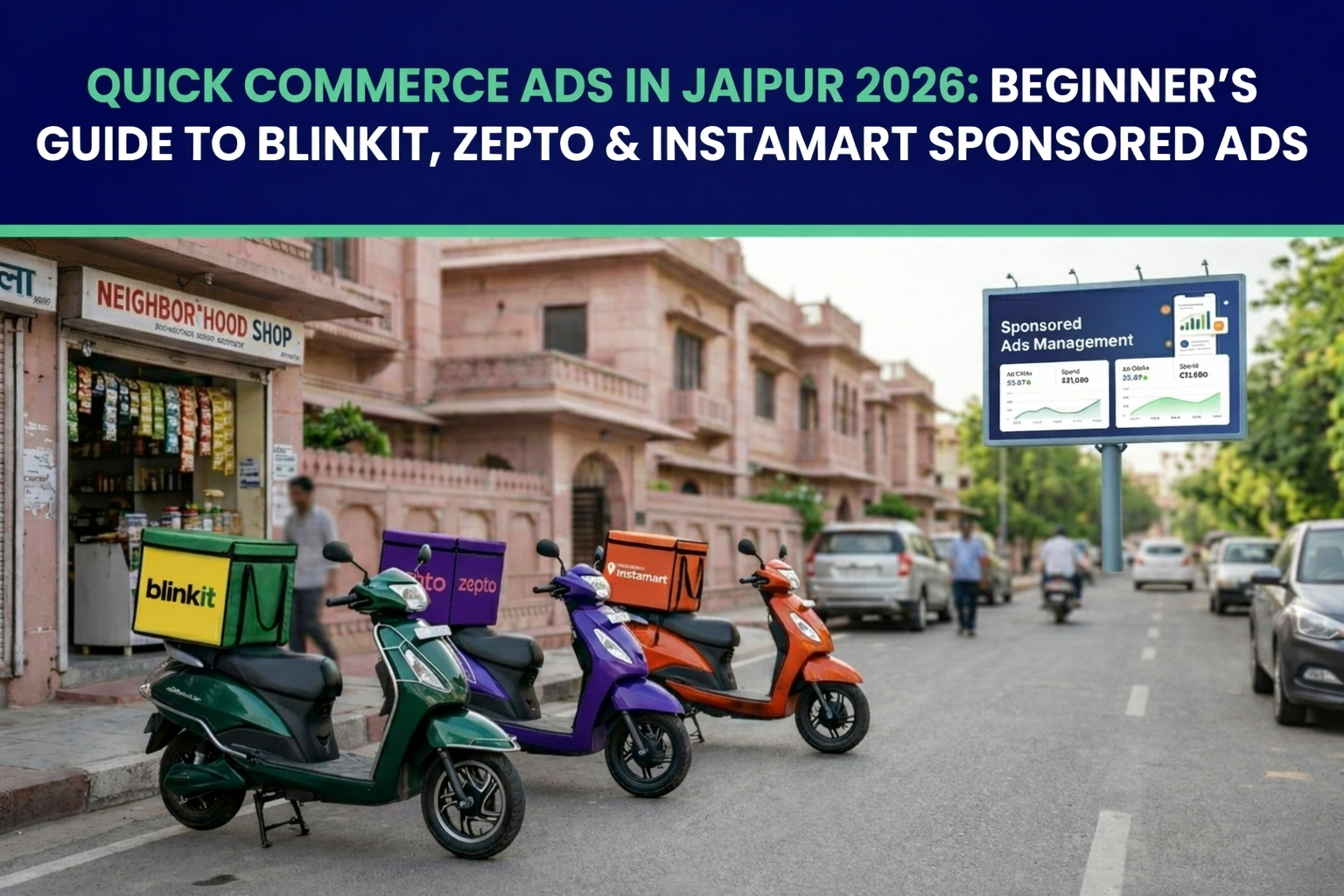
Quick Commerce Ads in Jaipur 2026: Beginner’s Guide to Blinkit, Zepto & Instamart Sponsored Ads


Quick commerce has changed how Jaipur shops for groceries, essentials, and daily needs. For local brands and sellers, this shift has opened a powerful new way to reach ready-to-buy customers through Quick Commerce Ads in Jaipur on platforms like Blinkit, Zepto, and Instamart.

If you are new to sponsored listings and wondering why your quick commerce ads are not converting, this beginner-friendly guide will walk you through how Blinkit ads work for sellers, how Instamart sponsored ads and Zepto placements function, and how to build a winning quick commerce advertising strategy for 2026.

Understanding Quick Commerce Ads in Jaipur for 2026

Quick Commerce Ads in Jaipur are paid placements on 10–30 minute delivery apps such as Blinkit, Zepto, and Instamart. Your products appear at the top of search results, in carousels, or in special sections when users search or browse categories.

In 2026, competition on these apps is rising fast as more Jaipur brands join. That means you must understand how these ad systems work, how to increase sales on Blinkit and similar platforms, and how to reduce CPC in quick commerce ads without killing performance.

Dominant Search Intent Behind Quick Commerce Ads

The main intent behind searches for Quick Commerce Ads in Jaipur is commercial and informational. Sellers want to learn how to run campaigns, why quick commerce ads are not converting, and how to scale profitable sales.

Users are not just curious; they are ready to invest in ads if they see a clear path to returns. Your content, creatives, and bidding must therefore focus on measurable outcomes like orders, repeat purchases, and basket value.

Why Quick Commerce Ads Matter for Jaipur Sellers

Jaipur consumers now expect instant delivery for groceries, snacks, personal care, and even niche products. If your brand is not visible in Quick Commerce Ads in Jaipur, you lose high-intent buyers to competitors who are.

Sponsored placements help you launch new SKUs, defend your brand keywords, and win category share. When combined with strong pricing and availability, they can become one of your highest-ROI digital channels.

How Blinkit Ads Work for Sellers in Jaipur

To understand how Blinkit ads work for sellers, think of them as a marketplace auction. You bid for visibility when users search for keywords or browse categories related to your products.

Your ad rank depends on your bid, product relevance, and performance metrics like click-through rate and conversion rate. This is why quick commerce advertising strategy must combine smart bidding with strong product pages.

Key Blinkit Ad Formats and Placements

On Blinkit, you typically get multiple ad formats. These often include sponsored product listings, banner placements, and category highlights. Each format serves a different role in your funnel.

Sponsored listings are best for driving direct orders, while banners support brand awareness. To increase sales on Blinkit, focus first on sponsored products, then test higher-funnel formats as your budget grows.

Common Reasons Blinkit Ads Are Not Converting

Many sellers ask why quick commerce ads are not converting even when they get clicks. The answer usually lies in product readiness and targeting rather than the platform itself.

Typical issues include weak product images, missing descriptions, poor ratings, stock-outs, and irrelevant keyword targeting. Fixing these basics often improves how Blinkit ads work for sellers more than simply raising bids.

Instamart Sponsored Ads and Zepto Marketing in Jaipur

Instamart sponsored ads and Zepto placements follow similar principles but with platform-specific nuances. Both prioritize user experience, so relevance and performance matter as much as your bid.

For Jaipur brands, these platforms are essential if your target audience is urban, time-poor, and value convenience. A unified quick commerce advertising strategy should treat Blinkit, Instamart, and Zepto as one ecosystem.

How Instamart Sponsored Ads Drive Sales

Instamart sponsored ads help you occupy premium shelf space in digital aisles. When users open the app for essentials, your products can appear in top rows or featured carousels.

To make these placements work, align your sponsored SKUs with high-frequency needs such as milk, bread, snacks, or personal care. This alignment increases repeat orders and stabilizes your cost per conversion.

Zepto Marketing Services in Jaipur

Zepto marketing services in Jaipur typically include sponsored listings, visibility boosts, and seasonal campaigns. These tools allow you to tap into young, mobile-first buyers who prefer fast delivery.

When planning Quick Commerce Ads in Jaipur, treat Zepto as a testing ground for new product launches or niche categories. Its audience often responds well to innovative SKUs and bundle offers.

Building a Winning Quick Commerce Advertising Strategy

A strong quick commerce advertising strategy starts with clear objectives. Decide whether you want to push volume, improve margins, or defend brand share in your key categories.

Then, map your budget across Blinkit, Instamart, and Zepto based on where your customers already buy. This cross-platform view ensures your Quick Commerce Ads in Jaipur work together instead of in silos.

Optimizing Creatives and Product Pages

Creatives and product pages are often the hidden reason why quick commerce ads are not converting. Even the best bid cannot fix a poor listing that fails to convince users.

Focus on clear product titles, sharp images, benefit-led descriptions, and social proof through ratings. These elements increase trust and improve how Blinkit ads work for sellers and other platforms alike.

Smart Bidding to Reduce CPC in Quick Commerce Ads

To reduce CPC in quick commerce ads without losing volume, avoid bidding blindly on broad terms. Instead, segment campaigns by brand, category, and high-intent keywords.

Monitor performance weekly and shift budget toward SKUs and keywords with strong conversion rates. Over time, this disciplined approach lowers your average CPC while keeping your Quick Commerce Ads in Jaipur profitable.

How to Increase Sales on Blinkit, Instamart, and Zepto

Once your basics are in place, focus on scaling. To increase sales on Blinkit and similar apps, you must combine paid visibility with operational excellence.

That means maintaining stock, competitive pricing, and fast fulfillment. Ads can bring traffic, but only a smooth end-to-end experience converts that traffic into loyal customers.

Tactical Tips to Boost Conversions

Use these practical tactics to get more from your Quick Commerce Ads in Jaipur across platforms:

  • Run ads on top-selling SKUs first, then expand to long-tail items.
  • Align campaigns with local festivals and Jaipur-specific events.
  • Test bundle offers and value packs to raise average order value.
  • Use negative keywords to cut wasteful clicks where possible.
  • Review search term reports to refine your quick commerce advertising strategy.

Conclusion: Turn Quick Commerce Ads into a Growth Engine

Quick Commerce Ads in Jaipur will only grow more competitive by 2026, but that also means more opportunity for brands that plan ahead. By understanding how Blinkit ads work for sellers, using Instamart sponsored ads and Zepto marketing services in Jaipur wisely, and fixing the reasons why quick commerce ads are not converting, you can turn these platforms into a reliable growth engine.

If you want expert support to structure campaigns, reduce CPC in quick commerce ads, and build a scalable quick commerce advertising strategy tailored to Jaipur, partnering with a specialized performance marketing team like HRL Infotechs can help you move faster and win your category.

How Gurugram Sellers Win the Walmart Buy Box in 2026: Smart Testing Strategies That Actually Work


Gurugram sellers are moving fast to dominate Walmart Marketplace in 2026, but the real game is not just listing products. The real advantage comes from smart Walmart Account Managment that systematically tests, tracks, and tweaks every variable that influences the Buy Box. If you are not testing, you are guessing—and guessing rarely wins the Buy Box consistently.

This guide breaks down how Walmart Buy Box works today, what changed for 2026, and how Gurugram brands can use structured testing to outperform national competitors. You will learn practical Walmart listing optimization strategies, data-backed experiments, and account management workflows that turn your Walmart store into a predictable revenue engine.

Understanding How the Walmart Buy Box Works in 2026

To win more orders, you must first understand how Walmart Buy Box works and why it behaves differently from Amazon. Walmart’s algorithm is built to protect price-sensitive shoppers while rewarding reliable, efficient sellers. That means your Walmart Account Managment strategy must align with both customer experience and platform rules.

In 2026, Walmart Buy Box algorithm factors have become more dynamic. The system now weighs real-time performance data, regional delivery capabilities, and assortment depth. Gurugram sellers who track these signals and adjust quickly gain a clear edge over those relying on static pricing or generic optimization advice.

Core Walmart Buy Box Algorithm Factors You Must Track

Several variables work together to decide which seller wins the Buy Box on any given product. Effective Walmart Account Managment means monitoring these inputs daily and testing changes in a controlled way. Ignoring even one factor can drag down your overall Buy Box share.

Key factors include:

  • Item price and total landed cost (including shipping and fees)
  • Shipping speed, reliability, and on-time delivery rate
  • Seller performance metrics and customer service quality
  • Inventory depth and stockout frequency
  • Content quality and Walmart product listing optimization score

Why Gurugram Sellers Need a Testing-First Mindset

Most sellers copy competitors’ prices and titles and hope for the best. That approach fails in 2026 because the algorithm updates frequently and reacts to micro-changes in behavior. A testing-first approach to Walmart Account Managment lets you see what actually moves the needle for your specific catalog.

Instead of random changes, you run structured experiments: adjust one variable, measure Buy Box share, then scale what works. Over time, this builds a proprietary playbook tailored to your Gurugram-based operations, logistics partners, and product categories.

Smart Pricing Experiments to Win the Walmart Buy Box

Pricing remains the strongest lever in Walmart Buy Box optimization 2026, but a race to the bottom destroys margins. Gurugram sellers need pricing experiments that balance competitiveness with profitability. The goal is not just to win the Buy Box once, but to hold it profitably over time.

Effective Walmart Account Managment uses data from past orders, competitor behavior, and seasonality to set pricing rules. You can then run controlled tests to see how small price changes affect Buy Box percentage, conversion rate, and net profit per order.

Designing Controlled Pricing Tests

Start by selecting a group of SKUs with stable demand and clear competitor overlap. For each SKU, define a baseline price and a test price range. The test should run long enough to gather statistically meaningful data, usually 7–14 days depending on traffic.

Track metrics such as Buy Box win rate, sessions, conversion rate, and profit per unit. With disciplined Walmart Account Managment, you can identify the exact discount level that maximizes both Buy Box share and margin, instead of blindly undercutting rivals.

Using Dynamic Repricing Without Losing Control

Many top Gurugram sellers now use dynamic repricing tools tuned specifically for Walmart product listing optimization. These tools adjust prices in near real time based on competitor moves and demand signals. However, they must be configured carefully to avoid margin erosion.

Set clear floor prices, maximum discount thresholds, and category-specific rules. Your Walmart Account Managment process should include weekly reviews of repricing performance, so you can refine rules and prevent the tool from making overly aggressive cuts.

Listing Optimization Strategies That Boost Buy Box Odds

Price and shipping are critical, but Walmart listing optimization strategies also play a major role in Buy Box eligibility. High-quality content improves click-through rate, conversion rate, and customer satisfaction—signals the algorithm rewards. Gurugram sellers who invest in content often see compounding gains.

Walmart product listing optimization in 2026 goes beyond keywords. It includes visual consistency, mobile readability, and compliance with category-specific guidelines. Strong Walmart Account Managment ensures every new listing follows a tested template rather than being created ad hoc.

Building High-Converting Product Detail Pages

Start with keyword research focused on how to win Walmart Buy Box and category-specific search terms. Incorporate these naturally into titles, bullet points, and descriptions. Avoid keyword stuffing, but ensure the focus terms appear in key on-page elements.

Then, optimize images, videos, and rich media. Use multiple angles, lifestyle shots, and clear infographics where allowed. A structured content checklist within your Walmart Account Managment workflow ensures no listing goes live without meeting your internal quality bar.

Leveraging Reviews and Content for Algorithmic Trust

Customer reviews influence both shoppers and the Walmart Buy Box algorithm. Encourage satisfied buyers to leave feedback through post-purchase communication that complies with Walmart policies. Higher ratings and review volume often correlate with stronger Buy Box performance.

Monitor negative reviews and address recurring issues through product improvements or clearer descriptions. Treat review analysis as a core part of Walmart Account Managment, not an afterthought. This feedback loop improves both conversion and long-term brand trust.

Operational Excellence: The Hidden Driver of Buy Box Wins

Even the best pricing and content fail if your operations are weak. Walmart Buy Box optimization 2026 heavily rewards reliable fulfillment, low cancellation rates, and strong customer service. Gurugram sellers must align warehouse, logistics, and support teams with marketplace goals.

Operational KPIs should be visible to your ecommerce and Walmart Account Managment teams. When everyone sees the same data, they can collaborate on fixes before performance drops enough to hurt Buy Box share.

Improving Shipping Speed and Reliability

Analyze your current shipping zones, carrier performance, and delivery promises. Look for gaps where Gurugram-based fulfillment may be slower to certain regions. Then, test alternative carriers, regional warehouses, or hybrid fulfillment models.

Each operational experiment should be tracked against Buy Box percentage and customer feedback. Over time, you will identify the shipping configurations that consistently support how Walmart Buy Box works in your categories.

Building a Proactive Customer Service Playbook

Fast, helpful responses reduce escalations and negative reviews. Create standard operating procedures for common issues such as delayed shipments, damaged items, or returns. Train your support team to resolve problems within Walmart’s response time expectations.

Integrate customer service metrics into your Walmart Account Managment dashboard. When you see spikes in tickets or complaints, investigate root causes and fix the underlying process, not just the individual case.

Scaling With Professional Walmart Account Managment Services

As your catalog and order volume grow, manual testing and optimization become hard to sustain. This is where specialized Walmart Account Managment Services can help Gurugram sellers scale without losing control. The right partner brings proven playbooks, automation, and category expertise.

Look for service providers who offer structured experimentation frameworks, transparent reporting, and clear accountability. They should understand how to win Walmart Buy Box in 2026, not just how to upload listings. A strong partner will help you turn scattered tactics into a cohesive growth strategy.

What a Mature Testing Framework Looks Like

A mature framework covers pricing, content, operations, and advertising in an integrated way. Each quarter, you define test themes, such as improving conversion rate on top SKUs or expanding Buy Box share in a new category. Then, you run prioritized experiments with clear hypotheses and success metrics.

Your Walmart Account Managment system should log every test, result, and learning. Over time, this becomes an internal knowledge base that new team members and partners can use to accelerate results, rather than starting from scratch.

Conclusion: Turn Walmart Testing Into a Competitive Moat

Gurugram sellers who treat Walmart Marketplace as a testing lab, not just a sales channel, will own the Buy Box in 2026. By combining disciplined Walmart Account Managment, data-driven experiments, and operational excellence, you can build a durable edge that competitors struggle to copy.

If you are ready to turn structured testing, Walmart listing optimization strategies, and marketplace operations into a scalable growth engine, partnering with experts like HRL Infotechs can help you move faster and win more Buy Box share with confidence.

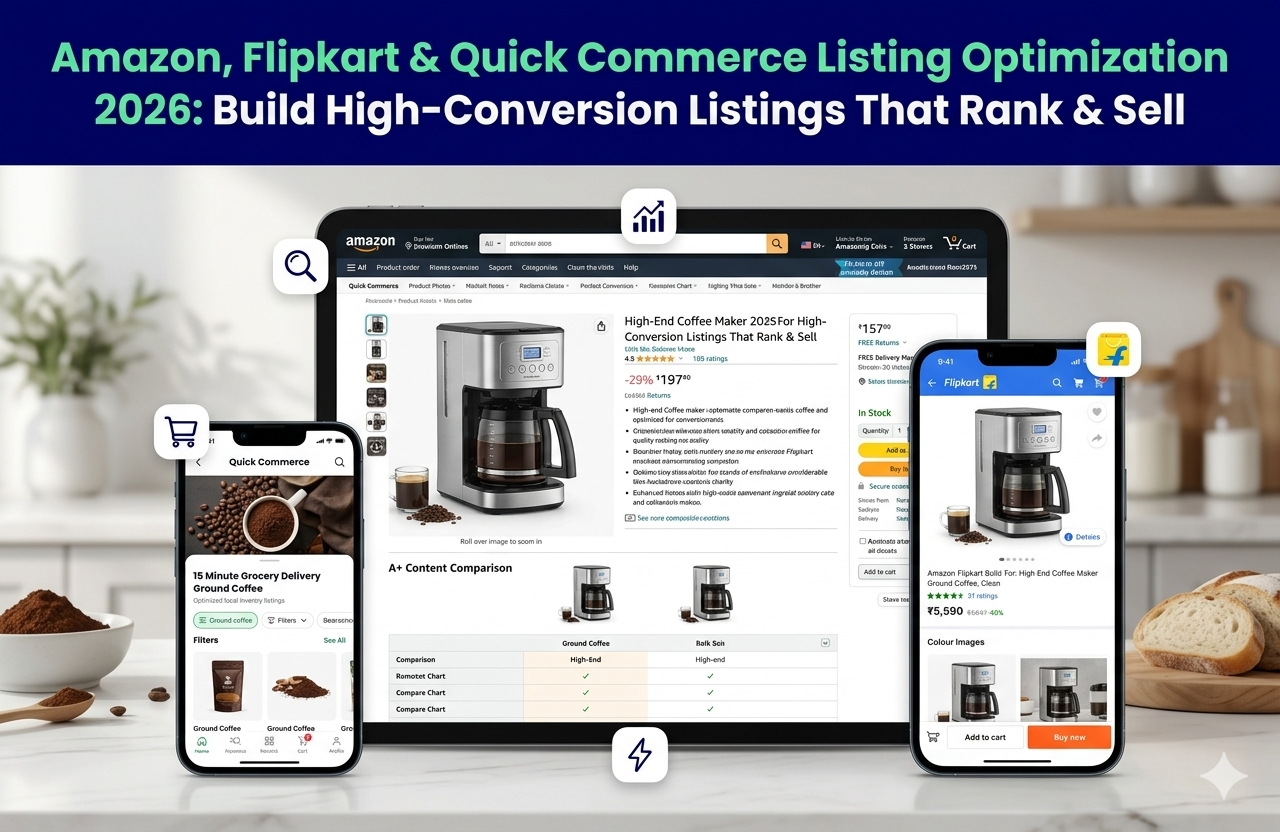
Amazon, Flipkart & Quick Commerce Listing Optimization 2026: Build High-Conversion Listings That Rank & Sell


Ecommerce marketplaces are more crowded than ever. Amazon, Flipkart, Blinkit, Zepto and other quick commerce apps reward brands that master Ecommerce Product Listing Optimization. In 2026, winning visibility is no longer about guesswork. It is about structured data, keyword-rich content, and conversion-focused product pages that align with each platform’s algorithm.

If your products are getting impressions but not enough clicks or sales, your listings are under-optimized. With the right Ecommerce Product Listing Optimization strategy, you can rank higher, attract qualified buyers, and turn every visit into revenue. This guide breaks down what works now for Amazon, Flipkart and quick commerce platforms, and how to future-proof your product pages for sales.

Why Ecommerce Product Listing Optimization Matters in 2026

Ecommerce Product Listing Optimization is no longer optional. Marketplaces use advanced ranking algorithms that evaluate keyword relevance, click-through rate, conversion rate, and customer satisfaction signals. If your listing is weak on any of these, your organic visibility drops and ad costs rise. Strong optimization helps you earn more from every impression.

In 2026, shoppers compare options faster and expect instant clarity. They scan titles, images, ratings and delivery promises in seconds. Effective product page optimization for sales ensures your offer answers key questions immediately. When your listing communicates value, trust and urgency, algorithms and buyers both reward you.

Core Principles of High-Converting Ecommerce Product Listing Optimization

Every marketplace has unique rules, but the foundations of Ecommerce Product Listing Optimization stay consistent. You need the right keywords, persuasive copy, clean structure, and proof elements like reviews and ratings. These elements work together to increase both ranking and conversion rate.

Start with deep keyword research around how to optimize Amazon product listing for sales, how to rank products on Flipkart, and quick commerce product listing optimization. Map primary and secondary keywords to titles, bullet points, descriptions and backend fields. Then layer in benefits, use cases and objections to create a compelling narrative.

Keyword Strategy for Marketplace Algorithms

Modern algorithms understand context, but they still rely on clear keyword signals. Your Ecommerce Product Listing Optimization plan should group keywords by intent and platform. For example, transactional phrases like “buy now” or “same-day delivery” matter more on quick commerce apps.

Use your focus keyword and family keywords naturally in titles, bullets and descriptions. Avoid stuffing, but ensure that terms like quick commerce product listing optimization, Blinkit product listing strategy, and Zepto product listing optimization appear where relevant. This improves discoverability for long-tail searches.

Conversion-Focused Content and Structure

Ranking without conversion wastes traffic. Product page optimization for sales means structuring content so buyers can skim and decide fast. Lead with the main benefit, then support it with features, social proof and guarantees. Keep sentences short and scannable.

Use bullet points to highlight key benefits and differentiators, such as:

  • Clear primary benefit in the first line of the description
  • Top three features in bullets near the top of the page
  • Social proof and ratings above the fold where possible
  • Delivery promises and returns policy stated clearly

When your Ecommerce Product Listing Optimization focuses on clarity and trust, conversion rates rise and rankings follow.

How to Optimize Amazon Product Listing for Sales in 2026

Amazon remains the benchmark for Ecommerce Product Listing Optimization. Its A9 and newer algorithm versions prioritize relevance, sales velocity and customer experience. To win, you must align your listing with both keyword intent and shopper psychology.

Begin with a keyword-rich title that stays within Amazon’s character limits. Include brand, main keyword, key feature and size or quantity. Then optimize bullets to answer the most common questions. Finally, use the description and A+ Content to tell a richer story and reinforce benefits.

Amazon Listing Elements That Drive Ranking and Sales

Focus on the elements Amazon weighs heavily. These include title, bullets, images, price, reviews and fulfillment method. Your Ecommerce Product Listing Optimization should treat each element as a lever for visibility and conversion.

Strengthen your Amazon listing by:

  • Using high-resolution images with lifestyle and close-up shots
  • Placing the primary keyword near the start of the title
  • Answering objections in bullet points, such as sizing or compatibility
  • Encouraging reviews through excellent post-purchase experience
  • Leveraging FBA or reliable fulfillment to improve delivery metrics

These improvements help Amazon see your product as both relevant and reliable, which boosts organic ranking.

How to Rank Products on Flipkart with Smart Listing Optimization

Flipkart’s ecosystem has its own nuances, but the core of Ecommerce Product Listing Optimization still applies. The platform favors listings that convert well, maintain strong seller performance, and match buyer search behavior. Your goal is to align content, pricing and logistics.

When planning how to rank products on Flipkart, start with category-level research. Study top competitors’ titles, images and descriptions. Identify patterns in keywords and offers. Then create a Flipkart listing optimization service style checklist for your own products, covering content, pricing and service metrics.

Flipkart Listing Optimization Service Style Checklist

Think like a specialist offering Flipkart listing optimization service. Break your approach into clear steps and repeat them across your catalog. This creates consistency and makes scaling easier as you add more SKUs.

Your checklist for Ecommerce Product Listing Optimization on Flipkart might include:

  • Category-specific title format with primary keyword and key attribute
  • Localized language or phrasing where it fits buyer behavior
  • Competitive pricing with clear discounts and offers
  • Strong seller ratings and on-time delivery performance
  • Accurate attributes and filters for better search and browse visibility

By following this process, you improve both discoverability and trust, which helps your products climb Flipkart search results.

Quick Commerce Product Listing Optimization for Blinkit and Zepto

Quick commerce platforms like Blinkit and Zepto operate on speed and proximity. Shoppers expect instant delivery and make decisions in seconds. Your Ecommerce Product Listing Optimization must therefore emphasize clarity, urgency and local relevance.

Titles should be short, clear and focused on what matters most: product type, size, flavor or variant. Images must be crisp and accurate, since buyers cannot afford confusion. Descriptions should be concise but informative, highlighting use cases and benefits quickly.

Blinkit Product Listing Strategy

A strong Blinkit product listing strategy focuses on search behavior and impulse buying. Many users search by generic terms like “bread,” “milk,” or “chips,” then choose from the first few results. Your goal is to appear in those top spots and convert fast.

For effective Ecommerce Product Listing Optimization on Blinkit, ensure:

  • Consistent naming conventions across similar SKUs
  • Clear pack sizes to avoid returns and complaints
  • Relevant tags and categories for better in-app discovery
  • Prominent display of offers or combos where allowed

These actions help the algorithm trust your listings and reduce friction for buyers.

Zepto Product Listing Optimization Tactics

Zepto product listing optimization follows similar principles but may vary by category and city. Local inventory, pricing and promotions influence visibility. Your content must still do the heavy lifting in terms of clarity and persuasion.

Focus your Ecommerce Product Listing Optimization on:

  • Accurate stock information and real-time availability
  • Short, benefit-led descriptions tailored to quick decisions
  • High-quality images that match the actual product delivered
  • Consistent performance to maintain strong seller scores

When your listings reduce confusion and returns, Zepto’s algorithm is more likely to favor your products.

Turning Optimized Listings into a Scalable Growth Engine

Once your Amazon, Flipkart and quick commerce listings are optimized, the next step is scale. Treat Ecommerce Product Listing Optimization as an ongoing process, not a one-time project. Algorithms change, competitors react, and buyer behavior evolves.

Build a simple optimization cycle: audit, test, measure, refine. Track key metrics like impressions, click-through rate, conversion rate and return rate. Use these insights to adjust titles, images, pricing and content. Over time, this disciplined approach compounds results across every marketplace.

From Single Listing Wins to Portfolio-Level Impact

Improving one product page is valuable, but real growth comes from portfolio-wide optimization. Apply the same Ecommerce Product Listing Optimization framework across categories and platforms. Standardize templates, keyword research, and creative guidelines.

This approach reduces manual effort and speeds up execution. It also ensures every new product launches with a strong foundation. As your catalog grows, small conversion lifts on each listing add up to significant revenue gains.

Conclusion: Make Your Listings Work Harder in 2026

In 2026, the brands that win on Amazon, Flipkart, Blinkit and Zepto are those that treat Ecommerce Product Listing Optimization as a strategic growth lever. By combining keyword intelligence, persuasive content, platform-specific tactics and continuous testing, you can build listings that both rank and sell.

If you are ready to turn your product pages into always-on sales assets and need expert support across marketplaces and quick commerce platforms, HRL Infotechs can help you design and execute a data-driven optimization roadmap tailored to your growth goals.

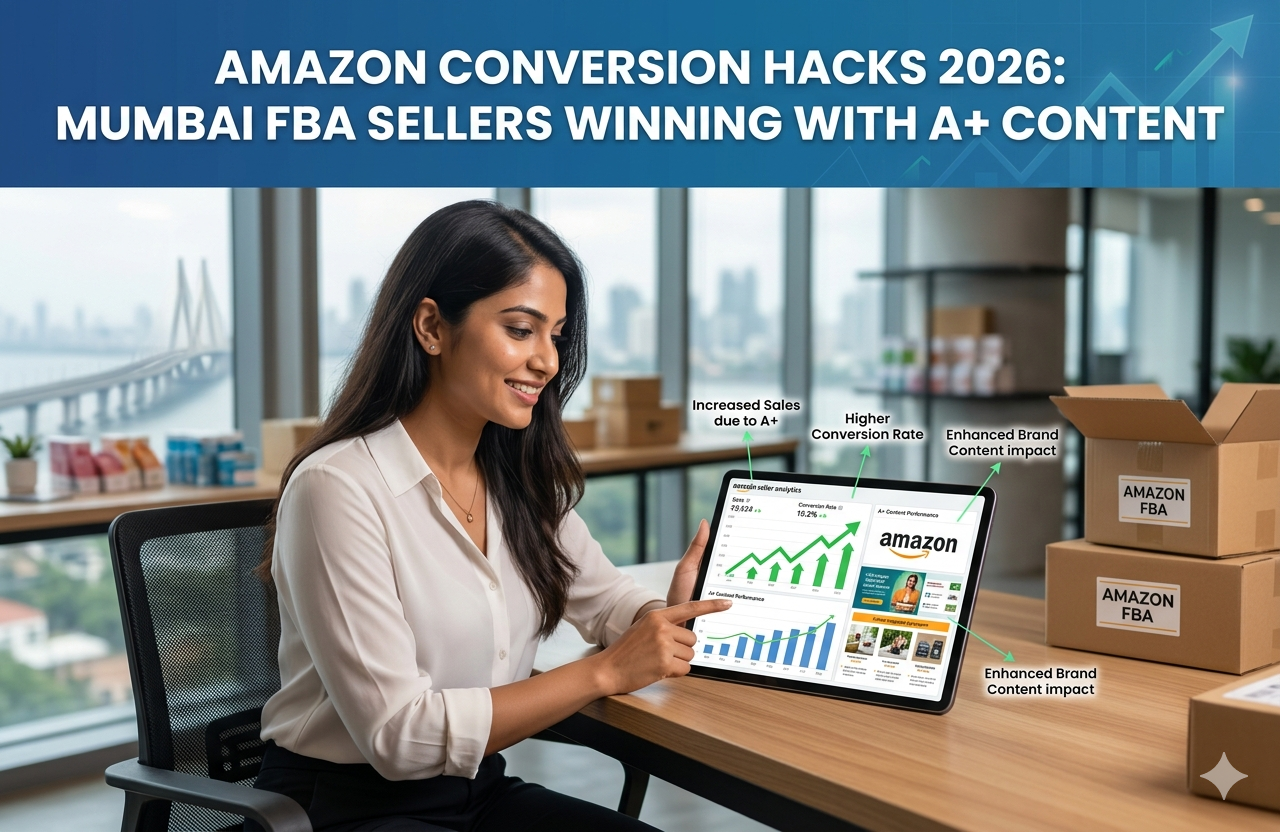
Amazon Conversion Hacks 2026: Mumbai FBA Sellers Winning with A+ Content


Mumbai FBA sellers are facing a new reality in 2026. Ad costs are rising, competition is brutal, and shoppers compare dozens of products in seconds. In this crowded marketplace, Amazon A+ Content has quietly become one of the most powerful levers to boost conversions without only relying on ads.

When done right, Amazon A+ Content turns a basic product page into a persuasive sales experience. It answers objections, builds trust, and guides buyers to click “Add to Cart.” If your Amazon listing is not converting or your low conversion rate Amazon listing is eating into profits, it is time to treat A+ as a core conversion asset, not an optional design upgrade.

Why Amazon A+ Content Is a Conversion Game-Changer in 2026

Amazon A+ Content is no longer just about pretty images. In 2026, it functions as a structured storytelling layer that supports your entire Amazon FBA conversion strategy. It lets you replace generic product descriptions with branded modules, lifestyle visuals, and comparison charts that speak directly to buyer intent.

For Mumbai FBA sellers, this matters even more. Many categories are saturated with similar products and similar pricing. Amazon A+ Content helps you differentiate when everything else looks the same. It highlights your unique value, reduces doubt, and nudges shoppers who are on the fence, which directly improves your Amazon listing conversion rate optimization efforts.

Diagnosing Why Your Amazon Listing Is Not Converting

Before you redesign anything, you must understand why your Amazon listing is not converting. Often, the problem is not traffic but what shoppers see after they land on your page. Weak visuals, vague benefits, and missing proof can quickly lead to bounce and lost sales.

Low conversion rate Amazon listing issues usually fall into a few patterns. The product title may be keyword-stuffed but unclear. Images might not show usage context. Bullets may list features but ignore benefits. Most importantly, the absence of strategic Amazon A+ Content leaves a gap where trust and persuasion should be.

Common Conversion Killers on Amazon Product Pages

Several recurring issues show up when analyzing underperforming listings. These problems quietly erode trust and cause shoppers to keep scrolling to competitors. Identifying them is the first step toward effective Amazon listing conversion rate optimization.

Watch out for these red flags:

  • Generic, non-branded product descriptions that feel copy-pasted
  • Low-resolution images or inconsistent visual style
  • No clear differentiation versus similar products in the category
  • Missing comparison charts or usage scenarios
  • Thin content that does not answer common buyer questions

Core Principles of High-Converting Amazon A+ Content

To increase Amazon sales conversion rate, you need A+ modules that do more than fill space. Every image, line of copy, and layout choice should support a clear conversion goal. That goal is to move the shopper from curiosity to confidence to purchase.

High-performing Amazon A+ Content follows a few core principles. It leads with benefits, not features. It uses visual hierarchy to guide the eye. It addresses objections early. And it mirrors the language customers use in reviews and questions, which also supports your broader Amazon FBA conversion strategy.

Structuring A+ Content for Maximum Impact

Thoughtful structure is what separates average A+ layouts from conversion-focused ones. Start with a hero module that instantly communicates your main promise. Follow with modules that explain, prove, and compare your offer in a logical flow.

A simple but effective structure for Amazon A+ Content is:

  • Top banner: key benefit and brand promise
  • Feature-benefit modules: 3–5 focused value points
  • Lifestyle imagery: product in real Mumbai or urban contexts
  • Comparison chart: your product versus alternatives
  • FAQ or objection-handling section: address common doubts

Copywriting Techniques That Lift Conversion Rate

Design alone will not fix a low conversion rate Amazon listing. The words inside your A+ modules must be sharp, specific, and benefit-driven. Avoid vague claims and focus on outcomes the buyer actually cares about, such as durability, ease of use, or time saved.

Use short, punchy headlines in each module. Support them with one or two concise sentences. Where possible, add microproof such as data points, usage scenarios, or mini testimonials. This approach makes your Amazon A+ Content both persuasive and easy to skim on mobile.

How to Create Amazon A+ Content That Converts for Mumbai FBA Sellers

Understanding theory is one thing; implementing it on live listings is another. When planning how to create Amazon A+ Content, start with a single hero product that already has some traction. This allows you to test improvements on a listing where data is reliable.

Begin by mapping your buyer journey. What does a Mumbai shopper think when they first see your product? What questions do they ask before purchase? Use this insight to design modules that guide them step by step. This is the foundation of effective Amazon listing conversion rate optimization.

Step-by-Step Process to Build A+ Content

A structured process helps you move from idea to published A+ quickly. It also ensures nothing critical is missed. You do not need to be a designer, but you do need a clear brief and intent.

Follow this simple workflow:

  • Audit your current listing and competitor A+ layouts
  • Define your primary and secondary benefits
  • Draft headlines and short copy for each module
  • Create or commission on-brand lifestyle and product images
  • Assemble modules in Seller Central and preview on mobile
  • Publish, then track conversion rate changes over 2–4 weeks

When to Use Amazon A+ Content Design Services

Many Mumbai sellers reach a point where DIY design is no longer enough. If you are serious about how to improve Amazon conversion rate at scale, professional Amazon A+ Content design services can compress your learning curve and speed up testing.

Specialized teams understand Amazon’s module options, image guidelines, and best practices for storytelling. They can turn raw product information into a cohesive visual narrative that aligns with your Amazon FBA conversion strategy and category norms.

Signs You Should Outsource A+ Content

Not every seller needs external help immediately. However, certain signals suggest that investing in Amazon A+ Content design services will pay off faster than continued experimentation. These signals are often visible in your metrics and workflow.

Consider outsourcing when:

  • Your traffic is strong but conversion has plateaued
  • You manage multiple SKUs and cannot test layouts quickly
  • Your brand visuals look inconsistent across listings
  • You are entering a highly competitive Mumbai or India-wide niche

Measuring the Real Amazon A+ Content Benefits

To justify ongoing investment, you must measure Amazon A+ Content benefits with data, not assumptions. The primary metric is your Amazon listing conversion rate, but secondary metrics also matter. Look at time on page, sessions, and review velocity.

After publishing new A+ layouts, compare performance over a defined period with similar traffic. If you see a sustained lift in conversion, you have validated your Amazon FBA conversion strategy. From there, you can roll out similar frameworks to other high-potential SKUs.

Turning Insights into a Repeatable Conversion Playbook

Once you find patterns that work, document them. Create internal guidelines for image styles, headline formulas, and module sequences. This turns Amazon A+ Content from a one-off project into a repeatable system for growth.

Over time, this playbook will help you launch new products faster, with fewer mistakes. It also ensures that every listing supports your broader goal to increase Amazon sales conversion rate across your Mumbai FBA portfolio.

Conclusion: Turn Your A+ Content into a Mumbai Conversion Engine

In 2026, winning on Amazon is less about shouting louder and more about converting better. For Mumbai FBA sellers, Amazon A+ Content is the bridge between traffic and revenue. It transforms static listings into persuasive experiences that answer questions, build trust, and move buyers to act.

If your Amazon listing is not converting or your low conversion rate Amazon listing is capping growth, now is the time to treat A+ as a strategic asset. With the right structure, copy, and visuals, your pages can start working harder for every click. When you are ready to scale this approach across your catalog and turn insights into a conversion system, HRL Infotechs can help you execute with precision.

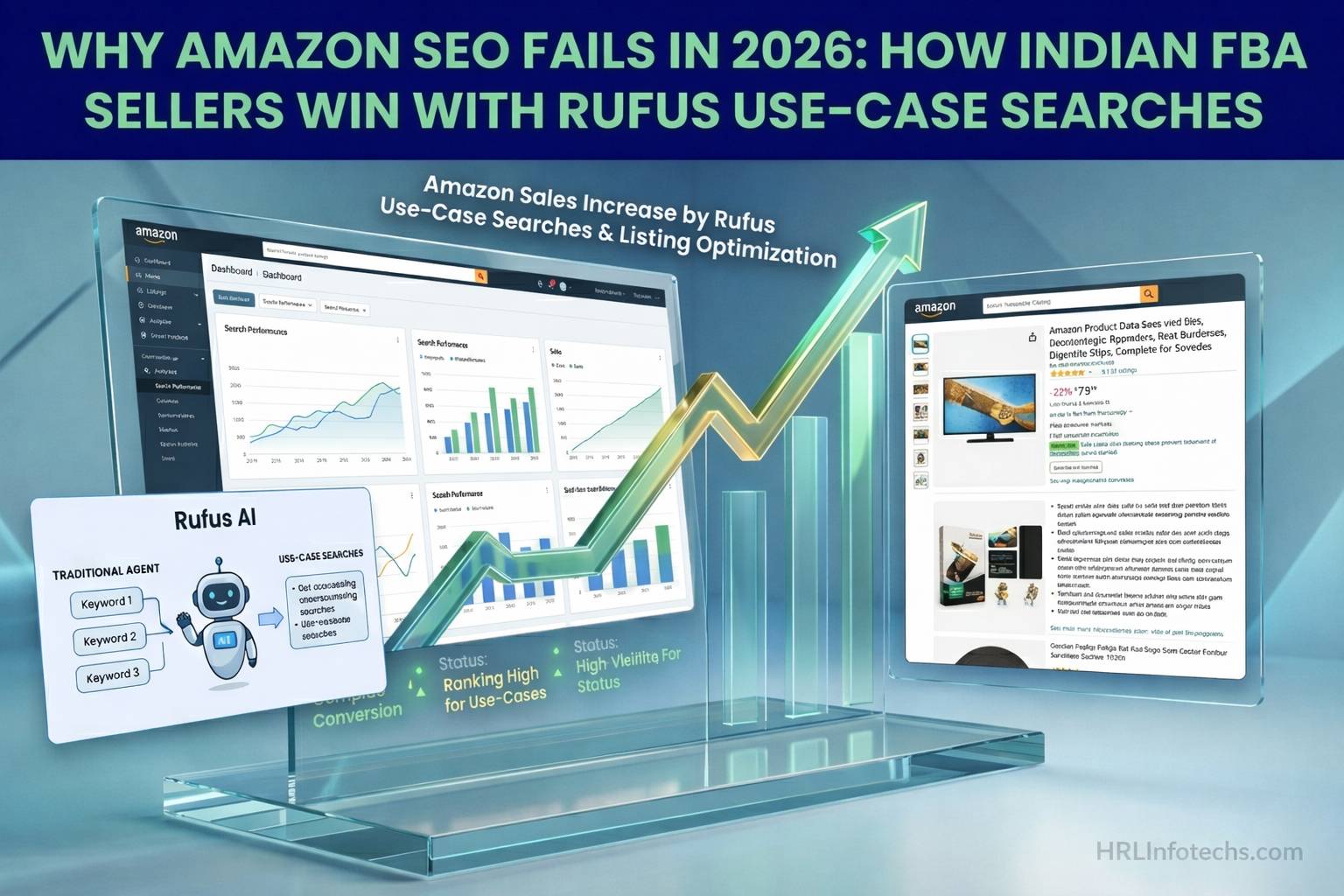
Why Amazon SEO Fails in 2026: How Indian FBA Sellers Win with Rufus Use-Case Searches


Amazon SEO is changing faster than most sellers can track. What worked in 2023 or 2024 is already losing power in 2026, especially with Amazon’s Rufus AI and use-case driven search. Indian FBA sellers who still rely only on keyword stuffing, generic titles, and broad match ads are watching their visibility drop while smarter competitors quietly take over page one.

To win now, you must treat Amazon SEO as a buyer-intent engine, not just a keyword checklist. That means understanding how customers search on Amazon in 2026, mapping real-life problems to your listings, and aligning Amazon SEO & Listing Optimization with data-driven ecommerce growth strategies. This shift is exactly where most Amazon SEO fails—and where Indian FBA sellers can win big.

Why Traditional Amazon SEO Fails in 2026

Most Amazon SEO frameworks were built for a different era, when exact match keywords and aggressive indexing were enough. In 2026, Amazon’s algorithm reads context, intent, and engagement signals, not just raw keyword density. Listings that ignore buyer language and real use cases get impressions but no clicks or conversions.

This is why many sellers complain that traffic is up but sales are flat. They optimize for search volume instead of problem solving keywords Amazon SEO actually rewards. When titles, bullets, and A+ content fail to answer a clear use case, Rufus and other AI layers push those listings down in favor of products that match how customers search on Amazon 2026.

The New Reality: Use-Case and Problem-Solving Search

Amazon search is shifting from product-first to problem-first. Instead of typing “wireless headphones,” buyers now search like, “headphones for noisy office calls” or “earbuds for gym that don’t fall out.” These are classic amazon use case search examples that reveal clear intent and context.

Amazon SEO for customer intent now means mapping your product to specific situations, pains, and outcomes. When your listing mirrors these phrases in a natural way, you send strong relevance signals. This is how to rank on Amazon with buyer intent: speak to the scenario, not just the category.

How Customers Search on Amazon 2026

Search behavior in 2026 looks more like conversations than short tags. Shoppers type full questions, detailed needs, and even mini-sentences, especially on mobile and voice. Amazon’s AI understands these patterns and surfaces listings that match the underlying use case, not just the core keyword.

To align Amazon SEO with this shift, sellers must research long-tail, intent-heavy phrases and integrate them into titles, bullets, and FAQs. Phrases like “for oily skin in humid weather” or “for small kitchens with limited space” are powerful signals when used strategically and naturally in your Amazon SEO & Listing Optimization.

Examples of Use-Case Driven Keywords

Instead of only targeting generic head terms, modern Amazon SEO requires layering in problem and outcome language. For example, a kitchen organizer can target “kitchen rack for small apartments” or “shelf organizer for under sink clutter.” These are problem solving keywords Amazon SEO tools often overlook.

By building clusters of such phrases, you create a semantic web around your listing. This helps Amazon understand that your product solves multiple micro-problems. Over time, this approach supports better organic ranking, stronger conversions, and lower dependence on pure Amazon PPC & Advertising spend.

Best Amazon SEO Strategy for Conversions, Not Just Clicks

Ranking is useless if your listing cannot convert. The best Amazon SEO strategy for conversions starts with aligning every element of the page to buyer intent. Titles attract the right click, bullets answer objections, and images prove outcomes. This creates a tight funnel from search term to purchase.

In 2026, Amazon SEO is less about tricks and more about structured persuasion. You still need keyword-rich content, but it must be framed around benefits, use cases, and social proof. When your listing reflects how customers search on Amazon 2026, your conversion rate becomes a ranking signal in itself.

Structuring Listings Around Buyer Intent

To optimize Amazon SEO for customer intent, start by mapping your top three to five use cases. For each, identify the problem, desired outcome, and emotional driver. Then, weave these into your title, bullets, and A+ modules with natural Amazon SEO keyword placement.

For example, bullets can follow a clear pattern: problem, solution, proof, and use-case scenario. This structure helps both the algorithm and the shopper understand why your product is the best fit. Over time, this approach supports higher click-through and conversion, which strengthens your Amazon SEO performance.

Integrating Amazon PPC & Advertising with Organic SEO

Many sellers treat Amazon PPC & Advertising as a separate channel from Amazon SEO, but in 2026 they are tightly connected. Paid campaigns generate data on which search terms convert, which then feeds your organic optimization strategy. Ignoring this loop is a major reason Amazon SEO fails.

By mining your PPC search term reports, you can uncover hidden amazon use case search examples and problem phrases that drive sales. These insights should guide your content updates, from titles to backend keywords. This is a key part of data-driven ecommerce growth strategies that top Indian FBA sellers now rely on.

Using PPC Data to Refine Amazon SEO

Instead of chasing vanity metrics like impressions, focus on high-conversion search terms from your ads. These phrases often reveal how to rank on Amazon with buyer intent because they show what real customers type before buying. Prioritize them in your on-page Amazon SEO & Listing Optimization.

Practical steps include updating bullet points with winning phrases, adjusting product descriptions to mirror buyer language, and testing new images that reflect key use cases. Over time, this alignment between PPC and Amazon SEO builds a powerful feedback loop that compounds your organic visibility.

Account Management, FBA Support, and Operational Signals

Even the best Amazon SEO strategy can fail if operational metrics are weak. Late shipments, stockouts, and poor customer service send negative signals to Amazon’s algorithm. In 2026, Account Management & FBA support are not back-end tasks; they are core parts of your Amazon SEO engine.

Strong inventory planning, responsive customer support, and optimized FBA workflows help maintain high seller ratings and fast delivery promises. These factors directly impact your ability to rank, especially in competitive niches. Amazon wants listings that not only match intent but also deliver a reliable experience.

Operational Excellence as an SEO Advantage

Indian FBA sellers who treat operations as a growth lever gain a real edge. Consistent stock, low return rates, and positive reviews all reinforce your Amazon SEO efforts. When combined with intent-driven content, these signals tell Amazon that your listing is a safe bet for top positions.

This is where data-driven ecommerce growth strategies go beyond keywords. Dashboards that track inventory health, review trends, and fulfillment performance help you spot risks early. Fixing these issues protects your rankings and ensures that your Amazon SEO investments keep paying off.

How Indian FBA Sellers Can Win the Rufus Era

Indian FBA sellers are uniquely positioned to leverage the Rufus use-case revolution. Many already operate in price-sensitive, problem-focused markets, which trains them to think in terms of real-life scenarios. Turning that insight into structured Amazon SEO can unlock global growth.

The path forward is clear: focus on how customers search on Amazon 2026, build listings around use cases, and integrate Amazon PPC & Advertising data into your optimization cycle. With disciplined Account Management & FBA support, this approach turns Amazon SEO into a predictable growth system rather than a guessing game.

Turning Strategy into Execution

To move from theory to action, start with an audit of your current listings. Identify where generic product language replaces clear use-case messaging. Then, rebuild titles, bullets, and A+ content around buyer intent while maintaining strong Amazon SEO fundamentals.

Next, align your PPC campaigns with these new themes and monitor which search terms drive the best conversions. Feed those insights back into your content and operational planning. If you need expert support to execute this at scale, partnering with a specialist like HRL Infotechs can help you turn Amazon SEO into a consistent, compounding growth channel.

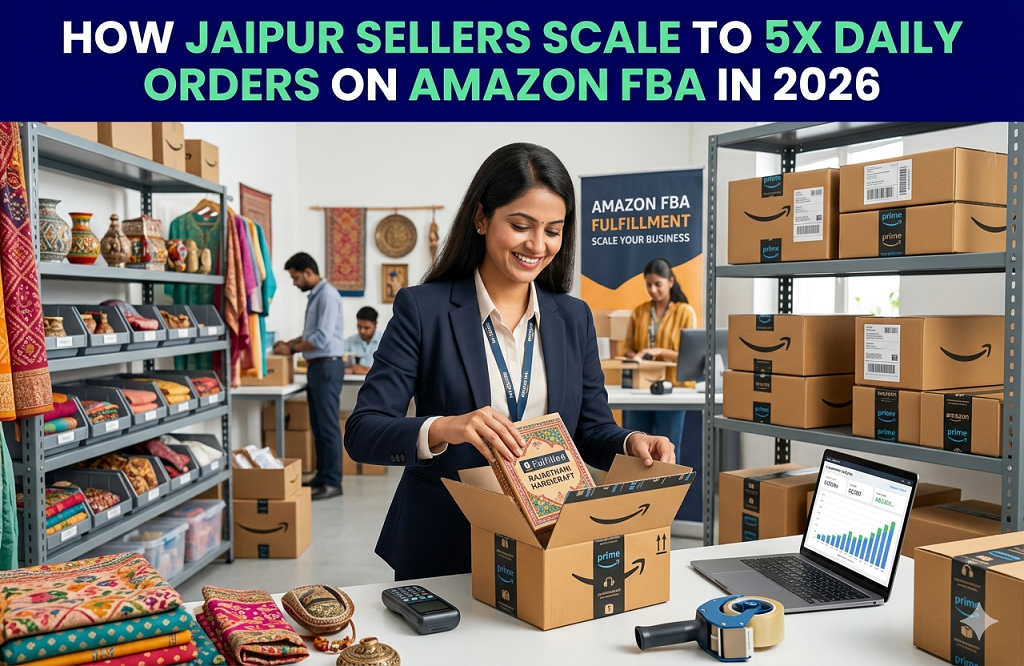
How Jaipur Sellers Scale to 5X Daily Orders on Amazon FBA in 2026


Jaipur’s ecommerce landscape has changed dramatically in the last few years. Local brands that once relied on exhibitions, retail counters, and word of mouth are now scaling to hundreds of daily orders using a clear Amazon FBA growth strategy. The sellers winning in 2026 are not just listing products; they are building systems, data-backed campaigns, and optimized operations that compound every month.

If you are a Jaipur-based seller wondering how to increase orders on Amazon FBA and turn a modest catalog into a scalable business, this guide breaks down the exact levers fast-growing brands are pulling. From listing optimization and PPC to account management and operations, you will see how Jaipur sellers are achieving 5X daily orders on Amazon FBA in 2026.

Why Jaipur Sellers Are Doubling Down on an Amazon FBA Growth Strategy

Jaipur’s manufacturers and traders have a natural edge on Amazon India. They offer strong product design, competitive pricing, and deep category knowledge in niches like home décor, textiles, jewelry, and handicrafts. When these strengths plug into a structured Amazon FBA growth strategy, the result is predictable and scalable order growth, not random spikes in sales.

The dominant search intent around Amazon FBA sales optimization tips is informational with a commercial angle. Sellers want to learn how to get more orders on Amazon, but they also look for expert support, such as Amazon account management services and Amazon FBA consulting services. This is why the most successful Jaipur ecommerce brands on Amazon combine in-house learning with specialist partners to accelerate growth.

Foundation First: High-Impact Listing Optimization for 5X Growth

Every top-ranking guide on how to increase orders on Amazon FBA starts with listings. Before scaling ads or inventory, Jaipur sellers winning in 2026 invest heavily in Amazon listing optimization services. The goal is simple: make every product page convert as efficiently as possible, so each click has maximum revenue potential.

A strong Amazon FBA growth strategy treats listings as digital storefronts. That means keyword-rich titles, compelling bullet points, and benefit-driven descriptions. It also means using high-quality images, infographics, and A+ Content to answer objections before buyers even ask. When listings convert better, the same traffic produces more orders and better organic rankings.

Essential Elements of Conversion-Ready Amazon Listings

Jaipur’s top-performing Amazon sellers follow a consistent structure across their catalog. They research primary and secondary keywords, then weave them naturally into titles, bullets, and descriptions without stuffing. This approach supports both Amazon SEO and user experience, which is crucial for long-term growth.

To increase Amazon daily orders, winning brands focus on clarity and benefits over jargon. They highlight use cases, materials, dimensions, and care instructions in simple language. They also use comparison charts, lifestyle images, and FAQs to reduce returns and boost review quality. Over time, these optimized listings feed into a stronger Amazon FBA growth strategy by improving click-through and conversion rates.

Keyword Strategy Tailored for Jaipur Ecommerce Brands on Amazon

Local brands selling on Amazon India often underestimate the power of localized keyword research. Instead of targeting only broad terms, they also optimize for niche phrases related to Jaipur’s strengths, such as block print bedsheets, ethnic jewelry, or handcrafted décor. This helps them rank faster in less competitive pockets of demand.

Top guides on Amazon FBA sales optimization tips recommend building a keyword universe that includes brand, category, material, style, and occasion-based terms. Jaipur ecommerce brands on Amazon then map these to different sections of the listing and backend search terms. This structured approach supports a sustainable Amazon FBA growth strategy that compounds with every new product launch.

Scaling Traffic: Smart Amazon PPC Services in India for Jaipur Sellers

Once listings are optimized, the next lever in how to get more orders on Amazon is paid traffic. In 2026, Amazon PPC services in Jaipur have become more competitive, but also more data-driven. Jaipur sellers scaling to 5X daily orders treat PPC not as an expense, but as an investment in ranking and market share.

An effective Amazon FBA growth strategy uses PPC to validate keywords, test new products, and defend high-converting search terms. Instead of running broad, uncontrolled campaigns, successful sellers segment their ads by match type, intent, and profitability. This lets them scale winning campaigns while cutting waste from underperforming ones.

Key PPC Structures That Drive 5X Daily Orders

High-growth Jaipur brands typically maintain separate campaigns for auto, broad, phrase, and exact match keywords. Auto campaigns discover new search terms, while exact campaigns focus budget on proven winners. This layered approach supports both exploration and aggressive scaling within a single Amazon FBA growth strategy.

They also use product targeting ads to appear on competitor listings and complementary products. This tactic is especially powerful for Jaipur’s local brands selling on Amazon India in crowded categories. By capturing shoppers already in buying mode, these brands increase Amazon daily orders without relying only on top-of-funnel keywords.

Operational Excellence: Inventory, Pricing, and Reviews

Traffic and listings can only take you so far. The Jaipur sellers reaching 5X daily orders on Amazon FBA in 2026 run tight operations behind the scenes. They monitor inventory levels, lead times, and FBA storage limits to avoid stockouts that kill ranking momentum and waste ad spend.

Pricing strategy is another pillar of a robust Amazon FBA growth strategy. Instead of constant discounting, successful brands use data to set price bands that balance volume and profit. They track competitor pricing, seasonality, and promotion windows, then adjust with clear rules rather than guesswork.

Building Trust Through Reviews and Customer Experience

Every top-ranking article on how to increase orders on Amazon FBA emphasizes reviews. Jaipur sellers that scale fast build systems to encourage genuine feedback, respond to queries quickly, and resolve issues before they escalate. This not only improves ratings but also signals reliability to new buyers.

To support long-term Amazon FBA growth strategy goals, leading brands analyze negative reviews for product improvement ideas. They refine packaging, instructions, and quality checks based on recurring complaints. Over time, this reduces returns, strengthens ratings, and improves conversion rates across the catalog.

When to Bring in Amazon Account Management and Consulting Services

There is a clear pattern among Jaipur’s fastest-growing Amazon sellers. They manage early experiments in-house, then bring in Amazon account management services and Amazon FBA consulting services once they see consistent traction. This shift usually happens when daily orders cross a certain threshold and complexity increases.

Specialist partners help structure catalogs, refine the Amazon FBA growth strategy, and manage PPC, deals, and compliance. They also provide reporting frameworks that show which SKUs, campaigns, and keywords drive the most profit. This outside perspective helps Jaipur ecommerce brands on Amazon avoid costly mistakes and scale with confidence.

Conclusion: Turning Jaipur’s Product Strength into Scalable Amazon Growth

Jaipur sellers already have what many markets lack: distinctive products, strong craftsmanship, and competitive pricing. When these strengths align with a focused Amazon FBA growth strategy, the path to 5X daily orders becomes clear and repeatable. It starts with optimized listings, data-driven PPC, disciplined operations, and a willingness to test, measure, and refine.

If you are serious about turning your Jaipur brand into a leading Amazon player in 2026, now is the time to formalize your strategy, tighten your execution, and, when needed, partner with experts like HRL Infotechs to accelerate your journey from local favorite to national bestseller.

The Global Growth Strategy for Chandigarh Sellers on Amazon & Walmart


Indian ecommerce sellers in Chandigarh are no longer limited to local markets. With the right global growth strategy for Amazon sellers India, you can reach customers across the US, UK, Europe, and beyond. Amazon and Walmart marketplace together offer massive cross-border opportunities, but success depends on smart planning, compliance, and performance-driven execution.

This guide breaks down a practical global growth strategy for Amazon sellers India who want to scale from Chandigarh to the world. You will learn how to sell globally on Amazon from India, how to approach Walmart marketplace global selling, and how to use account management, PPC, and listing optimization to build a sustainable international ecommerce business.

Understanding the Global Opportunity for Chandigarh-Based Sellers

Chandigarh sellers are uniquely positioned to tap into global ecommerce. Strong logistics networks, access to manufacturing hubs, and digital-first business owners make the region ideal for cross-border expansion. A focused global growth strategy for Amazon sellers India can convert this advantage into consistent international revenue.

However, selling internationally is not just about listing products on more marketplaces. It requires understanding buyer behavior in each country, marketplace rules, and competition levels. When you structure your Amazon global selling strategy India around data, compliance, and customer experience, you reduce risk and increase your chances of long-term success.

Core Pillars of a Global Growth Strategy for Amazon Sellers India

Every successful global growth strategy for Amazon sellers India is built on a few core pillars. These include product-market fit, marketplace selection, operational readiness, and performance marketing. Ignoring any of these areas can slow down or even block your international expansion.

Instead of treating global selling as an experiment, build a structured roadmap. Start with one or two priority markets, validate demand, then scale. This approach keeps your cash flow healthy and helps you refine your Amazon global selling strategy India based on real-world performance.

Choosing the Right International Marketplaces

Not every marketplace will be ideal for your products. For Chandigarh sellers, the most common starting points are Amazon US, Amazon UK, Amazon UAE, and Walmart US. Each platform has different fee structures, category rules, and competition levels, which should guide your global growth strategy for Amazon sellers India.

Before listing, research category demand, average selling prices, and top competitors. Use tools to estimate sales volume and advertising costs. This data-driven approach ensures your Amazon global selling strategy India focuses on markets where you can realistically win and scale.

Aligning Products with Global Demand

Even strong products in India may not automatically succeed overseas. Cultural preferences, seasonality, and regulations all impact performance. A robust global growth strategy for Amazon sellers India includes validating whether your catalog fits the needs of US, European, or Middle Eastern buyers.

Analyze reviews of similar products, identify gaps, and adapt your offer. This may include changing bundles, packaging, or even product features. When you align your Amazon global selling strategy India with real customer expectations, your conversion rates and ad performance improve significantly.

Building a Compliant and Scalable Operations Backbone

Operational readiness is often the difference between profitable scaling and costly failures. Your global growth strategy for Amazon sellers India must cover shipping models, customs, taxes, and returns. Many Chandigarh sellers start with FBA for Amazon and third-party fulfillment partners for Walmart.

Plan your inventory flow carefully. Factor in lead times from suppliers, international shipping durations, and marketplace storage limits. A stable operations backbone supports your Amazon global selling strategy India and prevents stockouts, penalties, and negative customer feedback.

How to Sell Globally on Amazon from India

To sell globally on Amazon from India, you need more than just an active seller account. You must configure marketplace registrations, tax information, and logistics in line with each region’s requirements. A structured global growth strategy for Amazon sellers India helps you complete these steps without costly mistakes.

Amazon offers dedicated programs for cross-border trade, including Amazon Global Selling. Through these, Chandigarh sellers can access multiple marketplaces using a unified framework. Integrating these tools into your Amazon global selling strategy India accelerates your launch and reduces operational friction.

Key Steps to Launch on Amazon International Marketplaces

When planning how to sell globally on Amazon from India, follow a clear step-by-step process. This keeps your global growth strategy for Amazon sellers India organized and measurable from day one.

  • Register for Amazon Global Selling and choose target marketplaces.
  • Complete KYC, tax, and business verification for each region.
  • Decide on FBA, FBM, or a hybrid fulfillment model.
  • Localize product listings for language, keywords, and compliance.
  • Set up Amazon PPC campaigns tailored to each marketplace.

Each of these steps should align with your broader Amazon global selling strategy India. Document your process, track performance, and refine based on data from your first few months of selling.

Walmart Marketplace Global Selling Guide for Indian Sellers

Walmart marketplace is emerging as a powerful channel for Indian brands targeting US customers. A dedicated Walmart marketplace global selling guide should be part of your overall global growth strategy for Amazon sellers India, especially if you want to diversify beyond Amazon.

Approval standards on Walmart are strict, but once onboarded, competition is often lower than on Amazon. This creates room for Chandigarh sellers to build strong positioning with the right Walmart marketplace management services and listing strategies.

Optimizing Walmart Listings for International Buyers

Walmart product listing optimization services focus on titles, images, attributes, and content that match US buyer expectations. Your global growth strategy for Amazon sellers India should mirror this structured approach on Walmart as well, ensuring brand consistency across platforms.

Use keyword research tailored to Walmart’s search engine, not just Amazon’s. Highlight benefits, guarantees, and social proof in your content. When combined with Walmart marketplace management services, this helps you maintain high listing quality scores and better organic visibility.

Leveraging Account Management and PPC for Global Scale

Once your listings are live, growth depends on performance marketing and ongoing optimization. Amazon account management services India and Walmart marketplace management services can help Chandigarh sellers manage complexity across multiple regions. This support is often essential as your global growth strategy for Amazon sellers India matures.

Dedicated account management ensures pricing, inventory, and content stay aligned with marketplace best practices. It also frees your internal team to focus on product development and branding, while experts handle the technical side of your Amazon global selling strategy India.

Using Amazon PPC Services for Global Markets

Amazon PPC services for global markets are a critical driver of visibility and sales velocity. Your global growth strategy for Amazon sellers India should include structured campaigns for each marketplace, with localized keywords and tailored bids.

Monitor ACoS, TACoS, and conversion rates by country. Pause underperforming keywords, scale winners, and test new match types. Integrating PPC data into your Amazon global selling strategy India helps you identify which products and markets deserve deeper investment.

Scaling with an International Ecommerce Growth Agency

Managing multiple marketplaces, regions, and ad accounts can quickly overwhelm small teams. Partnering with an international ecommerce growth agency allows Chandigarh sellers to execute a sophisticated global growth strategy for Amazon sellers India without building a large in-house staff.

Such agencies typically offer Amazon account management services India, Walmart product listing optimization services, and multi-channel PPC management. When aligned with your business goals, they can compress your learning curve and accelerate your Amazon global selling strategy India.

Conclusion: Turning Chandigarh Brands into Global Leaders

Global ecommerce is no longer reserved for large corporations. With a clear global growth strategy for Amazon sellers India, Chandigarh businesses can build profitable brands across Amazon and Walmart. The key is to combine smart marketplace selection, localized listings, strong operations, and data-driven advertising.

If you are ready to move beyond experimentation and build a serious international presence, partnering with a specialist team like HRL Infotechs can help you design, execute, and scale a winning strategy across Amazon and Walmart marketplaces.