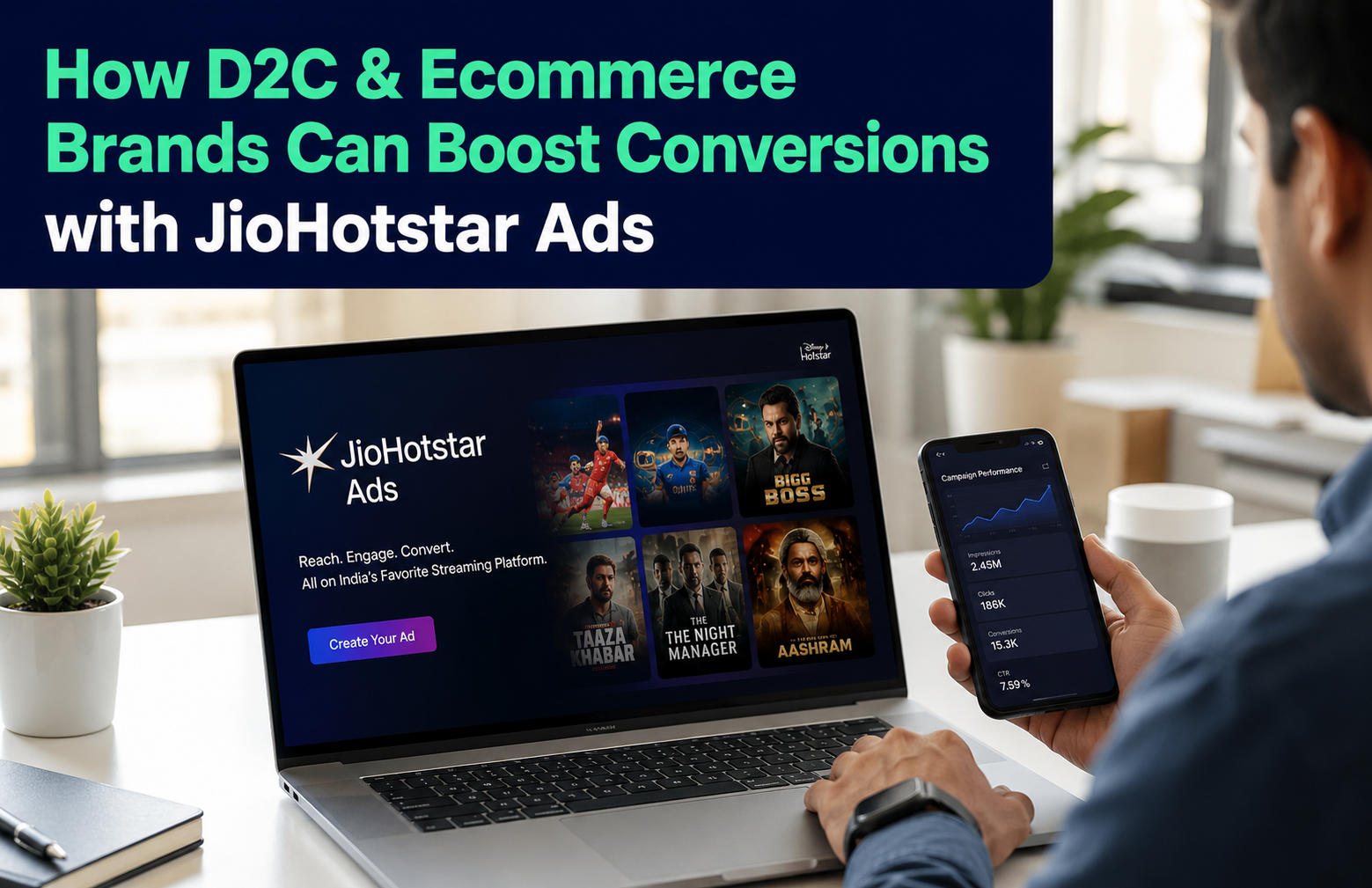
How D2C & Ecommerce Brands Can Boost Conversions with JioHotstar Ads


JioHotstar reached more than 600 million viewers during IPL events, while its wider platform ecosystem serves over 450 million monthly active users. Despite this massive reach, many D2C and ecommerce brands still approach OTT advertising with the same strategy they use for social media campaigns. That approach often limits results.

Advertising on streaming platforms works differently because audience behaviour is different. People scrolling through social media are usually multitasking and consuming content quickly. On JioHotstar, viewers intentionally spend time watching sports, entertainment, regional content, and live events. Their attention span is stronger, and that creates valuable opportunities for brands that want to improve engagement and conversions.

For ecommerce businesses facing rising customer acquisition costs, JioHotstar Ads offer access to high-intent audiences in a premium viewing environment. Instead of competing for attention inside crowded social feeds, brands can connect with audiences while they are actively engaged with content they enjoy.

This guide explains practical strategies that ecommerce and D2C businesses can use to improve conversions through JioHotstar advertising.

Why D2C Brands Are Looking Beyond Traditional Advertising Channels

The success of any advertising platform depends on both audience quality and platform scale. JioHotstar has positioned itself as one of India’s largest digital entertainment ecosystems with:

  • 450+ million monthly active users
  • 300,000+ hours of content
  • Content available in 19 languages
  • Access to sports, entertainment, originals, and live events
  • Coverage across 100% of India’s pin codes

For ecommerce brands, this creates opportunities to reach highly specific audience groups.

A fitness brand can target sports viewers during live matches. A beauty brand can run regional language campaigns for different markets. Fashion and lifestyle brands can advertise during entertainment programming that aligns with their target audience.

This level of audience targeting helps businesses improve campaign efficiency while reaching users who are more likely to engage with their products.

How Video Advertising Influences Buying Decisions

Most customers do not make purchase decisions instantly. Their buying journey usually moves through multiple stages before conversion happens.

A typical ecommerce journey may look like this:

 Awareness → Video ad exposure during streaming content
Research → Website visit after viewing the ad
Comparison → Retargeting campaigns across channels
Purchase → Promotional offer or conversion-focused landing page

Video advertising supports this journey because it combines storytelling, visuals, product demonstrations, and emotional connection in a way that static ads cannot.

Compared to standard image-based advertising, video campaigns can:

Improve Audience Engagement

Motion visuals and storytelling naturally hold attention longer and encourage viewers to interact with content more actively.

Increase Brand Recall

People are more likely to remember brands they have seen through video experiences, especially within premium entertainment environments.

Build Consumer Trust

Showing products in real-life situations helps customers understand their value more clearly and creates stronger credibility.

Explain Product Benefits More Effectively

Videos simplify communication by visually demonstrating features, benefits, and product use cases.

For ecommerce brands, video advertising often creates stronger customer familiarity before a purchase decision happens.

Five Effective Strategies to Improve Ecommerce Conversions with JioHotstar Ads

1. Prioritise Audience Segmentation

Not every customer behaves the same way. High-performing campaigns focus on audience segmentation instead of broad targeting.

Brands should segment audiences based on:

  • Interests
  • Geographic location
  • Language preference
  • Viewing behaviour
  • Purchase intent

A targeted strategy improves ad relevance and helps reduce wasted advertising spend.

2. Build Story-Driven Video Campaigns

Customers connect with stories more naturally than direct promotional messaging.

Instead of immediately pushing product features, effective campaigns often focus on:

  • A relatable customer problem
  • Everyday situations
  • Emotional triggers
  • Product-driven solutions

This approach creates stronger emotional engagement and improves brand memory.

3. Optimise Landing Pages for Mobile Users

Many ecommerce campaigns lose conversions after the click because of poor landing page experiences.

Common problems include:

  • Slow loading speeds
  • Poor mobile responsiveness
  • Confusing navigation
  • Complicated checkout processes

Since a large percentage of users access ecommerce stores through mobile devices, businesses must ensure the entire customer journey feels smooth and fast.

A strong ad campaign cannot compensate for a poor website experience.

4. Combine Awareness Campaigns with Retargeting

Most users do not convert after a single interaction.

Brands that combine awareness campaigns with retargeting strategies often see stronger performance because they continue engaging users throughout the decision-making process.

A simple conversion funnel may include:

Awareness Campaign → Website Visit → Retargeting → Promotional Offer → Conversion

This multi-touch approach helps businesses stay visible during different stages of the customer journey.

5. Use Performance Data to Optimise Campaigns

Successful campaigns are rarely static. They improve continuously through performance analysis.

Businesses should regularly monitor:

  • Click-through rates
  • Engagement metrics
  • Bounce rates
  • Conversion rates
  • Return on advertising spend

Performance tracking helps brands identify what is working and where improvements are needed.

Why JioHotstar Creates Strong Opportunities for Ecommerce Brands

Streaming platforms offer advantages that many traditional advertising channels struggle to deliver.

Higher Viewer Attention

Viewers on OTT platforms are usually more focused because they are actively watching content rather than casually scrolling.

Premium Content Environment

Brands can appear alongside premium entertainment, sports events, and regional programming that attract highly engaged audiences.

Better Brand Recall

Consistent exposure inside trusted content environments often improves long-term brand memory.

Common Mistakes Ecommerce Brands Should Avoid

Even strong campaigns can underperform when important fundamentals are ignored.

Some common mistakes include:

  • Broad audience targeting
  • Weak creative messaging
  • Slow website performance
  • No retargeting strategy
  • Ignoring campaign analytics

Fixing these areas can significantly improve overall campaign performance.

The Future of D2C Advertising on Streaming Platforms

Consumer attention is steadily shifting toward digital entertainment and connected viewing experiences. Streaming platforms are becoming a larger part of how people discover products, interact with brands, and consume content.

Businesses that combine strong creative storytelling, audience insights, and conversion-focused strategies will likely gain a stronger competitive advantage over time.

OTT advertising is no longer limited to large enterprises. D2C growth and ecommerce businesses of all sizes are now exploring streaming platforms to build awareness, improve engagement, and drive scalable growth.

Why an Integrated Marketing Strategy Matters

Advertising works best when every stage of the customer journey is connected.

Businesses that combine audience targeting, video campaigns, retargeting strategies, and website optimisation often create better customer experiences and stronger long-term results.

An effective marketing strategy should focus on:

Consistent Customer Experience

Every interaction should feel connected from awareness to final purchase.

Multi-Channel Integration

Combining OTT campaigns with social media, performance marketing, and retargeting improves brand consistency across platforms.

Data-Driven Decisions

Analysing customer behaviour and campaign performance helps businesses improve long-term marketing efficiency.

Conclusion

Ecommerce growth is no longer dependent on a single advertising platform. Brands that focus on customer attention, personalised experiences, and conversion-focused strategies are building stronger long-term results.

JioHotstar Ads provide ecommerce businesses with access to engaged audiences inside premium content environments, creating opportunities to improve visibility, customer engagement, and conversions.Businesses that adapt to changing consumer behaviour and invest in targeted OTT advertising strategies will be better positioned for sustainable growth in the evolving digital landscape. At HRL Infotechs, businesses can access performance-focused digital marketing solutions designed to support ecommerce growth through audience targeting, creative strategy, and data-driven campaign execution.
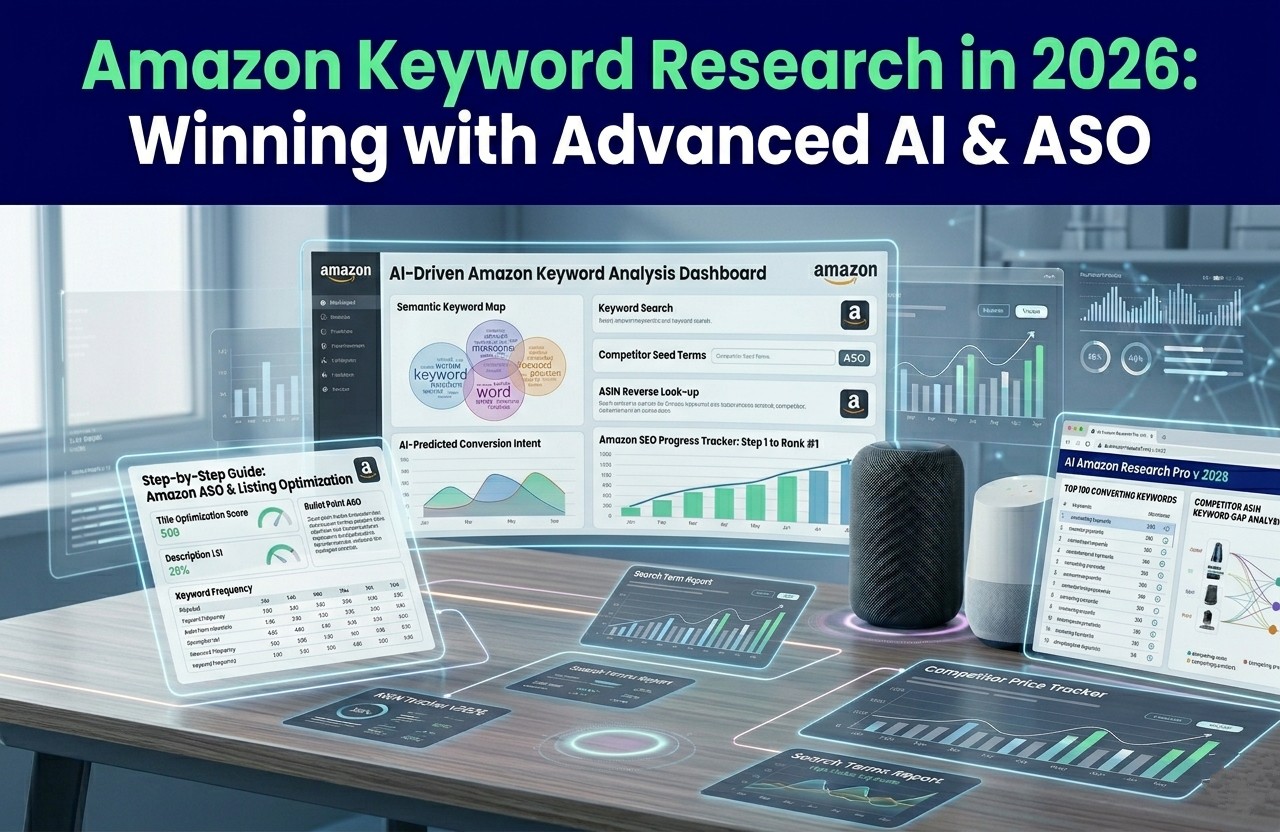

Ecommerce Trends 2026: What Smart Brands Are Doing to Win on Amazon & AI Search


Ecommerce in 2026 will not look like the ecommerce you know today. AI-driven search, new buyer expectations, and Amazon’s evolving ecosystem are reshaping how brands attract, convert, and retain customers. Smart teams are already adapting their ecommerce growth strategies to stay ahead of the curve.

If you sell on Amazon or run a D2C brand, understanding the key Ecommerce Trends 2026 is no longer optional. It is the difference between being visible in AI search results and disappearing behind competitors who know how to optimize, experiment, and scale with data.

Why Ecommerce Trends 2026 Matter For Every Brand

The brands winning online in 2026 will be those that read the signals early and act decisively. Ecommerce Trends 2026 are not just buzzwords; they reflect real shifts in how customers search, compare, and buy across Amazon and other digital channels. Ignoring these shifts can quietly erode your margins and market share.

At the same time, these trends open powerful opportunities. When you align your ecommerce growth strategies with how platforms like Amazon and AI search tools rank and recommend products, you can lower acquisition costs, improve conversion rates, and build a more resilient revenue engine.

AI Search And The Impact Of Amazon Rufus

One of the most important Ecommerce Trends 2026 is the rise of conversational and AI-driven search. Amazon Rufus AI search impact is already visible in how shoppers discover products using natural language queries instead of short, keyword-only searches. This changes how brands must structure and optimize their product content.

Instead of focusing only on exact-match keywords, brands need richer, more descriptive content that answers real questions. When your listings mirror how people speak and search, Amazon’s AI can better understand your products and surface them for more relevant, high-intent queries.

How Brands Are Winning On Amazon With AI-Led Discovery

Understanding how brands are winning on Amazon in 2026 starts with embracing AI search behavior. High-performing sellers are building detailed product pages that clearly explain benefits, use cases, and differentiators, not just features. This helps Amazon Rufus and other AI systems match products to nuanced shopper needs.

These brands also monitor search term reports and customer questions to refine their copy. By aligning language with real customer phrases, they improve relevance signals and increase the chances of appearing in AI-powered recommendation carousels and voice search results.

Structuring Content For AI Search Relevance

To ride the wave of Ecommerce Trends 2026, your product pages should be structured for both humans and algorithms. That means clear titles, scannable bullet points, and detailed descriptions that naturally include focus terms like Ecommerce Trends 2026 and related phrases without sounding forced.

Brands that succeed here usually follow a simple framework: lead with the main benefit, support with specific features, and close with proof such as reviews or certifications. This structure helps AI models understand context while giving shoppers the clarity they need to make confident decisions.

Optimizing Amazon Listings For 2026: What Actually Works

With competition intensifying, you cannot rely on basic listing setups anymore. To truly optimize your Amazon listings with experts or internal specialists, you need a data-backed approach that aligns with the latest Ecommerce Trends 2026 and Amazon’s evolving ranking factors.

Winning brands treat each listing as a high-converting landing page. They test different angles, visuals, and messaging to see what resonates best with their target audience, especially in India where regional preferences, price sensitivity, and trust signals can vary significantly.

Essential Elements Of High-Converting Amazon Listings

Top-performing sellers focus on a few critical building blocks. First, titles are crafted to be clear, benefit-led, and keyword-rich without becoming unreadable. Second, bullet points highlight real-life outcomes, not just technical specs, so shoppers can quickly see why the product fits their needs.

Third, images and A+ Content are used to tell a story. Lifestyle photos, comparison charts, and FAQs reduce friction and objections. When combined with strong reviews and social proof, these elements align with Ecommerce Trends 2026 by building trust and improving conversion rates in a crowded marketplace.

Using Data To Continuously Improve Listings

Another pattern among brands winning on Amazon is relentless optimization. They track click-through rates, conversion rates, and keyword rankings to identify which elements of a listing need refinement. This data-first mindset is central to modern ecommerce growth strategies.

Instead of guessing, they run structured tests on titles, main images, and pricing. Over time, these incremental gains compound, helping them stay ahead even as Amazon Rufus AI search impact and algorithm updates shift the competitive landscape.

Amazon PPC Strategy 2026: Smarter Spend, Higher Returns

Paid visibility is still essential, but the best ecommerce strategies for D2C brands in 2026 treat Amazon PPC as a precision tool, not a blunt instrument. With rising ad costs, brands must design an Amazon PPC strategy 2026 that balances aggressive growth with sustainable profitability.

Instead of chasing every keyword, leading advertisers prioritize intent and relevance. They invest more in terms that align with Ecommerce Trends 2026, such as long-tail, conversational queries that signal clear purchase intent and often deliver better return on ad spend.

Key Components Of A Modern Amazon PPC Strategy

Successful campaigns typically combine automatic and manual targeting. Automatic campaigns help uncover new search terms, while manual campaigns focus budget on proven performers. This structure allows brands to adapt quickly as shopper behavior and AI search patterns evolve.

They also segment campaigns by product lifecycle, separating launches from mature products. New items may require higher bids and broader targeting, while established winners can be optimized for efficiency. This layered approach aligns with broader ecommerce growth strategies that prioritize both scale and margin.

Best Ecommerce Strategies For D2C Brands In 2026

D2C brands in India face a unique mix of opportunity and complexity. On one side, digital adoption and online spending keep rising. On the other, competition from global and local players is intense. The best ecommerce strategies for D2C brands in 2026 recognize that marketplaces and owned channels must work together.

Rather than treating Amazon as a rival to their own website, leading brands use it as a powerful acquisition engine. They leverage the trust and reach of Amazon while building deeper relationships through email, communities, and loyalty programs on their own platforms.

Blending Marketplaces, D2C Sites, And AI Search

One of the defining Ecommerce Trends 2026 is the convergence of channels. Shoppers might discover a product through AI search, compare it on Amazon, and finally purchase from a brand’s D2C site. To capture this journey, your messaging, pricing, and positioning must stay consistent across touchpoints.

Brands that manage this well use unified analytics to understand where customers first interact and where they finally convert. This helps them allocate budgets more intelligently and refine both marketplace strategies and on-site experiences for maximum lifetime value.

Building Resilient Ecommerce Growth Strategies For The Future

Looking ahead, the most resilient ecommerce growth strategies will be those that combine strong fundamentals with adaptability. Clear positioning, compelling offers, and reliable fulfillment remain non-negotiable. What changes is how you surface these strengths in an environment dominated by AI search and evolving customer expectations.

To stay aligned with Ecommerce Trends 2026, brands should invest in better product data, richer content, and continuous experimentation. When you treat every listing, campaign, and landing page as a living asset that can be improved, you create a system that keeps learning and compounding results over time.

Conclusion: Turning Ecommerce Trends 2026 Into Competitive Advantage

Ecommerce Trends 2026 are already reshaping how products are discovered, evaluated, and purchased on Amazon and across AI-driven search experiences. Brands that respond early by upgrading their content, refining their Amazon PPC strategy 2026, and aligning D2C and marketplace efforts will gain a durable edge in visibility and profitability.

If you are ready to translate these trends into practical action, from optimizing your Amazon listings with experts to designing smarter campaigns for the Indian market, partnering with HRL Infotechs can help you move faster, reduce guesswork, and build an ecommerce engine designed for the next wave of digital growth.