The Real Impact of A+ Content on Amazon Sales in India


Amazon has become the primary marketplace for brands across India, but competition is fiercer than ever. Shoppers scroll through endless similar products, and most decisions are made in seconds. In this crowded space, Amazon A+ Content India is no longer a nice-to-have; it is a powerful lever that can directly influence click-throughs, engagement, and conversions on your product detail pages.

When used strategically, A+ Content does far more than make listings look attractive. It helps communicate value, answer objections, build trust, and guide buyers to purchase with confidence. Understanding the real impact of A+ Content on Amazon sales, and how to implement it correctly for the Indian marketplace, can transform underperforming listings into consistent revenue drivers.

The Role of Amazon A+ Content India in Today’s Marketplace

Amazon A+ Content India allows brand owners and sellers to enhance product detail pages with rich visuals, comparison charts, and structured storytelling. Instead of relying only on plain text bullets and a short description, you can showcase benefits, features, and use cases in a more persuasive way. This richer experience aligns with how Indian shoppers research and compare products online.

Most top-ranking listings in competitive categories now use A+ Content as a standard. As a result, products without it often look incomplete or less trustworthy. The impact of A+ Content on Amazon sales is especially visible in categories like electronics, beauty, home, and fashion, where visual storytelling and clear differentiation strongly influence purchase decisions.

How A+ Content Increases Amazon Sales in India

The direct impact of A+ Content on Amazon sales comes from improving how shoppers understand and feel about your product. When customers see clear visuals, benefit-driven copy, and comparison modules, they spend more time on the page and feel more confident. This often leads to higher conversion rates and better sales velocity over time.

In the Indian market, buyers frequently compare multiple listings before deciding. Well-structured Amazon A+ Content India helps your listing stand out by answering questions upfront, reducing doubts, and highlighting unique selling points. Over time, this can also contribute to better organic ranking, as improved conversions signal listing relevance to Amazon’s algorithm.

Reducing Purchase Anxiety and Returns

One of the most overlooked benefits of A+ Content is its ability to reduce returns and negative reviews. Detailed modules can clarify product dimensions, compatibility, usage instructions, and care guidelines. This clarity helps align expectations and reduces post-purchase disappointment.

When customers know exactly what they are buying, they are less likely to feel misled. Fewer returns and better reviews indirectly support higher sales. This is a key way the impact of A+ Content on Amazon sales extends beyond just the initial conversion rate.

Boosting Brand Perception and Trust

High-quality visuals and consistent branding across your A+ modules create a premium perception. In India, where many buyers are still building trust with online brands, this professional presentation makes a strong difference. It signals that the seller is serious, reliable, and invested in customer experience.

As your Amazon product listing optimization India strategy matures, A+ Content becomes a central tool for brand storytelling. You can highlight brand values, certifications, quality checks, and social proof. This emotional connection often nudges buyers to choose your product over a cheaper but less credible alternative.

Key Elements of High-Converting A+ Content in India

To truly leverage Amazon A+ Content India, you must go beyond generic templates. The best-performing listings follow a clear structure that mirrors how shoppers scan a page. Each module should have a purpose, from grabbing attention to closing the sale.

When planning your layout, think about the buyer journey: awareness, consideration, and decision. Align each section of your A+ Content with these stages. This strategic approach ensures that every image, icon, and line of copy works together to drive conversions.

Visual Storytelling and Lifestyle Imagery

High-resolution lifestyle images help customers imagine the product in real use. For Indian shoppers, context matters: show how the product fits into local homes, routines, or cultural moments. This makes the listing feel more relevant and relatable.

Use images to demonstrate scale, usage steps, and key benefits. Avoid cluttered designs; instead, focus on one message per visual. This clarity supports both user experience and Amazon product listing optimization India best practices.

Benefit-Focused Copy and Feature Highlights

While visuals attract attention, words close the sale. Your A+ copy should translate features into clear benefits. Instead of only listing technical specs, explain how they improve comfort, convenience, savings, or performance for the buyer.

Use short, scannable sentences and sub-points where needed. For example, highlight benefits like durability, energy savings, or skin safety. This style of writing aligns with how users skim content on mobile, which dominates Amazon traffic in India.

Integrating A+ Content into a Complete Amazon Marketing Strategy

A+ Content performs best when it is part of a broader Amazon marketing services plan. It should support your keyword strategy, ad campaigns, and pricing decisions. While A+ modules themselves are not directly indexed for SEO, they influence engagement and conversions, which affect ranking.

To maximize the impact of A+ Content on Amazon sales, ensure that your titles, bullets, and backend keywords are already optimized. Then, use A+ to reinforce those messages visually and emotionally. This integrated approach creates a consistent narrative across the entire product detail page.

Aligning with Sponsored Ads and Deals

When you drive traffic through Sponsored Products or Sponsored Brands, your A+ Content becomes the conversion engine. Ads may win the click, but the detail page must win the purchase. Strong A+ modules help convert paid traffic into profitable sales.

During key sale events in India, such as festive seasons or payday weekends, optimized A+ Content can significantly lift performance. Buyers are more open to discovering new brands, and a polished listing can quickly build trust and urgency.

Why Many Sellers in India Underuse A+ Content

Despite its proven benefits, many sellers still treat Amazon A+ Content India as an afterthought. Common issues include low-quality images, generic text, or modules that simply repeat bullet points. These mistakes waste a valuable opportunity to influence buyer behavior.

Another challenge is the lack of a clear content strategy. Without understanding target audiences, pain points, and competitive positioning, sellers often create A+ layouts that look good but fail to convert. This gap is where expert Amazon marketing services and structured planning make a real difference.

When to Consider Professional Amazon Account Management Support

As your catalog grows and competition intensifies, managing A+ Content, ads, and optimization in-house can become overwhelming. A specialized Amazon account management agency can help build a scalable strategy that covers design, copywriting, keyword research, and performance tracking.

Such partners understand how to tailor Amazon A+ Content India for different categories and price points. They can test variations, analyze conversion data, and refine layouts over time. This data-driven approach ensures that your A+ modules are not just visually appealing but also commercially effective.

Key Outcomes You Should Expect

When A+ Content is executed strategically, you should see measurable improvements in several areas. These include higher conversion rates, better session-to-order ratios, and stronger review profiles. Over time, these metrics contribute to improved organic ranking and lower dependence on aggressive discounting.

Additionally, you can expect clearer brand positioning within your niche. With consistent messaging and visuals across products, shoppers begin to recognize and trust your brand. This recognition supports repeat purchases and cross-selling opportunities across your catalog.

Conclusion: Turning A+ Content into a Competitive Advantage

In the evolving Indian ecommerce landscape, Amazon A+ Content India is one of the most controllable levers for improving performance. It shapes how buyers perceive your brand, understand your product, and decide to purchase. When aligned with strong listing fundamentals and smart advertising, A+ Content can unlock meaningful, long-term growth.

If you are serious about scaling your presence on Amazon and want to convert more clicks into loyal customers, investing in strategic A+ Content is essential. Partnering with experts like HRL Infotechs can help you move beyond basic templates and build data-backed, high-impact experiences that turn your product pages into powerful sales assets.

How to Identify and Fix Underperforming SKUs on Amazon & Flipkart in 2026


Struggling to understand why some of your Amazon and Flipkart products barely move while others sell out? Underperforming SKUs quietly drain ad budgets, hurt your rankings, and block real growth. The good news is that with the right amazon sku optimization strategy, you can turn these weak listings into consistent revenue drivers.

This guide walks you through a practical, data-backed approach to identify and fix underperforming SKUs on Amazon and Flipkart. You will learn how to audit performance, improve amazon listing optimization, and apply flipkart product listing optimization tactics that actually move the needle on sales and profitability.

Understanding What Makes a SKU Underperform

Before you can fix anything, you need a clear definition of an underperforming SKU. On Amazon and Flipkart, a SKU is underperforming if it gets impressions but low clicks, or clicks but poor conversions. It may also be underperforming if it generates sales but at a very low margin or high return rate.

From an amazon sku optimization perspective, you should look at each product’s visibility, engagement, and conversion. If any of these are significantly below your category or account average, that SKU needs attention. This structured view helps you prioritize which listings to fix first instead of guessing.

Key Metrics to Track for Amazon and Flipkart SKUs

To identify weak listings, you must track the right performance metrics. For Amazon, focus on sessions, click-through rate (CTR), conversion rate, Buy Box percentage, and organic keyword rankings. These metrics show how well your amazon listing optimization efforts are working.

On Flipkart, monitor impressions, clicks, orders, product page views, and cancellation or return rates. When combined, these metrics reveal whether your flipkart product listing optimization is aligned with shopper expectations and marketplace algorithms.

Common Reasons SKUs Underperform

Most underperforming SKUs suffer from similar issues across marketplaces. Poor images, weak titles, missing keywords, and confusing descriptions are frequent problems. Pricing that is not competitive, slow delivery options, and low ratings also push your products down in search results.

In many cases, amazon seller account managment and flipkart seller account optimization are reactive instead of proactive. Sellers set up listings once and rarely revisit them. Over time, competitors improve, search trends shift, and your unchanged SKUs slowly lose visibility and conversions.

Step-by-Step Process to Identify Underperforming SKUs

Once you know what to look for, you can build a repeatable process. Start with a marketplace-wise performance export from your Amazon and Flipkart dashboards. Filter products with low sales, low conversion rates, or declining trends over the last 60–90 days.

Next, segment SKUs by category, price range, and traffic level. This allows you to compare each SKU against similar products instead of your entire catalog. Such segmentation is a core part of effective amazon sku optimization and helps you avoid misleading averages.

Building a Simple Performance Audit Sheet

Create a spreadsheet that lists each SKU with key metrics from both platforms. Include impressions, clicks, CTR, conversion rate, average selling price, and returns. Mark SKUs that fall below your defined thresholds as high-priority for optimization.

This audit sheet becomes your control panel for amazon listing optimization and flipkart seller account optimization. Review it monthly to spot new problem SKUs early, before they impact your overall account health and organic visibility.

Optimizing Product Content for Higher Conversions

Once you have your list of weak SKUs, start with content improvements. Product titles, bullet points, and descriptions are the foundation of amazon sku optimization and flipkart product listing optimization. They influence both search rankings and buyer trust.

Use keyword research tools and marketplace suggestions to find relevant search terms. Then, weave your focus and family keywords naturally into titles and descriptions. This improves discoverability while keeping content readable and persuasive for real shoppers.

Best Practices for Titles, Bullets, and Descriptions

Strong titles should include brand, main keyword, core benefit, and key attributes like size or color. Keep them clear and scannable. For bullets, highlight benefits, use cases, and differentiators, not just features. This approach supports amazon listing optimization and helps customers decide faster.

Descriptions should tell a concise story about the product. Address common objections, explain how to use the product, and include subtle social proof. Use short paragraphs and formatting for readability. This structure improves engagement and can directly increase sales on Amazon and Flipkart.

Improving Images and Visual Trust Signals

Visuals are often the fastest way to boost performance. Use high-resolution images with clean backgrounds and multiple angles. Add infographics that show benefits, dimensions, and usage scenarios to support your amazon sku optimization strategy.

On Flipkart, follow image guidelines closely and consider lifestyle photos that show the product in real use. Consistent, professional visuals across your catalog enhance flipkart seller account optimization and build trust with buyers who compare multiple listings.

Pricing, Offers, and Reviews: Hidden Growth Levers

Content alone cannot fix every underperforming SKU. Pricing, offers, and reviews play a major role in how to increase sales on Amazon and Flipkart. Even a perfectly written listing will struggle if it is overpriced or lacks social proof.

Start by benchmarking your price against top competitors in the same category. Consider your landed cost, fees, and desired margin, then adjust pricing to stay competitive. Use limited-time deals, coupons, or bundles to revive stagnant SKUs and test demand.

Managing Reviews and Ratings Strategically

Low ratings can destroy conversion rates even when traffic is strong. Encourage genuine reviews through post-purchase communication that complies with marketplace policies. Focus on improving product quality and packaging to reduce negative feedback.

Respond to critical reviews professionally and offer solutions where allowed. Over time, this improves your rating profile, which supports amazon sku optimization and strengthens your overall amazon seller account managment strategy.

Leveraging Advertising and Search Data to Refine SKUs

Advertising campaigns on Amazon and Flipkart provide powerful data for optimization. Analyze search term reports to discover which queries convert and which waste budget. This insight feeds directly into better amazon listing optimization and content updates.

Pause or adjust bids on non-performing keywords and double down on profitable ones. Use this data to refine titles, bullets, and backend keywords. Over time, your organic rankings improve, and your reliance on paid traffic can decrease.

Aligning Ads with Optimized Listings

Driving traffic to weak listings rarely works. Always optimize your product pages before scaling ads. Ensure that your ad keywords match the benefits and language used on the product page for consistent messaging.

This alignment improves click-to-conversion rates and makes your campaigns more efficient. It also supports long-term amazon sku optimization by sending strong performance signals to the marketplace algorithms.

Creating a Continuous Optimization Routine

Identifying and fixing underperforming SKUs is not a one-time project. Marketplaces change, competitors evolve, and customer expectations shift. You need a simple, repeatable routine to keep amazon sku optimization and flipkart product listing optimization on track.

Set a monthly or quarterly review cycle. Revisit your audit sheet, refresh keywords, test new images, and adjust pricing based on performance. Over time, this disciplined approach compounds, leading to stronger rankings, better margins, and more predictable growth.

When to Seek Expert Help

If you manage a large catalog or lack in-house expertise, optimization can feel overwhelming. At that stage, partnering with specialists who understand amazon seller account managment and flipkart seller account optimization can save time and reduce costly mistakes.

Look for a partner with proven marketplace experience, transparent reporting, and a clear process for SKU audits, content optimization, and performance tracking. The right support can accelerate results and free your team to focus on product and brand growth.

Conclusion: Turn Weak Listings into Reliable Revenue Drivers

Underperforming SKUs are not dead ends; they are untapped opportunities. By auditing performance, improving content, refining pricing, and leveraging ad data, you can systematically revive weak listings and strengthen your entire catalog. Consistent amazon sku optimization and structured flipkart product listing optimization help you capture more visibility, trust, and conversions across both marketplaces.

If you are ready to turn your Amazon and Flipkart presence into a predictable growth engine and want expert support across listing audits, optimization, and account strategy, the team at HRL Infotechs can help you unlock that next level of marketplace performance.

How to Optimize Amazon Product Listings for Higher Conversions


Selling on Amazon might be one of the best decisions you ever make, in regards to your business, if you can make your product stand out. But with millions of small and big competitors available online, standing out in the marketplace requires more than just having a good product. To succeed and drive higher sales, properly optimizing your Amazon product listings is essential. If your listings are done right, your product can rank higher in search results, attract more buyers and ultimately increase your conversion rates by turning more visitors into buyers. 

In this blog, we’ll dive into effective strategies about how to optimize Amazon listings for sales, boost Amazon conversions and increase product visibility on Amazon, so that your product can get the recognition it deserves. 

Why Optimizing Amazon Listings is Crucial for Higher Conversions

Understanding why Amazon product listing optimization is critical for your success on the platform is necessary. Amazon is known for being the largest ecommerce marketplace with millions and billions of sellers and buyers. With this intense level of competition, being able to stand out is difficult if your listings are not properly optimized. 

Optimized product listings not only improve your ranking in the search results but also influence the customer’s decision to purchase your product. Factors like clear product descriptions, high-quality images, and relevant keywords help build customer trust. So, getting your Amazon listing SEO right is a crucial step in improving both visibility and conversions.

How to optimize Amazon listings for sales?

For proper optimization you need to follow proper Amazon SEO strategies for listings, which impact customer decisions about purchasing the product greatly. Some of the strategies that will help you drive more sales and traffic are given below:

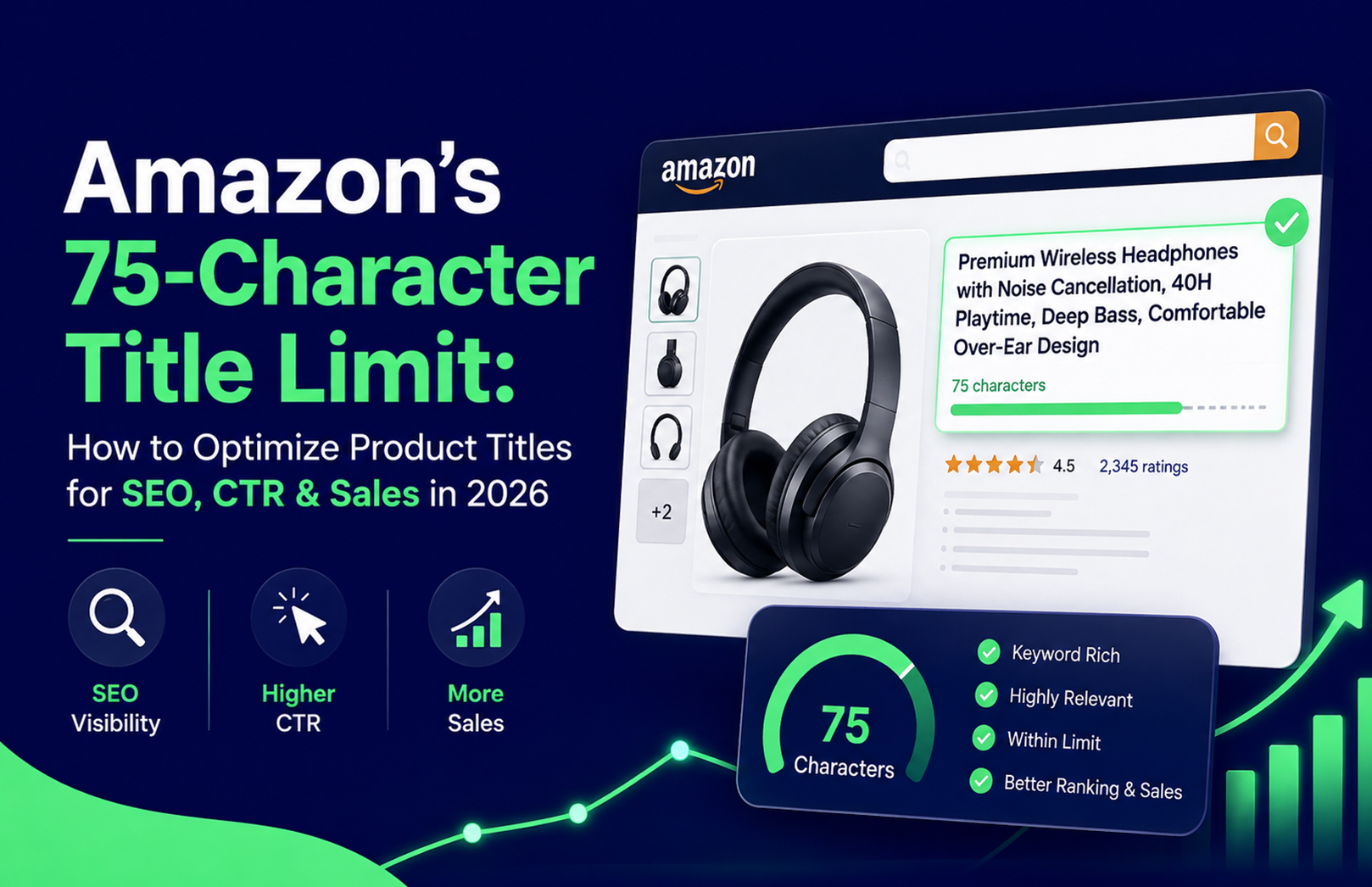
Creating Compelling Product Titles

The product title is the first thing customers see when browsing Amazon. A well-crafted title can make all the difference in whether a potential customer clicks on your listing or passes it by. Your title should be optimized by:

Including Relevant Keywords – Use primary keywords that your target customers are likely to search for. This helps improve search visibility on Amazon.

Be Descriptive: Include key details about your product, such as the brand, product type, size, colour, material, and features.

Be Clear & Concise: Avoid unnecessary jargon. Amazon allows up to 200 characters, and it’s best to focus on clarity and relevant information.

Writing Engaging Product Descriptions

Your product description should be well-written, detailing all the features of your product clearly, so that customers know what to expect and are influenced towards purchasing the product. Some Amazon listing optimization tips are:

Highlight Key Features – Focus on answering the most asked questions. How will it make the customer’s life easier? What makes it different from other products?

Use Bullet Points for Readability: Amazon allows you to use bullet points, which makes it easier for shoppers to scan the most important features.

Include Keywords: Naturally incorporate secondary keywords into your description. This improves the product’s SEO and helps your listing rank higher.

Incorporate High-Quality Images

High-quality images and videos are essential for convincing customers to make a purchase. Great images give your potential customers a sense of the product’s size, features, and quality. To improve conversions, you should: 

Use High-Resolution Photos – Ensure your images are high-quality and show the product from different angles. Blurry images can discourage potential customers.

Show Product Usage – If applicable, include lifestyle images showing the product in use. This helps customers visualize how the product fits into their lives.

Follow Amazon’s Image Guidelines – Amazon has specific guidelines for product images; be sure to follow them for maximum compliance and visibility.

Encourage Positive Reviews

Product reviews impact customer decisions greatly when making a purchase. Positive reviews can build trust and boost conversions, while negative reviews can harm your brand’s reputation. To manage reviews, you should:

Encourage Feedback – Politely ask satisfied customers to leave reviews. This can be done through follow-up emails or packaging.

Respond to Negative Reviews – Address complaints professionally, offering solutions and ensuring the customer knows their concerns are taken seriously.

Maintain High Ratings – Consistently delivering excellent products and customer service will help maintain a high rating, which increases customer trust.

Price Competitively

Pricing is an important factor that determines whether your product is purchased or not. If you’re priced too high as compared to the competitors, your sales may suffer, but if priced too low, your quality may be questioned. 

Find a Balance – Check how similar products are priced and find an amount where your product is competitive but still reflects the quality you offer.

Use Discounts and Coupons – Offering time-sensitive deals, discounts, or coupons can encourage customers to make a purchase.

Use Dynamic Pricing – Adjust your prices in real-time based on market conditions, competitor pricing, or demand fluctuations, & remain competitively priced.

Final Thoughts – Good Product Listings for Good Sales

Optimized product titles for Amazon are essential for driving higher conversion rates and increasing sales. Handling everything from crafting compelling titles and engaging and informative descriptions to using high-quality images can feel overwhelming, but HRL Infotech helps you manage it all with effectiveness and efficiency.

Every aspect of optimized listings plays an important role in achieving high conversion rates. By applying the aforementioned Amazon SEO strategies, you can boost your rankings in search results, attract more traffic and ultimately convert the traffic into loyal customers by building their trust. 

Expert Amazon Account Management Services to Boost Your Sales


Selling on Amazon can be exciting and profitable, but sometimes it is not that simple. With so many sellers competing for the attention of shoppers, you are going to need more than just a great product to succeed.

You’ll need to have professional Amazon account management services that will differentiate you, bring customers to you, and get you consistent increases in sales.

Here, in this blog, we are going to talk about why professional account management is required, the best ways to boost sales, and how the right partner can handle everything, from product listings to customer support, so that you can focus on business growth.

Why Amazon Account Management Services Matter

Selling on an Amazon store is so much more than listing products and waiting for the orders to roll in. You have to optimised listings, good advertising, well-managed inventory, and happy customers. That’s where Amazon account management services come in.

It is all taken care of by a professional account management team that is responsible for all the day-to-day operations and strategic choices that impact your sales. You can focus on discovering good products and establishing your brand, while experts take care of the technical, creative, and operational tasks.

The Importance of Sales Growth Strategies on Amazon

To be successful at Amazon, you can’t do it through trial and error. You have to apply proven Amazon sales enhancers that are effective in conjunction with the marketplace algorithms and shopper behaviour. They are:

Product listings optimised, covering high-quality keywords and compelling copy.

Utilising Amazon advertising to send targeted traffic.

To research competitor performance to determine opportunities.

If used by professionals as one of your Amazon account management services, such tactics can drive your visibility and sales.

Amazon Product Listing Management to Get More Visibility

Your Amazon product listings are your virtual shop. If they aren’t optimised, then you’re losing potential customers. Best-in-class Amazon product listing management makes sure all your listings are optimised to receive clicks and convert visitors into customers.

That includes

  • Creating keyword-rich headings and bullets.
  • Adding high-quality images highlighting product specifications.
  • Utilising A+ content to share your brand story.

If your professional listing management is handled well, you are giving your products the most incredible opportunity to rank higher and sell more.

Grow revenue with proactive Amazon seller support services

Even the most optimised listings and promotions can still experience unexpected issues, including an unexpected policy violation, account suspension or unhappy customer.

That is where the Amazon seller support services are worth their weight in gold. A reputable Amazon seller support service knows how to handle every situation like the pros they are, fixing issues quickly, dealing with Amazon on your behalf and keeping your account healthy.

By acting quickly and being proactive, they save you from costly downtime, angry customers, and most importantly, maintain your sales momentum.

With ongoing optimisation, you can provide seamless operations and prevent disruptions that are counterproductive to your sales.

How Professional Amazon Account Management Services Work

When you engage a team of experts, the Amazon account management services generally operate in a straightforward, outlined approach designed to grow your business rapidly:

  • Account Audit & Strategy – First, they perform a detailed analysis of your Amazon account to ascertain what is working, what is not working, and what the most significant opportunities are.
  • Listing Optimisation – Then, they will optimise your product titles, descriptions, keywords, and images to increase conversions and search rankings.
  • Advertising Service ManagementYour team will plan, create, and optimise your Amazon PPC campaigns, so you get the traffic you’re looking for – people who want to buy.
  • Performance Tracking – They will measure sales, inventory, and performance metrics to ensure that everything is working well for you.
  • Ongoing Services – When you have dedicated Amazon seller services, any issue that may arise – listing errors, policies, etc. can be resolved quickly and efficiently.

It is a complete, end-to-end system of services that always has one focus: increasing your sales on Amazon.

Major Advantages of Using Professional Account Management Services on Amazon

When you enlist help from professionals, it is not just a matter of convenience; it is about achieving results. Here is what you can expect.

  • Save Time: Let professionals worry about the minutiae, so you can concentrate on sourcing products or scaling your brand!
  • Grow Faster: With well-regarded sales boosting strategies for Amazon, your business and brand can scale faster than you ever thought possible.
  • Less Risk: Seasoned managers know how to steer clear of expensive mistakes that are all too common, whether it’s a policy violation, poorly optimized ad, or overlooked keyword.

When your Amazon store is professionally managed, you can keep an eye on the bigger picture of a sustainable brand.

Better ROI: Better listings and advertisements lead to more sales and better profit margins.

Real-Life Application: Maximising Amazon Sales Strategies in Practice

Assume that you have a great product, but your sales aren’t increasing. A good management team can implement sales-driving strategies for Amazon, such as:

  • Keyword optimisation to enhance search results ranking. 
  • Better product images to induce click-throughs.
  • Targeted advertising efforts to attract your ideal customers.

The result? More traffic, more conversions, and more sales – and you have accomplished this through expert Amazon account management services.

The Importance of Continuous Optimisation

Amazon is continuously evolving, as is the behaviour of customers on the site. For this reason, Amazon account management needs ongoing optimisation.

This is why Amazon account management services focus on ongoing optimisation. Ongoing changes to keywords, tests of new images, and optimisations of advertising campaigns ensure your store is competitive.

By having ongoing Amazon product listing management services, you can quickly react to changes in the market and create sustainability for long-term growth.

Choosing the Right Partner

Not all Amazon service providers are equal. As you evaluate potential companies to partner with, consider the following:

An established history of working with vendors in your category.

Offer transparent reporting so that you can manage and track performance.

Full-service solutions such as listings, advertising, support, and strategy.

A suitable partner will be an extension of your team, dedicated to helping you grow sales and build your brand.

Final Thoughts

Amazon’s success is not about marketing an incredible product but having the right systems, strategies, and support. Expert Amazon account management services combine everything you need: optimised listings, successful ad campaigns, problem-solving know-how, and future-focused strategy to have your sales continue to soar.

With the proper Amazon sales promotion methods, focused Amazon product listing management, and engaging Amazon seller support services, you can turn your Amazon store into a thriving, booming business. If you’re ready to take your store to the next level, now is the time to put the right strategies in place and start achieving the sales growth you’ve always dreamed of!

How To Optimize Your Amazon Backend Keywords For Better Reach


Most Amazon brands & sellers are aware of Amazon listing optimization with forward-facing keywords. But backend search terms also play a big role here. Despite being largely invisible to consumers, backend keywords boost search rankings & drive sales when optimized for comprehensive content & SEO strategies. 

Following best backend keyword practice is crucial because Amazon has strict rules for search terms. Read through this blog to learn how to optimize your Amazon backend keywords for your listings.

Why optimize your Amazon backend keywords?

You might wonder why backend keywords are important. What benefit could they provide for your Amazon product listing?

Well, backend keywords improve your product’s ranking for other crucial keywords. You can put them on the back end of your website & still rank for them. Basically, they make your products discoverable. Let’s consider the example of you selling LED lights. Some people might look for LED lights, while others might look for Diwali lights. You would miss out on users searching using all the other terms listed if you only optimized for LED lights. 

Incorporating keywords (like Christmas lights, Diwali lights, or light strands) into the backend of your site ensures that you won’t miss out on worthwhile leads. This makes it easier for you to connect with customers conducting different product searches. 

5 tips for optimizing your Amazon backend keywords

Tip 1: Concentrate on the essential keywords

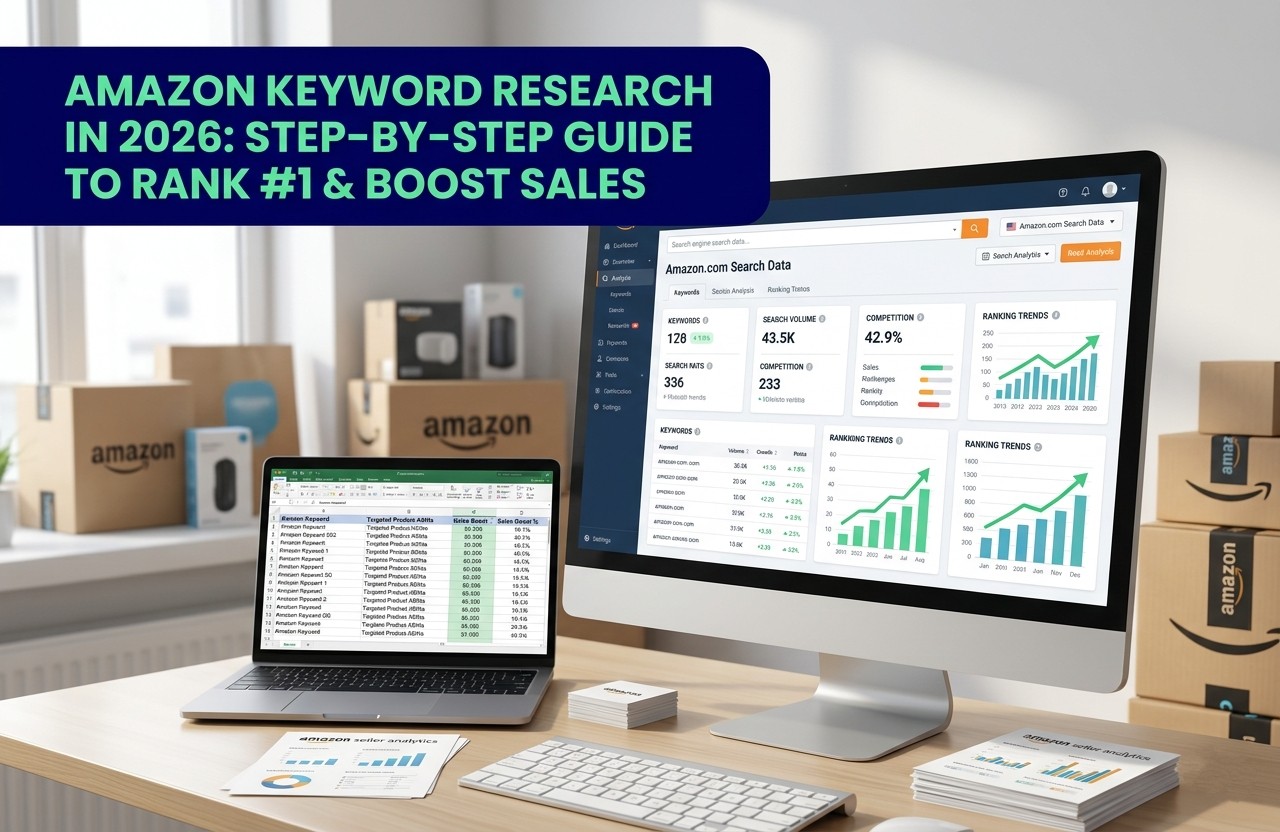
To improve your product’s ranking on Amazon, you must choose the best keywords for your business by conducting product keyword research. Concentrate on the most crucial keywords because you can only use 250 bytes for backend keywords. 

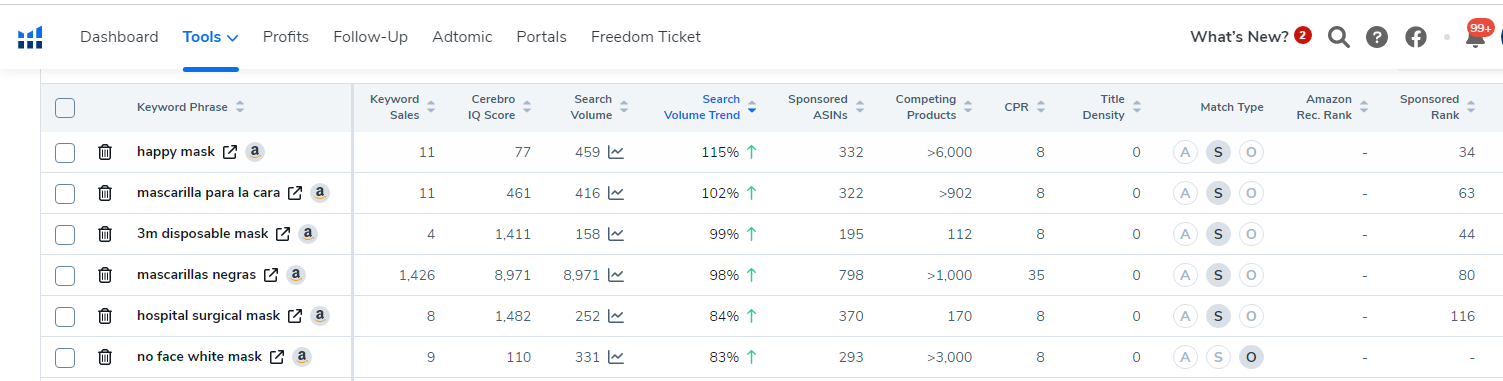
People’s searches are completely different on Amazon than they would on Google. So you need tools like Sonar to conduct the best product keyword research for your listing. You can even use such tools to view a keyword’s search volume.

Concentrating on essential keywords doesn’t require you to abandon your Google keyword tools. You can still determine the worth of your keywords with the Google tools at your disposal.


product keyword research

Tip 2: Listen to Amazon

You need to listen to Amazon if you want to optimize your backend keywords for maximum performance. Here are a few requirements for

Amazon has for backend keywords:

a. Keep Prohibited Search Terms to a Minimum

If you use certain categories of keywords in your backend search terms, Amazon will penalize you.

Including brand names, whether those of your own or your rivals, is a big mistake. Since it’s a part of your product listing’s keywords, this information is redundant. Using it in backend search terms will only cause Amazon’s search platform to suppress it.

Businesses are also prohibited from using abusive language, as well as UPC codes, ASINs, & other product identifiers.

b. Sort your keywords logically.

Make sure that the order in which you list each of your backend keywords makes sense. Consider how people look for things. What is the arrangement of those keywords?

This is important because Amazon prioritizes a logical order for search terms.

For instance, you want to write “red racing car” rather than “racing red car” because most users consider color before the product. And also, racing red car doesn’t make any sense. You should arrange your keywords in the order that a user would search for them.

Tip 3: Keep track of keyword performance.

Business owners often select backend keywords for their product listings & never look at them again. This is problematic because if you never update your Amazon backend keywords, your listing won’t perform to its full potential.

Instead, keep an eye on your backend keywords to determine whether they send relevant traffic to your listing. To find out if the keywords are still helpful, you can check for your Amazon keyword ranking or index performance.

Amazon listing optimization

Tip 4: Sparingly use keywords

If you’re used to optimizing for Google SEO, your first inclination is to use your keywords several times throughout your content. This behavior might transfer to your Amazon product listing.

You aren’t required to use keywords more than once by Amazon, nor is it advised. You will rank as long as you use them once on your page. 

You don’t even have to use clever integration techniques to scatter it throughout your page.

Use the general procedure when incorporating keywords into your listing’s backend. Use none that are on your page’s front page. And you’ll appear in search results for those keywords.

Tip 5: Each byte matters 

Remember (tip#1) when we said your focus must be on the most crucial keywords because you only have 250 bytes for backend keywords? Since there is a finite space, you should concentrate your Amazon listing optimization on the most vital & relevant keywords that work best for your purpose. 

You can also avoid punctuation when using Amazon backend keywords. This applies to all punctuation like commas, exclamation points, periods, & question marks. Each keyword you enter only needs to be separated by a space. 

Final Note

Your products rank higher on the Amazon search results page when you have backend keywords that are strong & well-optimized. So, never undervalue Amazon search engine optimization with backend keywords. 

Always double-check to see if entered keywords are being indexed by Amazon.  

Now you know the tips to Amazon listing optimization, use them to your advantage, like to increase your product’s visibility & thus drive sales and profits. Want experts’ help? HRL Infotech marketing experts can help you with Amazon account management, optimisation and  advertisement.