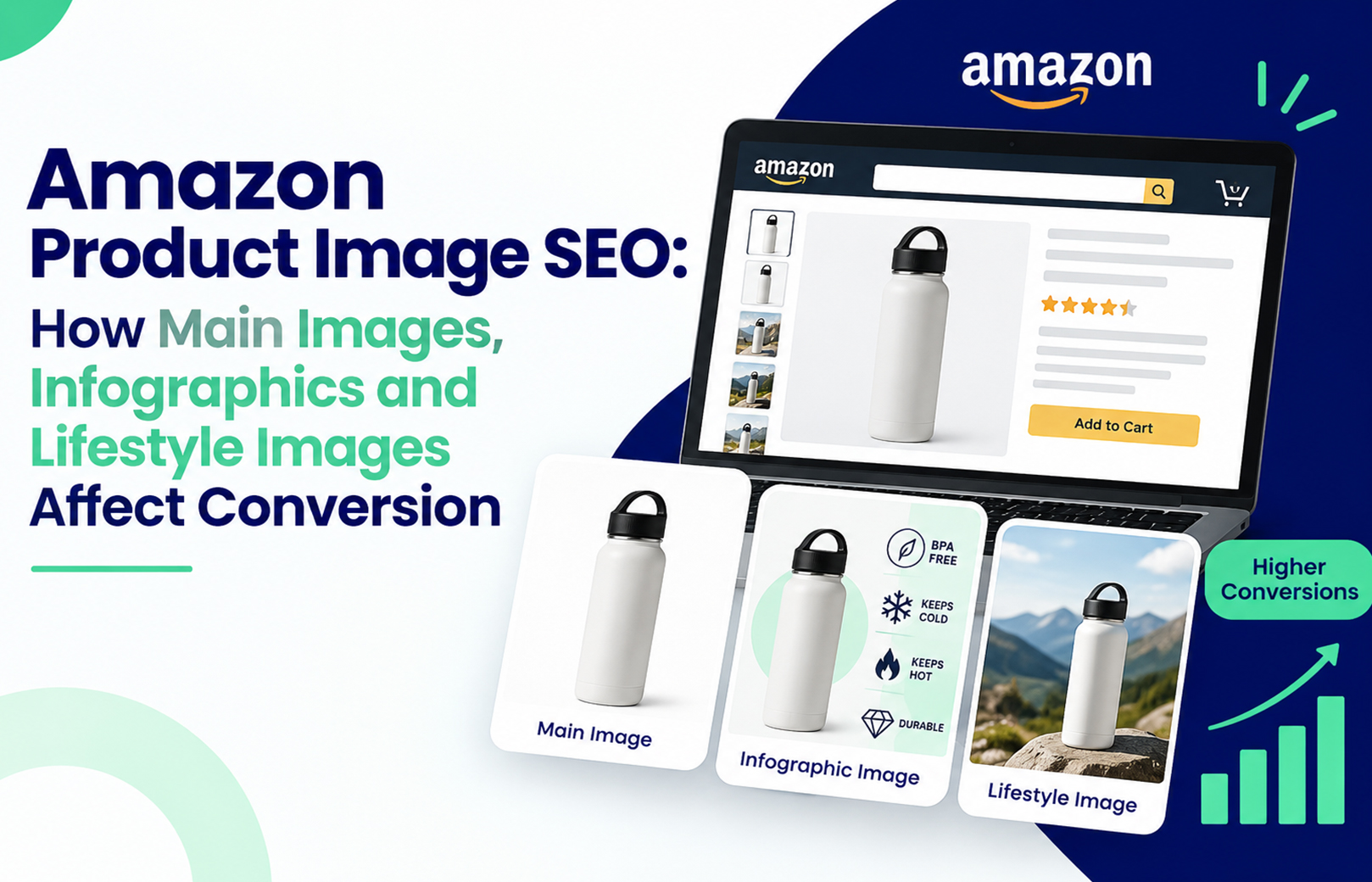
Amazon Product Image SEO: How Main Images, Infographics and Lifestyle Images Affect Conversion


Amazon Product Image SEO is the practice of building a listing’s image set so it clears Amazon’s technical image requirements, stays legible at thumbnail size on a phone, and answers the buying objection before the shopper swipes away. Amazon does not index your pictures. It measures what your pictures make shoppers do, and those behavioural signals feed your organic rank. That is why two listings with identical keywords can sit ten positions apart.

Here is the mechanism, because it decides where your budget goes. Amazon’s relevance layer reads text fields only: title, bullets, backend search terms, attributes and A+ Content copy. Images influence ranking through click-through rate on the search results page and unit session percentage on the detail page. A shopper who clicks and buys teaches Amazon your listing is a strong answer for that query. A shopper who clicks and bounces means you paid for the click and taught the algorithm the opposite. Everything below is the sequence we use to fix that, in the order we run it.

Does Amazon actually rank product images?

No, not directly. There is no alt text field for gallery images in Seller Central, and Amazon’s search index reads titles, bullets, backend search terms, attributes and A+ Content copy. Images earn their SEO value indirectly by lifting CTR and conversion, which are the session signals that feed organic placement. If you are not sure which of those two is your real bottleneck, work through Amazon CTR vs conversion rate and which metric to fix first before touching a single file.

What are Amazon’s product image requirements?

Amazon publishes these in Seller Central under Help, Product Image Requirements. Break them and the listing gets suppressed, not demoted, which is a faster and more expensive problem.

ElementRequirement
MAIN image backgroundPure white, RGB 255-255-255
Frame fillProduct occupies at least 85% of the frame
Zoom threshold1,000 px minimum on the longest side; 1,600 px recommended
Maximum dimension10,000 px on the longest side
FormatsJPEG, TIFF, PNG, GIF, with JPEG preferred
Colour modesRGB or CMYK
MAIN image restrictionsNo text, logos, watermarks, borders, props or inset images
Slot namesMAIN, then PT01 to PT08, plus SWCH for variation swatches

Two things about amazon image size that the requirement page will not tell you. Past roughly 3,000 px you gain no visible zoom quality, and you do add page weight on a 4G connection, which is still how most Indian shoppers browse. And square beats rectangular, because the search results grid crops to a square container and a wide file loses height it cannot afford.

Why does the main image decide your click-through rate?

Because it is the only asset competing on the results page, at roughly 180 px on a phone. Your title is truncated, your bullets are invisible, your A+ Content is three scrolls away. Frame fill is the single most common fix we make. Sellers hit 85% on paper by counting shadow and padding, then their thumbnail renders a small product in a big white box beside a competitor whose product touches the edge.

A worked example from a kitchenware catalogue we manage in Jaipur. One steel container ASIN held 4.1% conversion for five months with indexed keywords and stable bids. The main image was 1,200 px with the product filling roughly half the frame. We refilled to 88%, re-exported at 1,600 px square, and promoted the lifestyle shot from slot five to slot two. Conversion settled near 6% across the next three weeks with no change to title, bullets or price. Results vary by category, and this was a single ASIN, not a controlled test across a catalogue.

Two judgement calls worth stealing. If you sell a multipack, photographing all six units shrinks each one at thumbnail size, so shoot one unit and let the pack count live in the title, where the 75-character title limit forces you to prioritise anyway. And never change the main image in the same week you change the title. Search Query Performance will show you movement you cannot attribute to either change, and you will have burned three weeks of clean baseline.

Where should infographics sit in the image stack?

An infographic is a secondary image that overlays short callouts on a product photo to communicate a spec, benefit or dimension. Put it at PT01 or PT02, and make it answer the one objection that kills the sale rather than listing every feature you have.

The test we run on every infographic: shrink it to 25% and read it. If a callout is unreadable, it fails, because the strip thumbnails are what most shoppers actually see. Five or six words per callout, maximum. For a ₹2,499 water purifier, the callout that earns its space is filter life in litres, not a tagline about purity.

Do lifestyle images really improve conversion?

They do, when they answer a question a spec sheet cannot: will this fit my kitchen, my desk, my child’s hand. A lifestyle image shows the product in use, in a real environment, with a scale cue in shot. Across the home and kitchen catalogues we manage, promotion of a lifestyle image from slot five to slot two has moved conversion more reliably than adding a seventh image nobody scrolls to.

The sequencing rule we use is price-led. Above roughly ₹3,000, shoppers are comparing specs, so lead PT01 with the infographic and follow with lifestyle. Below that, shoppers are deciding on feel, so reverse it. Most mobile buyers swipe twice before deciding, which makes slot order more valuable than slot count.

How is this different from A+ Content imagery?

A+ Content sits below the fold and never appears in search results, so it cannot influence CTR at all. It influences conversion for shoppers who scroll, and unlike gallery images, its copy is indexed. Standard modules run to 970 px wide, a different export spec entirely, which is why resized gallery files look soft there. Rebuilding modules to spec is the core of our Amazon A+ Content design work, and comparison charts are usually the first module we fix because they break worst on mobile.

Your 30-day image fix sequence

  1. Pull your top 20 ASINs by sessions from Business Reports. Audit MAIN frame fill on each and fix anything under 85%.
  2. Re-export every gallery file at 1,600 to 2,000 px square, sRGB, JPEG, under about 500 KB.
  3. Reorder slots by price point using the rule above.
  4. Upload through Manage Images in Seller Central rather than a flat file, because flat file uploads can overwrite variation slots without warning.
  5. Change one variable per ASIN, then wait 14 to 21 days before reading anything.
  6. Compare unit session percentage before and after in Business Reports, not in your ad console, so organic sessions are included.

Be honest about what this cannot do. Images will not rescue a 3.4-star ASIN, a broken variation family, or a listing that is suppressed for a different reason, which is a separate diagnosis covered in our guide to why an active Amazon listing is not visible in search. They also will not fix rank if your title and backend terms do not match how buyers phrase the search, which is the job of Amazon SEO and listing optimization.

If you have just worked out that your image stack was built for a desktop shopper who no longer exists, that gap is common and cheap to close compared with what you are paying for the clicks it wastes. HRL Infotechs runs image spec audits for Indian sellers and global brands, usually as part of ongoing Amazon account management. Send three ASINs and we will tell you what we would change first, and in what order.

Frequently asked questions

Q1. What is the best Amazon image size for mobile shoppers in India?

Ans. Export square at 1,600 to 2,000 px on the longest side, sRGB JPEG, ideally under 500 KB. That clears the zoom threshold, fits the square search container without cropping, and loads acceptably on 4G. Files above 3,000 px add weight without visible gain, since Amazon compresses images before delivery.

Q2. Can I put text or a logo on my Amazon main image?

Ans. No. Amazon’s product image requirements prohibit text, logos, watermarks, borders and promotional badges on the MAIN image. The only exception is text physically printed on the product or its packaging. Violations usually trigger listing suppression rather than a warning, so audit before uploading rather than after.

Q3. How many images should an Amazon listing have?

Ans. Fill every slot your category allows, typically six images plus a video, but sequence beats volume. Most mobile shoppers view two or three before deciding. Put your strongest objection-handling asset at PT01 instead of saving it for a slot that gets almost no views.

Q4. How long do Amazon image changes take to show results?

Ans. Allow 14 to 21 days of comparable traffic. Business Reports refresh daily, but Search Query Performance lags by several days, so early readings mislead. Avoid testing during Great Indian Festival or Prime Day, when the traffic mix distorts your baseline enough to make the comparison meaningless.

Q5. Should local sellers pay for professional Amazon product photography?

Ans. In visually competitive categories, yes. A shoot covering 10 SKUs in India typically costs a fraction of one month’s ad spend for an established seller, though the figure varies by city and category and should be treated as illustrative. Compare it against wasted click spend, not against a design freelancer’s hourly rate.

Q6. Does changing images reset my Amazon ranking?

Ans. No. Image edits do not reset indexing or sales history. Rank can move afterwards because your conversion rate moved, which is the intended effect. The one real risk is a compliance error causing suppression, so verify the listing is still active in Seller Central the day after any upload.
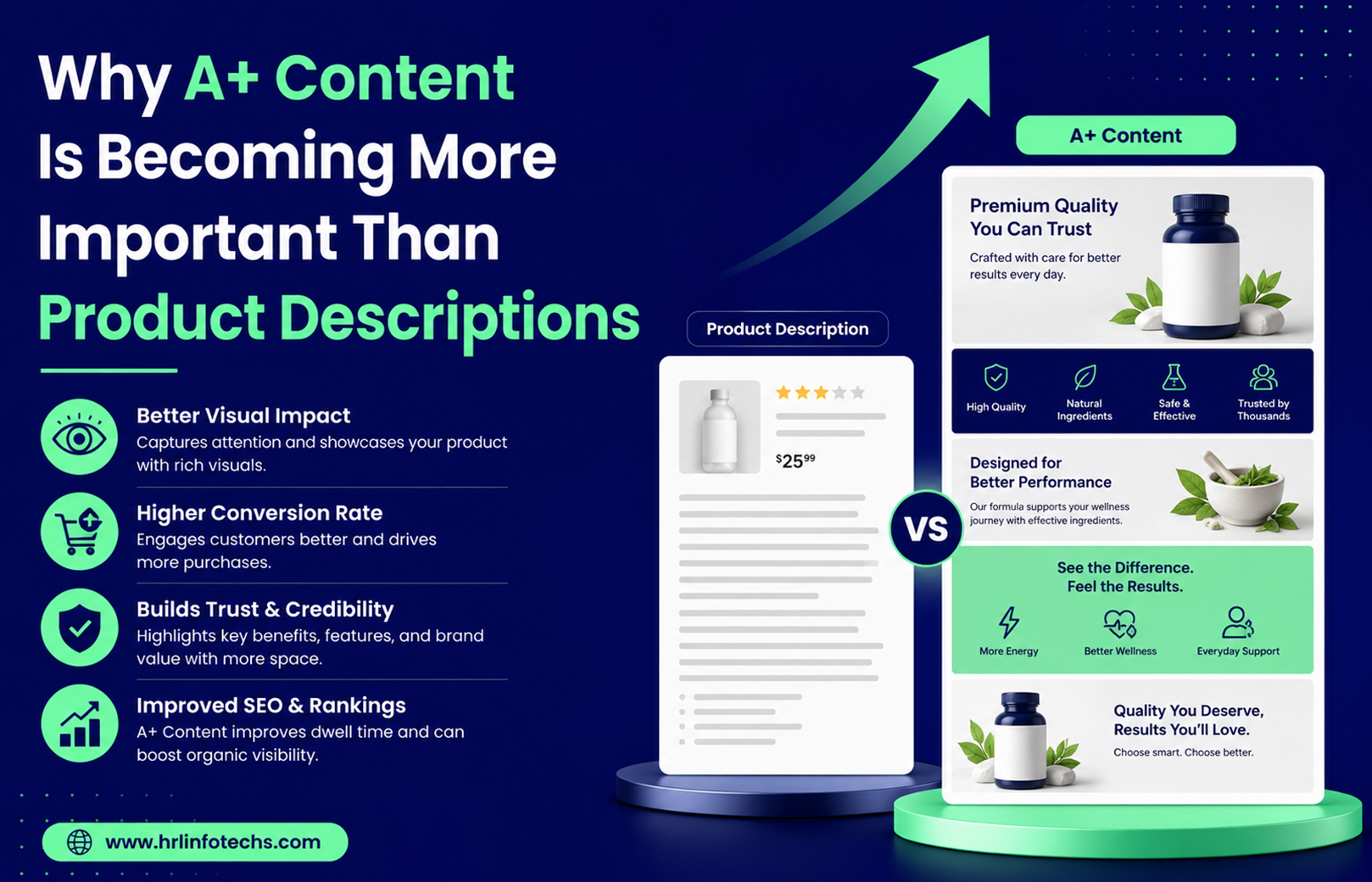

Why A+ Content Is Becoming More Important Than Product Descriptions


An e-commerce brand selling on Amazon India noticed something unusual in its conversion data in late 2024. Two products with nearly identical manufacturing costs, similar pricing, and comparable review counts were converting at dramatically different rates. One converted at 6.8%. The other sat at a mere 2.1%.

The difference was not the product. It was the listing. The higher-converting product had Amazon A+ Content Design lifestyle imagery showing the product in use, a comparison module explaining why the formula worked differently from alternatives, a brand story section establishing the founders’ credibility, and a clear benefit breakdown structured for scanning rather than reading.

The lower-converting product had a 200-word description listing ingredients and a standard five-bullet feature rundown.

Same product category. Same price point. Same platform. Three times the conversion rate. The gap between them was entirely in how the product was communicated to a buyer who had already decided to consider it.

The Changing Behaviour of Amazon Shoppers

Amazon customers in 2026 do not read listings. They evaluate them.

The average time spent on a product page before a purchase decision is made has dropped consistently year on year as mobile shopping has become the dominant format. A buyer arrives at a listing having already seen thumbnail images in search results. They have already formed a visual first impression. What the listing needs to do is confirm that impression and resolve any remaining hesitation in seconds, not paragraphs.

Amazon A+ Content exists precisely because text alone cannot do this job efficiently. A 200-word description requires a buyer to read and construct a mental model of the product. A well-designed A+ module communicates the same information visually in five seconds. For a buyer comparing three similar products simultaneously, that difference in cognitive load is the difference between staying on the page and clicking back.

Why Product Descriptions Alone Are No Longer Enough

Amazon product descriptions were built for a search environment where buyers arrived with a specific product in mind and needed detailed specification information to confirm their choice. That buying journey still exists, but it is no longer the dominant one.

Most Amazon purchases today begin with a category search, produce a results page with twenty similar options, and require a buyer to differentiate between products that appear nearly identical at thumbnail scale. The buyer who arrives on your listing is not certain they want your product. They are deciding whether your product deserves the thirty seconds of evaluation they are about to give it.

A text description that leads with dimensions and materials loses that decision. A+ Content that leads with the specific problem the product solves, visually, wins it.

Building Stronger Brand Experiences

Amazon brand content is not a design preference. It is a trust mechanism.

Indian buyers on Amazon have become significantly more sophisticated about evaluating brand credibility before purchasing. A listing that looks professionally designed signals a brand that takes its products seriously. A listing that relies on a plain text description against a white background signals the opposite, regardless of the actual product quality behind it.

The brand story, the founder’s credibility, the manufacturing process, and the quality commitment none of these things can be communicated effectively in a bullet point. A+ Content modules give brands the space to communicate who they are and why that matters to the buyer evaluating them, which is the conversion decision that price and specification comparisons alone never resolve.

Improving Amazon Customer Experience

Amazon customer experience on the listing page is determined by how quickly and confidently a buyer can answer three questions: does this product do what I need, is it better than the alternatives, and can I trust the brand selling it?

Standard listings answer the first question adequately through titles and bullets. They rarely answer the second or third effectively. A+ Content addresses all three simultaneously, benefiting communication through lifestyle imagery, competitive differentiation through comparison modules, and trust building through brand story and quality signals.

The e-commerce brand’s higher-converting listing answered all three questions before the buyer reached the reviews section. The lower-converting listing answered only the first and left the buyer to resolve the remaining uncertainty through competitor comparisons, which they often did.

How A+ Content Supports Conversion Rates

Amazon conversion optimisation through A+ Content works through a specific mechanism that is worth understanding clearly.

Conversion rate depends on visitors who buy versus those who leave due to hesitation, product uncertainty, or lack of trust. A+ Content directly addresses these friction points, using impactful visual communication to resolve consumer hesitation faster than text alone.

That extra detail on Amazon pages? It often leads to more buys – between 3% and 10%, based on what’s being sold and how well it’s shown. If a product gets a thousand views each month, just a 5% bump could turn into fifty new sales without spending another dollar on ads.

Enhanced Brand Content and Brand Building

Enhanced Brand Content, the term Amazon used before rebranding to A+ Content, was built around a simple insight: customers buy from brands they recognise and trust more readily than from brands they are encountering for the first time.

A+ modules sharing brand values, standards, or founder stories reduce the psychological distance to purchase, creating a compounding trust loop. Shoppers who connect with a strong A+ presence remember the brand, leading to repeat purchases and higher catalogue exploration. This is why pairing Amazon brand Storefront investment with A+ Content drives conversion improvements across your entire product ecosystem, not just individual listings.

The Role of Amazon Listing Optimisation

Amazon listing optimization is not a single lever. It is a system where each element supports the others.

Keyword-optimised titles and bullets drive traffic by improving search visibility. High-quality primary images drive click-through by winning the thumbnail evaluation. A+ Content drives conversion by resolving purchase hesitation once a buyer arrives. Amazon sales optimisation requires all three layers working together; traffic without conversion infrastructure wastes advertising spend, and conversion infrastructure without traffic visibility produces nothing.

One wrong move here kills visibility. Skip strong keywords, get lost in search. Rely only on fancy visuals, and watch clicks vanish without sales. Winning pages on Amazon India nail both. They guide shoppers step by step. Every phase gets what it needs.

Why A+ Content Works Harder When Your Entire Account Is Managed Strategically

Amazon Marketing Services amplifies A+ Content by converting ad traffic more efficiently. Driving a Sponsored Products campaign to an optimised listing yields measurably higher conversions than targeting a text-only page. Brands building this conversion infrastructure first make every rupee of paid spend highly productive, while those who advertise before optimising simply pay for traffic they cannot convert.

The fastest-growing brands on Amazon India don’t just optimise single listings; they treat every element as an interconnected system. Even elite A+ Content loses its conversion edge if stock runs out or ads target the wrong buyers. This is why Amazon Account Management makes the structural difference: it ensures your content, advertising campaigns, inventory logistics, and performance metrics work in perfect sync.

Why Indian Brands Should Prioritise A+ Content Now

Indian ecommerce is at an inflexion point. Category competition on Amazon India has intensified significantly since 2022 as both domestic brands and international sellers have professionalised their marketplace presence.

The listing quality gap that once existed between premium international brands and domestic Indian sellers has largely closed at the product and pricing level. What has not closed equally quickly is the A+ Content gap. A significant proportion of Indian sellers are still relying on text-first listings in categories where buyers are making visual-first decisions.

Amazon brand content investment now, before category competitors close the gap, builds a conversion rate advantage that is expensive to replicate quickly. A brand whose listing converts at 7% while competitors convert at 3% can sustain a lower advertising bid and still achieve the same sales velocity, which is the margin and growth advantage that compounds most powerfully over time.

Conclusion

The e-commerce brand that discovered the conversion gap between its two listings fixed it in six weeks. The lower-converting product received full Amazon A+ Content Design lifestyle modules, comparison charts, brand story section, and benefit-led visual hierarchy. Its conversion rate moved from 2.1% to 6.4% within thirty days of the update going live. No price change. No advertising increase. No review campaign.

At HRL Infotechs, we help Indian brands build the A+ Content, listing optimisation, and Amazon customer experience infrastructure that turns qualified traffic into consistent sales. The brands growing most efficiently on Amazon right now are not the ones spending the most on advertising. They are the ones converting most effectively once buyers arrive.

Amazon A+ Content Guide for Stationery & Book Sellers: Win More Sales This JEE & Back-to-School Season


Parents are shortlisting JEE prep books, students are filling carts with notebooks and pens, and stationery brands are fighting for visibility on Amazon India. If your product pages look like everyone else’s, you are leaving money on the table this back-to-school and JEE season.

Amazon A+ Content is one of the most powerful tools to stand out, especially for stationery and book sellers. Used correctly, it can transform a flat product page into a persuasive, visual story that builds trust, answers doubts, and nudges shoppers to click “Buy Now” with confidence.

What Is Amazon A+ Content And Why It Matters For Stationery Sellers

Amazon A+ Content is an enhanced content feature that lets brand-registered sellers add rich visuals, comparison charts, and formatted text to their product detail pages. Instead of relying only on a basic description, you can showcase your stationery and books in a more engaging and informative way.

For stationery and book sellers in India, this matters a lot during JEE and back-to-school peaks. Parents and students compare multiple similar products. Strong Amazon A+ Content helps you highlight quality, usability, and value, which directly improves Amazon product page conversion rate and reduces hesitation.

How Amazon A+ Content Supports High-Intent Shoppers

Most visitors during exam and school seasons already know what they want: pens, notebooks, planners, guides, or JEE prep books. Their intent is commercial and close to transactional. They are choosing between brands, not deciding whether to buy at all.

Amazon A+ Content lets you answer the exact questions these shoppers have: paper thickness, ink quality, syllabus coverage, binding strength, and bundle value. When your page removes doubts and shows clear benefits, you naturally increase Amazon sales for stationery and books.

Key Benefits Of Using Amazon A+ Content For Sellers

Top-ranking Amazon marketing guides consistently highlight similar benefits of A+ modules. For stationery and book listings, the most important advantages include higher engagement and better clarity of information. Customers stay longer on your page and understand your product faster.

Well-structured Amazon A+ Content can also reduce returns, because buyers know exactly what they are getting. Over time, this improves reviews and boosts organic ranking, which is crucial when you sell stationery on Amazon India in a competitive category.

Understanding Search Intent For JEE & Back-To-School Stationery

Before you design A+ modules, it helps to understand what buyers are actually searching for. During JEE season, students and parents look for trusted books, solved papers, and high-quality note-making tools. During back to school stationery India demand spikes, the focus shifts to bundles and value packs.

The dominant search intent here is commercial: users are researching and comparing products with the goal of purchasing soon. Your Amazon A+ Content should therefore focus on clarity, proof of quality, and easy comparison, not just branding or storytelling.

Common Questions Buyers Have On Amazon India

When shoppers browse stationery and books, they usually want to know whether the product will last, whether it is exam-relevant, and whether it is worth the price. If your A+ content does not answer these questions, they quickly move to a competitor listing.

Use your Amazon A+ Content to address questions such as paper GSM, ink smudge resistance, syllabus alignment, edition year, and what exactly is included in a combo. This builds confidence and directly supports your Amazon product listing optimization strategy.

Aligning A+ Content With Seasonal Buying Cycles

Back-to-school and JEE seasons follow predictable timelines. Smart sellers prepare Amazon A+ Content well in advance, so listings are fully optimized when search volume peaks. This includes refreshing visuals, updating comparison charts, and aligning messaging with the season.

For example, before JEE mains and advanced, highlight exam-focused benefits in your A+ modules. Before school reopening, focus on durability, value packs, and attractive designs. Aligning Amazon A+ Content with timing helps you capture more high-intent traffic.

Essential A+ Content Design Tips For Stationery & Book Listings

Designing A+ modules is not just about adding images and text. The best-performing pages follow a clear structure that mirrors what top SERP results recommend: strong hero visuals, benefit-led modules, and scannable comparison sections. This structure keeps buyers engaged from top to bottom.

When planning A+ content design tips Amazon experts often suggest, think of your page as a guided story. Each module should move the shopper closer to purchase, from understanding the product to trusting the brand and finally feeling confident enough to add it to cart.

Use Visuals To Highlight Real-World Usage

For stationery, lifestyle images are critical. Show notebooks being used for JEE notes, pens writing smoothly on paper, or school kits neatly packed in a bag. These visuals help buyers imagine how the product fits into their daily study routine.

For books, highlight covers clearly and include inside-page previews where allowed. Use Amazon A+ Content modules to show chapter structure, solved examples, and special features like QR-linked video solutions. This visual proof often convinces serious exam aspirants.

Structure Your Copy For Clarity And Scannability

Many shoppers skim rather than read every line. Break your Amazon A+ Content into short sections with clear subheadings and bullet points. Focus on benefits first, then details. For example, lead with “No ink bleed-through” before explaining the GSM or paper type.

Use bullet lists to summarise key features such as page count, binding type, ink color options, and compatible exams. This style supports both human readers and Amazon’s algorithm, contributing to better Amazon product page conversion rate over time.

Optimizing Amazon A+ Content To Increase Sales

Once your basic design is ready, the next step is optimization. This is where you align Amazon A+ Content with keywords like sell stationery on Amazon India and Amazon A+ Content for sellers, without stuffing or sounding forced. The goal is to stay natural while still signaling relevance.

Start by mapping primary and secondary keywords to different sections of your A+ modules. Use the focus keyword in headings and body copy where it fits naturally, and place related phrases in feature descriptions, comparison tables, and image captions.

Practical Optimization Ideas You Can Implement

To increase Amazon sales stationery brands should test different A+ layouts and messages. Try highlighting exam success stories, durability claims, or bundle savings in separate versions and track which one converts better. Over time, this data-driven approach refines your Amazon product listing optimization.

Also, ensure your A+ content supports your main bullets and title instead of repeating them. Use the space to go deeper into benefits, usage tips, and care instructions. This layered information gives buyers a complete picture, which often leads to higher trust and more sales.

Leveraging Local Expertise And Amazon Marketing Services

Many stationery and book sellers focus only on listings and ignore the broader marketing ecosystem. However, combining strong Amazon A+ Content with targeted ads and external traffic can multiply results, especially during peak seasons in India.

Some sellers work with specialized partners for amazon marketing services and other cities to plan campaigns around JEE and school reopening dates. When ads drive traffic to a well-optimized A+ page, the return on ad spend usually improves significantly.

Integrating A+ Content With Your Overall Amazon Strategy

Think of Amazon A+ Content as one pillar of a larger growth strategy. It should work alongside sponsored ads, deals, coupons, and review-building efforts. When all these elements are aligned, your listings look stronger than competitors at every stage of the buyer journey.

Track metrics such as Amazon product page conversion rate, click-through from ads, and time on page. If traffic is high but conversions are low, refine your A+ modules. If conversions are strong, consider scaling ad budgets to reach more buyers during peak demand.

Conclusion: Turn Seasonal Demand Into Long-Term Growth

JEE and back-to-school seasons create a surge of high-intent shoppers who are ready to buy the right stationery and books. By investing in thoughtful, well-structured Amazon A+ Content, you turn that seasonal demand into consistent sales and stronger product rankings.

If you want expert support in planning, designing, and optimizing Amazon A+ Content specifically for the Indian stationery and book market, HRL Infotechs can help you build conversion-focused product pages that keep working long after the season ends.

The Real Impact of A+ Content on Amazon Sales in India


Amazon has become the primary marketplace for brands across India, but competition is fiercer than ever. Shoppers scroll through endless similar products, and most decisions are made in seconds. In this crowded space, Amazon A+ Content India is no longer a nice-to-have; it is a powerful lever that can directly influence click-throughs, engagement, and conversions on your product detail pages.

When used strategically, A+ Content does far more than make listings look attractive. It helps communicate value, answer objections, build trust, and guide buyers to purchase with confidence. Understanding the real impact of A+ Content on Amazon sales, and how to implement it correctly for the Indian marketplace, can transform underperforming listings into consistent revenue drivers.

The Role of Amazon A+ Content India in Today’s Marketplace

Amazon A+ Content India allows brand owners and sellers to enhance product detail pages with rich visuals, comparison charts, and structured storytelling. Instead of relying only on plain text bullets and a short description, you can showcase benefits, features, and use cases in a more persuasive way. This richer experience aligns with how Indian shoppers research and compare products online.

Most top-ranking listings in competitive categories now use A+ Content as a standard. As a result, products without it often look incomplete or less trustworthy. The impact of A+ Content on Amazon sales is especially visible in categories like electronics, beauty, home, and fashion, where visual storytelling and clear differentiation strongly influence purchase decisions.

How A+ Content Increases Amazon Sales in India

The direct impact of A+ Content on Amazon sales comes from improving how shoppers understand and feel about your product. When customers see clear visuals, benefit-driven copy, and comparison modules, they spend more time on the page and feel more confident. This often leads to higher conversion rates and better sales velocity over time.

In the Indian market, buyers frequently compare multiple listings before deciding. Well-structured Amazon A+ Content India helps your listing stand out by answering questions upfront, reducing doubts, and highlighting unique selling points. Over time, this can also contribute to better organic ranking, as improved conversions signal listing relevance to Amazon’s algorithm.

Reducing Purchase Anxiety and Returns

One of the most overlooked benefits of A+ Content is its ability to reduce returns and negative reviews. Detailed modules can clarify product dimensions, compatibility, usage instructions, and care guidelines. This clarity helps align expectations and reduces post-purchase disappointment.

When customers know exactly what they are buying, they are less likely to feel misled. Fewer returns and better reviews indirectly support higher sales. This is a key way the impact of A+ Content on Amazon sales extends beyond just the initial conversion rate.

Boosting Brand Perception and Trust

High-quality visuals and consistent branding across your A+ modules create a premium perception. In India, where many buyers are still building trust with online brands, this professional presentation makes a strong difference. It signals that the seller is serious, reliable, and invested in customer experience.

As your Amazon product listing optimization India strategy matures, A+ Content becomes a central tool for brand storytelling. You can highlight brand values, certifications, quality checks, and social proof. This emotional connection often nudges buyers to choose your product over a cheaper but less credible alternative.

Key Elements of High-Converting A+ Content in India

To truly leverage Amazon A+ Content India, you must go beyond generic templates. The best-performing listings follow a clear structure that mirrors how shoppers scan a page. Each module should have a purpose, from grabbing attention to closing the sale.

When planning your layout, think about the buyer journey: awareness, consideration, and decision. Align each section of your A+ Content with these stages. This strategic approach ensures that every image, icon, and line of copy works together to drive conversions.

Visual Storytelling and Lifestyle Imagery

High-resolution lifestyle images help customers imagine the product in real use. For Indian shoppers, context matters: show how the product fits into local homes, routines, or cultural moments. This makes the listing feel more relevant and relatable.

Use images to demonstrate scale, usage steps, and key benefits. Avoid cluttered designs; instead, focus on one message per visual. This clarity supports both user experience and Amazon product listing optimization India best practices.

Benefit-Focused Copy and Feature Highlights

While visuals attract attention, words close the sale. Your A+ copy should translate features into clear benefits. Instead of only listing technical specs, explain how they improve comfort, convenience, savings, or performance for the buyer.

Use short, scannable sentences and sub-points where needed. For example, highlight benefits like durability, energy savings, or skin safety. This style of writing aligns with how users skim content on mobile, which dominates Amazon traffic in India.

Integrating A+ Content into a Complete Amazon Marketing Strategy

A+ Content performs best when it is part of a broader Amazon marketing services plan. It should support your keyword strategy, ad campaigns, and pricing decisions. While A+ modules themselves are not directly indexed for SEO, they influence engagement and conversions, which affect ranking.

To maximize the impact of A+ Content on Amazon sales, ensure that your titles, bullets, and backend keywords are already optimized. Then, use A+ to reinforce those messages visually and emotionally. This integrated approach creates a consistent narrative across the entire product detail page.

Aligning with Sponsored Ads and Deals

When you drive traffic through Sponsored Products or Sponsored Brands, your A+ Content becomes the conversion engine. Ads may win the click, but the detail page must win the purchase. Strong A+ modules help convert paid traffic into profitable sales.

During key sale events in India, such as festive seasons or payday weekends, optimized A+ Content can significantly lift performance. Buyers are more open to discovering new brands, and a polished listing can quickly build trust and urgency.

Why Many Sellers in India Underuse A+ Content

Despite its proven benefits, many sellers still treat Amazon A+ Content India as an afterthought. Common issues include low-quality images, generic text, or modules that simply repeat bullet points. These mistakes waste a valuable opportunity to influence buyer behavior.

Another challenge is the lack of a clear content strategy. Without understanding target audiences, pain points, and competitive positioning, sellers often create A+ layouts that look good but fail to convert. This gap is where expert Amazon marketing services and structured planning make a real difference.

When to Consider Professional Amazon Account Management Support

As your catalog grows and competition intensifies, managing A+ Content, ads, and optimization in-house can become overwhelming. A specialized Amazon account management agency can help build a scalable strategy that covers design, copywriting, keyword research, and performance tracking.

Such partners understand how to tailor Amazon A+ Content India for different categories and price points. They can test variations, analyze conversion data, and refine layouts over time. This data-driven approach ensures that your A+ modules are not just visually appealing but also commercially effective.

Key Outcomes You Should Expect

When A+ Content is executed strategically, you should see measurable improvements in several areas. These include higher conversion rates, better session-to-order ratios, and stronger review profiles. Over time, these metrics contribute to improved organic ranking and lower dependence on aggressive discounting.

Additionally, you can expect clearer brand positioning within your niche. With consistent messaging and visuals across products, shoppers begin to recognize and trust your brand. This recognition supports repeat purchases and cross-selling opportunities across your catalog.

Conclusion: Turning A+ Content into a Competitive Advantage

In the evolving Indian ecommerce landscape, Amazon A+ Content India is one of the most controllable levers for improving performance. It shapes how buyers perceive your brand, understand your product, and decide to purchase. When aligned with strong listing fundamentals and smart advertising, A+ Content can unlock meaningful, long-term growth.

If you are serious about scaling your presence on Amazon and want to convert more clicks into loyal customers, investing in strategic A+ Content is essential. Partnering with experts like HRL Infotechs can help you move beyond basic templates and build data-backed, high-impact experiences that turn your product pages into powerful sales assets.