Amazon Great Indian Festival 2026 Seller Guide: How to Increase Sales, Visibility & ROI During the Festive Season


It’s October 7. Your best-selling listing is priced at ₹1,499, you have 42 units in stock, and the ad campaign behind it hasn’t been touched since August. That’s how most festive sales get lost, before they start. To increase sales, visibility and ROI during the Amazon Great Indian Festival 2026, lock your listings, inventory and ad structure before October 8, put extra budget only behind campaigns that already convert, and check account health daily while the sale runs. Amazon India says the sale starts October 8 and hasn’t announced an end date.

The competition is heavier than last year. Amazon’s seller base has passed 20 lakh, with more than 3 lakh joining in the past year, and Amazon promises same-day delivery on over a million products. Diwali falls on November 8 and Flipkart’s Big Billion Days starts October 9, so demand will build over weeks. A festive sale strategy is simply the set of decisions on listings, stock and ad spend you make before traffic arrives, so you aren’t making them at 11 PM on day one.

What should you finish before October 8?

Finish listing content, inventory placement and ad structure, in that order. A sale amplifies whatever already exists, so a weak title or thin stock gets exposed faster than on any normal Tuesday.

Listings and search terms

Amazon listing optimisation means matching your title, bullets, images and backend search terms to what festive shoppers actually type. Think “gift for parents under 2000” or “Diwali combo pack,” not just your category name. Pull your search term report, add the phrases already converting, and make sure your backend field doesn’t repeat words from the title. If you’d rather hand this off, a team offering Amazon SEO and listing optimization can run the keyword pass across your catalogue in days.

One judgement call to make early: freeze the titles of your best-ranking listings a few days before the sale. A late rewrite can shuffle how a listing is indexed, and you don’t want that experiment running at peak traffic. Test new keywords on second-tier listings instead.

Inventory and delivery promise

Shoppers filter for fast delivery, so a listing that can’t ship quickly loses clicks before price even matters. If you use FBA, confirm stock is received and available, not just shipped, since receiving can lag when volumes spike. Plan stock for your best week of the last quarter, then add a buffer for your top three SKUs only.

Stock-outs hurt twice. You lose the sales, and you lose the ranking momentum your ad spend paid for.

How should you split your ad budget during the Great Indian Festival?

Put most of the extra budget behind campaigns that already convert, and keep discovery spend small. Cost per click typically climbs during big sale events, so raising every bid on day one mostly means paying more for the same clicks.

Sponsored Products stays the workhorse. Protect your branded and top exact-match terms, then scale the ones whose ACoS (advertising cost of sale, meaning ad spend divided by ad-attributed sales) sits below your break-even margin. Sponsored Brands makes sense when you have three or more related products and a storefront worth landing on. If you don’t have time to rebuild campaigns, an agency running Amazon advertising services can restructure them before the sale rather than during it.

Here’s the trade-off beginners miss. Say a campaign shows a 12% ACoS on ₹50,000 of monthly ad sales (illustrative figures). It looks great, but doubling its budget rarely doubles sales, because you’ve probably already captured the shoppers actively searching that term. Watch TACoS instead, which is ad spend against total sales, not just ad-attributed ones. If TACoS rises while total sales stay flat, you’re buying orders you’d have received anyway.

How should you price and bundle for the sale?

Price to protect margin, not to match the lowest offer you can find. Undercutting a rival by ₹50 rarely wins the Buy Box on its own, because Amazon also weighs delivery speed and account performance. Work out a floor price for each SKU first: product cost, referral fee, fulfilment fee, GST and ad cost per order. Anything sold below that floor is a donation.

Bundles are the safer lever. A ₹999 combo built from two slow-moving items and one bestseller lifts order value, clears older stock and gives shoppers a gift-ready pack, which is the kind of listing Diwali searches tend to reward. Keep the bundle to items you can pack and ship without delay.

Does Amazon’s AI shopping layer change how you write listings?

Yes, in one way: it favours listings that answer questions clearly. Amazon’s shopping assistants and contextual prompts tend to draw from your bullets, description and Q&A, so vague marketing copy gives them little to use.

State size, material, compatible models, warranty and box contents in plain sentences. We’ve written up how to optimise listings for Amazon’s new AI prompts feature, but the short version is to write as if you’re answering a shopper’s question over the phone.

What can go wrong while the sale is live?

Account health issues, stock-outs and Buy Box losses cause most of the damage in sale week. All three are quiet, so check them at fixed times, say 10 AM, 3 PM and 9 PM.

The Buy Box is the featured offer most shoppers buy from, and it goes to the seller with the best mix of price, fulfilment and account performance. A reseller undercutting you, or a cancellation rate ticking up, can cost you it within hours. Screenshot the Buy Box status of your top ten ASINs each morning so a drop gets noticed while it’s still fixable.

Give one person ownership of this. Small teams often split it across three people and nobody looks. A dedicated Amazon account management partner can cover health monitoring, case logs and FBA reimbursement claims, which leaves you free to make stock and pricing calls.

Illustrative example: a home-decor brand runs 8 SKUs on roughly ₹80,000 a month in ad spend. Before a festive sale it pauses ads on the weakest three, moves that budget to two SKUs under 15% ACoS, and adds a ₹999 combo listing. The combo’s higher order value keeps TACoS steady while sales on the focus SKUs climb. The numbers are made up, but the pattern of fewer SKUs, more budget and a bundle to lift order value is what tends to hold.

How do reviews and ratings affect festive conversion?

They decide the click after your ad wins it. A 4.4-star listing with 800 reviews will often beat a 4.6 with 12, because shoppers read volume as proof. Check your top SKUs for recurring complaints, such as packaging or a wrong size chart, and fix the cause before ad spend sends more traffic to them.

We explain the mechanics in our note on why Amazon reviews and ratings matter more with AI shopping assistants. Skip any review-manipulation shortcuts. Amazon enforces against them, and a suspension mid-sale is the costliest outcome available.

What should you do after the sale ends?

Review within 48 hours, while the numbers are fresh. Export the ad and business reports, then mark which SKUs held their rank after the traffic dropped and which slid back. Those two groups need different treatment, because one deserves continued budget and the other probably got its sales from discounting alone.

Keep watching returns for two weeks as well. Festive orders bring gift purchases and size mismatches, and returns can quietly erase a good sales week. Log the reasons and fix the listing copy that caused them, so the next campaign starts from a cleaner baseline.

A 10-day action plan before the sale starts

Work in this order so each step supports the next. If you have fewer days left, do steps 1, 3 and 6 first.

  1. Days 1 and 2: Audit your top 20 SKUs for stock, price, title and image gaps.
  2. Days 3 and 4: Update listing content and backend search terms, then freeze the titles of your best rankers.
  3. Days 5 and 6: Confirm FBA stock is received and ship a buffer for your top SKUs.
  4. Days 7 and 8: Restructure ads by pausing weak terms, capping budgets and adding festive keywords.
  5. Day 9: Check the Deals section in Seller Central for open promotions, coupons and combo options you qualify for.
  6. Day 10: Assign owners, set your three daily check times, and record baseline ranks, Buy Box status and TACoS.

If reading this showed you gaps in two or three of these areas, that’s normal at this stage, and a quick outside look beats guessing. HRL Infotechs offers a free marketplace audit that shows where your listings, ads and account setup stand while there’s still time to fix them.

FAQs

When does Amazon Great Indian Festival 2026 start?

Amazon India has announced October 8, 2026 as the start date, a day before Flipkart’s Big Billion Days. No end date had been announced at the time of writing, so check Amazon India’s announcements and Seller Central notices for updates.

Should I join every deal type in the sale?

No. Join only where your margin survives the discount, Amazon fees and ad cost combined. Work out your break-even price per SKU first. A deal that lifts units but leaves no profit just moves cash around and can strain inventory.

How much should I raise my Amazon ad budget for the festive season?

There’s no universal figure. A sensible starting point is raising budgets by 20 to 30% on campaigns already under your break-even ACoS, then reviewing daily. Leave underperforming campaigns alone until you see how the sale’s traffic behaves.

Is FBA better than self-ship during the Great Indian Festival?

If you can’t dispatch the same day, FBA is usually safer because it carries the delivery promise shoppers filter for. Self-ship can work for slow-moving or bulky items. Whichever you pick, confirm stock and dispatch capacity before October 8.

What is a good ACoS during a sale?

Your break-even ACoS equals your profit margin before ad spend. A 30% margin means 30% is break-even. ACoS often runs higher in sale weeks, so judge it alongside TACoS and total sales rather than in isolation.

Can I edit my listings while the sale is running?

You can, but be careful. Avoid title changes on your top-ranking listings, since edits can affect indexing and take time to reflect. Small fixes to images, bullets or A+ content are safer, and any change should be checked the same day.

Amazon’s Rufus + Alexa for Shopping Merger: What “Agentic Shopping” Means for Sellers


If you sell on Amazon, you may have noticed that product discovery is becoming less about typing two or three keywords and more about asking a complete question. A shopper might ask for “a protein powder for a beginner who wants low sugar and doesn’t like whey” instead of searching only for “protein powder.” Amazon’s 2026 shift from Rufus to Alexa for Shopping is designed for exactly this behaviour.

Amazon Rufus + Alexa for Shopping means Amazon is moving toward agentic shopping, where AI can understand a shopper’s intent, compare products, personalize recommendations, track prices, build carts, and take certain shopping actions. For sellers, this means your Amazon listing needs to communicate product relevance clearly to both traditional search systems and AI shopping assistants.

What happened to Amazon Rufus in 2026?

Amazon renamed Rufus as Alexa for Shopping on May 13, 2026, bringing Rufus’s product knowledge together with Alexa+’s personalization and conversational capabilities. The experience is now available across Amazon’s shopping interfaces, with features including product comparisons, personalized shopping guides, price history, deal discovery, cart building, and routine purchasing actions.

This distinction matters for sellers because you don’t need to throw away everything you’ve done for Amazon Rufus. The practical lesson is to build on your existing Amazon SEO and listing work rather than treating the update as an entirely new ranking system. Amazon itself has not published a simple “Alexa for Shopping ranking formula,” so sellers should avoid claims that a specific keyword density or formatting trick guarantees AI recommendations.

That is also why understanding the impact of Amazon Rufus AI on sellers in India is still useful, even though Amazon now uses the Alexa for Shopping name. The underlying shift toward conversational product discovery remains highly relevant.

What is agentic shopping on Amazon?

Agentic shopping means an AI assistant can move beyond answering a product question and help execute parts of the shopping journey on the customer’s behalf. Instead of simply returning search results, the assistant can understand preferences, compare options, monitor prices, find deals, build carts, and support purchases or repeat orders.

For example, imagine a customer needs a mixer grinder under ₹5,000 for a small Indian kitchen. A traditional search might return hundreds of products. An agentic shopping experience can interpret the budget, intended use, preferences and constraints, then narrow the options and explain why particular products fit.

That changes the seller’s challenge. Your product doesn’t only need to contain the right keyword. It needs enough accurate information for an AI shopping assistant to understand what the product is, who it is for, what problem it solves, and where it fits better than alternatives.

How does Amazon’s AI shopping assistant affect product listings?

Amazon’s AI shopping assistant makes listing quality more important because conversational discovery depends on context. Your title, bullet points, product description, attributes, reviews, images and other product information collectively help communicate that context.

A common mistake is to respond by stuffing more keywords into the listing. That is the wrong trade-off. You still need relevant Amazon SEO keywords, but the copy should explain the product naturally.

For example, instead of repeatedly inserting “wireless earbuds,” a stronger listing might explain that the earbuds offer active noise cancellation, are suitable for commuting, support long listening sessions and have a particular battery life. These details give an AI system more useful product context.

This is where Amazon product listing and SEO optimization becomes more than traditional keyword placement. HRL Infotechs’ service specifically covers keyword research, title optimization, image optimization, backend keywords and listing improvements, which are relevant foundations for AI-assisted product discovery.

What should Amazon sellers change in their listings for agentic shopping?

The best approach is to make your product information more complete, specific and buyer-focused. You should not rewrite every listing simply because Amazon changed the assistant’s name.

Start with these five areas:

  1. Clarify the product’s primary use case. Explain who should use it and what problem it solves.
  2. Make specifications unambiguous. Include dimensions, capacity, compatibility, materials, ingredients or other relevant attributes.
  3. Answer purchase objections. Address questions around durability, maintenance, compatibility, usage and limitations.
  4. Use natural buyer language. Include relevant conversational phrases without forcing exact-match keywords.
  5. Keep every product attribute consistent. Conflicting information across titles, bullets, descriptions and structured fields can create uncertainty.

The trade-off many sellers miss is that more content is not automatically better. A 2,000-word description filled with repetitive claims can be less useful than a concise listing that clearly explains five important buying decisions.

Can Amazon PPC still matter with agentic shopping?

Yes. Agentic shopping does not make Amazon advertising irrelevant. It changes how you should think about the relationship between paid visibility, organic relevance and conversion.

Amazon Ads says its advertising can help shoppers discover brands within agentic shopping experiences, including Sponsored Products and Sponsored Brands prompts associated with Alexa for Shopping.

For sellers, this means PPC should not operate separately from listing optimization. If an ad generates traffic but the product page does not clearly answer the buyer’s needs, you have paid for a visit without fixing the conversion problem.

A stronger workflow is:

Search-term data → listing improvement → PPC testing → conversion analysis → content refinement.

That approach is especially useful for D2C brands because the same product positioning can influence Amazon search, AI-assisted discovery and customer conversion.

If your advertising campaigns need the same level of attention, Amazon Advertising Services can fit naturally into this workflow by connecting campaign performance with broader marketplace growth rather than treating PPC as an isolated activity.

Why reviews and product information matter more now

AI shopping systems need evidence to understand whether a product fits a shopper’s situation. Customer reviews can provide real-world language about product performance, use cases and limitations.

Amazon says Rufus uses information including Amazon’s product catalogue, customer reviews, community Q&As and information from across the web to support its AI shopping experience.

That creates an important practical lesson: don’t manufacture language for AI. Make the underlying customer experience strong enough that real buyers naturally describe useful product outcomes.

A seller of a kitchen appliance, for example, benefits more from genuine reviews explaining capacity, ease of cleaning or performance than from hundreds of generic reviews saying “good product.”

This is also why sellers should regularly review customer questions and negative feedback. They often reveal the exact information your product page is failing to communicate.

What does the Amazon Rufus 2026 update mean for Indian sellers?

For Indian sellers, the biggest opportunity is not chasing a new “Rufus keyword.” It is improving how clearly your catalogue communicates product intent.

Amazon launched Rufus in India as an AI shopping assistant available through the Amazon Shopping app and desktop experience. The 2026 Alexa for Shopping development now takes the concept further through personalization and agentic shopping capabilities, although availability and specific functionality can vary by market.

For an Indian private-label brand selling internationally, this distinction matters. You may optimize an Amazon.in listing for Indian buyers while also selling into the US, UK or other marketplaces. Customer language, pricing, product expectations and availability can differ, so simply translating the same listing is rarely enough.

Your product data needs to remain accurate in every marketplace where you sell.

How should sellers prepare for agentic shopping in 2026?

The practical preparation is straightforward, but it needs to be done systematically.

First, audit your top-selling SKUs. Look for vague titles, incomplete bullets, missing attributes, weak use-case explanations and conflicting product information.

Next, examine customer questions and reviews. Turn repeated questions into useful listing information where Amazon policies allow it.

Then review your keyword strategy. Keep high-value search terms, but connect them to intent rather than repeating them mechanically. This supports both traditional Amazon SEO and conversational discovery.

Finally, measure business outcomes rather than trying to guess an invisible AI score. Watch organic sales, conversion rate, advertising efficiency, search-term performance and product-level profitability.

For a broader foundation, Amazon keyword research in 2026 can help connect traditional keyword research with the intent-focused approach required for AI-assisted shopping.

What should you do next?

If you’re an Amazon seller, don’t rebuild your entire catalogue overnight. Start with your top 10 to 20 revenue-generating ASINs and audit them for conversational relevance.

Check whether each listing clearly answers:

  • Who is this product for?
  • What problem does it solve?
  • What are its important limitations?
  • Which use cases does it suit?
  • What specifications could affect the purchase decision?
  • Are the title, bullets, attributes and images telling the same story?

Then connect those improvements with your PPC and sales data. This gives you a measurable process instead of trying to reverse-engineer Amazon’s proprietary AI.

The brands most prepared for agentic shopping on Amazon will not necessarily be the ones that publish the most content. They will be the ones that make their product information easiest to understand, verify and match to a real shopper’s need.

If your listings, PPC campaigns and marketplace strategy are not aligned with this shift, an experienced Amazon marketing agency can help you audit the gaps and prioritize the changes that are most likely to affect visibility and conversion.

FAQs

Q1. Is Amazon Rufus still available in 2026?

Ans. The Rufus name was retired as a standalone shopping experience on May 13, 2026, when Amazon introduced Alexa for Shopping. Sellers may still see “Rufus” used in older articles and searches because the technology and previous optimization discussions remain relevant. Amazon now positions Alexa for Shopping as the unified AI shopping experience.

Q2. What is Alexa for Shopping on Amazon?

Ans. Alexa for Shopping is Amazon’s personalized AI shopping assistant that combines shopping knowledge with customer context. It can answer product questions, compare products, create shopping guides, show price history, find deals and support actions such as cart building and routine purchases.

Q3. Does agentic shopping replace Amazon SEO?

Ans. No. Traditional Amazon SEO still matters because products need relevant, accurate and discoverable information. Agentic shopping adds another layer where AI interprets shopper intent and product context. Sellers should therefore combine keyword optimization with complete product information, strong conversion signals and clear use-case communication.

Q4. How can I optimize an Amazon listing for AI shopping?

Ans. Start with accurate titles, structured attributes, clear bullet points, detailed product information, useful images and natural language around genuine use cases. Avoid keyword stuffing. Amazon has not published a definitive Alexa for Shopping ranking formula, so sellers should focus on information quality rather than chasing unsupported “AI ranking hacks.”

Q5. Does Amazon PPC still matter with Alexa for Shopping?

Ans. Yes. Amazon Ads continues to position advertising as part of AI-assisted discovery, including Sponsored Products and Sponsored Brands within relevant shopping experiences. PPC should work alongside listing optimization because advertising can create visibility, while the product page must provide enough information and value to convert the shopper.

Q6. Is Alexa for Shopping available to Indian Amazon sellers?

Ans. Amazon launched Rufus for customers in India, but the rollout and specific Alexa for Shopping capabilities can vary by marketplace and customer experience. Indian sellers should therefore avoid assuming that every US feature is immediately available on Amazon.in. Monitor Amazon’s marketplace-specific announcements before changing strategy based on US-only functionality.

Ready to adapt your Amazon catalogue for AI-assisted discovery? Review your highest-value ASINs first, identify the information gaps, and then align listing optimization, Amazon SEO and PPC around actual buyer intent. HRL Infotechs can help brands build that process without abandoning the Amazon fundamentals that still drive sales.

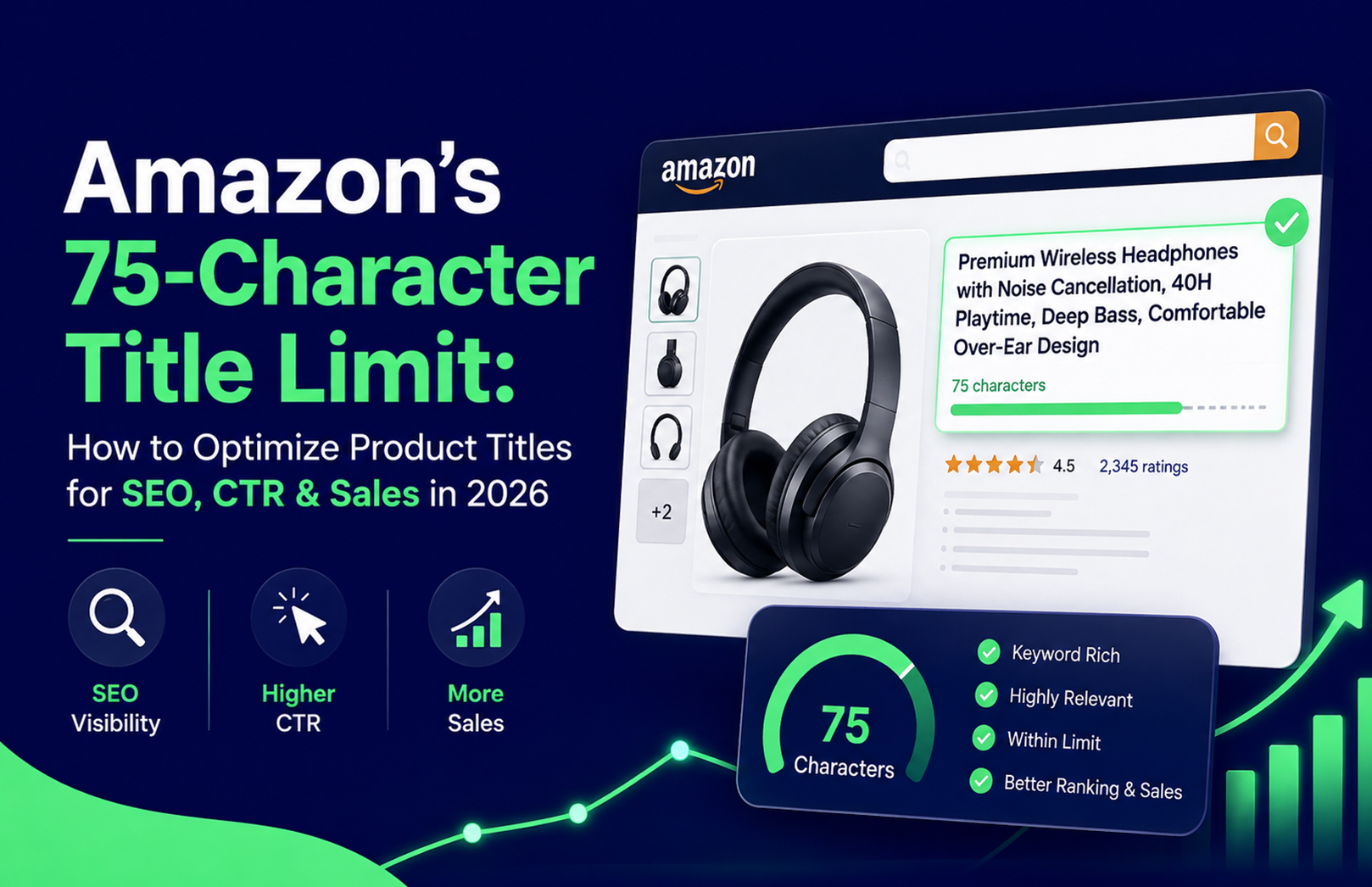
Amazon’s 75-Character Title Limit: How to Optimize Product Titles for SEO, CTR & Sales in 2026


Amazon sellers in India need to rethink how they create and optimize product titles in 2026. Amazon announced that, starting July 27, 2026, product titles in all categories except media must be 75 characters or fewer, including spaces. Amazon says the change is intended to make product titles display more clearly on mobile devices and create a more consistent shopping experience.

For sellers, this makes Amazon product title optimization more important than ever. Instead of trying to fit as many keywords as possible into a title, brands now need to prioritize the right keyword, essential product information and conversion-focused messaging within a much smaller character limit.

A well-optimized Amazon product title can help shoppers understand a product quickly, support relevance for Amazon search and encourage more clicks. In 2026, the goal is not simply to write a shorter title—it is to make every character work harder.

What Is Amazon’s 75-Character Title Limit?

Amazon’s new requirement states that titles for categories other than media must contain 75 characters or fewer, including spaces. Amazon also introduced Item Highlights, which provide an additional 125 characters for information such as materials and recommended use cases. This content is searchable and can appear with titles in search results and on product detail pages.

Amazon is also providing AI-powered tools to help sellers create titles and Item Highlights that comply with the new limits. Sellers can access recommendations through Manage All Inventory and review suggested changes before implementation.

This means the Amazon title character limit should not be viewed only as a compliance requirement. It should be treated as an opportunity to make product listings more concise, relevant and shopper-friendly.

Why Amazon Product Title Optimization Matters in 2026

The title is one of the first pieces of information shoppers encounter when browsing Amazon search results. It tells customers what the product is and can immediately communicate important attributes such as size, quantity, material, compatibility or use case.

At the same time, your title contributes to how Amazon understands your product and its relevance to customer searches. This makes Amazon SEO and title optimization closely connected.

However, keyword placement alone is not enough. A title can contain relevant keywords and still perform poorly if it is difficult to read or does not communicate a compelling reason to click.

The best approach combines search relevance + readability + conversion intent.

How to Optimize an Amazon Product Title Within 75 Characters

1. Start With the Most Important Keyword

The primary product keyword should generally appear early in the title so shoppers can understand the product immediately.

For example, instead of:

“Premium Quality Best Wireless Bluetooth Earbuds for Music Calls”

consider:

“Wireless Bluetooth Earbuds, Noise Cancellation, 40H Battery”

The second version removes unnecessary promotional wording and focuses on product identity and meaningful attributes.

When performing Amazon title optimization, identify the search terms most closely connected to the product and customer buying intent. Do not automatically choose a keyword simply because it has the highest search volume.

2. Remove Unnecessary Words

The new Amazon 75 character title limit means sellers have less room for filler.

Words such as “best,” “amazing,” “premium quality,” “high quality” and “perfect” can consume valuable space without helping shoppers understand the product.

Instead, use characters for information that helps customers make a purchasing decision.

Prioritize:

  • Product type
  • Primary keyword
  • Important feature
  • Size or quantity
  • Material
  • Compatibility
  • Key use case
  • Meaningful differentiator

Every word should either improve relevance or help the shopper understand the product.

3. Use High-Intent Keywords

Effective Amazon SEO begins with understanding what shoppers actually search for when they are ready to purchase.

For an Indian seller, keyword research can include:

  • Core product keywords
  • Long-tail search terms
  • Product attributes
  • Size and quantity terms
  • Material-related searches
  • Compatibility keywords
  • Usage-based searches
  • Category-specific terminology
  • Commercial search phrases

Rather than inserting every keyword into the title, select the strongest primary term and use the remaining relevant terms naturally across the listing.

This is particularly important because Amazon’s new title format forces sellers to make stronger keyword prioritization decisions.

4. Optimize for CTR, Not Just Rankings

A common mistake is to think that Amazon product title optimization is only about rankings.

Your title also has a direct role in the shopper’s decision to click.

Consider these examples:

Generic:
“Face Serum 30ml”

More informative:
“Vitamin C Face Serum 30ml, Brightening, Lightweight”

The second title quickly communicates the product, size and relevant benefit. It gives the shopper more context without becoming unnecessarily long.

A good title should answer the shopper’s basic question:

“Is this the product I am looking for?”

If the answer is immediately clear, the listing has a stronger opportunity to earn the click.

Use Item Highlights Instead of Overloading the Title

The 75-character requirement does not mean every product benefit needs to disappear.

Amazon’s new Item Highlights feature provides up to 125 additional characters for information such as materials and recommended use cases. Amazon states that this content is searchable and visible with titles in search results and on product detail pages.

This creates an opportunity to separate information strategically.

Product title:
Product identity + primary keyword + critical attribute

Item Highlights:
Material + recommended use + supporting product information

For example:

Title:
“Stainless Steel Water Bottle 1L, Leakproof, Insulated”

Item Highlight:
“Suitable for office, gym, school and travel; durable stainless steel construction.”

This approach keeps the title focused while giving customers additional information elsewhere in the listing.

Amazon Product Title Character Limit: Mistakes to Avoid

The biggest mistake sellers can make is treating the Amazon product title character limit as a keyword puzzle.

Avoid these common errors:

  • Repeating the same keyword multiple times
  • Adding unrelated high-volume keywords
  • Using unnecessary promotional claims
  • Writing the entire title in capital letters
  • Adding excessive punctuation
  • Including information that belongs elsewhere in the listing
  • Hiding the primary product keyword
  • Sacrificing readability to add another keyword
  • Ignoring category-specific Amazon requirements

Amazon’s guidance emphasizes concise titles and provides title requirements and best practices for sellers. Amazon also notes that titles exceeding applicable requirements can be subject to changes through its enforcement process.

The objective should always be relevance without keyword stuffing.

A Simple Formula for Amazon Title Optimization

A practical structure for creating a 75-character title is:

[Primary Product Keyword] + [Key Feature] + [Size/Quantity] + [Critical Differentiator]

For example:

“Cotton Bedsheet King Size, 300 TC, Floral Print”

Or:

“Yoga Mat 6mm, Non-Slip, Extra Wide for Home Workouts”

The exact structure will vary by category, but the principle remains the same: start with what the product is, then use the remaining space for the information most likely to influence search relevance and purchasing decisions.

Before publishing, check:

  1. Is the main product keyword clear?
  2. Is the product immediately understandable?
  3. Is the most important information near the beginning?
  4. Have filler words been removed?
  5. Is the title 75 characters or fewer?
  6. Does it follow category-specific requirements?
  7. Would a real shopper find the title useful?

How Better Titles Can Improve CTR and Sales

An optimized title cannot guarantee higher sales on its own. Amazon performance depends on several factors, including pricing, reviews, availability, advertising, images, conversion rate and overall listing quality.

However, a strong title can contribute to the customer journey in several ways.

Better relevance: A clearly structured title helps communicate what the product is and which searches it is relevant to.

Better readability: Customers can understand the offer faster, particularly when browsing on mobile.

Better click potential: A title that clearly matches customer intent can provide a stronger reason to open the product detail page.

This is why Amazon listing optimization should go beyond the title. Sellers should also optimize bullet points, product images, backend search terms, A+ Content and other listing elements.

If your catalogue contains multiple ASINs, maintaining all of these elements consistently can become difficult. Professional Amazon account management services can help brands manage catalogue optimization, listing performance, account health and other ongoing marketplace activities. HRL Infotechs provides account management covering catalogue optimization, performance analysis and broader Seller Central operations.

Combine Amazon SEO With Complete Listing Optimization

A product title works best when the rest of the listing supports it.

Imagine a customer searches for a product and clicks because the title matches their intent. If the product images are unclear, bullet points are weak or the description does not answer their questions, the click may not turn into a purchase.

That is why Amazon listing optimization should cover the entire product detail page.

A strong optimization strategy can include:

  • Keyword research
  • Amazon product title optimization
  • Bullet point optimization
  • Backend search term optimization
  • Product image optimization
  • A+ Content
  • Competitor analysis
  • Conversion-focused content
  • Search performance monitoring

For brands that need professional support, HRL Infotechs offers Amazon product listing and SEO services, helping businesses optimize product titles, keywords and other listing elements as part of a broader Amazon growth strategy.

Connect Title Optimization With Amazon Marketing

Optimizing a listing is only one part of growing on Amazon. Once your product page is properly structured, paid advertising can help bring qualified shoppers to it.

This is where Amazon marketing services become valuable.

Amazon PPC campaigns can be aligned with listing keywords so that the search terms being targeted through advertising are also reflected naturally within the product detail page. HRL Infotechs’ Amazon advertising approach combines keyword research, campaign management and listing optimization to help paid traffic reach product pages designed to convert.

For example, if your PPC campaign identifies a high-converting search term, your listing strategy can evaluate whether that term is appropriately represented in the title or another relevant listing field.

This creates a stronger connection between:

Keyword research → Amazon SEO → Listing optimization → PPC → Conversion → Sales

Should You Rewrite Existing Amazon Titles?

If you already have Amazon listings, do not blindly rewrite every title simply to make it shorter.

Start with your highest-priority ASINs.

Review:

  • Current title length
  • Organic ranking
  • Main search terms
  • Click performance
  • Conversion rate
  • Sales contribution
  • Competitor titles
  • Product relevance
  • Category requirements

Then prioritize titles that are over the new limit or contain unnecessary wording.

Amazon states that titles exceeding 75 characters after the July 27 change will be updated to AI recommendations gradually. Sellers can review, modify and approve AI-generated recommendations during the specified review period.

For brands with a large catalogue, this makes a systematic title audit more valuable than making random changes.

A 2026 Amazon Title Optimization Checklist

Before finalizing any Amazon product title, use this quick checklist:

  • Keep the title within the applicable character limit.
  • Place the primary product keyword naturally.
  • Describe the product clearly.
  • Add only important attributes.
  • Remove repetitive keywords.
  • Remove unnecessary promotional language.
  • Keep the title easy to read.
  • Optimize for mobile shoppers.
  • Follow category-specific requirements.
  • Use Item Highlights for additional information where applicable.
  • Review performance after optimization.

A title should not be written once and forgotten. Amazon search behavior, competition and customer preferences can change, so ongoing performance analysis is essential.

Final Thoughts

Amazon’s 75-character title limit is changing how sellers should approach product listing optimization in 2026. With less space available, brands cannot rely on long keyword-heavy titles to communicate every possible product detail.

Instead, successful Amazon product title optimization requires prioritization.

Start with the strongest relevant keyword. Clearly identify the product. Add the most important attribute or differentiator. Remove unnecessary words and use Item Highlights and other listing fields for additional information.

For Indian Amazon sellers, this is an opportunity to create cleaner, more focused listings that work better for mobile shoppers while supporting broader Amazon SEO and conversion strategies.

When title optimization is combined with complete Amazon listing optimization, professional account management and targeted Amazon marketing services, sellers can build a more consistent foundation for visibility, traffic and long-term marketplace growth.

If your Amazon catalogue needs to be reviewed for the new 75-character requirements, connect with HRL Infotechs for Amazon marketing and listing support.

FAQs

1. What is Amazon’s 75-character title limit?

Starting July 27, 2026, Amazon requires product titles in categories other than media to be 75 characters or fewer, including spaces.

2. Does the Amazon 75-character title limit apply to sellers in India?

Yes. Amazon’s Seller Central India announcement specifies that titles in all categories except media must be 75 characters or less, including spaces.

3. Can I still use keywords in my Amazon product title?

Yes. Keywords remain important for Amazon SEO, but sellers should focus on the most relevant, high-intent terms instead of repeating keywords or trying to include every search phrase.

4. What should I do if important product information does not fit within 75 characters?

Amazon introduced Item Highlights, which provide up to 125 additional characters for information such as materials and recommended use cases. This information is also searchable.

5. Can Amazon product title optimization increase sales?

An optimized title cannot guarantee sales, but it can improve product clarity, search relevance and click potential. Strong results usually require title optimization alongside images, bullet points, A+ Content, pricing, reviews, inventory and advertising.

6. Should I optimize all my Amazon product titles?

It is advisable to audit your catalogue, particularly high-traffic and high-revenue ASINs. Prioritize titles that exceed the new limit, contain unnecessary wording or are not clearly aligned with high-intent customer searches.

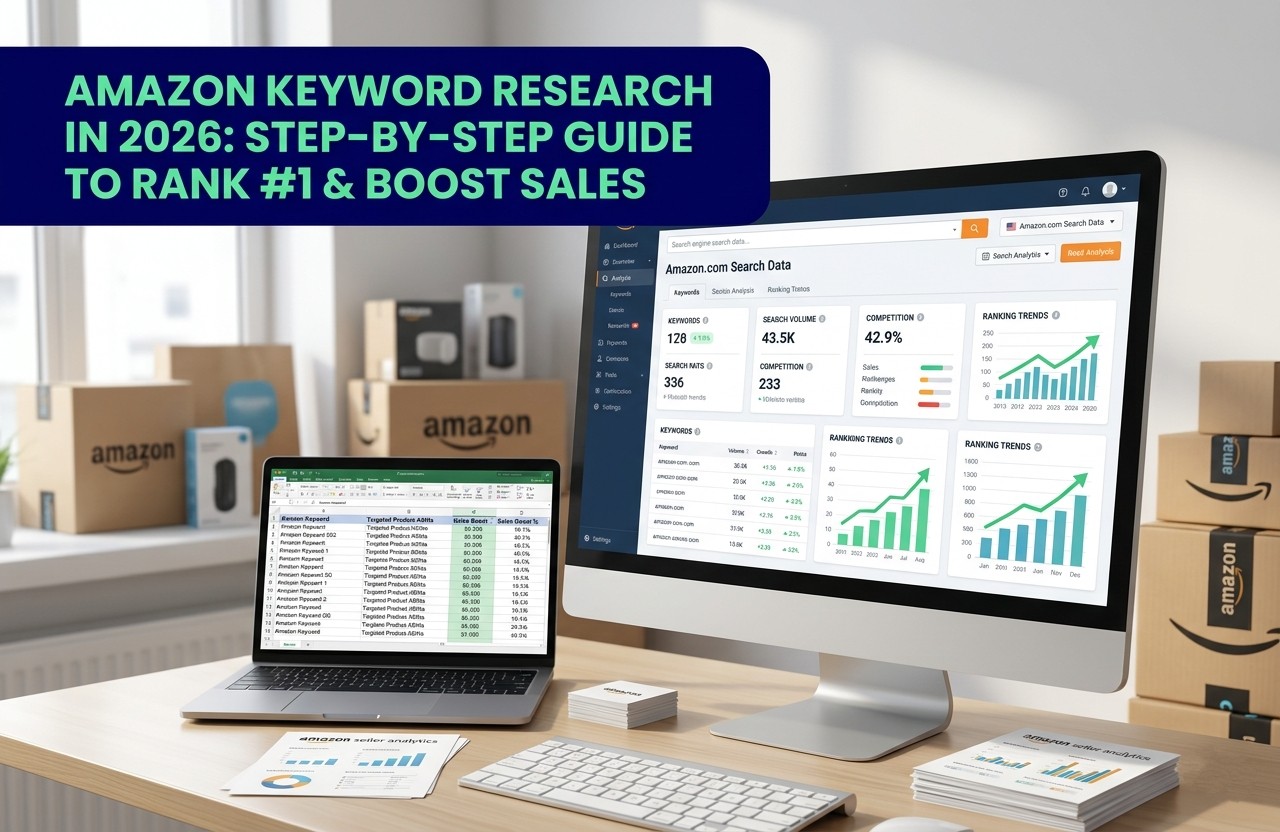
Amazon Keyword Research in 2026: Step-by-Step Guide to Rank #1 & Boost Sales


Winning on Amazon in 2026 is no longer about guessing a few popular search terms and hoping for the best. The marketplace is more competitive, the Amazon search algorithm is smarter, and shoppers are more specific with what they type into the search bar. Strategic Amazon Keywords Research is now the foundation of ranking higher and consistently driving profitable sales.

When you understand exactly how your customers search, you can build listings that match their intent, align with Amazon search algorithm updates, and convert more clicks into orders. This step-by-step Amazon keyword research guide will walk you through a practical, data-backed process tailored for sellers who want to rank #1 and scale their brand in 2026.

Why Amazon Keywords Research Matters More In 2026

Amazon has evolved from a simple product catalog into a powerful search engine with its own rules. In 2026, Amazon keyword research is not just about traffic; it is about finding buyer-intent keywords that lead to real revenue. Sellers who ignore this are left fighting for scraps on generic, low-converting terms.

The latest Amazon search algorithm updates focus heavily on relevance, shopper behavior, and listing quality. This means your Amazon keyword research 2026 strategy must connect the right keywords with compelling content, accurate product details, and strong conversion signals. Done well, it improves organic rankings, ad performance, and overall brand visibility.

Understanding Search Intent Behind Amazon Keywords

Before diving into tools, it is essential to understand why shoppers use certain phrases. Effective Amazon Keywords Research starts with mapping search intent so you can prioritize terms that lead to purchases, not just clicks. This is especially important for competitive categories in the Indian market.

On Amazon, search intent usually falls into a few clear buckets. When you know which bucket a keyword belongs to, you can decide where to place it in your listing and how aggressively to target it with ads or promotions.

Types of Buyer Intent on Amazon

Most high-value terms in Amazon keyword research 2026 can be grouped into three main types. First are discovery keywords, where shoppers are exploring options, such as “best wireless earphones” or “top kitchen mixer”. These are great for visibility but may not convert as strongly as more specific phrases.

Next are comparison and branded keywords, where users already know what they want to compare. Finally, there are purchase-intent keywords like “buy mixer grinder 750W” or “waterproof trekking shoes men”. Your Amazon keyword research guide should prioritize these high-intent phrases in titles, bullets, and ads.

Short-Tail vs Long-Tail Keywords

Short-tail keywords are broad terms like “headphones” or “bedsheet”. They have high search volume but also high competition and mixed intent. Relying only on these in Amazon Keywords Research can drain ad budgets and limit organic ranking potential.

Long-tail keywords, such as “noise cancelling headphones under 3000” or “cotton double bedsheet for summer”, may have lower volume but far higher conversion rates. In 2026, a balanced approach that blends broad and long-tail terms is critical for sustainable growth.

Step-by-Step Process: How To Do Amazon Keyword Research

A structured process helps you avoid random guesswork and build a repeatable system. The following step-by-step framework aligns with how top sellers and Amazon marketing teams approach Amazon keyword research 2026 for serious growth.

Use this as a checklist every time you launch a new product or optimize an existing listing. Over time, you will build a strong keyword asset library that compounds your ranking and Amazon advertising advantages.

Step 1: Start With Real Customer Language

Begin your Amazon Keywords Research by collecting phrases directly from the marketplace. Type your main product term into the Amazon search bar and note the autocomplete suggestions. These are real searches from real shoppers and are extremely valuable.

Next, review top-ranking competitor listings. Look at their titles, bullet points, descriptions, and customer questions. This manual research gives you a strong base list of how buyers describe features, problems, and benefits in your niche.

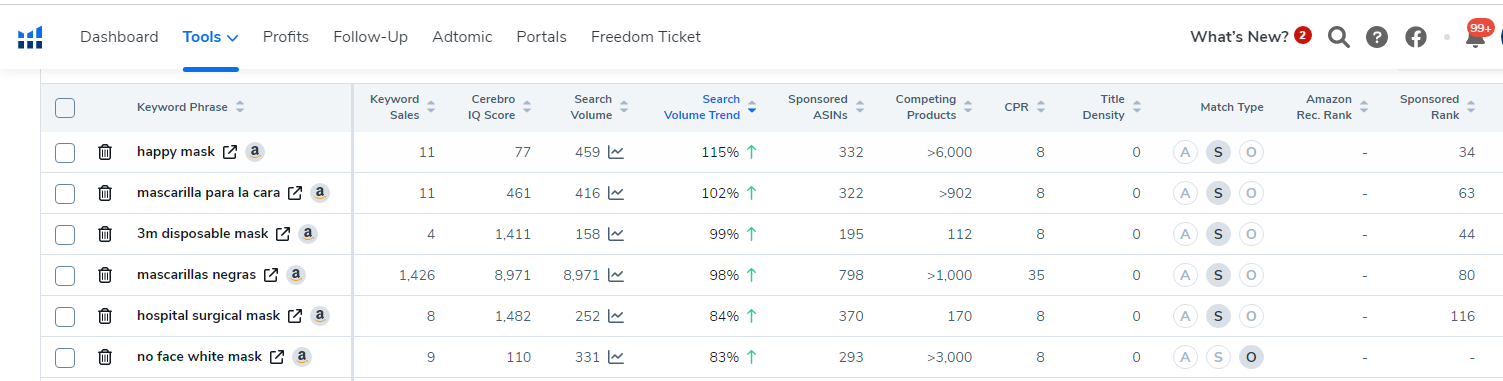
Step 2: Use Amazon Keyword Research Tools 2026

Once you have a seed list, expand it using reliable Amazon keyword research tools 2026. Modern tools can show estimated search volume, competition level, and related phrases you may never think of manually. This is where your research becomes data-driven instead of guess-based.

Look for tools that provide filters for geography, especially if you are targeting India, and that highlight long-tail, high-converting terms. Combine tool data with your manual insights to build a master keyword sheet grouped by intent and relevance.

Step 3: Prioritize Keywords By Relevance And Revenue Potential

Not every keyword deserves a top spot in your listing. Effective Amazon Keywords Research means ranking your terms by how closely they match your product and how likely they are to drive sales. Overstuffing unrelated keywords can hurt both rankings and conversions.

Create three groups: primary, secondary, and supporting keywords. Primary keywords are highly relevant, high-intent terms that belong in your title and main bullets. Secondary keywords support these in bullets and descriptions. Supporting keywords can be placed in backend search terms and content where they fit naturally.

Implementing Keywords In Your Amazon Listing

Once your Amazon keyword research guide is complete, implementation becomes the next critical step. The goal is to signal strong relevance to Amazon’s algorithm while keeping the listing readable and persuasive for human shoppers.

Focus on strategic placement rather than repetition. Amazon Keywords Research is only effective when the right phrases appear in the right sections of your listing, aligned with clear benefits and accurate product details.

Optimizing Titles, Bullets, And Descriptions

Your product title is the most powerful on-page element for Amazon keyword research 2026. Include your main primary keyword near the beginning, followed by key attributes like size, material, color, and core benefit. Keep it clear, scannable, and compliant with category guidelines.

Use bullet points to integrate secondary keywords while highlighting benefits, not just features. In the description or A+ Content, weave supporting keywords into natural, informative copy that answers common objections and builds trust with Indian shoppers.

Using Backend Search Terms Wisely

Backend search terms are often underused in Amazon Keywords Research. This hidden field allows you to include relevant phrases that may not fit naturally in your visible copy, such as common misspellings, regional variations, or alternate product names.

Avoid repeating keywords already used in your title and bullets. Instead, focus on additional long-tail phrases, Hindi or regional language variations where appropriate, and synonyms that your audience might use while searching.

Aligning Keyword Strategy With Amazon Search Algorithm Updates

Amazon search algorithm updates in 2026 continue to reward listings that balance relevance, performance, and customer satisfaction. That means your Amazon Keywords Research must be part of a broader optimization strategy, not an isolated task.

Keywords help you get discovered, but sales history, click-through rate, conversion rate, and reviews help you stay ranked. Regularly revisiting your keyword list and aligning it with performance data is essential for long-term success.

Ongoing Optimization And Performance Tracking

After implementing your keywords, monitor performance using Amazon reports and your chosen tools. Track which search terms drive clicks and conversions, and which ones attract traffic but fail to convert. This feedback loop is vital for refining your Amazon keyword research 2026 approach.

Update your listing every few months based on new data, seasonal trends, and competitor movements. Remove underperforming phrases, add emerging long-tail terms, and keep your content aligned with shopper behavior and algorithm shifts.

Turning Strong Keyword Research Into Higher Sales

Effective Amazon Keywords Research does more than improve rankings; it shapes your entire growth strategy. When you know what your audience is searching for, you can design better products, create more relevant ads, and build content that resonates across every touchpoint.

For sellers in India aiming to dominate their category in 2026, a disciplined approach to Amazon keyword research, combined with smart listing optimization and ongoing testing, is a powerful competitive edge. If you want expert support in building and executing a winning strategy, partnering with a specialized Amazon marketing agency like HRL Infotechs can accelerate your results and help you scale with confidence.

The Real Impact of A+ Content on Amazon Sales in India


Amazon has become the primary marketplace for brands across India, but competition is fiercer than ever. Shoppers scroll through endless similar products, and most decisions are made in seconds. In this crowded space, Amazon A+ Content India is no longer a nice-to-have; it is a powerful lever that can directly influence click-throughs, engagement, and conversions on your product detail pages.

When used strategically, A+ Content does far more than make listings look attractive. It helps communicate value, answer objections, build trust, and guide buyers to purchase with confidence. Understanding the real impact of A+ Content on Amazon sales, and how to implement it correctly for the Indian marketplace, can transform underperforming listings into consistent revenue drivers.

The Role of Amazon A+ Content India in Today’s Marketplace

Amazon A+ Content India allows brand owners and sellers to enhance product detail pages with rich visuals, comparison charts, and structured storytelling. Instead of relying only on plain text bullets and a short description, you can showcase benefits, features, and use cases in a more persuasive way. This richer experience aligns with how Indian shoppers research and compare products online.

Most top-ranking listings in competitive categories now use A+ Content as a standard. As a result, products without it often look incomplete or less trustworthy. The impact of A+ Content on Amazon sales is especially visible in categories like electronics, beauty, home, and fashion, where visual storytelling and clear differentiation strongly influence purchase decisions.

How A+ Content Increases Amazon Sales in India

The direct impact of A+ Content on Amazon sales comes from improving how shoppers understand and feel about your product. When customers see clear visuals, benefit-driven copy, and comparison modules, they spend more time on the page and feel more confident. This often leads to higher conversion rates and better sales velocity over time.

In the Indian market, buyers frequently compare multiple listings before deciding. Well-structured Amazon A+ Content India helps your listing stand out by answering questions upfront, reducing doubts, and highlighting unique selling points. Over time, this can also contribute to better organic ranking, as improved conversions signal listing relevance to Amazon’s algorithm.

Reducing Purchase Anxiety and Returns

One of the most overlooked benefits of A+ Content is its ability to reduce returns and negative reviews. Detailed modules can clarify product dimensions, compatibility, usage instructions, and care guidelines. This clarity helps align expectations and reduces post-purchase disappointment.

When customers know exactly what they are buying, they are less likely to feel misled. Fewer returns and better reviews indirectly support higher sales. This is a key way the impact of A+ Content on Amazon sales extends beyond just the initial conversion rate.

Boosting Brand Perception and Trust

High-quality visuals and consistent branding across your A+ modules create a premium perception. In India, where many buyers are still building trust with online brands, this professional presentation makes a strong difference. It signals that the seller is serious, reliable, and invested in customer experience.

As your Amazon product listing optimization India strategy matures, A+ Content becomes a central tool for brand storytelling. You can highlight brand values, certifications, quality checks, and social proof. This emotional connection often nudges buyers to choose your product over a cheaper but less credible alternative.

Key Elements of High-Converting A+ Content in India

To truly leverage Amazon A+ Content India, you must go beyond generic templates. The best-performing listings follow a clear structure that mirrors how shoppers scan a page. Each module should have a purpose, from grabbing attention to closing the sale.

When planning your layout, think about the buyer journey: awareness, consideration, and decision. Align each section of your A+ Content with these stages. This strategic approach ensures that every image, icon, and line of copy works together to drive conversions.

Visual Storytelling and Lifestyle Imagery

High-resolution lifestyle images help customers imagine the product in real use. For Indian shoppers, context matters: show how the product fits into local homes, routines, or cultural moments. This makes the listing feel more relevant and relatable.

Use images to demonstrate scale, usage steps, and key benefits. Avoid cluttered designs; instead, focus on one message per visual. This clarity supports both user experience and Amazon product listing optimization India best practices.

Benefit-Focused Copy and Feature Highlights

While visuals attract attention, words close the sale. Your A+ copy should translate features into clear benefits. Instead of only listing technical specs, explain how they improve comfort, convenience, savings, or performance for the buyer.

Use short, scannable sentences and sub-points where needed. For example, highlight benefits like durability, energy savings, or skin safety. This style of writing aligns with how users skim content on mobile, which dominates Amazon traffic in India.

Integrating A+ Content into a Complete Amazon Marketing Strategy

A+ Content performs best when it is part of a broader Amazon marketing services plan. It should support your keyword strategy, ad campaigns, and pricing decisions. While A+ modules themselves are not directly indexed for SEO, they influence engagement and conversions, which affect ranking.

To maximize the impact of A+ Content on Amazon sales, ensure that your titles, bullets, and backend keywords are already optimized. Then, use A+ to reinforce those messages visually and emotionally. This integrated approach creates a consistent narrative across the entire product detail page.

Aligning with Sponsored Ads and Deals

When you drive traffic through Sponsored Products or Sponsored Brands, your A+ Content becomes the conversion engine. Ads may win the click, but the detail page must win the purchase. Strong A+ modules help convert paid traffic into profitable sales.

During key sale events in India, such as festive seasons or payday weekends, optimized A+ Content can significantly lift performance. Buyers are more open to discovering new brands, and a polished listing can quickly build trust and urgency.

Why Many Sellers in India Underuse A+ Content

Despite its proven benefits, many sellers still treat Amazon A+ Content India as an afterthought. Common issues include low-quality images, generic text, or modules that simply repeat bullet points. These mistakes waste a valuable opportunity to influence buyer behavior.

Another challenge is the lack of a clear content strategy. Without understanding target audiences, pain points, and competitive positioning, sellers often create A+ layouts that look good but fail to convert. This gap is where expert Amazon marketing services and structured planning make a real difference.

When to Consider Professional Amazon Account Management Support

As your catalog grows and competition intensifies, managing A+ Content, ads, and optimization in-house can become overwhelming. A specialized Amazon account management agency can help build a scalable strategy that covers design, copywriting, keyword research, and performance tracking.

Such partners understand how to tailor Amazon A+ Content India for different categories and price points. They can test variations, analyze conversion data, and refine layouts over time. This data-driven approach ensures that your A+ modules are not just visually appealing but also commercially effective.

Key Outcomes You Should Expect

When A+ Content is executed strategically, you should see measurable improvements in several areas. These include higher conversion rates, better session-to-order ratios, and stronger review profiles. Over time, these metrics contribute to improved organic ranking and lower dependence on aggressive discounting.

Additionally, you can expect clearer brand positioning within your niche. With consistent messaging and visuals across products, shoppers begin to recognize and trust your brand. This recognition supports repeat purchases and cross-selling opportunities across your catalog.

Conclusion: Turning A+ Content into a Competitive Advantage

In the evolving Indian ecommerce landscape, Amazon A+ Content India is one of the most controllable levers for improving performance. It shapes how buyers perceive your brand, understand your product, and decide to purchase. When aligned with strong listing fundamentals and smart advertising, A+ Content can unlock meaningful, long-term growth.

If you are serious about scaling your presence on Amazon and want to convert more clicks into loyal customers, investing in strategic A+ Content is essential. Partnering with experts like HRL Infotechs can help you move beyond basic templates and build data-backed, high-impact experiences that turn your product pages into powerful sales assets.

How to Identify and Fix Underperforming SKUs on Amazon & Flipkart in 2026


Struggling to understand why some of your Amazon and Flipkart products barely move while others sell out? Underperforming SKUs quietly drain ad budgets, hurt your rankings, and block real growth. The good news is that with the right amazon sku optimization strategy, you can turn these weak listings into consistent revenue drivers.

This guide walks you through a practical, data-backed approach to identify and fix underperforming SKUs on Amazon and Flipkart. You will learn how to audit performance, improve amazon listing optimization, and apply flipkart product listing optimization tactics that actually move the needle on sales and profitability.

Understanding What Makes a SKU Underperform

Before you can fix anything, you need a clear definition of an underperforming SKU. On Amazon and Flipkart, a SKU is underperforming if it gets impressions but low clicks, or clicks but poor conversions. It may also be underperforming if it generates sales but at a very low margin or high return rate.

From an amazon sku optimization perspective, you should look at each product’s visibility, engagement, and conversion. If any of these are significantly below your category or account average, that SKU needs attention. This structured view helps you prioritize which listings to fix first instead of guessing.

Key Metrics to Track for Amazon and Flipkart SKUs

To identify weak listings, you must track the right performance metrics. For Amazon, focus on sessions, click-through rate (CTR), conversion rate, Buy Box percentage, and organic keyword rankings. These metrics show how well your amazon listing optimization efforts are working.

On Flipkart, monitor impressions, clicks, orders, product page views, and cancellation or return rates. When combined, these metrics reveal whether your flipkart product listing optimization is aligned with shopper expectations and marketplace algorithms.

Common Reasons SKUs Underperform

Most underperforming SKUs suffer from similar issues across marketplaces. Poor images, weak titles, missing keywords, and confusing descriptions are frequent problems. Pricing that is not competitive, slow delivery options, and low ratings also push your products down in search results.

In many cases, amazon seller account managment and flipkart seller account optimization are reactive instead of proactive. Sellers set up listings once and rarely revisit them. Over time, competitors improve, search trends shift, and your unchanged SKUs slowly lose visibility and conversions.

Step-by-Step Process to Identify Underperforming SKUs

Once you know what to look for, you can build a repeatable process. Start with a marketplace-wise performance export from your Amazon and Flipkart dashboards. Filter products with low sales, low conversion rates, or declining trends over the last 60–90 days.

Next, segment SKUs by category, price range, and traffic level. This allows you to compare each SKU against similar products instead of your entire catalog. Such segmentation is a core part of effective amazon sku optimization and helps you avoid misleading averages.

Building a Simple Performance Audit Sheet

Create a spreadsheet that lists each SKU with key metrics from both platforms. Include impressions, clicks, CTR, conversion rate, average selling price, and returns. Mark SKUs that fall below your defined thresholds as high-priority for optimization.

This audit sheet becomes your control panel for amazon listing optimization and flipkart seller account optimization. Review it monthly to spot new problem SKUs early, before they impact your overall account health and organic visibility.

Optimizing Product Content for Higher Conversions

Once you have your list of weak SKUs, start with content improvements. Product titles, bullet points, and descriptions are the foundation of amazon sku optimization and flipkart product listing optimization. They influence both search rankings and buyer trust.

Use keyword research tools and marketplace suggestions to find relevant search terms. Then, weave your focus and family keywords naturally into titles and descriptions. This improves discoverability while keeping content readable and persuasive for real shoppers.

Best Practices for Titles, Bullets, and Descriptions

Strong titles should include brand, main keyword, core benefit, and key attributes like size or color. Keep them clear and scannable. For bullets, highlight benefits, use cases, and differentiators, not just features. This approach supports amazon listing optimization and helps customers decide faster.

Descriptions should tell a concise story about the product. Address common objections, explain how to use the product, and include subtle social proof. Use short paragraphs and formatting for readability. This structure improves engagement and can directly increase sales on Amazon and Flipkart.

Improving Images and Visual Trust Signals

Visuals are often the fastest way to boost performance. Use high-resolution images with clean backgrounds and multiple angles. Add infographics that show benefits, dimensions, and usage scenarios to support your amazon sku optimization strategy.

On Flipkart, follow image guidelines closely and consider lifestyle photos that show the product in real use. Consistent, professional visuals across your catalog enhance flipkart seller account optimization and build trust with buyers who compare multiple listings.

Pricing, Offers, and Reviews: Hidden Growth Levers

Content alone cannot fix every underperforming SKU. Pricing, offers, and reviews play a major role in how to increase sales on Amazon and Flipkart. Even a perfectly written listing will struggle if it is overpriced or lacks social proof.

Start by benchmarking your price against top competitors in the same category. Consider your landed cost, fees, and desired margin, then adjust pricing to stay competitive. Use limited-time deals, coupons, or bundles to revive stagnant SKUs and test demand.

Managing Reviews and Ratings Strategically

Low ratings can destroy conversion rates even when traffic is strong. Encourage genuine reviews through post-purchase communication that complies with marketplace policies. Focus on improving product quality and packaging to reduce negative feedback.

Respond to critical reviews professionally and offer solutions where allowed. Over time, this improves your rating profile, which supports amazon sku optimization and strengthens your overall amazon seller account managment strategy.

Leveraging Advertising and Search Data to Refine SKUs

Advertising campaigns on Amazon and Flipkart provide powerful data for optimization. Analyze search term reports to discover which queries convert and which waste budget. This insight feeds directly into better amazon listing optimization and content updates.

Pause or adjust bids on non-performing keywords and double down on profitable ones. Use this data to refine titles, bullets, and backend keywords. Over time, your organic rankings improve, and your reliance on paid traffic can decrease.

Aligning Ads with Optimized Listings

Driving traffic to weak listings rarely works. Always optimize your product pages before scaling ads. Ensure that your ad keywords match the benefits and language used on the product page for consistent messaging.

This alignment improves click-to-conversion rates and makes your campaigns more efficient. It also supports long-term amazon sku optimization by sending strong performance signals to the marketplace algorithms.

Creating a Continuous Optimization Routine

Identifying and fixing underperforming SKUs is not a one-time project. Marketplaces change, competitors evolve, and customer expectations shift. You need a simple, repeatable routine to keep amazon sku optimization and flipkart product listing optimization on track.

Set a monthly or quarterly review cycle. Revisit your audit sheet, refresh keywords, test new images, and adjust pricing based on performance. Over time, this disciplined approach compounds, leading to stronger rankings, better margins, and more predictable growth.

When to Seek Expert Help

If you manage a large catalog or lack in-house expertise, optimization can feel overwhelming. At that stage, partnering with specialists who understand amazon seller account managment and flipkart seller account optimization can save time and reduce costly mistakes.

Look for a partner with proven marketplace experience, transparent reporting, and a clear process for SKU audits, content optimization, and performance tracking. The right support can accelerate results and free your team to focus on product and brand growth.

Conclusion: Turn Weak Listings into Reliable Revenue Drivers

Underperforming SKUs are not dead ends; they are untapped opportunities. By auditing performance, improving content, refining pricing, and leveraging ad data, you can systematically revive weak listings and strengthen your entire catalog. Consistent amazon sku optimization and structured flipkart product listing optimization help you capture more visibility, trust, and conversions across both marketplaces.

If you are ready to turn your Amazon and Flipkart presence into a predictable growth engine and want expert support across listing audits, optimization, and account strategy, the team at HRL Infotechs can help you unlock that next level of marketplace performance.

How to Optimize Amazon Product Listings for Higher Conversions


Selling on Amazon might be one of the best decisions you ever make, in regards to your business, if you can make your product stand out. But with millions of small and big competitors available online, standing out in the marketplace requires more than just having a good product. To succeed and drive higher sales, properly optimizing your Amazon product listings is essential. If your listings are done right, your product can rank higher in search results, attract more buyers and ultimately increase your conversion rates by turning more visitors into buyers. 

In this blog, we’ll dive into effective strategies about how to optimize Amazon listings for sales, boost Amazon conversions and increase product visibility on Amazon, so that your product can get the recognition it deserves. 

Why Optimizing Amazon Listings is Crucial for Higher Conversions

Understanding why Amazon product listing optimization is critical for your success on the platform is necessary. Amazon is known for being the largest ecommerce marketplace with millions and billions of sellers and buyers. With this intense level of competition, being able to stand out is difficult if your listings are not properly optimized. 

Optimized product listings not only improve your ranking in the search results but also influence the customer’s decision to purchase your product. Factors like clear product descriptions, high-quality images, and relevant keywords help build customer trust. So, getting your Amazon listing SEO right is a crucial step in improving both visibility and conversions.

How to optimize Amazon listings for sales?

For proper optimization you need to follow proper Amazon SEO strategies for listings, which impact customer decisions about purchasing the product greatly. Some of the strategies that will help you drive more sales and traffic are given below:

Creating Compelling Product Titles

The product title is the first thing customers see when browsing Amazon. A well-crafted title can make all the difference in whether a potential customer clicks on your listing or passes it by. Your title should be optimized by:

Including Relevant Keywords – Use primary keywords that your target customers are likely to search for. This helps improve search visibility on Amazon.

Be Descriptive: Include key details about your product, such as the brand, product type, size, colour, material, and features.

Be Clear & Concise: Avoid unnecessary jargon. Amazon allows up to 200 characters, and it’s best to focus on clarity and relevant information.

Writing Engaging Product Descriptions

Your product description should be well-written, detailing all the features of your product clearly, so that customers know what to expect and are influenced towards purchasing the product. Some Amazon listing optimization tips are:

Highlight Key Features – Focus on answering the most asked questions. How will it make the customer’s life easier? What makes it different from other products?

Use Bullet Points for Readability: Amazon allows you to use bullet points, which makes it easier for shoppers to scan the most important features.

Include Keywords: Naturally incorporate secondary keywords into your description. This improves the product’s SEO and helps your listing rank higher.

Incorporate High-Quality Images

High-quality images and videos are essential for convincing customers to make a purchase. Great images give your potential customers a sense of the product’s size, features, and quality. To improve conversions, you should: 

Use High-Resolution Photos – Ensure your images are high-quality and show the product from different angles. Blurry images can discourage potential customers.

Show Product Usage – If applicable, include lifestyle images showing the product in use. This helps customers visualize how the product fits into their lives.

Follow Amazon’s Image Guidelines – Amazon has specific guidelines for product images; be sure to follow them for maximum compliance and visibility.

Encourage Positive Reviews

Product reviews impact customer decisions greatly when making a purchase. Positive reviews can build trust and boost conversions, while negative reviews can harm your brand’s reputation. To manage reviews, you should:

Encourage Feedback – Politely ask satisfied customers to leave reviews. This can be done through follow-up emails or packaging.

Respond to Negative Reviews – Address complaints professionally, offering solutions and ensuring the customer knows their concerns are taken seriously.

Maintain High Ratings – Consistently delivering excellent products and customer service will help maintain a high rating, which increases customer trust.

Price Competitively

Pricing is an important factor that determines whether your product is purchased or not. If you’re priced too high as compared to the competitors, your sales may suffer, but if priced too low, your quality may be questioned. 

Find a Balance – Check how similar products are priced and find an amount where your product is competitive but still reflects the quality you offer.

Use Discounts and Coupons – Offering time-sensitive deals, discounts, or coupons can encourage customers to make a purchase.

Use Dynamic Pricing – Adjust your prices in real-time based on market conditions, competitor pricing, or demand fluctuations, & remain competitively priced.

Final Thoughts – Good Product Listings for Good Sales

Optimized product titles for Amazon are essential for driving higher conversion rates and increasing sales. Handling everything from crafting compelling titles and engaging and informative descriptions to using high-quality images can feel overwhelming, but HRL Infotech helps you manage it all with effectiveness and efficiency.

Every aspect of optimized listings plays an important role in achieving high conversion rates. By applying the aforementioned Amazon SEO strategies, you can boost your rankings in search results, attract more traffic and ultimately convert the traffic into loyal customers by building their trust. 

Expert Amazon Account Management Services to Boost Your Sales


Selling on Amazon can be exciting and profitable, but sometimes it is not that simple. With so many sellers competing for the attention of shoppers, you are going to need more than just a great product to succeed.

You’ll need to have professional Amazon account management services that will differentiate you, bring customers to you, and get you consistent increases in sales.

Here, in this blog, we are going to talk about why professional account management is required, the best ways to boost sales, and how the right partner can handle everything, from product listings to customer support, so that you can focus on business growth.

Why Amazon Account Management Services Matter

Selling on an Amazon store is so much more than listing products and waiting for the orders to roll in. You have to optimised listings, good advertising, well-managed inventory, and happy customers. That’s where Amazon account management services come in.

It is all taken care of by a professional account management team that is responsible for all the day-to-day operations and strategic choices that impact your sales. You can focus on discovering good products and establishing your brand, while experts take care of the technical, creative, and operational tasks.

The Importance of Sales Growth Strategies on Amazon

To be successful at Amazon, you can’t do it through trial and error. You have to apply proven Amazon sales enhancers that are effective in conjunction with the marketplace algorithms and shopper behaviour. They are:

Product listings optimised, covering high-quality keywords and compelling copy.

Utilising Amazon advertising to send targeted traffic.

To research competitor performance to determine opportunities.

If used by professionals as one of your Amazon account management services, such tactics can drive your visibility and sales.

Amazon Product Listing Management to Get More Visibility

Your Amazon product listings are your virtual shop. If they aren’t optimised, then you’re losing potential customers. Best-in-class Amazon product listing management makes sure all your listings are optimised to receive clicks and convert visitors into customers.

That includes

  • Creating keyword-rich headings and bullets.
  • Adding high-quality images highlighting product specifications.
  • Utilising A+ content to share your brand story.

If your professional listing management is handled well, you are giving your products the most incredible opportunity to rank higher and sell more.

Grow revenue with proactive Amazon seller support services

Even the most optimised listings and promotions can still experience unexpected issues, including an unexpected policy violation, account suspension or unhappy customer.

That is where the Amazon seller support services are worth their weight in gold. A reputable Amazon seller support service knows how to handle every situation like the pros they are, fixing issues quickly, dealing with Amazon on your behalf and keeping your account healthy.

By acting quickly and being proactive, they save you from costly downtime, angry customers, and most importantly, maintain your sales momentum.

With ongoing optimisation, you can provide seamless operations and prevent disruptions that are counterproductive to your sales.

How Professional Amazon Account Management Services Work

When you engage a team of experts, the Amazon account management services generally operate in a straightforward, outlined approach designed to grow your business rapidly:

  • Account Audit & Strategy – First, they perform a detailed analysis of your Amazon account to ascertain what is working, what is not working, and what the most significant opportunities are.
  • Listing Optimisation – Then, they will optimise your product titles, descriptions, keywords, and images to increase conversions and search rankings.
  • Advertising Service Management – Your team will plan, create, and optimise your Amazon PPC campaigns, so you get the traffic you’re looking for – people who want to buy.
  • Performance Tracking – They will measure sales, inventory, and performance metrics to ensure that everything is working well for you.
  • Ongoing Services – When you have dedicated Amazon seller services, any issue that may arise – listing errors, policies, etc. can be resolved quickly and efficiently.

It is a complete, end-to-end system of services that always has one focus: increasing your sales on Amazon.

Major Advantages of Using Professional Account Management Services on Amazon

When you enlist help from professionals, it is not just a matter of convenience; it is about achieving results. Here is what you can expect.

  • Save Time: Let professionals worry about the minutiae, so you can concentrate on sourcing products or scaling your brand!
  • Grow Faster: With well-regarded sales boosting strategies for Amazon, your business and brand can scale faster than you ever thought possible.
  • Less Risk: Seasoned managers know how to steer clear of expensive mistakes that are all too common, whether it’s a policy violation, poorly optimized ad, or overlooked keyword.

When your Amazon store is professionally managed, you can keep an eye on the bigger picture of a sustainable brand.

Better ROI: Better listings and advertisements lead to more sales and better profit margins.

Real-Life Application: Maximising Amazon Sales Strategies in Practice

Assume that you have a great product, but your sales aren’t increasing. A good management team can implement sales-driving strategies for Amazon, such as:

  • Keyword optimisation to enhance search results ranking. 
  • Better product images to induce click-throughs.
  • Targeted advertising efforts to attract your ideal customers.

The result? More traffic, more conversions, and more sales – and you have accomplished this through expert Amazon account management services.

The Importance of Continuous Optimisation

Amazon is continuously evolving, as is the behaviour of customers on the site. For this reason, Amazon account management needs ongoing optimisation.

This is why Amazon account management services focus on ongoing optimisation. Ongoing changes to keywords, tests of new images, and optimisations of advertising campaigns ensure your store is competitive.

By having ongoing Amazon product listing management services, you can quickly react to changes in the market and create sustainability for long-term growth.

Choosing the Right Partner

Not all Amazon service providers are equal. As you evaluate potential companies to partner with, consider the following:

An established history of working with vendors in your category.

Offer transparent reporting so that you can manage and track performance.

Full-service solutions such as listings, advertising, support, and strategy.

A suitable partner will be an extension of your team, dedicated to helping you grow sales and build your brand.

Final Thoughts

Amazon’s success is not about marketing an incredible product but having the right systems, strategies, and support. Expert Amazon account management services combine everything you need: optimised listings, successful ad campaigns, problem-solving know-how, and future-focused strategy to have your sales continue to soar.

With the proper Amazon sales promotion methods, focused Amazon product listing management, and engaging Amazon seller support services, you can turn your Amazon store into a thriving, booming business. If you’re ready to take your store to the next level, now is the time to put the right strategies in place and start achieving the sales growth you’ve always dreamed of!

How To Optimize Your Amazon Backend Keywords For Better Reach


Most Amazon brands & sellers are aware of Amazon listing optimization with forward-facing keywords. But backend search terms also play a big role here. Despite being largely invisible to consumers, backend keywords boost search rankings & drive sales when optimized for comprehensive content & SEO strategies. 

Following best backend keyword practice is crucial because Amazon has strict rules for search terms. Read through this blog to learn how to optimize your Amazon backend keywords for your listings.

Why optimize your Amazon backend keywords?

You might wonder why backend keywords are important. What benefit could they provide for your Amazon product listing?

Well, backend keywords improve your product’s ranking for other crucial keywords. You can put them on the back end of your website & still rank for them. Basically, they make your products discoverable. Let’s consider the example of you selling LED lights. Some people might look for LED lights, while others might look for Diwali lights. You would miss out on users searching using all the other terms listed if you only optimized for LED lights. 

Incorporating keywords (like Christmas lights, Diwali lights, or light strands) into the backend of your site ensures that you won’t miss out on worthwhile leads. This makes it easier for you to connect with customers conducting different product searches. 

5 tips for optimizing your Amazon backend keywords

Tip 1: Concentrate on the essential keywords

To improve your product’s ranking on Amazon, you must choose the best keywords for your business by conducting product keyword research. Concentrate on the most crucial keywords because you can only use 250 bytes for backend keywords. 

People’s searches are completely different on Amazon than they would on Google. So you need tools like Sonar to conduct the best product keyword research for your listing. You can even use such tools to view a keyword’s search volume.

Concentrating on essential keywords doesn’t require you to abandon your Google keyword tools. You can still determine the worth of your keywords with the Google tools at your disposal.


product keyword research

Tip 2: Listen to Amazon

You need to listen to Amazon if you want to optimize your backend keywords for maximum performance. Here are a few requirements for

Amazon has for backend keywords:

a. Keep Prohibited Search Terms to a Minimum

If you use certain categories of keywords in your backend search terms, Amazon will penalize you.

Including brand names, whether those of your own or your rivals, is a big mistake. Since it’s a part of your product listing’s keywords, this information is redundant. Using it in backend search terms will only cause Amazon’s search platform to suppress it.

Businesses are also prohibited from using abusive language, as well as UPC codes, ASINs, & other product identifiers.

b. Sort your keywords logically.

Make sure that the order in which you list each of your backend keywords makes sense. Consider how people look for things. What is the arrangement of those keywords?

This is important because Amazon prioritizes a logical order for search terms.

For instance, you want to write “red racing car” rather than “racing red car” because most users consider color before the product. And also, racing red car doesn’t make any sense. You should arrange your keywords in the order that a user would search for them.

Tip 3: Keep track of keyword performance.

Business owners often select backend keywords for their product listings & never look at them again. This is problematic because if you never update your Amazon backend keywords, your listing won’t perform to its full potential.

Instead, keep an eye on your backend keywords to determine whether they send relevant traffic to your listing. To find out if the keywords are still helpful, you can check for your Amazon keyword ranking or index performance.

Amazon listing optimization

Tip 4: Sparingly use keywords

If you’re used to optimizing for Google SEO, your first inclination is to use your keywords several times throughout your content. This behavior might transfer to your Amazon product listing.

You aren’t required to use keywords more than once by Amazon, nor is it advised. You will rank as long as you use them once on your page. 

You don’t even have to use clever integration techniques to scatter it throughout your page.

Use the general procedure when incorporating keywords into your listing’s backend. Use none that are on your page’s front page. And you’ll appear in search results for those keywords.

Tip 5: Each byte matters 

Remember (tip#1) when we said your focus must be on the most crucial keywords because you only have 250 bytes for backend keywords? Since there is a finite space, you should concentrate your Amazon listing optimization on the most vital & relevant keywords that work best for your purpose. 

You can also avoid punctuation when using Amazon backend keywords. This applies to all punctuation like commas, exclamation points, periods, & question marks. Each keyword you enter only needs to be separated by a space. 

Final Note

Your products rank higher on the Amazon search results page when you have backend keywords that are strong & well-optimized. So, never undervalue Amazon search engine optimization with backend keywords. 

Always double-check to see if entered keywords are being indexed by Amazon.  

Now you know the tips to Amazon listing optimization, use them to your advantage, like to increase your product’s visibility & thus drive sales and profits. Want experts’ help? HRL Infotech marketing experts can help you with Amazon account management, optimisation and  advertisement.