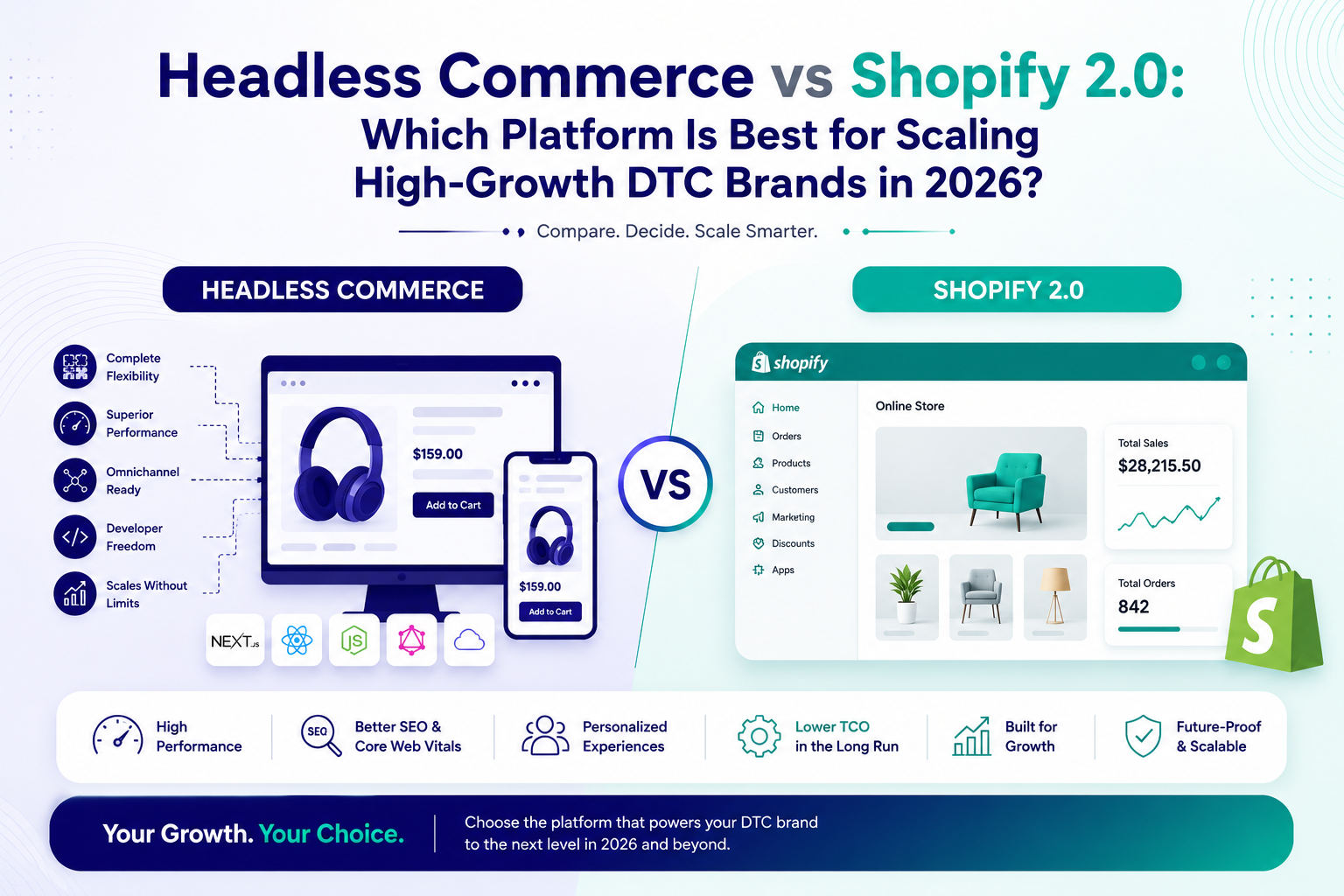
Headless Commerce vs Shopify 2.0: Which Platform Is Best for Scaling High-Growth DTC Brands in 2026?


Scaling a high-growth DTC brand in 2026 is not just about great products. It is about choosing the right ecommerce architecture that can handle traffic spikes, deliver fast experiences, and support advanced marketing. For many founders and CMOs, the big question is whether Shopify 2.0 is enough or if it is time to move to headless commerce.

This guide breaks down Shopify 2.0 vs headless commerce in practical terms, using real-world scenarios for growing brands. You will understand what headless commerce is, when to switch, and whether your Shopify store should go headless or stay on a well-optimized Shopify 2.0 stack.

Understanding Shopify 2.0 For Scaling DTC Brands

Shopify 2.0 is the upgraded version of Shopify’s online store framework, designed to give brands more flexibility, better performance, and improved customization. For many DTC brands in India and globally, Shopify 2.0 is often the first serious ecommerce platform for scaling brands beyond the early stage.

With Shopify 2.0, merchants get improved theme architecture, faster storefront rendering, and more control over sections and blocks. When combined with expert Shopify website development agency support, it can deliver fast ecommerce websites for conversions without needing a complex headless setup.

Key Features That Make Shopify 2.0 Attractive

Shopify 2.0 brings a more modular theme system, better metafields, and improved app integrations. These changes make it easier for marketers to launch landing pages, run campaigns, and test offers without relying heavily on developers for every small change.

For growing DTC brands, this means faster experimentation and better alignment between ecommerce marketing services and the storefront. Shopify performance optimization is also easier with built-in tools, CDN delivery, and a mature ecosystem of performance-focused apps.

When Shopify 2.0 Is Enough For Growing Brands

Many founders ask if Shopify 2.0 is enough for growing brands that are scaling aggressively. In most cases, Shopify 2.0 can comfortably support brands up to mid-market level, especially when the store is well optimized and uses high-quality themes and apps.

If your current challenges are related to basic speed issues, checkout friction, or limited merchandising, improving Shopify performance optimization, cleaning up apps, and working with a specialist agency often solves the problem without needing to go headless.

What Is Headless Commerce In Simple Terms

To decide between Shopify 2.0 vs headless commerce, you need a clear view of what headless actually means. Headless commerce separates the frontend experience from the backend platform, so your storefront is built using modern frameworks while Shopify or another engine manages products, orders, and payments.

In this model, the frontend communicates with the backend via APIs. This gives brands more control over design, performance, and omnichannel experiences. Headless ecommerce for high traffic stores is popular because it can deliver extremely fast, custom experiences tailored to specific audiences and markets.

Headless Commerce Advantages And Disadvantages

Headless commerce advantages and disadvantages must be weighed carefully before making a decision. On the positive side, headless allows pixel-perfect design, lightning-fast page loads, and deep personalization. It is ideal for enterprise ecommerce brands that need unique experiences across web, mobile, apps, and other channels.

However, the disadvantages include higher development costs, more complex maintenance, and greater dependency on engineering teams. For many DTC brands, the question is not just is headless commerce worth it, but whether the team has the capacity to manage a more technical stack over the long term.

Headless Commerce For Enterprise Ecommerce And High Traffic

Headless commerce for enterprise ecommerce shines when brands operate across multiple regions, languages, or storefronts. It allows centralized logic with localized experiences, which is difficult to achieve with a single traditional theme-based store. This is especially relevant for brands planning global expansion.

Headless ecommerce for high traffic stores also helps when performance requirements are extreme, such as flash sales, influencer drops, or large-scale campaigns. In these situations, a decoupled frontend can be tuned for speed and resilience, while the backend handles order processing reliably.

Shopify 2.0 Vs Headless Commerce: How To Decide

Choosing between Shopify 2.0 vs headless commerce should start with your business goals, not just technology trends. The dominant search intent around this topic is informational with a commercial angle, which means leaders want clarity before committing budgets to a new architecture.

Instead of asking only should my Shopify store go headless, it is better to map your current pain points, growth targets, and team capabilities. Then you can match those needs to what Shopify 2.0 or a headless setup can realistically deliver in the next 12 to 24 months.

When To Switch To Headless Commerce

There are clear signals that indicate when to switch to headless commerce. If your brand has hit the limits of Shopify 2.0 themes, needs highly custom user journeys, or is planning a multi-country rollout with complex content, headless may be a strong option.

You should also consider headless if your marketing team needs advanced experimentation that standard Shopify templates cannot support. In these cases, a modern frontend with API-driven content and product data can unlock new growth opportunities and higher conversion rates.

When To Double Down On Shopify 2.0 Instead

On the other hand, if your main issues are slow load times, cluttered apps, or poor UX, Shopify 2.0 is often still the right foundation. A focused Shopify performance optimization project can dramatically improve speed and conversions without a full rebuild.

For many Indian DTC brands, investing in a strong Shopify website development agency, better CRO, and integrated ecommerce marketing services delivers a higher ROI than moving to headless too early. This approach keeps your stack simpler while still supporting aggressive growth.

Practical Evaluation Checklist For DTC Founders

To make a confident decision, it helps to use a structured checklist. This reduces bias and keeps the conversation grounded in numbers, not hype. You can review this list with your internal team and external partners to align on the right path forward.

Consider the following factors before choosing Shopify 2.0 or headless commerce for your next phase of growth. Revisiting this checklist every 6 to 12 months also helps you decide if your current architecture is still serving your goals.

Key Questions To Ask Before Going Headless

Use these questions to clarify whether headless commerce is worth it for your specific situation and stage of growth. Honest answers will prevent overbuilding or underinvesting in your ecommerce platform.

  • Is my current Shopify 2.0 store truly maxed out, or can optimization still deliver gains
  • Do I have or plan to build an in-house or retained engineering team to manage a headless stack
  • Are my performance issues due to architecture or poor implementation and heavy apps
  • Do I need unique experiences across multiple regions, brands, or channels
  • Will a headless build directly support revenue, AOV, or LTV growth in the next 12 months

Which Path Is Best For Scaling In 2026

Looking ahead to 2026, the best ecommerce platform for scaling brands will be the one that balances flexibility, speed, and operational simplicity. For many DTC brands, a well-optimized Shopify 2.0 store, supported by strong partners, will remain a powerful and cost-effective choice.

Headless commerce will continue to grow among larger and more complex brands that need advanced personalization, global rollouts, or highly custom experiences. The key is to avoid rushing into headless just because it is a trend and instead align your technology roadmap with clear business outcomes.

Conclusion: Making A Confident Platform Decision

Deciding between Shopify 2.0 and headless commerce is ultimately a strategic choice, not just a technical one. If your brand is still unlocking growth through better UX, faster pages, and smarter campaigns, doubling down on Shopify 2.0 with expert support is often the smartest move.

When your brand reaches a stage where standard templates and apps limit innovation, exploring headless commerce for enterprise ecommerce can be the next logical step. Partnering with HRL Infotechs can help you evaluate both paths objectively, design a scalable architecture, and build a store that is ready for the demands of high-growth DTC in 2026.

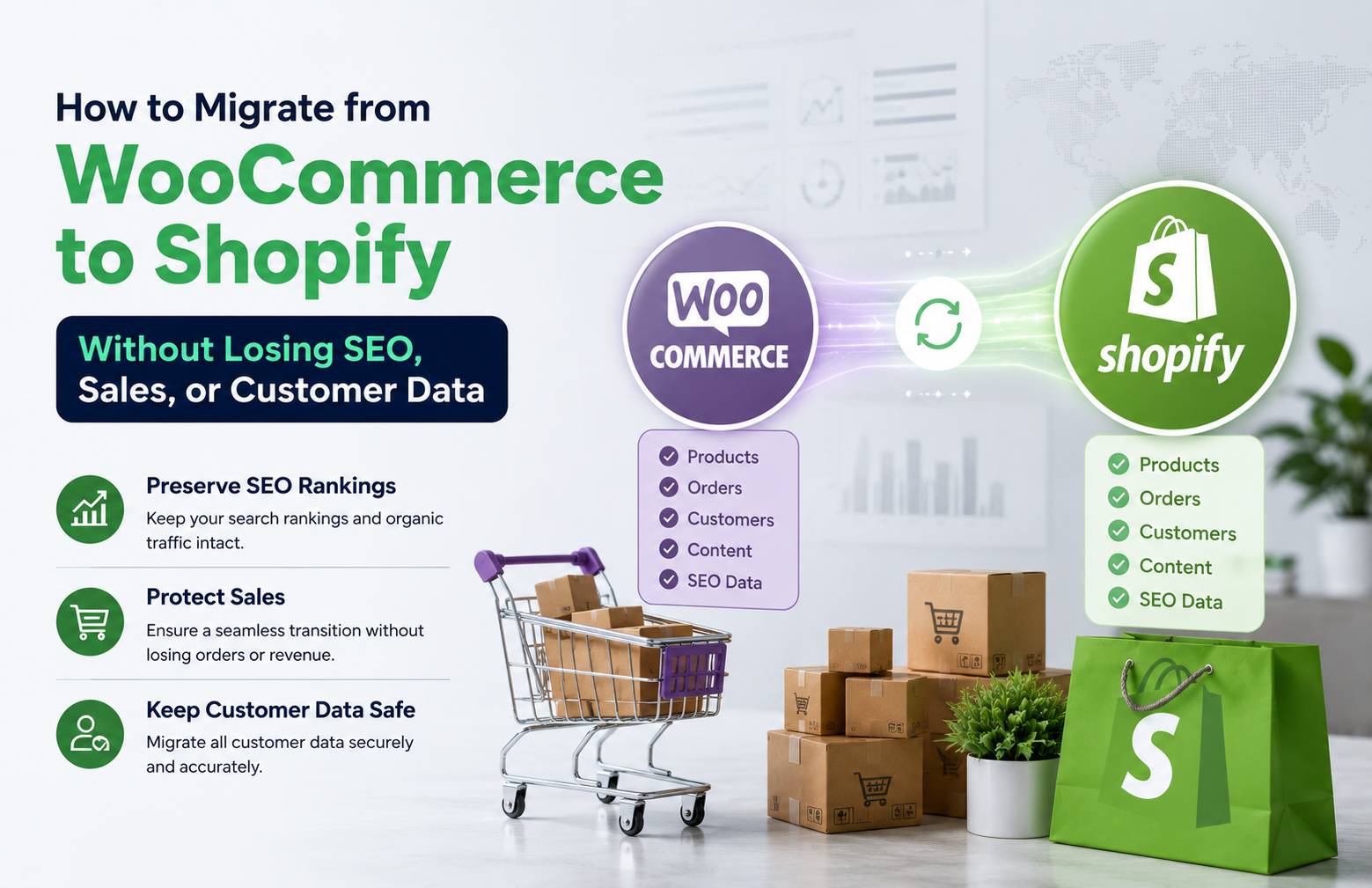
How to Migrate from WooCommerce to Shopify Without Losing SEO, Sales, or Customer Data


Migrating your online store from WooCommerce to Shopify can feel risky, especially when you rely on organic traffic and repeat customers. The good news is that with the right plan, a WooCommerce to Shopify migration can be smooth, secure, and profitable without sacrificing SEO, sales, or customer data.

This guide walks you step by step through how to migrate WooCommerce to Shopify the right way. You will learn how to protect your rankings, preserve order history, and keep your customers buying while you transition to a more scalable ecommerce platform.

Understanding When a WooCommerce to Shopify Migration Makes Sense

Before you move any data, it helps to understand why a WooCommerce to Shopify migration is worth the effort. Many store owners outgrow the flexibility of WordPress and want a more stable, hosted solution that reduces technical headaches and security worries.

Shopify offers a managed infrastructure, built-in payment options, and a large app ecosystem. When you migrate WooCommerce to Shopify, you are often looking for better performance, easier maintenance, and a platform that can handle growth without constant plugin updates and server tuning.

Key Benefits Of Moving From WooCommerce To Shopify

One of the biggest advantages of ecommerce platform migration is simplicity. Shopify centralizes hosting, security, backups, and updates, so your team can focus more on marketing and merchandising instead of technical troubleshooting.

Another benefit is scalability. As your traffic and product catalog grow, Shopify can typically handle spikes more reliably. This makes a WooCommerce to Shopify migration attractive for brands that run frequent campaigns, flash sales, or seasonal promotions.

Risks If You Migrate Without An SEO Strategy

Despite the benefits, a poorly planned WooCommerce to Shopify migration can damage your organic visibility. If URLs change without proper redirects, search engines may treat your Shopify store as a new site and drop your rankings temporarily or permanently.

There is also a risk of losing product metadata, structured data, and internal links. Without a clear WooCommerce to Shopify redirect plan, you might see 404 errors, lower crawl efficiency, and confused customers who land on broken pages instead of live products.

Pre-Migration SEO Audit And Planning

A successful WooCommerce to Shopify migration starts with a detailed SEO audit. This step helps you understand what is currently working so you can preserve it during the move. Skipping this stage often leads to traffic drops that could have been avoided.

Begin by documenting your top-performing URLs, categories, and blog posts. Identify which pages drive the most organic traffic and revenue. These are your priority assets and must be protected with precise WooCommerce to Shopify redirect mappings.

Creating A URL And Redirect Mapping Sheet

To avoid confusion later, build a spreadsheet that lists every important WooCommerce URL and its future Shopify equivalent. Include product pages, category archives, blog posts, and any landing pages used for campaigns or ads.

This mapping sheet becomes the backbone of your WooCommerce to Shopify redirect strategy. When the new store goes live, you will use it to implement 301 redirects so that search engines and users are automatically guided from old URLs to their new locations.

Backing Up Data Before Ecommerce Platform Migration

Before you export WooCommerce products to Shopify, take full backups of your WordPress database and files. This ensures you can restore your store if anything goes wrong during the migration process or testing phase.

Backups should include products, customers, orders, coupons, and media files. A careful ecommerce platform migration always keeps a safety net, so you never lose critical customer data or order history while experimenting with new configurations.

How To Export WooCommerce Products To Shopify

Once your plan is ready, you can start moving actual store data. The core of any WooCommerce to Shopify migration is transferring products, collections, and related content accurately. This is where many store owners rely on migration apps or professional services.

Shopify supports CSV imports and dedicated migration tools that connect directly to WooCommerce. Whichever method you choose, the goal is to export WooCommerce products to Shopify with correct titles, descriptions, prices, variants, and images.

Product, Category, And Media Migration Essentials

When you migrate WooCommerce to Shopify, pay close attention to product handles and collections. These influence your final URL structure and can affect SEO. Try to keep slugs similar to your old URLs when possible to simplify redirect mapping.

Also make sure that product images, galleries, and alt text transfer correctly. Image optimization is a ranking factor and a user experience signal. During ecommerce platform migration, this is a good time to compress large images and standardize naming conventions.

WooCommerce Order History Shopify Import

Preserving customer trust means keeping their purchase records intact. A proper WooCommerce order history Shopify import allows you to maintain accurate reporting, customer lifetime value calculations, and personalized marketing campaigns.

Many migration tools support importing past orders and customer accounts. After the WooCommerce order history Shopify import is complete, test a sample of accounts to confirm that addresses, order totals, and payment statuses match your original WooCommerce data.

Implementing WooCommerce To Shopify Redirects Without Losing SEO

With products and content in place, the next critical step is implementing your WooCommerce to Shopify redirect plan. This is where you protect your SEO equity and ensure that visitors from search engines land on relevant pages instead of dead ends.

Use 301 redirects for all important URLs listed in your mapping sheet. On Shopify, you can configure redirects in the admin panel or via bulk upload. Every old WooCommerce URL should point to the closest matching Shopify page, not just the homepage.

Technical SEO Checks After Migration

After your WooCommerce to Shopify migration goes live, run a full technical SEO audit. Crawl the new site to identify 404 errors, redirect chains, and missing metadata. Fixing these quickly helps search engines understand the new structure faster.

Also verify that canonical tags, XML sitemaps, and robots.txt are correctly configured. Submit updated sitemaps in Google Search Console and monitor indexing coverage. This post-launch phase is essential to stabilizing rankings and preventing long-term traffic loss.

Maintaining Sales And Customer Experience During Migration

Protecting SEO is only part of a successful WooCommerce to Shopify migration. You also need to maintain sales momentum and a seamless customer experience while the transition happens in the background.

Plan your migration timeline during a lower-traffic period if possible. Communicate transparently with customers about any brief maintenance windows. A clear message on your site and email updates can reduce confusion and support tickets.

Testing Checkout, Payments, And Integrations

Before fully switching traffic to Shopify, thoroughly test the checkout flow, payment gateways, shipping rules, and tax settings. A migration that looks perfect on the surface can still fail if customers cannot complete purchases smoothly.

Run test orders with different payment methods and shipping zones. Confirm that transactional emails, such as order confirmations and shipping notifications, are sent correctly. This testing phase ensures your WooCommerce to Shopify migration does not interrupt revenue.

When To Partner With A Shopify Website Development Agency

While small stores can sometimes handle a WooCommerce to Shopify migration on their own, larger or more complex sites often benefit from expert support. A specialized Shopify website development agency can manage both technical and strategic aspects.

These teams can customize themes, optimize performance, and handle advanced integrations such as ERP, CRM, and marketing automation tools. They can also fine tune your WooCommerce to Shopify redirect setup and on page SEO to match or outperform your previous results.

What To Look For In A Migration Partner

When evaluating agencies for ecommerce platform migration, ask about their previous WooCommerce to Shopify projects. Look for case studies that show stable or improved SEO, successful order history imports, and measurable revenue growth after launch.

Also consider their approach to communication and documentation. A reliable partner will provide clear timelines, risk assessments, and post launch support. This reduces stress and helps you stay focused on marketing and operations while experts handle the technical migration.

Conclusion: Turning Migration Into An Opportunity For Growth

A carefully planned WooCommerce to Shopify migration does not have to mean lost rankings, broken links, or frustrated customers. By auditing your current site, mapping URLs, exporting data accurately, and implementing precise redirects, you can protect your SEO while upgrading your ecommerce platform.

With the right strategy and, when needed, support from specialists like HRL Infotechs, your new Shopify store can load faster, convert better, and provide a stronger foundation for long term growth in the competitive Indian ecommerce market.

Amazon Vine India Now Live (2026): Complete Guide for Indian Sellers to Get Authentic Reviews


Amazon Vine India is finally live, and this changes the way Indian sellers can build trust, boost conversions, and get authentic product reviews on Amazon.in. With competition rising across every category, early adoption of Amazon Vine Program India can give you a serious edge over other sellers.

This complete guide breaks down how Amazon Vine India 2026 works, who can join, how to enroll, and how to use it strategically for long-term growth. If you are looking for reliable ways to get genuine Amazon Vine reviews and strengthen your brand presence, this guide is built for you.

What Is Amazon Vine India And Why It Matters For Sellers

Amazon Vine India is a review generation program where trusted reviewers, called Vine Voices, receive your products for free and share detailed, unbiased feedback on Amazon.in. These Amazon Vine reviews are clearly marked, which helps shoppers identify them as credible and trustworthy.

The core purpose of Amazon Vine Program India is to help high-potential products get early traction with authentic Amazon reviews for sellers. Instead of chasing random buyers for feedback, you leverage a structured system that encourages in-depth, experience-based reviews from verified reviewers.

Search Intent Behind Amazon Vine India 2026 Queries

Most sellers searching for Amazon Vine India 2026 want practical, actionable information. They are not just curious about what the program is; they want to know how to get reviews on Amazon India in a compliant and scalable way without risking account health.

At the same time, there is a strong commercial intent. Sellers are evaluating whether Amazon Vine for Indian sellers is worth the cost, how it compares to other review strategies, and how it fits into their broader Amazon marketing and growth plan.

Eligibility Criteria For Amazon Vine Program India

Before you plan your Amazon Vine enrollment India strategy, you need to confirm whether your ASINs qualify. Amazon has set specific eligibility rules to maintain quality and protect the customer experience on the marketplace.

In most cases, the product must be brand registered, have a buy box eligible offer, and meet certain stock and compliance conditions. Understanding these requirements upfront saves time and helps you prioritize which listings to enroll first.

Basic Product And Account Requirements

To participate in Amazon Vine India, your Amaozn seller account should be in good standing with no major policy violations. Products should be new, not used or refurbished, and must comply with all category-level and legal regulations in India.

Additionally, your listings should already be optimized with clear titles, bullet points, images, and A+ content where applicable. Since Amazon Vine reviews are based on real user experience, a strong product listing and SEO management approach ensures the right expectations are set before customers receive the product.

ASIN-Level Conditions For Enrollment

Not every ASIN is ideal for Amazon Vine enrollment India. Typically, products should have limited or no reviews, be recently launched or under-penetrated, and have sufficient inventory to fulfill Vine orders quickly.

Some sensitive or restricted categories may not be eligible for Amazon Vine India. It is wise to review Amazon’s latest policy documentation and prioritize ASINs with good margins, strong differentiation, and clear target audiences before enrolling.

Step-by-Step: How To Enroll In Amazon Vine India

Once you confirm eligibility, the next step is to understand how to enroll in Amazon Vine for Indian sellers. The process is handled through Seller Central and is designed to be self-service, but each step should be taken carefully to avoid errors.

Planning your Amazon Vine enrollment India as part of a broader launch or relaunch strategy can significantly improve your return on investment. Instead of enrolling random products, focus on hero SKUs or strategic categories where reviews will directly impact sales velocity.

Setting Up Your ASINs For Vine Enrollment

Before you click enroll, review your product detail page thoroughly. Ensure your title is keyword-rich yet natural, your bullet points answer common buyer questions, and your images show real use cases. This is where strong Amazon product listing and SEO management becomes critical.

Next, check inventory levels and pricing. Vine Voices will receive the product for free, but customers browsing later will compare your offer with competitors. A competitive price, Prime eligibility, and fast shipping help convert the traffic that Amazon Vine India brings to your listing.

Completing The Enrollment Workflow

Inside Seller Central, navigate to the Amazon Vine section, select the eligible ASIN, and choose the number of units you are willing to provide. This quantity should align with your inventory planning and marketing goals for that product.

After confirmation, Amazon will make the product available to Vine Voices. As they claim and receive units, reviews will start appearing over time. It is important to monitor performance, track review quality, and adjust your broader Amazon marketing strategy based on the insights you receive.

How Amazon Vine India Helps You Get Authentic Reviews

One of the biggest challenges for new and growing brands is figuring out how to get reviews on Amazon India without violating policies. Amazon Vine India solves this by connecting your products with experienced reviewers who are incentivized only to share honest feedback, not positive ratings.

These Amazon Vine reviews are often more detailed than regular customer feedback. They may highlight strengths, weaknesses, and use cases that you can later incorporate into your listing copy, product packaging, or even future product improvements.

Impact On Conversion Rate And Sales Velocity

Shoppers on Amazon.in rely heavily on reviews to make purchase decisions. When they see a mix of detailed Amazon Vine reviews and organic customer feedback, their confidence in your product increases, especially if the reviews address real-life usage and quality.

As your review count and average rating improve, your conversion rate usually rises. This can lead to better organic ranking, stronger ad performance, and more stable sales velocity, especially in competitive categories where social proof is a key differentiator.

Building Long-Term Brand Trust With Authentic Feedback

Beyond short-term sales, Amazon Vine India supports long-term brand building. Authentic Amazon reviews for sellers show potential buyers that your brand is transparent, confident, and open to feedback, even when it is critical.

Over time, this transparency builds trust and repeat purchase behavior. When combined with strong customer service, quality control, and consistent branding, Amazon Vine Program India becomes a powerful pillar of your overall marketplace reputation strategy.

Integrating Amazon Vine India Into A Broader Growth Strategy

While Amazon Vine India is powerful, it should not operate in isolation. The most successful brands integrate it with advertising, pricing, catalog expansion, and external traffic strategies to create a complete growth engine on Amazon.in.

For example, you can time your Amazon Vine enrollment India with a product launch, followed by sponsored ads and deals. As reviews start to appear, your ads convert better, your organic ranking improves, and your overall return on ad spend becomes healthier.

Role Of Amazon Marketing And Account Management Services

Many sellers partner with an Amazon marketing agency for sellers growth to manage complex activities like Vine, advertising, catalog optimization, and reporting. This allows them to focus on product development and supply chain while experts handle marketplace execution.

Professional Amazon account management services for sellers can help you identify the right ASINs for Amazon Vine India, optimize listings for maximum impact, and track performance metrics such as review velocity, keyword ranking, and conversion rates.

Best Practices To Maximize ROI From Amazon Vine India

To get the most from Amazon Vine India, treat it as an investment, not an experiment. Choose products with clear demand, strong differentiation, and enough margin to absorb the cost of free units and associated fees.

Some practical best practices include: enrolling early in the product lifecycle, ensuring flawless fulfillment, monitoring reviews for insights, and continuously improving your listing based on real customer feedback. When executed well, Amazon Vine for Indian sellers can become a repeatable growth lever.

Conclusion: Turning Amazon Vine India Into A Competitive Advantage

Amazon Vine India gives serious sellers a structured, policy-compliant path to build authentic review depth, improve conversion rates, and strengthen brand trust on Amazon.in. By understanding eligibility, planning enrollment strategically, and aligning it with your broader marketing efforts, you can turn reviews into a sustainable competitive advantage.

If you want expert support in planning Amazon Vine enrollment India, optimizing product listings, and scaling performance across categories, partnering with a specialized marketplace growth team like HRL Infotechs can help you move faster, avoid costly mistakes, and unlock the full potential of the Amazon Vine Program India.

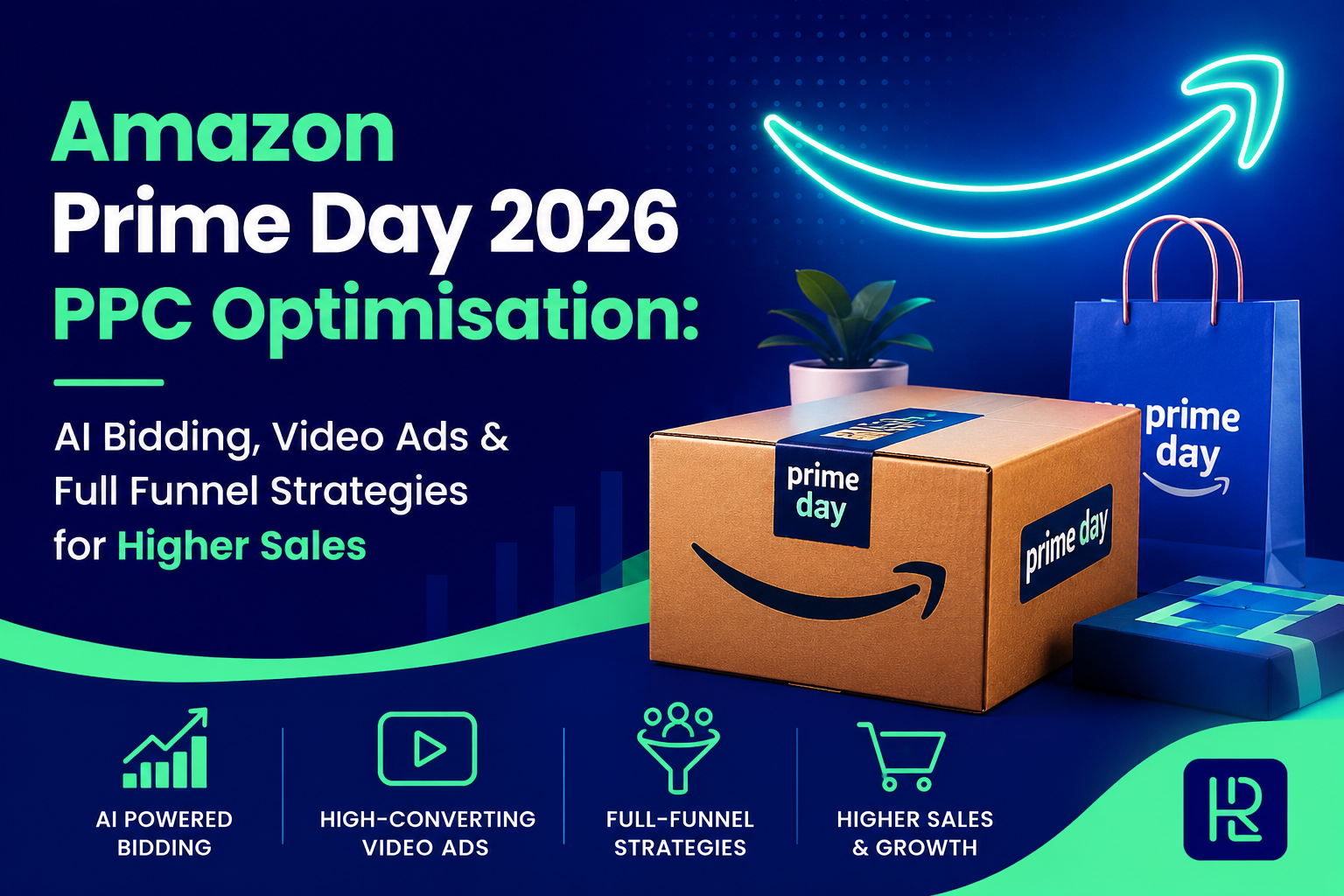
Amazon Prime Day 2026 PPC Optimisation: AI Bidding, Video Ads & Full Funnel Strategies for Higher Sales


Amazon Prime Day presents one of the biggest opportunities for brands to accelerate revenue, increase product visibility, and acquire new customers. However, the growing competition on Amazon makes it increasingly difficult for sellers to stand out during this high traffic shopping event. Simply running standard campaigns is no longer enough.

To achieve maximum results, brands need a data driven Amazon Prime Day PPC Optimization strategy that combines AI powered bidding, high converting video ads, and full funnel advertising. At our agency, we help brands prepare, optimise, and scale their Amazon advertising campaigns to drive profitable growth before, during, and after Prime Day.

Why Amazon Prime Day PPC Optimisation Is Critical for Success

Prime Day attracts millions of shoppers actively searching for deals, making it one of the most competitive advertising periods on Amazon. Brands that fail to optimise their campaigns often experience rising advertising costs, lower visibility, and missed sales opportunities.

Our Amazon Prime Day PPC Services are designed to help brands capture high intent traffic while maintaining efficient advertising spend. Through strategic keyword targeting, bid optimisation, and campaign monitoring, we ensure your products remain visible when purchase intent is at its highest.

Common Prime Day Advertising Challenges

  • Increased keyword competition
  • Rising cost per click
  • Budget depletion during peak traffic hours
  • Lower conversion rates due to poor campaign structure
  • Missed opportunities from inadequate audience targeting

Using Amazon AI Bidding Strategy to Maximise Performance

Artificial intelligence has become a powerful tool for improving advertising efficiency on Amazon. An effective Amazon AI Bidding Strategy enables campaigns to adjust bids automatically based on customer behaviour, conversion probability, and market conditions.

Our team leverages advanced bidding strategies to ensure your advertising budget is allocated where it generates the highest return. Rather than relying on manual bid adjustments, AI driven optimisation helps maximise visibility during high converting periods while reducing unnecessary spend on low performing traffic.

By combining automation with expert campaign management, we help brands achieve stronger performance and better profitability throughout Prime Day.

Driving Engagement with Amazon Sponsored Brands Video Ads

Video advertising has become one of the most effective ways to attract attention and influence buying decisions on Amazon. Amazon Sponsored Brands Video Ads allow brands to showcase products in action, communicate unique selling points, and create a more engaging shopping experience.

Our creative and advertising specialists develop high performing video campaigns designed specifically for Prime Day audiences. These ads help increase click through rates, improve product awareness, and drive higher conversion rates compared to traditional ad formats.

Benefits of Sponsored Brands Video Ads

  • Increased shopper engagement
  • Higher click through rates
  • Better brand visibility
  • Improved conversion potential
  • Stronger product differentiation

When integrated into a broader Amazon Prime Day Marketing Strategy, video advertising becomes a powerful tool for generating sales and strengthening brand recognition.

Building a Full Funnel Amazon Prime Day Marketing Strategy

Many advertisers focus exclusively on bottom funnel conversions during Prime Day. While this approach can generate sales, it often limits overall growth potential. A successful Amazon Prime Day Marketing Strategy should target customers throughout the entire buying journey.

Our agency develops full funnel advertising frameworks that help brands build awareness, nurture consideration, and drive conversions. This approach allows businesses to engage shoppers before they are ready to purchase, creating stronger demand when Prime Day promotions go live.

Top Funnel Awareness Campaigns

We use Sponsored Brands campaigns, video advertising, and audience targeting to introduce products to relevant shoppers and expand brand reach.

Middle Funnel Consideration Campaigns

Our team implements audience remarketing and engagement strategies designed to nurture potential customers who have interacted with your brand but have not yet converted.

Bottom Funnel Conversion Campaigns

We focus on high intent keywords, competitor targeting, and conversion driven campaign structures to maximise sales during Prime Day.

This full funnel approach creates multiple touchpoints that increase purchase likelihood and improve overall advertising performance.

Our Amazon PPC Campaign Optimization Process

Effective Amazon PPC Campaign Optimization requires more than launching ads and monitoring performance. Success depends on continuous analysis, testing, and refinement throughout the campaign lifecycle.

Our optimisation process includes comprehensive keyword research, campaign segmentation, bid adjustments, search term analysis, and performance tracking. We identify opportunities to increase efficiency while eliminating wasted ad spend.

Key optimisation activities include:

  • Strategic keyword expansion
  • Negative keyword implementation
  • Budget allocation management
  • Bid optimisation based on performance
  • Placement analysis and adjustments
  • Conversion rate improvement recommendations

This proactive management approach ensures your campaigns remain competitive during Prime Day’s most critical sales periods.

Why Brands Choose Our Amazon PPC Management Services

Prime Day requires constant monitoring and rapid decision making. Managing campaigns internally can be challenging, particularly when competition and advertising costs fluctuate throughout the event.

Our Amazon PPC Management Services provide brands with access to experienced specialists who understand Amazon’s advertising ecosystem and evolving marketplace trends. We monitor performance in real time, make strategic adjustments, and implement proven growth strategies designed to maximise return on investment.

From campaign setup to post event analysis, our team focuses on delivering measurable results that support both short term sales objectives and long term brand growth.

Scale Faster with Amazon Full Account Management Services

Successful Prime Day performance depends on more than advertising alone. Product listings, inventory planning, pricing strategies, promotions, and account health all contribute to campaign success.

Our Amazon Full Account Management Services provide comprehensive support across every aspect of your Amazon business. By aligning advertising strategies with operational performance, we help brands create a seamless customer experience that drives stronger results during Prime Day and beyond.

Conclusion

Amazon Prime Day 2026 will be more competitive than ever, making strategic advertising essential for brands looking to maximise sales and profitability. Combining Amazon Prime Day PPC Optimization, Amazon AI Bidding Strategy, Amazon Sponsored Brands Video Ads, and a full funnel marketing approach creates the foundation for sustainable growth and long term success.

As a results driven Amazon Marketing Agency, we help brands unlock the full potential of Prime Day through advanced Amazon Prime Day Advertising solutions, expert Amazon PPC Management Services, and end to end Amazon Full Account Management Services designed to deliver measurable business growth.

Amazon Prime Day 2026 Trends: Top Seller Strategies, Winning Products & Key Updates


Amazon Prime Day 2026 is shaping up to be bigger, more competitive, and more data-driven than any previous event. For Indian Amazon sellers, this is not just a discount festival, but a make-or-break opportunity to scale revenue, rank higher, and win long-term customers across key categories.

Understanding the latest Amazon Prime Day 2026 Trends, buyer behaviour, and marketplace updates will help you choose winning products, plan inventory, optimise SEO, and build a powerful advertising strategy. With the right preparation, Prime Day can fuel your sales for the rest of the year, not just for two days.

Why Amazon Prime Day 2026 Trends Matter For Indian Sellers

Prime Day has evolved from a flash sale into a strategic growth engine. The top-performing brands are already aligning their catalog, pricing, and marketing around Amazon Prime Day 2026 Trends to capture intent-heavy shoppers who are ready to buy, not just browse.

For Indian sellers, this means treating Prime Day like a planned product launch. When you understand how to prepare for Amazon Prime Day 2026, you can position your listings to rank higher, convert faster, and keep momentum even after the event ends.

Dominant Search Intent Behind Prime Day 2026

The dominant search intent for Amazon Prime Day 2026 Trends is a mix of informational and commercial. Shoppers want to know which products are worth buying, while sellers want clear guidance on strategies, tools, and timelines to maximise sales.

Top-ranking pages focus on practical frameworks: how to prepare for Amazon Prime Day 2026, how to structure deals, and how to use Amazon marketing services for seller growth. Aligning your content and offers with this intent will help you attract both new and returning customers.

Key Categories And Buyer Behaviour Shifts

Electronics, home & kitchen, fashion, beauty, and smart devices continue to dominate Amazon Prime Day Deals 2026. However, there is a growing shift towards value-driven bundles, sustainable products, and niche problem-solving items.

Buyers are also more research-oriented. They compare reviews, check price history, and look for clear benefits. This makes listing quality, social proof, and transparent offers critical parts of your Prime Day 2026 seller strategies.

Prime Day 2026 Seller Strategies That Top Performers Use

Winning on Prime Day is no longer about random discounts. The best Prime Day 2026 seller strategies combine data, branding, and performance marketing to build a full-funnel approach that starts weeks before the event.

Instead of slashing prices across your entire catalog, focus on a curated set of hero products. Use these as traffic magnets, then cross-sell complementary items to increase average order value and long-term customer lifetime value.

Building A Conversion-Ready Product Portfolio

Start by identifying your best products for Prime Day 2026 based on past sales, margins, reviews, and seasonality. Prioritise SKUs that already have traction, then strengthen them with better creatives, A+ content, and keyword-rich copy.

Next, create bundles and variations that solve specific customer needs. For example, pair a high-demand item with an accessory at a compelling combined price. This approach aligns with Amazon Prime Day 2026 Trends that reward perceived value over pure discounting.

Pricing, Coupons, And Deal Mechanics

Prime Day shoppers are highly price-sensitive, but they also recognise genuine value. Use a layered approach: strategic discounts, stacked coupons, and limited-time lightning deals to create urgency without destroying margins.

Ensure your Amazon Prime Day Deals 2026 are clearly communicated in titles, bullets, and images. Highlight percentage savings, bundle benefits, and time limits. This clarity improves click-through rates and supports your overall Amazon Prime Day advertising strategy.

Amazon Prime Day Advertising Strategy For 2026

Advertising is one of the most critical levers for Prime Day success. As competition increases, a strong Amazon Prime Day advertising strategy can be the difference between getting buried and dominating your category.

Top-ranking brands use a mix of Sponsored Products, Sponsored Brands, and Sponsored Display campaigns. They start warming up audiences weeks before the event, then scale aggressively during peak traffic windows.

Pre-Prime Day Campaign Warm-Up

Two to three weeks before Prime Day, begin running campaigns to build visibility and gather data. Focus on high-intent keywords like Amazon Prime Day 2026 Trends, Prime Day 2026 seller strategies, and category-specific deal terms.

Use this period to test creatives, refine bids, and identify which search terms convert best. This data will guide your budget allocation during the actual event, ensuring your ads appear where buyers are most likely to purchase.

Scaling During The Event Window

During Prime Day itself, shift to a more aggressive bidding strategy on proven keywords. Protect your top-performing ASINs with branded and competitor campaigns, while continuing to target generic deal-focused searches.

Monitor performance in real time, adjusting bids, budgets, and placements. A flexible Amazon Prime Day advertising strategy helps you capture surges in traffic while avoiding overspending on low-converting terms.

Inventory Planning & SEO Optimization For Prime Day 2026

Even the best deals fail if you run out of stock or your listings are not discoverable. That is why Amazon Prime Day Inventory Planning & SEO optimization should be handled together, not in isolation.

Start by forecasting demand using past data, category trends, and current Amazon Prime Day 2026 Trends. Then align your FBA shipments, listing updates, and keyword strategy around that forecast.

Meeting Prime Day FBA Deadlines 2026

Missing Prime Day FBA Deadlines 2026 can instantly disqualify your products from the biggest traffic spike of the year. Plan your manufacturing, packaging, and logistics backwards from Amazon’s cut-off dates.

Build in buffer time for delays, quality checks, and labelling issues. Ensure that your high-priority SKUs are fully stocked in key fulfilment centres so that Prime customers across India experience fast, reliable delivery.

Listing SEO And Content Optimization

SEO is at the heart of how to prepare for Amazon Prime Day 2026. Optimise titles, bullet points, and descriptions with your focus keyword Amazon Prime Day 2026 Trends and relevant family keywords that match buyer intent.

Use clear, benefit-driven language, strong images, and A+ content to improve conversion rates. Higher conversion signals help your products rank better organically, which compounds the impact of your paid campaigns during Prime Day.

Storefront Optimization And Seller Account Management

As traffic surges during Prime Day, your brand storefront and account health become more visible than ever. Amazon primday deal storefront optimization ensures that visitors see a curated, on-brand experience instead of a random product grid.

Design your storefront around Prime Day 2026 themes: hero banners, featured deals, category sections, and clear navigation. This structure helps shoppers quickly find relevant offers and increases the chances of multi-item purchases.

Strengthening Amazon Prime Day Seller Account Management

Robust Amazon Prime Day Seller account managment is essential to avoid disruptions during the event. Keep your account health metrics strong by monitoring policy compliance, customer messages, and performance notifications.

Respond quickly to buyer queries, manage returns professionally, and resolve any listing or pricing flags before Prime Day begins. A stable account foundation supports your Prime Day 2026 seller strategies and protects your long-term marketplace presence.

Practical Prime Day 2026 Sales Tips For Indian Sellers

To translate strategy into action, focus on a simple execution checklist. This ensures that your Amazon Prime Day 2026 Trends insights turn into measurable sales growth rather than scattered efforts.

Combine product, pricing, advertising, and operations into one integrated plan. This holistic view will help you stay organised and responsive as conditions change during the event.

Actionable Checklist For Prime Day Success

Use the following practical Amazon Prime Day Sales Tips to guide your preparation and execution:

  • Shortlist best products for Prime Day 2026 based on data, margins, and reviews
  • Optimise listings for Amazon Prime Day 2026 Trends and related keywords
  • Confirm inventory levels and align with Prime Day FBA Deadlines 2026
  • Plan layered discounts, coupons, and lightning deals
  • Set up and test your Amazon Prime Day advertising strategy in advance
  • Design a focused Amazon Prime Day deal storefront optimization layout
  • Monitor Amazon Prime Day Seller account managment metrics daily

Review this checklist weekly in the lead-up to Prime Day. Small, consistent improvements in each area will compound into a significant performance boost once the event goes live.

Conclusion: Turn Prime Day 2026 Into A Long-Term Growth Engine

Amazon Prime Day 2026 Trends clearly show that success will favour sellers who plan early, optimise deeply, and execute with discipline. By aligning your catalog, inventory, SEO, and advertising, you can transform Prime Day from a short-term sales spike into a long-term growth engine.

If you want expert support with Amazon marketing services for seller growth, from strategy to execution, HRL Infotechs can help you design and implement a Prime Day blueprint tailored to the Indian marketplace and your specific business goals.

How Top Indian Sellers Are Scaling Faster with Amazon Business Bulk Orders


Many Indian sellers on Amazon reach a revenue plateau after some initial success with regular B2C orders. The real breakthrough often comes when they tap into Amazon B2B selling and start winning consistent bulk orders from businesses, institutions, and resellers across India.

By understanding how Amazon Business India for sellers actually works, and by aligning your catalog, pricing, and marketing to B2B demand, you can turn your existing Amazon presence into a powerful wholesale channel. Let’s explore how top Indian sellers are using Amazon Business bulk orders to scale faster and more profitably.

Why Amazon B2B Selling Is a Game Changer for Indian Sellers

Amazon B2B selling opens access to lakhs of registered business buyers who purchase in higher quantities and with greater frequency than typical retail customers. These buyers include offices, schools, hospitals, retailers, manufacturers, and startups looking for reliable suppliers on Amazon India.

Unlike standard B2C orders, bulk orders often have higher average order value, better repeat potential, and more predictable demand. This makes Amazon Business opportunities for wholesalers especially attractive, as they can plan inventory, negotiate better rates with suppliers, and build long-term relationships with business customers.

Understanding Amazon Business India For Sellers

To leverage Amazon B2B selling effectively, you first need to understand how Amazon Business India for sellers is structured. When you enable a Business account and B2B features, your listings become visible to business buyers with special pricing, quantity discounts, and tax benefits.

Business customers can filter for Business-only offers, GST-compliant invoices, and bulk quantity options. If your catalog is optimized for these filters, you stand a much better chance of appearing in front of high-intent buyers searching for how to get bulk orders on Amazon India.

Key Benefits Of Amazon Business Account For Sellers

The benefits of Amazon Business account for sellers go beyond just visibility. You gain access to tools designed specifically for B2B selling strategies for Amazon India, helping you stand out in competitive categories.

Some of the most impactful benefits include:

  • Ability to set Business-only pricing and quantity-based discounts
  • Access to business analytics and purchase patterns
  • Eligibility for bulk purchase recommendations and B2B badges
  • Better trust with buyers through GST-compliant invoicing

How Business Buyers Search And Compare Sellers

Business buyers usually search with clear intent, often including terms like bulk, wholesale, or pack of in their queries. They compare sellers based on price per unit, delivery timelines, ratings, and invoice compliance rather than just lowest price alone.

When planning your Amazon seller growth strategy, it is important to study how these buyers behave in your category. Look at top listings, analyze their pack sizes, and observe how they structure titles and bullet points to attract bulk buyers.

How To Sell Products In Bulk On Amazon India Effectively

Many sellers ask how to sell products in bulk on Amazon and assume it is only about offering larger quantities. In reality, success with Amazon B2B selling requires a combination of catalog design, pricing logic, and operational readiness.

To start, identify SKUs that already have steady B2C demand and can logically be sold in multipacks or cartons. Then, create separate B2B-friendly listings or variations that clearly communicate value for business buyers.

Optimizing Listings For Bulk And Wholesale Buyers

Listing optimization is one of the best ways to sell wholesale on Amazon India. Your titles, images, and bullet points must clearly highlight pack size, per-unit cost, and suitability for business use, such as office supplies, resale, or institutional consumption.

Consider these optimization tips for Amazon B2B selling:

  • Include terms like bulk pack, wholesale, or value pack where relevant
  • Mention carton quantity and total units clearly in the title and bullets
  • Show usage scenarios for offices, retailers, or facilities in the description
  • Highlight GST invoice availability and any compliance certifications

Pricing And Quantity Discount Strategies

Pricing strategy is central to how to get bulk orders on Amazon India. Business buyers expect better per-unit pricing at higher quantities, but they also value reliability and service. Your goal is to balance margins with attractive discounts.

Use Business Pricing and Quantity Discounts to set tiered offers, such as lower rates for 10, 25, or 50 units. This structure encourages larger orders and helps you forecast demand, which is crucial for building a sustainable Amazon seller growth strategy.

Practical B2B Selling Strategies For Amazon India

Once your catalog is B2B-ready, you need a clear action plan to drive visibility and conversions. Effective B2B selling strategies for Amazon India combine organic optimization, paid visibility, and strong account health.

Instead of relying only on organic traffic, many top sellers invest in targeted advertising and structured promotions to reach decision-makers who are actively searching for bulk solutions in their category.

Using Advertising And Promotions To Attract Bulk Buyers

Sponsored Products and Sponsored Brands can be tailored to highlight your bulk and wholesale listings. When planned correctly, these campaigns help you appear for high-intent searches related to how to sell products in bulk on Amazon and category-specific B2B queries.

Promotions like percentage-off deals on higher quantities, business-only coupons, and limited-time bulk discounts can further push buyers to place larger orders. The key is to track performance and refine campaigns based on which keywords and placements drive the most profitable bulk orders.

Improving Operations To Handle Large Orders Smoothly

Winning bulk orders is only half the battle; fulfilling them reliably is what keeps business buyers coming back. Ensure your inventory planning, packaging, and logistics can handle sudden spikes in order volume without delays or cancellations.

Many successful B2B sellers use a mix of Fulfilment by Amazon and self-fulfilment, depending on product type and margins. Clear communication on handling times, packaging standards, and replacement policies builds trust and supports long-term B2B relationships.

Leveraging External Support For Faster B2B Growth

As competition grows, many sellers look for expert support to accelerate Amazon B2B selling performance. This is where partnering with an experienced amazon marketing agency or specialized amazon account management services can make a measurable difference.

These partners help refine catalog strategy, optimize advertising, and maintain strong account health, so you can focus on sourcing and operations. For sellers who are serious about scaling bulk orders, this external expertise often shortens the learning curve significantly.

Role Of Amazon Marketing And Account Management Services

A capable amazon marketing agency will analyze your category, identify Amazon Business opportunities for wholesalers, and design campaigns that specifically target B2B search behavior. They align keyword strategy with bulk and wholesale intent, not just retail traffic.

Meanwhile, amazon account management services monitor pricing, stock levels, policy compliance, and performance metrics. This proactive approach helps protect your visibility in search results and reduces the risk of disruptions that could affect large business customers.

Actionable Amazon India Seller Tips To Start Getting Bulk Orders

To move from theory to execution, it helps to follow a simple checklist. These Amazon India seller tips are designed to get you started quickly while keeping long-term scalability in mind.

Begin with a focused set of SKUs, test your approach, and then expand based on data. This controlled method reduces risk while still allowing you to tap into the growing demand for Amazon B2B selling in India.

Quick Checklist To Launch Or Improve B2B Selling

Use the following steps as a practical roadmap for how to get bulk orders on Amazon India and grow them consistently over time.

Key actions include:

  • Enable Amazon Business features and verify GST compliance
  • Identify high-potential SKUs and create bulk or wholesale variations
  • Optimize titles, bullets, and images for business and bulk intent
  • Set business pricing and quantity discounts with clear margins
  • Launch targeted ads focusing on B2B and bulk-related keywords
  • Monitor performance, reviews, and repeat purchase patterns

Conclusion: Turning Amazon B2B Selling Into A Scalable Growth Engine

Scaling faster with Amazon Business bulk orders is not reserved for a few large brands. Any disciplined seller who understands how to sell products in bulk on Amazon, optimizes for business buyers, and maintains strong operations can build a reliable B2B revenue stream.

By combining smart catalog planning, competitive yet sustainable pricing, and expert guidance from partners like HRL Infotechs, Indian sellers can transform Amazon B2B selling into a long-term growth engine that attracts repeat business buyers across the country.

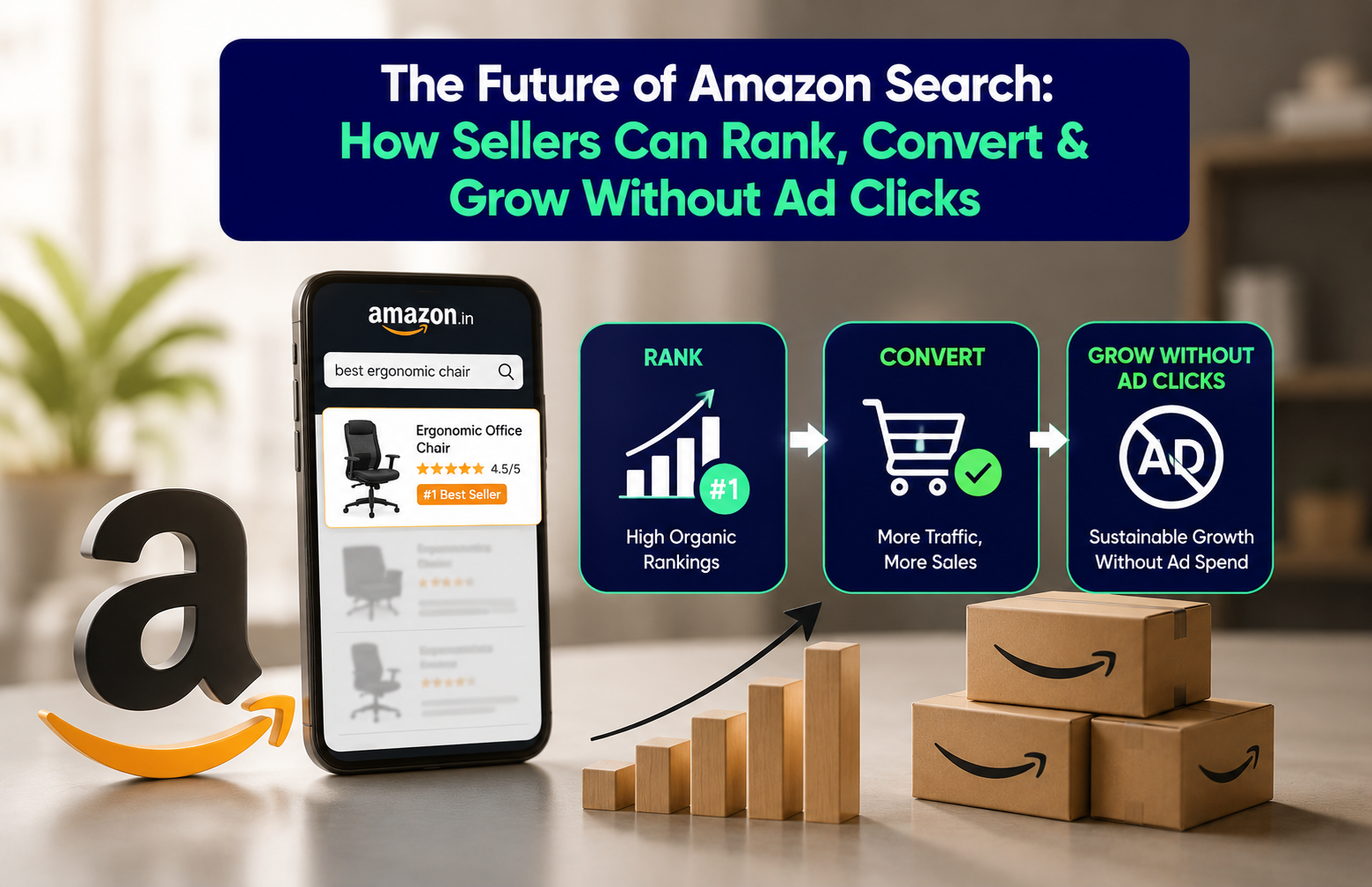
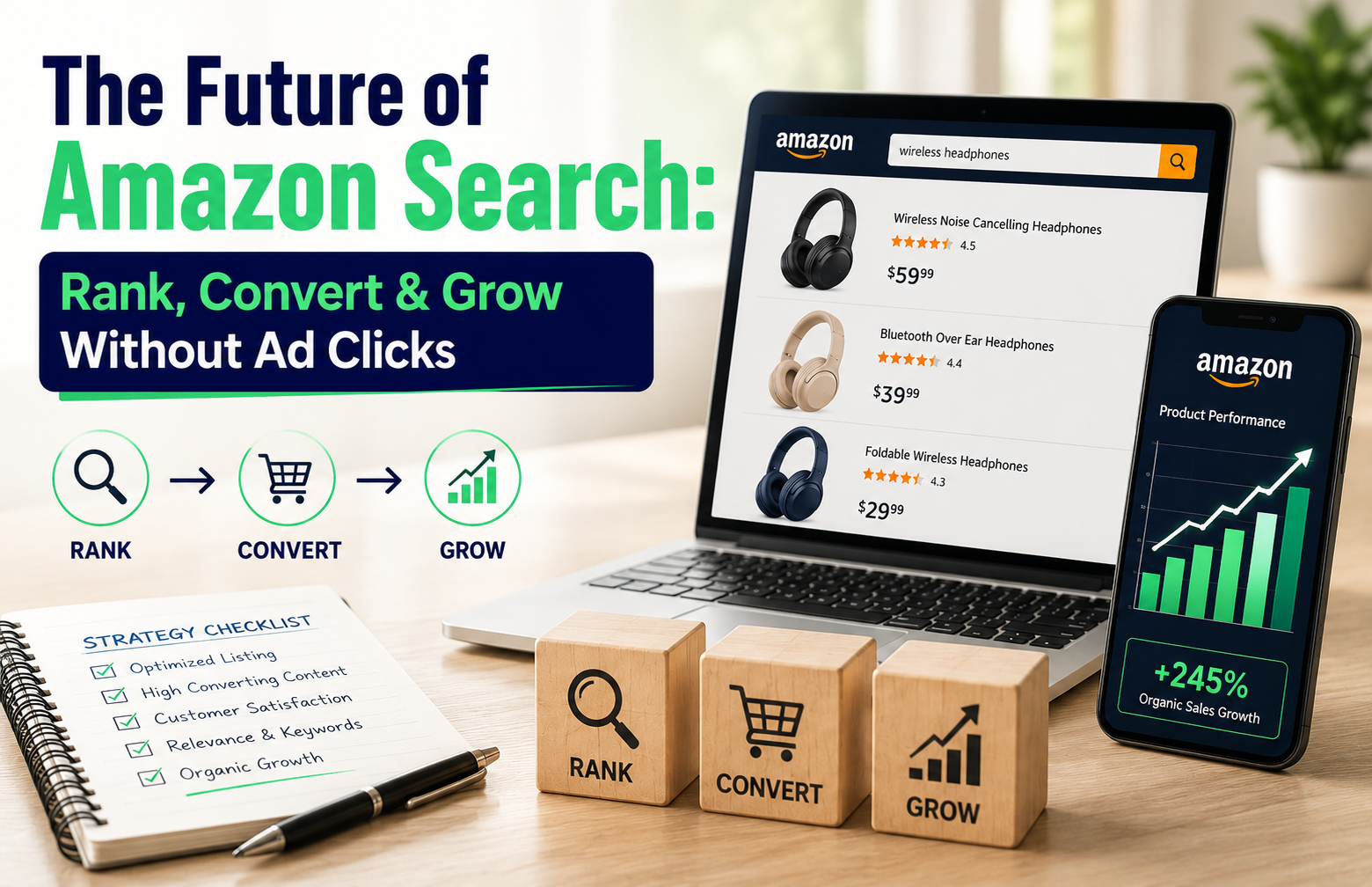
The Future of Amazon Search: How Sellers Can Rank, Convert & Grow Without Ad Clicks


Shoppers on Amazon are searching, comparing and deciding faster than ever. Many of them never click on ads or even scroll very far. They scan what appears first, read key details, check reviews and buy. This new behaviour is driving a powerful shift toward amazon zero click search, where winning the first glance matters more than ever.

For Indian sellers, this shift is both a challenge and a massive opportunity. If you understand how to rank on Amazon without ads, how to align with Amazon organic ranking factors and how to turn impressions into conversions, you can grow profitably even when ad costs rise. This guide breaks down exactly how to do that.

Understanding Amazon Zero Click Search And Why It Matters

Amazon zero click search refers to buying journeys where shoppers get everything they need from the first screen of results. They see a product’s image, title, price, rating and key benefits, then decide to purchase or shortlist without exploring many other listings or sponsored ads.

This behaviour is growing because customers trust Amazon’s organic ranking and rely on visual cues. For sellers, that means your product must be highly visible, instantly clear and strongly persuasive right from the search results page, not only on the product detail page.

Dominant Search Intent: High-Intent, Research-Driven Buyers

Most searches that trigger amazon zero click search are high-intent Amazon keywords. Shoppers already know what they want, such as a specific size, feature, material or use case. They are comparing options, not casually browsing, so relevance and clarity are critical.

To capture this intent, you need a focused amazon brand growth strategy. That includes mapping long tail queries, aligning your content with buyer language and ensuring your offer is clearly better than competing listings on the first page, especially in India’s price-sensitive but quality-conscious market.

Core Amazon Organic Ranking Factors In A Zero Click World

Amazon’s algorithm is designed to maximise revenue and customer satisfaction. In a zero click ecommerce search environment, the core amazon organic ranking factors become even more important, because the system must quickly identify which products deserve top visibility.

While the exact formula is secret, performance data from top sellers shows that the following elements have the strongest impact on how to rank on Amazon without ads and with lower ad dependency over time.

Relevance: Keywords, Category And Listing Structure

Relevance starts with how precisely your listing matches the search query. Amazon uses your title, bullet points, description, backend keywords and category to decide if your product deserves to appear for a term like amazon long tail keywords or a very specific product phrase.

To improve relevance, research high intent Amazon keywords that match your product’s real strengths. Integrate them naturally into titles and bullets, and use backend fields for variations and synonyms. This helps you show up for more zero click ecommerce search journeys without keyword stuffing.

Performance: Click-Through Rate, Conversion And Sales Velocity

Once you appear in search, Amazon tracks how shoppers respond. High click-through rate, strong conversion rate and consistent sales velocity signal that your product satisfies demand. These signals are central amazon organic ranking factors and directly influence your future visibility.

Improving images, pricing, reviews and social proof can significantly lift performance. Over time, better performance allows you to rely less on Amazon PPC vs organic ranking, because organic placements become strong enough to generate stable sales even when ad budgets are controlled.

Customer Experience: Reviews, Returns And Content Clarity

Amazon wants happy customers who keep buying. Positive reviews, low return rates and clear, accurate content all feed into that goal. Listings that overpromise or mislead may get clicks but will struggle to sustain organic rank in the long run.

Focus on honest benefit-driven copy, realistic images and transparent details. This approach not only supports amazon conversion rate optimization but also builds long-term trust, which is vital for brand growth in India’s competitive marketplaces.

Advanced Amazon Listing Optimization For Zero Click Wins

To truly benefit from amazon zero click search, you must treat your search result snippet as a mini landing page. The title, main image, price, rating and badges together must answer the buyer’s key questions and push them to click or buy.

Amazon listing optimization services and expert guidance can help you refine every element, but you can start with a structured approach that mirrors what top-ranking competitors are already doing in your category.

Titles And Images That Capture High-Intent Shoppers

Your title should combine clarity, benefits and amazon long tail keywords. Instead of stuffing every possible phrase, focus on the 2 or 3 most important attributes buyers care about, such as size, material, use case or compatibility, along with the core product keyword.

For images, invest in a clean, high-resolution main image that stands out on mobile. Support it with secondary images that show use cases, scale, key features and comparison shots. Strong visuals are often the deciding factor in amazon zero click search outcomes.

Bullet Points, A+ Content And Conversion Triggers

Bullet points should quickly communicate benefits, not just features. Use simple language, short phrases and scannable formatting. Address objections like durability, warranty, compatibility and after-sales support to reassure buyers before they even reach the detail page.

Enhanced Amazon A+ Content design can further support amazon conversion rate optimization by telling a clear brand story, comparing variants and highlighting proof points. While A+ does not always show in the search snippet, it improves the overall performance signals that feed organic ranking.

Balancing Amazon PPC Vs Organic Ranking For Sustainable Growth

Paid ads still matter, but the goal is to use them strategically to boost organic visibility, not to depend on them forever. The healthiest accounts use Amazon PPC to generate early sales and data, then gradually shift focus to organic performance as rankings improve.

In practice, this means targeting high intent Amazon keywords with sponsored campaigns, monitoring which terms convert best and then doubling down on those terms in your listing content. Over time, this approach supports how to rank on Amazon without ads dominating your budget.

Using PPC Data To Strengthen Zero Click Ecommerce Search

Your search term reports are a goldmine for discovering amazon long tail keywords that real customers use. Many of these phrases have lower competition but very strong buying intent, making them perfect for amazon zero click search optimisation.

Identify phrases with strong conversion and reasonable cost, then integrate them into titles, bullets and backend fields. This closes the loop between Amazon PPC vs organic ranking and helps your listing earn more free, high-quality traffic.

Why Indian Sellers Need Pro-Level Amazon Account Management Services

Managing catalog health, pricing, inventory, ads and content together is complex, especially when you are scaling across multiple categories or marketplaces. This is where specialised Amazon account management services can create a real competitive edge.

An experienced amazon seo agency or amazon marketing agency in India understands local buyer behaviour, category trends and compliance requirements. They can coordinate listing optimisation, review generation, pricing tests and advertising so that every action supports your amazon brand growth strategy.

Key Outcomes Of Strategic Amazon Product Discoverability

When all these elements work together, your products become easier to find, easier to understand and easier to trust. That is the foundation of strong Amazon product discoverability and sustainable growth in a zero click environment.

Over time, you should see higher organic rankings, better conversion rates, lower ad dependency and more predictable revenue. These are the exact outcomes that top-ranking sellers focus on, and they are achievable with a disciplined, data-driven approach.

Conclusion: Turning Zero Click Behaviour Into A Growth Engine

Zero click behaviour on Amazon is not a threat to sellers who understand how the platform thinks. By aligning with amazon organic ranking factors, optimising for high-intent Amazon keywords and treating every search result impression as a conversion opportunity, you can build a resilient, profitable presence.

If you want expert support in mastering amazon zero click search, from listing optimisation and conversion rate improvements to full-funnel strategy, partnering with HRL Infotechs can help you move from ad-dependent sales to sustainable organic growth in the Indian market.

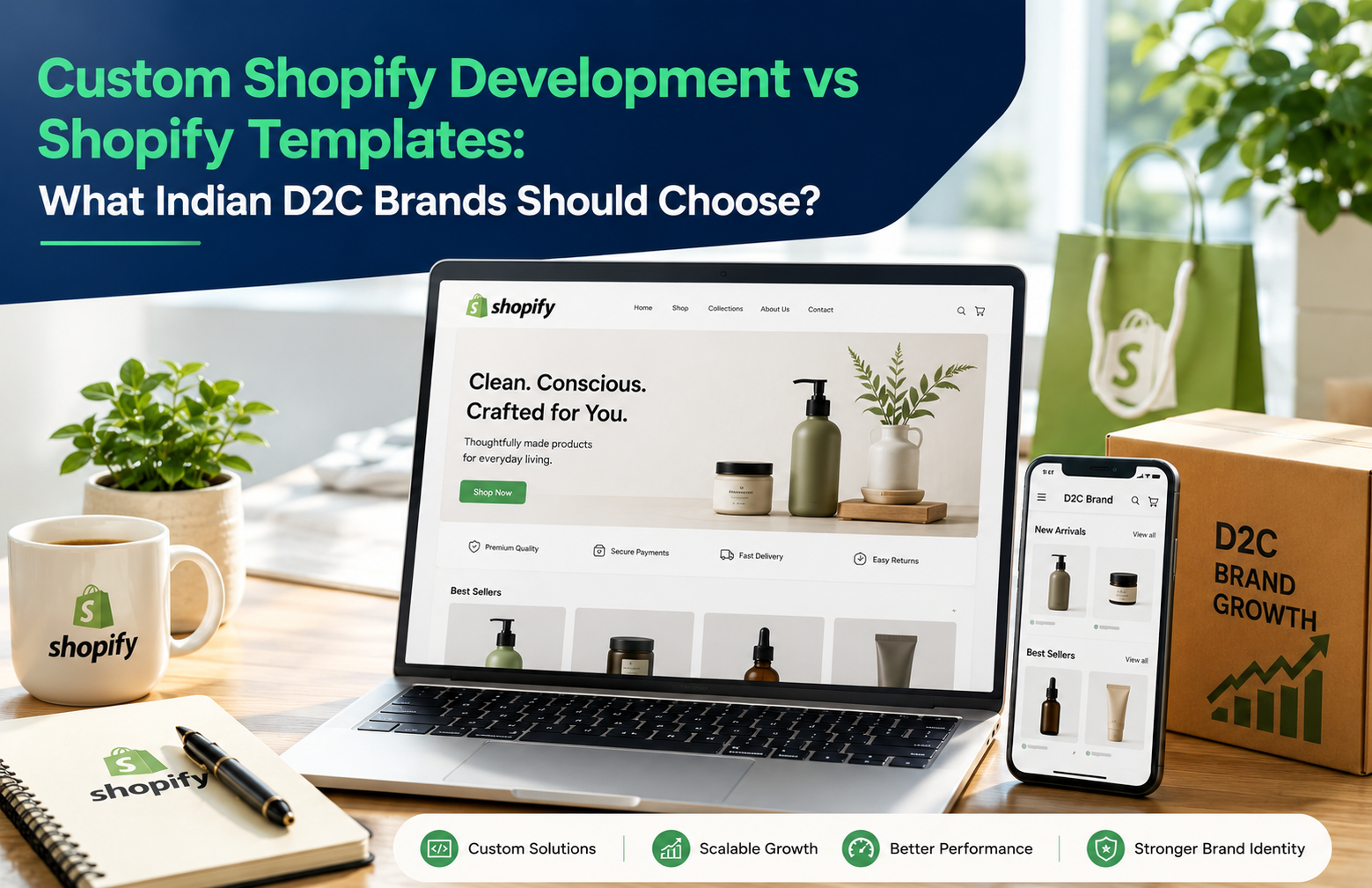
Custom Shopify Development vs Shopify Templates: What Indian D2C Brands Should Choose?


Indian D2C brands are growing faster than ever across categories like fashion, skincare, wellness, jewellery, electronics, and home decor. As competition increases, having a Shopify store is no longer enough. The real difference comes from how the store performs, how customers experience the brand, and how easily the business can scale in the future.

One of the most common questions growing ecommerce brands ask is whether they should use a Shopify template or invest in custom Shopify development.

Both options can work, but they serve different business goals. Choosing the right one can directly impact conversions, customer retention, SEO performance, and long-term growth.

Understanding Shopify Templates

Shopify templates are pre-designed themes that help businesses launch ecommerce stores quickly. These themes already include layouts, product pages, navigation systems, and standard ecommerce functionality.

For startups or businesses entering ecommerce for the first time, templates often seem like the easiest option because they reduce development time and initial investment.

Shopify templates usually include:

  • Ready-made store layouts
  • Mobile responsive designs
  • Product and collection pages
  • Basic customisation settings
  • Standard checkout experiences
  • Built-in e-commerce features

Templates are useful for businesses that want a faster launch without investing heavily in development during the early stage.

Advantages of Shopify Templates

Faster Launch Process

Templates help businesses go live quickly. Instead of building everything from scratch, brands can customise an existing design and start selling faster.

Lower Initial Cost

For businesses with smaller budgets, templates are often more affordable than custom development.

Beginner Friendly Setup

Most Shopify themes are designed for ease of use, making them suitable for founders with limited technical knowledge.

Basic Ecommerce Features

Templates already support essential ecommerce functions such as shopping carts, payment gateways, and product management.

Limitations of Shopify Templates

While templates provide convenience, growing D2C brands often face several challenges as operations expand.

Limited Brand Differentiation

Many businesses use the same popular Shopify themes. As a result, stores can look visually similar, making it difficult for brands to stand out in competitive markets.

For D2C brands, brand identity plays a major role in customer trust and repeat purchases. A generic-looking store may reduce long-term brand recall.

Restricted Customisation

Templates work well for standard ecommerce setups, but limitations become noticeable when brands need advanced functionality such as:

  • Subscription systems
  • Interactive product pages
  • Personalised customer journeys
  • Custom checkout flows
  • Advanced filtering
  • Product recommendation quizzes
  • Region-specific experiences

Adding these features often requires multiple third-party apps, which can increase complexity and reduce website performance.

Website Performance Issues

Many templates contain unnecessary scripts and features that businesses may never use. This extra code can slow down websites and negatively impact:

  • Mobile experience
  • SEO rankings
  • User engagement
  • Conversion rates
  • Core Web Vitals

A slow ecommerce website can increase bounce rates and reduce customer trust.

Scalability Challenges

As businesses grow, they usually require better operational flexibility. Standard templates may struggle to support:

  • Large product catalogues
  • Advanced inventory management
  • Multi location fulfilment
  • ERP integrations
  • Customer segmentation
  • Omnichannel selling

This often forces brands to redesign or rebuild stores later.

What Is Custom Shopify Development?

Custom Shopify development involves building a store specifically around a brand’s business goals, customer behaviour, and operational requirements.

Instead of adapting the business to fit a theme, custom development creates an ecommerce experience tailored to the business itself.

Custom Shopify development may include:

  • Custom UI and UX design
  • Mobile first optimisation
  • Bespoke product pages
  • Advanced integrations
  • Performance optimisation
  • Custom checkout experiences
  • Personalised shopping journeys
  • Automation workflows
  • Multi-language functionality
  • API based integrations

For brands planning long-term growth, custom development often becomes a strategic investment rather than just a design upgrade.

Why Indian D2C Brands Are Moving Towards Custom Development

The Indian ecommerce market has become highly competitive. Customers now expect smooth navigation, fast loading speeds, personalised recommendations, and seamless mobile experiences.

Standard templates may not always support these expectations effectively.

Better Customer Experience

Customer experience directly affects conversion rates and repeat purchases.

Custom Shopify development allows businesses to create shopping journeys based on how customers actually browse and buy products.

This can include:

  • Faster navigation
  • Personalised recommendations
  • Simplified checkout experiences
  • Mobile optimised interfaces
  • Dynamic filtering systems
  • Custom product discovery experiences

Better user experiences often lead to higher engagement and improved retention.

Stronger Brand Identity

D2C brands rely heavily on visual identity and storytelling.

Custom development allows businesses to create a unique store experience that reflects their brand positioning instead of relying on commonly used themes.

A strong brand identity can improve customer trust and help businesses stand out from competitors.

Improved Website Speed and SEO

Website performance plays a major role in ecommerce success.

Custom Shopify stores are typically lighter and more optimised because developers only include features the business actually needs.

This helps improve:

  • Website speed
  • Mobile usability
  • User experience
  • Search engine rankings
  • Core Web Vitals performance

Technical SEO improvements often contribute to better long-term organic visibility.

Advanced Integrations for Indian Businesses

Indian D2C brands frequently require integrations that many global templates do not fully support.

Custom development allows smoother integration with tools such as:

  • Razorpay
  • Shiprocket
  • WhatsApp Business API
  • CRM platforms
  • GST software
  • Inventory systems
  • Marketing automation tools
  • ERP software

These integrations help businesses streamline operations and improve efficiency.

Scalability for Future Growth

As ecommerce brands grow, they need infrastructure that can support increasing traffic and operational complexity.

Custom Shopify development provides scalability for:

  • Expanding product catalogues
  • Multi-city fulfilment
  • International selling
  • Subscription commerce
  • Advanced analytics
  • Customer segmentation
  • Omnichannel experiences

This flexibility helps brands grow without constantly rebuilding their ecommerce systems.

Which Option Is Better for Your Business?

The right choice depends on your current business stage and long-term goals.

Shopify Templates May Be Suitable If:

  • You are launching a new business
  • You need a faster store launch
  • Your budget is limited
  • Your operational requirements are simple
  • You are testing product market fit

Templates can provide a practical starting point for early-stage businesses.

Custom Shopify Development May Be Better If:

  • Your business is scaling rapidly
  • You want stronger brand differentiation
  • Customer experience is a priority
  • You need advanced features and integrations
  • You want long-term e-commerce scalability
  • SEO and performance matter significantly to your growth strategy

For established or growth-focused D2C brands, custom development often delivers stronger long-term value.

Why This Decision Impacts Long-Term Business Growth

Many businesses initially focus only on launching quickly. However, ecommerce growth eventually depends on much more than design alone.

Your Shopify store influences:

  • Customer trust
  • Organic traffic growth
  • Conversion rates
  • Retention performance
  • Operational efficiency
  • Brand perception

A store built only for short-term convenience may create limitations later as customer expectations evolve.

Choosing the right ecommerce foundation early can reduce future development costs and support sustainable growth.

Final Thoughts

Both Shopify templates and custom Shopify development can help businesses build successful ecommerce stores. The right option depends on business goals, operational complexity, and growth expectations.

Templates can work well for startups that want a quick and affordable launch. However, as Indian D2C brands grow, they often need better flexibility, stronger branding, advanced integrations, and improved customer experiences.

Custom Shopify development allows businesses to create ecommerce stores tailored specifically to their audience, products, and long-term vision.

For brands looking to build scalable and performance-focused Shopify stores, HRL Infotechs helps D2C businesses create customised ecommerce solutions designed for growth, customer engagement, and long-term success.

How to Rank on Amazon in 2026: Voice Search, Rufus AI & the New SEO Rules


Ranking on Amazon in 2026 is no longer just about stuffing keywords into your product title and hoping for the best. With voice search, Rufus AI, and new Amazon SEO rules shaping how shoppers discover products, sellers need a smarter, data-led strategy to stay visible and profitable.

If you are serious about growth, you must understand how to rank on Amazon 2026 using updated Amazon ranking factors, AI-driven recommendations, and customer intent signals. This guide breaks down what has changed, what still matters, and how to future-proof your Amazon SEO and product listing optimization for the Indian and global marketplace.

Understanding How to Rank on Amazon 2026 After the Latest Algorithm Shifts

To understand how to rank on Amazon 2026, you first need clarity on how the Amazon algorithm evaluates products today. The platform is moving from simple keyword matching to intent-based, AI-enhanced ranking that blends relevance, performance, and customer experience signals.

Recent Amazon algorithm updates focus heavily on whether a listing truly solves the shopper’s need. That means your Amazon SEO and products listing optimization must align with search terms, click behavior, conversion rates, and post-purchase satisfaction. Sellers who ignore these signals will slowly lose visibility, even if their prices look attractive.

Core Amazon Ranking Factors You Cannot Ignore in 2026

Modern Amazon ranking factors are a mix of classic SEO elements and new AI-driven signals. While keywords still matter, the algorithm now evaluates how well your listing performs for those queries over time. This performance-led approach rewards consistent quality and penalizes weak experiences.

Key elements that influence how to rank on Amazon 2026 include:

  • Relevance of title, bullets, description, and backend keywords
  • Click-through rate from search results and ad placements
  • Conversion rate and add-to-cart behavior
  • Pricing competitiveness and promotions
  • Ratings, reviews, and return rates
  • Inventory health and fulfillment method

What the Latest Amazon Algorithm Update Means for Sellers

The most recent Amazon algorithm update integrates more behavioral data and AI scoring into rankings. Instead of treating all listings with similar keywords equally, the system surfaces products that consistently satisfy buyers and match their intent across devices and channels.

For Indian sellers, this means you must track how your listings perform for mobile, desktop, and voice queries. If your listing attracts clicks but fails to convert or gets poor reviews, your visibility will drop. Understanding these shifts is essential if you want to master how to rank on Amazon 2026 in a sustainable way.

Amazon Rufus AI: How Does Amazon Rufus Affect Ranking?

Rufus AI is Amazon’s conversational shopping assistant that helps customers discover products using natural language queries. Instead of typing short keywords, shoppers can ask detailed questions, and Rufus AI recommends products based on context, intent, and historical data.

This changes how to rank on Amazon 2026 because your listing now needs to be understandable not only to the algorithm but also to Rufus AI. The system reads your content, maps it to user questions, and decides whether your product is a strong match for a specific use case or problem.

Rufus Amazon SEO: Optimizing Listings for Conversational Queries

Rufus Amazon SEO focuses on making your content clear, structured, and aligned with real customer language. Instead of only targeting short keywords, you should weave in natural phrases that match how people speak when they ask questions about your product category.

To align with Amazon Rufus AI and improve how to rank on Amazon 2026, consider:

  • Answering common questions directly in bullet points and descriptions
  • Using benefit-led language that explains who the product is for
  • Including use cases, scenarios, and problem-solution statements
  • Structuring content so Rufus can easily extract key details

How Does Amazon Rufus Affect Ranking in Competitive Niches?

In competitive categories like electronics, beauty, and home improvement, Rufus AI can be the difference between being recommended or ignored. When shoppers ask detailed questions, Rufus prioritizes listings that clearly match those needs and have strong performance metrics.

If you want to master how to rank on Amazon 2026 in such niches, you must combine traditional Amazon SEO and products listing optimization with conversational content. Listings that sound human, answer questions, and demonstrate expertise will gain more visibility in Rufus-powered recommendations.

Does Voice Search Impact Amazon SEO in 2026?

Voice search Amazon optimization is no longer optional. With more shoppers using smart speakers and mobile voice assistants, queries are becoming longer, more conversational, and more intent-driven. This directly affects how to rank on Amazon 2026 across categories.

Voice queries often sound like real questions instead of short phrases. Instead of searching for “wireless headphones,” a shopper might say, “Which wireless headphones are best for online classes and calls under 3000 rupees?” Your listing must be ready to match that level of detail.

Best Practices for Voice Search Amazon Optimization

To align with voice search behavior and improve your Amazon SEO, you need to think beyond basic keyword placement. The goal is to make your listing the best possible answer to a spoken question, not just a text query.

Practical steps include:

  • Incorporating long-tail, question-style phrases into bullets and descriptions
  • Highlighting price ranges, use cases, and key benefits clearly
  • Using simple, natural language that voice systems can interpret easily
  • Ensuring your main images and titles quickly confirm relevance after a voice-led click

Advanced Amazon SEO and Products Listing Optimization Strategies

To truly master how to rank on Amazon 2026, you must treat each listing like a conversion-focused landing page. Every element, from title to A+ content, should work together to attract, inform, and convince the shopper to buy.

Modern Amazon SEO and products listing optimization goes beyond keywords. It includes storytelling, trust-building, and data-backed testing. Sellers who continuously refine their content based on performance data will stay ahead of algorithm updates and AI-driven changes.

Structuring High-Converting Product Listings

A strong listing structure is essential for both the algorithm and the shopper. The title should include primary keywords and core attributes, while bullet points should address benefits, features, and objections in a clear order.

Your description and A+ content can then expand on the story, showcase use cases, and build trust. When you align this structure with how to rank on Amazon 2026, you create a listing that performs well for both search and conversion, improving your long-term ranking potential.

Leveraging Data, Reviews, and Content Testing

Data is now central to Amazon ranking factors. Monitoring click-through rate, conversion rate, and review trends helps you understand which parts of your listing resonate and which need improvement. Small changes can lead to meaningful ranking gains over time.

Regularly test variations of titles, images, and bullet points to see how they affect performance. By treating optimization as an ongoing process, you align with the evolving Amazon algorithm update cycle and strengthen your position for how to rank on Amazon 2026.

Amazon Account Management for Seller Growth and Marketing Support

As Amazon becomes more complex, many brands turn to expert support for Amazon account management for seller growth. Managing SEO, ads, inventory, pricing, and compliance together is challenging, especially when you are scaling across multiple marketplaces in India and abroad.

A specialized amazon marketing agency can help you align organic ranking efforts with advertising, promotions, and brand-building. This integrated approach ensures that your strategy for how to rank on Amazon 2026 is not isolated but connected to your overall revenue and profitability goals.

When to Partner With an Amazon Marketing Agency

There comes a stage where DIY optimization is not enough. If you are handling multiple SKUs, facing aggressive competition, or planning to expand into new categories, expert guidance can accelerate your growth and reduce costly mistakes.

An experienced team can support listing audits, keyword research, Rufus Amazon SEO, voice search Amazon optimization, and ongoing Amazon account management for seller growth. This level of support is particularly valuable when you want to scale while staying compliant with every new Amazon algorithm update.

Conclusion: Future-Proof Your Amazon Rankings for 2026 and Beyond

Winning visibility on Amazon now requires a deep understanding of how to rank on Amazon 2026 using AI-aware strategies, voice search readiness, and customer-centric content. Sellers who adapt to Rufus AI, conversational queries, and evolving Amazon ranking factors will secure stronger positions in search results and recommendation carousels.

If you want expert support to align your Amazon SEO and products listing optimization with the latest algorithm changes and growth opportunities in India, partnering with HRL Infotechs can help you turn rankings into predictable, scalable revenue.

How D2C & Ecommerce Brands Can Boost Conversions with JioHotstar Ads


JioHotstar reached more than 600 million viewers during IPL events, while its wider platform ecosystem serves over 450 million monthly active users. Despite this massive reach, many D2C and ecommerce brands still approach OTT advertising with the same strategy they use for social media campaigns. That approach often limits results.

Advertising on streaming platforms works differently because audience behaviour is different. People scrolling through social media are usually multitasking and consuming content quickly. On JioHotstar, viewers intentionally spend time watching sports, entertainment, regional content, and live events. Their attention span is stronger, and that creates valuable opportunities for brands that want to improve engagement and conversions.

For ecommerce businesses facing rising customer acquisition costs, JioHotstar Ads offer access to high-intent audiences in a premium viewing environment. Instead of competing for attention inside crowded social feeds, brands can connect with audiences while they are actively engaged with content they enjoy.

This guide explains practical strategies that ecommerce and D2C businesses can use to improve conversions through JioHotstar advertising.

Why D2C Brands Are Looking Beyond Traditional Advertising Channels

The success of any advertising platform depends on both audience quality and platform scale. JioHotstar has positioned itself as one of India’s largest digital entertainment ecosystems with:

  • 450+ million monthly active users
  • 300,000+ hours of content
  • Content available in 19 languages
  • Access to sports, entertainment, originals, and live events
  • Coverage across 100% of India’s pin codes

For ecommerce brands, this creates opportunities to reach highly specific audience groups.

A fitness brand can target sports viewers during live matches. A beauty brand can run regional language campaigns for different markets. Fashion and lifestyle brands can advertise during entertainment programming that aligns with their target audience.

This level of audience targeting helps businesses improve campaign efficiency while reaching users who are more likely to engage with their products.

How Video Advertising Influences Buying Decisions

Most customers do not make purchase decisions instantly. Their buying journey usually moves through multiple stages before conversion happens.

A typical ecommerce journey may look like this:

 Awareness → Video ad exposure during streaming content
Research → Website visit after viewing the ad
Comparison → Retargeting campaigns across channels
Purchase → Promotional offer or conversion-focused landing page

Video advertising supports this journey because it combines storytelling, visuals, product demonstrations, and emotional connection in a way that static ads cannot.

Compared to standard image-based advertising, video campaigns can:

Improve Audience Engagement

Motion visuals and storytelling naturally hold attention longer and encourage viewers to interact with content more actively.

Increase Brand Recall

People are more likely to remember brands they have seen through video experiences, especially within premium entertainment environments.

Build Consumer Trust

Showing products in real-life situations helps customers understand their value more clearly and creates stronger credibility.

Explain Product Benefits More Effectively

Videos simplify communication by visually demonstrating features, benefits, and product use cases.

For ecommerce brands, video advertising often creates stronger customer familiarity before a purchase decision happens.

Five Effective Strategies to Improve Ecommerce Conversions with JioHotstar Ads

1. Prioritise Audience Segmentation

Not every customer behaves the same way. High-performing campaigns focus on audience segmentation instead of broad targeting.

Brands should segment audiences based on:

  • Interests
  • Geographic location
  • Language preference
  • Viewing behaviour
  • Purchase intent

A targeted strategy improves ad relevance and helps reduce wasted advertising spend.

2. Build Story-Driven Video Campaigns

Customers connect with stories more naturally than direct promotional messaging.

Instead of immediately pushing product features, effective campaigns often focus on:

  • A relatable customer problem
  • Everyday situations
  • Emotional triggers
  • Product-driven solutions

This approach creates stronger emotional engagement and improves brand memory.

3. Optimise Landing Pages for Mobile Users

Many ecommerce campaigns lose conversions after the click because of poor landing page experiences.

Common problems include:

  • Slow loading speeds
  • Poor mobile responsiveness
  • Confusing navigation
  • Complicated checkout processes

Since a large percentage of users access ecommerce stores through mobile devices, businesses must ensure the entire customer journey feels smooth and fast.

A strong ad campaign cannot compensate for a poor website experience.

4. Combine Awareness Campaigns with Retargeting

Most users do not convert after a single interaction.

Brands that combine awareness campaigns with retargeting strategies often see stronger performance because they continue engaging users throughout the decision-making process.

A simple conversion funnel may include:

Awareness Campaign → Website Visit → Retargeting → Promotional Offer → Conversion

This multi-touch approach helps businesses stay visible during different stages of the customer journey.

5. Use Performance Data to Optimise Campaigns

Successful campaigns are rarely static. They improve continuously through performance analysis.

Businesses should regularly monitor:

  • Click-through rates
  • Engagement metrics
  • Bounce rates
  • Conversion rates
  • Return on advertising spend

Performance tracking helps brands identify what is working and where improvements are needed.

Why JioHotstar Creates Strong Opportunities for Ecommerce Brands

Streaming platforms offer advantages that many traditional advertising channels struggle to deliver.

Higher Viewer Attention

Viewers on OTT platforms are usually more focused because they are actively watching content rather than casually scrolling.

Premium Content Environment

Brands can appear alongside premium entertainment, sports events, and regional programming that attract highly engaged audiences.

Better Brand Recall

Consistent exposure inside trusted content environments often improves long-term brand memory.

Common Mistakes Ecommerce Brands Should Avoid

Even strong campaigns can underperform when important fundamentals are ignored.

Some common mistakes include:

  • Broad audience targeting
  • Weak creative messaging
  • Slow website performance
  • No retargeting strategy
  • Ignoring campaign analytics

Fixing these areas can significantly improve overall campaign performance.

The Future of D2C Advertising on Streaming Platforms

Consumer attention is steadily shifting toward digital entertainment and connected viewing experiences. Streaming platforms are becoming a larger part of how people discover products, interact with brands, and consume content.

Businesses that combine strong creative storytelling, audience insights, and conversion-focused strategies will likely gain a stronger competitive advantage over time.

OTT advertising is no longer limited to large enterprises. D2C growth and ecommerce businesses of all sizes are now exploring streaming platforms to build awareness, improve engagement, and drive scalable growth.

Why an Integrated Marketing Strategy Matters

Advertising works best when every stage of the customer journey is connected.

Businesses that combine audience targeting, video campaigns, retargeting strategies, and website optimisation often create better customer experiences and stronger long-term results.

An effective marketing strategy should focus on:

Consistent Customer Experience

Every interaction should feel connected from awareness to final purchase.

Multi-Channel Integration

Combining OTT campaigns with social media, performance marketing, and retargeting improves brand consistency across platforms.

Data-Driven Decisions

Analysing customer behaviour and campaign performance helps businesses improve long-term marketing efficiency.

Conclusion

Ecommerce growth is no longer dependent on a single advertising platform. Brands that focus on customer attention, personalised experiences, and conversion-focused strategies are building stronger long-term results.

JioHotstar Ads provide ecommerce businesses with access to engaged audiences inside premium content environments, creating opportunities to improve visibility, customer engagement, and conversions.Businesses that adapt to changing consumer behaviour and invest in targeted OTT advertising strategies will be better positioned for sustainable growth in the evolving digital landscape. At HRL Infotechs, businesses can access performance-focused digital marketing solutions designed to support ecommerce growth through audience targeting, creative strategy, and data-driven campaign execution.