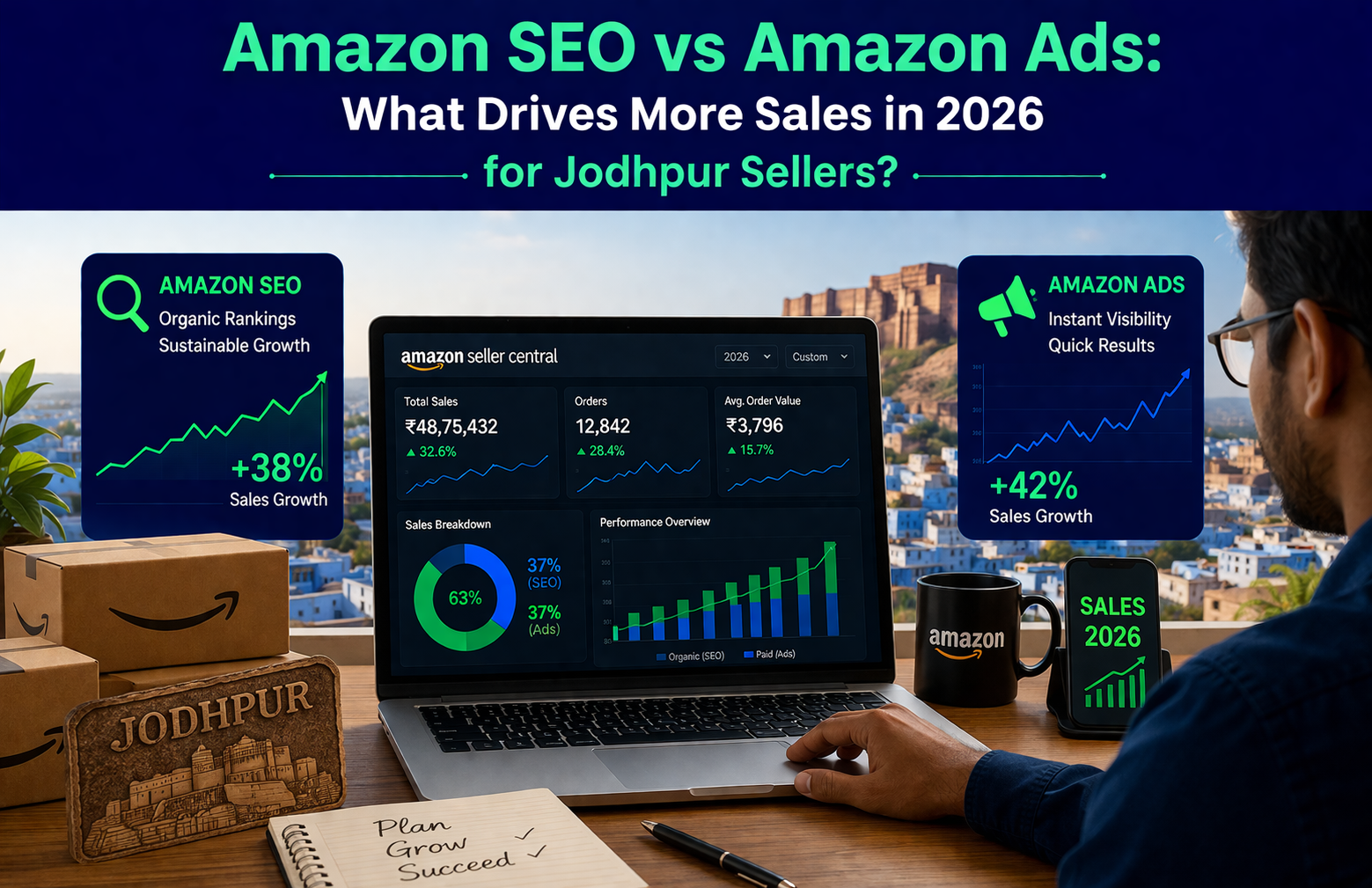
For many Jodhpur-based Amazon sellers, the big question is no longer whether to sell on Amazon, but how to get consistent, profitable sales. Two strategies dominate every discussion: Amazon SEO and Amazon Ads. Both can grow your revenue, but they work very differently and impact your margins and long-term growth in unique ways.
To decide where to invest your time and budget in 2026, you need a clear, practical comparison of Amazon SEO vs Amazon Ads, especially in the context of the Indian marketplace and competitive categories. This guide breaks down how each works, what to expect, and how Jodhpur sellers can combine them for maximum results.
Understanding Amazon SEO vs Amazon Ads for Indian Sellers
When we compare Amazon SEO vs Amazon Ads, we are really comparing organic visibility against paid visibility. Amazon SEO focuses on improving your product rankings in organic search results, while Amazon Ads (PPC) pays for sponsored placements above or within those results. Both aim to capture buyer intent, but the cost and sustainability differ.
For Jodhpur sellers, especially small and mid-sized brands, understanding how Amazon SEO works is critical. Organic rankings help you get sales even when your ad budget is low. At the same time, Amazon advertising services in India can accelerate visibility for new listings or highly competitive keywords, giving you faster data and initial traction.
How Amazon SEO Works: The Foundation of Long-Term Sales
Amazon SEO is the process of optimizing your product listings so they rank higher in Amazon search results for relevant keywords. The A9 and A10 algorithms look at relevance and performance signals such as click-through rate, conversion rate, and sales history. When done correctly, Amazon SEO for sellers can generate consistent, low-cost traffic.
Effective Amazon listing optimization in India starts with keyword research tailored to local search behavior, pricing expectations, and competition. You need to identify primary and secondary keywords, including long-tail phrases like “how to increase Amazon sales in India” or “best kitchen tools under 500” and naturally place them in titles, bullet points, descriptions, and backend search terms.
Key Elements of Amazon Listing Optimization in India
High-performing listings share several common traits. First, they use clear, benefit-driven titles that integrate the focus keyword and related phrases without keyword stuffing. Second, they use bullet points to highlight features, benefits, and use cases that matter to Indian buyers, such as durability, value for money, and warranty.
Beyond copy, image quality and A+ Content play a major role. Multiple high-resolution images, lifestyle shots, and infographics improve engagement and conversion rates. This performance data feeds back into how Amazon SEO works, signaling to the algorithm that your listing satisfies buyer intent, which leads to better organic rankings.
Why Organic Rankings Matter for Jodhpur Sellers
For sellers in Jodhpur, organic rankings reduce dependence on daily ad spend. Once your products rank well for important keywords like “stainless steel bottles” or “handcrafted home decor,” you can maintain sales even during slower seasons or when ad costs spike. This stability is crucial for managing cash flow and inventory.
Additionally, strong organic visibility builds brand trust. Shoppers often compare sponsored and organic results. When your listing appears both in ads and organically, it reinforces credibility. Over time, this combination of Amazon SEO for sellers and selective ads can lower your average cost per acquisition and increase profit margins.
How Amazon Ads Work: Fast Visibility With a Cost
Amazon Ads, often referred to as PPC, allow you to bid on keywords so your products appear as sponsored listings. When evaluating Amazon SEO vs Amazon Ads, it is important to recognize that ads can generate traffic immediately, while SEO takes time. This makes ads attractive for product launches, seasonal pushes, and competitive niches.
In India, Amazon advertising services support multiple ad types, including Sponsored Products, Sponsored Brands, and Sponsored Display. Most Jodhpur sellers start with Sponsored Products because they are directly tied to individual listings and buyer search queries. The challenge is managing bids and budgets so that your advertising remains profitable.
Types of Amazon Ads Relevant for Jodhpur Sellers
Sponsored Products ads show individual products in search results and product detail pages. These are ideal for driving direct sales and testing which keywords convert best. Sponsored Brands highlight your brand logo and multiple products, helping you build awareness and cross-sell within your catalog.
Sponsored Display ads can retarget shoppers who viewed your products or similar items. For local Indian sellers, this can be powerful in categories where buyers compare many options before purchasing. When used strategically, these formats support a broader Amazon marketing strategy for small sellers who want both reach and precision.
Cost, Competition, and ROI of Amazon Ads
Unlike Amazon SEO, which mainly costs time and expertise, Amazon Ads require ongoing budget. Your cost per click depends on competition, category, and keyword intent. High-intent keywords like “buy mixer grinder online” usually cost more but can convert better. Monitoring your advertising cost of sales is essential.
To maintain profitability, you need to regularly review search term reports, pause non-performing keywords, and shift budget to high-converting terms. This is where the debate of Amazon SEO vs PPC which is better becomes practical. Ads can deliver quick wins, but without strong listings and organic rankings, your long-term ROI may suffer.
Amazon SEO vs Amazon Ads: Which Drives More Sales in 2026?
For Jodhpur sellers looking ahead to 2026, the answer is rarely one or the other. Instead, the most successful Amazon marketing strategy for small sellers blends both. Amazon SEO builds a strong foundation of organic traffic, while Amazon Ads amplify visibility and accelerate data collection on what actually converts.
In competitive Indian categories, relying only on organic rankings can be slow, especially for new listings. On the other hand, running ads without solid Amazon listing optimization in India leads to wasted spend, low click-through rates, and poor conversion. The real power comes from aligning your SEO and PPC efforts around the same keyword strategy.
When to Prioritize Amazon SEO
Prioritize Amazon SEO when you are building a long-term presence, launching evergreen products, or operating with limited ad budgets. If your margins are thin or your category has many price-sensitive buyers, strong organic rankings can protect your profitability and reduce reliance on constant ad spend.
SEO should also be your focus when improving existing listings that already have some sales history. Small improvements in titles, images, and descriptions can significantly increase conversion rates. This not only boosts organic rankings but also improves the performance of any Amazon Ads you choose to run later.
When to Prioritize Amazon Ads
Amazon Ads become essential when launching new products, entering highly competitive niches, or targeting seasonal demand spikes. In these situations, waiting for organic rankings alone can mean missing critical sales windows. Strategic PPC campaigns help you gain initial reviews and sales velocity, which later support your SEO.
Ads are also valuable for testing. By running targeted campaigns, you can quickly see which keywords drive conversions. These insights can then be used to refine your Amazon SEO & product listings for sellers, update listing copy, and adjust pricing. In this way, PPC becomes a research tool as much as a sales driver.
Building a Winning Amazon Marketing Strategy for Jodhpur Sellers
To make the most of Amazon SEO vs Amazon Ads, Jodhpur sellers need a structured plan rather than isolated tactics. Start by auditing your current listings, identifying gaps in keywords, images, and content. Then, build a keyword map that connects primary and secondary terms to specific products and categories.
Next, align your SEO and PPC efforts around this map. Optimize your listings first, then launch focused ad campaigns on your most important keywords. Track performance weekly, looking at impressions, click-through rates, conversion rates, and overall sales. This integrated approach helps answer how to increase Amazon sales in India in a measurable way.
Practical Steps to Combine SEO and Ads
To combine both effectively, follow a simple sequence. First, perform detailed keyword research for each product. Second, implement those keywords in titles, bullets, descriptions, and backend fields. Third, launch low to medium budget PPC campaigns targeting the same keywords to drive initial traffic and validate your assumptions.
As data comes in, refine your listings and campaigns. Pause low-performing keywords, double down on profitable ones, and continue improving images and content. Over time, your organic rankings should improve, allowing you to gradually reduce dependency on ads for certain keywords while still using PPC strategically for growth.
Conclusion: Choosing the Right Mix for Sustainable Growth
For Jodhpur sellers, the real question is not simply Amazon SEO vs Amazon Ads, but how to balance both for sustainable, profitable growth in 2026 and beyond. Organic optimization gives you stability and better margins, while paid campaigns provide speed and data. When you align them, you build a resilient sales engine that can handle competition and market shifts.
If you want expert support in creating this balance, from deep Amazon listing optimization in India to performance-driven advertising campaigns, partnering with a specialist like HRL Infotechs can help you turn Amazon into a consistent, scalable revenue channel tailored to your products and your market.