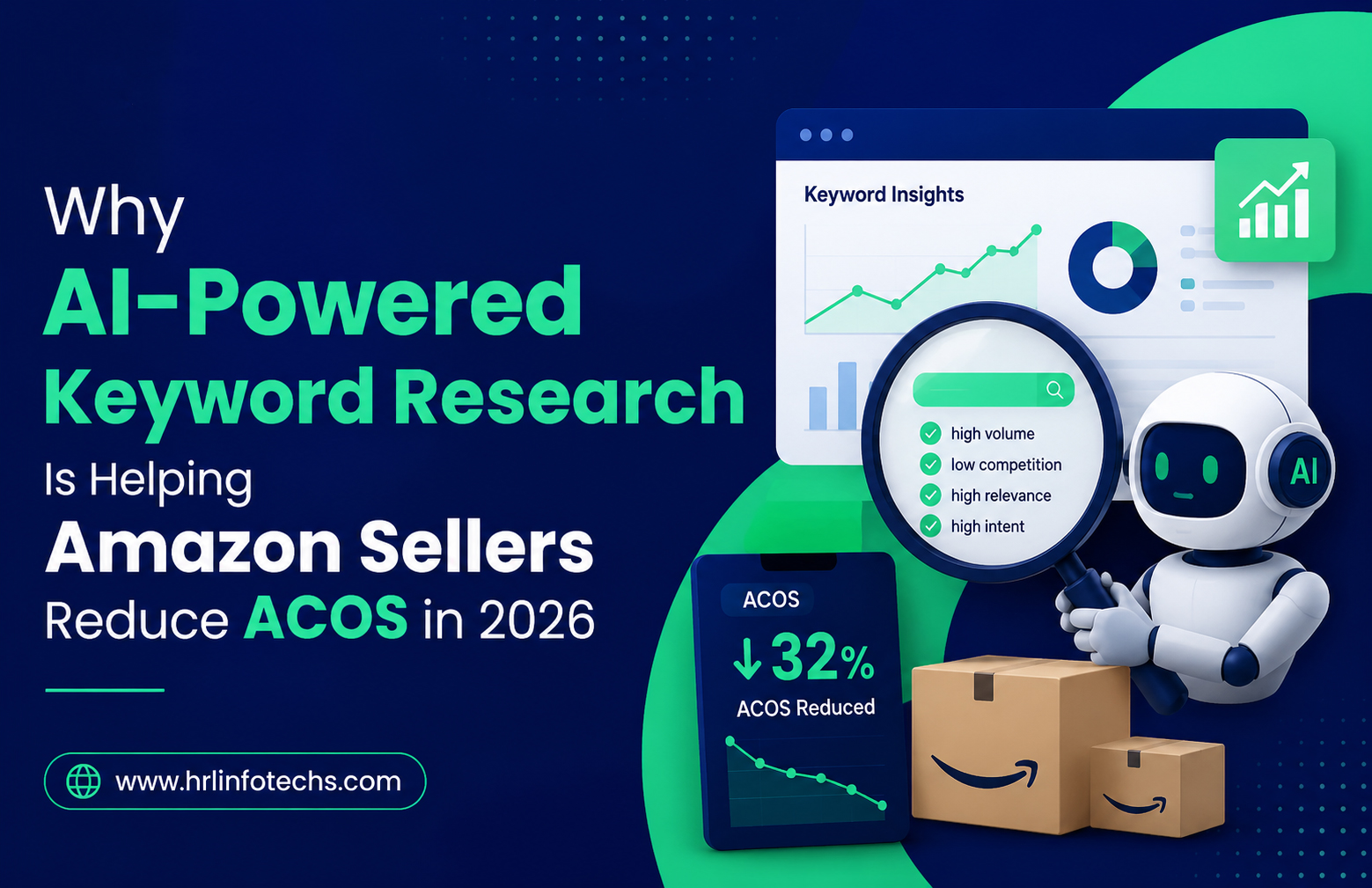
How AI-Powered Keyword Research Is Helping Amazon Sellers Reduce ACOS in 2026


Amazon advertising has become more competitive than ever in 2026. Rising CPCs, smarter competitors, and changing buyer behavior are forcing sellers to rethink how they manage PPC campaigns. Traditional keyword research methods are no longer enough for brands trying to scale profitably. This is where AI-powered keyword research for Amazon is creating a major shift.

Sellers are now using artificial intelligence to identify high-converting keywords, eliminate wasted ad spend, and improve campaign targeting faster than manual research ever allowed. Instead of spending hours analyzing spreadsheets and search term reports, AI tools are helping advertisers make real-time decisions based on customer intent and performance data.

Recent industry reports show that AI-driven PPC optimization helps sellers uncover hidden search trends, automate keyword clustering, and improve bidding accuracy for better advertising efficiency.

How AI-Powered Keyword Research Works for Amazon PPC

AI-powered keyword research for Amazon uses machine learning and automation to analyze millions of shopper search queries, competitor listings, and ad performance signals. These tools identify patterns that are difficult to detect manually, especially when managing large product catalogs or multiple campaigns.

Unlike traditional Amazon PPC keyword research, AI systems continuously monitor keyword performance and buyer intent. They can quickly identify which search terms generate conversions and which keywords are draining budget without producing sales. This allows sellers to focus only on profitable traffic sources.

Modern Amazon keyword research tools also evaluate seasonal demand trends, click-through rates, search intent, and competitor movements. Instead of relying on guesswork, sellers receive data-backed recommendations that improve campaign precision and help lower ACOS on Amazon.

Why Manual Keyword Research Is No Longer Effective

Manual keyword research may still work for small sellers with limited campaigns, but it becomes inefficient as advertising budgets grow. Managing hundreds of keywords manually often leads to delayed optimizations, irrelevant targeting, and wasted ad spend.

One of the biggest problems with traditional research methods is the inability to process large amounts of search term data quickly. Amazon shoppers constantly change their search behavior, and trends can shift within days. Sellers relying only on spreadsheets or basic reports often react too late.

AI tools for Amazon sellers solve this problem by automating keyword discovery and performance analysis. They instantly identify negative keywords, profitable long-tail terms, and emerging search opportunities. This level of automation helps improve Amazon advertising optimization while reducing unnecessary spending.

How AI Helps Reduce ACOS Amazon PPC Campaigns

Reducing advertising cost of sales requires more than simply lowering bids. Successful Amazon PPC optimization 2026 strategies focus on improving keyword relevance and conversion quality.

AI systems help sellers reduce ACOS Amazon PPC campaigns through:

Smarter Keyword Targeting

AI tools analyze customer intent instead of focusing only on search volume. This helps sellers target keywords with higher purchase probability rather than broad traffic terms that waste budget.

Automated Negative Keyword Detection

Many campaigns lose money because irrelevant search terms continue spending without conversions. AI identifies poor-performing keywords automatically and recommends exclusions to prevent wasted clicks.

Real-Time Bid Adjustments

Advanced Amazon PPC management platforms use AI to optimize bids based on performance trends, competition, and conversion likelihood. This improves ad efficiency without constant manual intervention.

Long-Tail Keyword Discovery

Long-tail keywords usually have lower competition and stronger buyer intent. AI-powered Amazon seller keyword research tools uncover these hidden opportunities faster than manual analysis.

Industry research in 2026 highlights that automated keyword optimization and negative keyword filtering significantly improve PPC profitability for growing sellers.

The Role of Search Term Analysis in Amazon Advertising Optimization

One of the most valuable benefits of AI is advanced search term analysis. Campaign keywords alone do not reveal how customers actually search on Amazon. Search term data provides deeper insight into buyer behavior and conversion intent.

AI platforms analyze thousands of search queries to identify patterns that human analysts often miss. For example, two search terms may appear different but reflect the same purchase intent. AI groups these related terms together to improve targeting efficiency.

This process helps sellers improve:

  • Sponsored Products campaigns
  • Sponsored Brands targeting
  • Product listing optimization
  • Backend keyword relevance
  • Negative keyword management

Better search term analysis also improves overall Amazon advertising optimization because campaigns become more aligned with real customer behavior instead of assumptions.

Best Practices for AI-Driven Amazon PPC Optimization 2026

Using AI alone is not enough. Sellers still need a structured strategy to maximize campaign performance.

Combine AI Insights With Manual Oversight

Automation works best when paired with human decision-making. Sellers should regularly review campaign goals, profit margins, and product performance alongside AI recommendations.

Focus on Conversion Data Instead of Traffic Volume

High search volume keywords do not always generate profitable sales. Prioritizing conversion-focused keywords helps improve ROAS and lower ACOS on Amazon over time.

Build Separate Campaign Structures

Separating branded, non-branded, and competitor campaigns allows AI systems to optimize performance more accurately. Structured campaigns produce cleaner data and better optimization opportunities.

Continuously Refresh Keywords

Buyer behavior changes frequently. AI-powered keyword research for Amazon should be an ongoing process rather than a one-time setup.

Why AI Keyword Research Is Becoming Essential for Amazon Sellers

The Amazon marketplace is becoming increasingly data-driven. Sellers who continue using outdated keyword research methods risk overspending on ineffective traffic while competitors gain better visibility through automation.

AI tools for Amazon sellers are helping businesses scale campaigns more efficiently by improving targeting accuracy, identifying profitable search trends, and reducing wasted spend. This creates a significant advantage in highly competitive categories where every advertising dollar matters.

More importantly, AI helps sellers make faster decisions. Instead of manually reviewing reports for hours, advertisers can quickly act on performance insights and focus on business growth strategies.

Conclusion

Amazon PPC is evolving rapidly, and successful sellers in 2026 are relying on smarter advertising strategies powered by artificial intelligence. AI-powered keyword research for Amazon is helping brands improve targeting precision, discover high-converting search terms, and eliminate wasted ad spend that increases ACOS.

As competition and CPC costs continue to rise, businesses that adopt advanced Amazon PPC optimization 2026 strategies will have a stronger advantage in scaling profitable campaigns. For sellers looking to improve campaign performance, lower ACOS on Amazon, and build a more data-driven advertising strategy, The HRL Infotechs can help deliver smarter Amazon PPC management solutions designed for long-term growth.
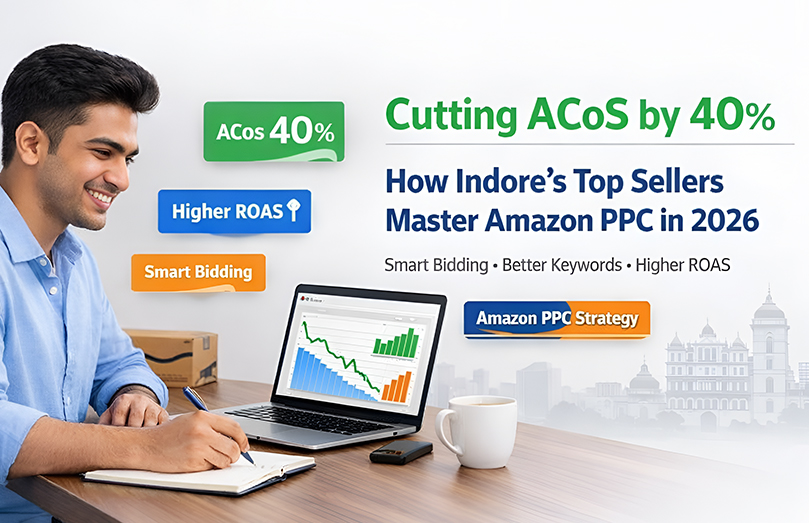

Cutting ACoS by 40%: How Indore’s Top Sellers Master Amazon PPC in 2026


Amazon PPC in 2026 is no longer about simply bidding higher and hoping for clicks. Indore’s top Amazon sellers are proving that with the right data-driven strategy, it is possible to cut ACoS by 40% while still scaling revenue. The brands winning today treat Amazon PPC like a performance engine, not a guessing game.

If you are selling on Amazon from Indore or anywhere in India, you are competing in a far more sophisticated marketplace than even a year ago. This guide breaks down how leading sellers are mastering Amazon PPC in 2026, reducing ACoS, and building sustainable growth with smarter campaigns, sharper keyword research, and disciplined optimization.

Why Amazon PPC in 2026 Demands a New Playbook

The way Amazon PPC works has evolved quickly. In 2026, the algorithm rewards relevance, conversion history, and shopper experience more than raw bids. That means the old tactics of broad targeting and aggressive spending often lead to rising ACoS and shrinking margins.

Indore’s top sellers understand that Amazon PPC in 2026 is a full-funnel system. They align campaigns with clear goals: visibility for new products, profitability for mature listings, and dominance for category leaders. This shift from random testing to structured strategy is the foundation for sustainable ACoS control.

Understanding ACoS and Its Role in Profitability

Advertising Cost of Sales (ACoS) is the percentage of ad spend compared to the revenue generated from those ads. When you reduce ACoS in Amazon PPC, you free up budget to reinvest in growth, inventory, and new product launches. For many Indore-based sellers, a 40% ACoS reduction has been the difference between break-even and strong profit.

However, cutting ACoS is not about slashing bids blindly. In Amazon PPC in 2026, you must balance ACoS with total sales, organic ranking, and long-term brand visibility. The goal is to reach a profitable ACoS that still allows your products to stay competitive in search results.

Core Amazon PPC Strategies Top Indore Sellers Use in 2026

Winning sellers in Indore follow a structured framework for Amazon PPC strategies instead of random experiments. They start by defining clear campaign goals, then map those goals to specific ad types and targeting methods. This disciplined approach keeps ACoS under control while still driving growth.

These Amazon PPC strategies are not theory; they are battle-tested in competitive Indian marketplaces. By adopting them, you can move from reactive campaign management to proactive performance marketing that steadily reduces ACoS and improves return on ad spend.

1. Smart Campaign Structuring for Control and Clarity

Top sellers separate campaigns by match type, product category, and intent. This structure gives them precise control over bids and budgets. For example, they run separate campaigns for branded, competitor, and generic keywords, each with its own ACoS target.

This level of segmentation is essential for Amazon PPC in 2026 because it reveals which search terms truly drive profit. With clear data, you can quickly decide where to scale spend and where to cut, making ACoS reduction a predictable process rather than guesswork.

2. Amazon Sponsored Products ACoS Optimization Tactics

Sponsored Products remain the backbone of most Amazon PPC accounts. To reduce ACoS in Amazon PPC, Indore’s leading sellers focus on three levers: bids, search terms, and product detail pages. They constantly refine these elements based on performance data.

Key optimization moves include lowering bids on high-spend, low-conversion terms, adding negative keywords to block waste, and improving listing content to boost conversion rate. In Amazon PPC in 2026, even small gains in conversion can significantly lower Sponsored Products ACoS.

3. Leveraging Sponsored Brands and Sponsored Display for Scale

While Sponsored Products drive direct sales, Sponsored Brands and Sponsored Display support brand visibility and remarketing. Indore’s advanced sellers use these formats to protect their brand terms, cross-sell related products, and re-engage shoppers who viewed but did not buy.

These upper and mid-funnel campaigns may show a higher ACoS on the surface. However, when aligned with Sponsored Products, they help lift total sales and organic ranking. This holistic view of Amazon PPC in 2026 is what separates casual advertisers from true performance marketers.

High-Intent Keyword Research for Amazon PPC in India

Effective Amazon PPC keyword research in India is now about understanding buyer intent, not just search volume. Top Indore sellers dig into search term reports to find phrases that signal strong purchase intent, such as size, color, pack quantity, or use case.

They combine Amazon’s own data with third-party tools to identify profitable long-tail keywords. This approach reduces competition, improves click-through rates, and lowers ACoS. In Amazon PPC in 2026, precision beats volume when it comes to keyword targeting.

How Sellers in Indore Build Profitable Keyword Sets

Leading sellers start with broad and phrase match campaigns to discover new search terms. Then they promote the best-performing terms into exact match campaigns with dedicated budgets and tighter ACoS targets. This step-by-step process turns raw data into reliable profit drivers.

They also localize their Amazon PPC keyword research in India by including regional phrases, common spelling variations, and use cases relevant to Indian shoppers. This localized approach improves relevance, which is critical for Amazon PPC in 2026 as the platform rewards ads that closely match shopper intent.

Practical Ways to Reduce ACoS in Amazon PPC

Cutting ACoS by 40% is realistic when you apply consistent, data-backed optimizations. Indore’s top sellers do not chase overnight miracles. Instead, they follow a weekly and monthly routine that steadily improves performance across all campaigns.

These routines focus on trimming waste, reallocating budget to winners, and improving the shopper journey. Over time, these small, disciplined actions compound into major ACoS reductions and stronger overall profitability from Amazon PPC in 2026.

Weekly Optimization Checklist for Sellers

High-performing sellers rely on simple but powerful checklists to keep campaigns healthy. A typical weekly optimization routine for Amazon PPC in 2026 includes several focused actions that directly impact ACoS and sales.

Key weekly tasks often include:

  • Reviewing search term reports and adding negative keywords
  • Lowering bids on high-ACoS keywords and raising bids on top performers
  • Pausing underperforming ads or ad groups
  • Testing new keyword variations and match types
  • Checking product pages for content or pricing issues

Improving Listings to Support Lower ACoS

No Amazon PPC strategy can succeed if product pages fail to convert. Indore’s leading sellers treat listing optimization as part of their Amazon PPC strategies, not a separate task. They refine titles, bullet points, images, and A+ content to align with target keywords and buyer expectations.

When listings convert better, every click becomes more valuable. This naturally reduces ACoS in Amazon PPC because more of your paid traffic turns into revenue. In 2026, the strongest Amazon PPC results come from the combination of optimized ads and high-converting product pages.

When to Partner with an Amazon Marketing Agency in Indore

As Amazon PPC in 2026 grows more complex, many sellers reach a point where in-house management is no longer efficient. They spend hours in spreadsheets but still struggle to reduce ACoS or scale profitably. This is often the moment to consider expert support.

An experienced Amazon marketing agency in Indore can bring advanced tools, proven playbooks, and dedicated specialists to your account. For many brands, this partnership turns Amazon PPC from a stressful cost center into a predictable growth channel.

What to Expect from Professional Amazon Marketing Services

Professional Amazon marketing services typically include full-funnel PPC management, listing optimization, and ongoing performance reporting. Agencies build structured campaigns, execute deep keyword research, and run continuous A/B tests to keep improving results.

They also align Amazon PPC strategies with your broader business goals, such as launching new products, entering new categories, or preparing for seasonal peaks. With expert guidance, cutting ACoS by 40% becomes a structured project with clear milestones instead of a vague wish.

Conclusion: Turn Amazon PPC in 2026 into a Profit Engine

Indore’s top Amazon sellers are proving that Amazon PPC in 2026 can be both scalable and profitable. By structuring campaigns intelligently, investing in precise keyword research, and following disciplined optimization routines, they are consistently reducing ACoS while growing total sales.

If you are ready to move beyond trial-and-error and turn your advertising into a true profit engine, partnering with a specialist team like HRL Infotechs can help you apply these strategies faster, with less risk and a clearer path to long-term marketplace dominance.