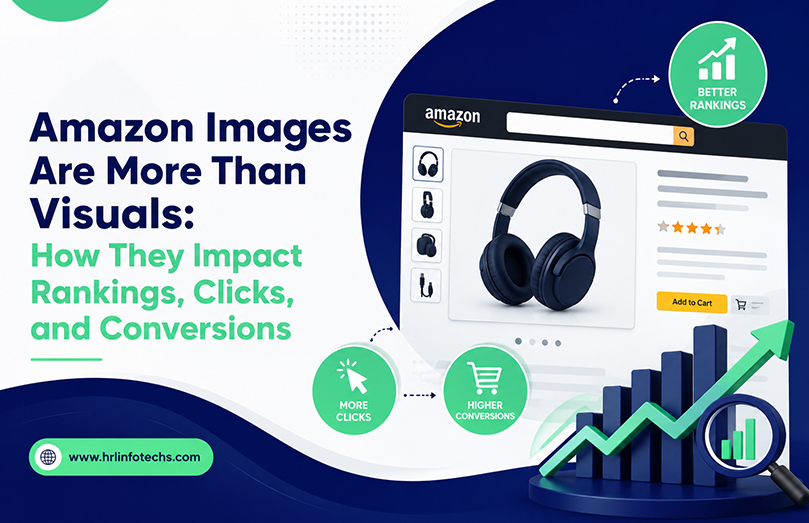
Scroll through Amazon on your phone for 30 seconds and count how many product titles you have read in full. Realistically, not a single one of them probably caught your eye. What determined whether you continued scrolling or stopped to read more? The image beside the title, which most sellers continue to overlook, despite being their most important tool.
That’s the gap worth talking about, because it touches nearly every part of how a listing actually performs, not just how it looks.
Why Images Are Doing More Work Than Sellers Realise
Most sellers think of Amazon listing optimisation as a title-and-bullet-points exercise, with images treated as decoration added at the end once the copy is finalised.
That’s backwards. On a results page full of dozens of similar products, the image is the first and sometimes only information the shopper takes in before clicking through to your product detail page. Get it wrong, and no one will see your great title at all.
The Click Decision Happens Before Anyone Reads Anything
Real Amazon product image optimisation starts with understanding a simple, slightly uncomfortable truth: shoppers judge a product visually before they judge it rationally.
A messy main image, poorly lit product, or oddly framed shot in an otherwise perfect ad could cause a visitor to pause for half a second – just long enough to go back and pick a competitor instead. Your main image is all it takes to sell someone on your service before they’ve read a single word of your ad.
Why This Connects Directly to Search Visibility
Here’s the part most sellers genuinely don’t expect: images influence Amazon SEO services work more than people assume, because click-through rate is a ranking signal Amazon’s algorithm actively tracks.
A snippet that is clicked on more often than not will steadily improve its position in results, as it’s rewarded by higher levels of traffic. In other words, a well-performing snippet will continue doing well for months to come as a result of being clicked on more often than not.
Getting the Technical Side Right
Good Amazon image optimisation isn’t just about creative quality; it’s also about meeting Amazon’s actual technical requirements properly, something a surprising number of listings still get wrong.
That means using the full 85% of the frame Amazon recommends, keeping the background genuinely pure white on the main image, uploading at a resolution high enough to support zoom, and using every available image slot instead of stopping at three or four of the seven or nine available slots. Each unused slot is a missed opportunity to answer a question a shopper hasn’t asked yet.
Why Images Are the Real Conversion Lever
Traffic getting a shopper to your page is only half the job. The other half genuinely the harder half is convincing them to actually buy once they’ve arrived, and this is where Amazon conversion optimisation lives or dies.
Infographic-style images explaining size, material, or use case answer objections before a shopper has to type a question into the Q&A section. Lifestyle images showing the product genuinely in use build a kind of confidence that specification text alone simply can’t replicate. A shopper who can picture themselves actually using the product converts at a meaningfully higher rate than one left to imagine it purely from a bullet list.
Why This Needs Ongoing Attention, Not a One-Time Fix
A lot of sellers treat product imagery as something you do once at launch and never revisit, which is exactly where professional Amazon listing management services genuinely earn their value.
Seasonal changes, experimenting with alternate lifestyles, refreshing your image, studying the results to determine which image drives traffic and which one is a dud- they all add up to work that most solo sellers can not afford to do regularly.
The Bigger Picture Beyond a Single Listing
Zoom out, and this is really part of a much broader conversation about Amazon marketplace optimisation because images don’t function in isolation from everything else happening on your account.
A brand that leverages strong imagery across its catalogue – not just for the bestseller, but for everything else – can build an image appeal that its buyers will recognise across their purchases. This creates a powerful competitive advantage in a crowded product category, where multiple offerings have similar descriptions and target the same search queries.
Why Account Health Quietly Affects This Too
Here’s a connection most sellers don’t immediately see: solid Amazon seller account management directly supports how well your imagery actually gets to perform in the first place.
Hidden listings, policy issues, or faulty catalogue entries may bury even the most compelling images deep within the search maze, rendering them invisible to potential buyers despite your best efforts. After all, if there is no healthy and compliant account to showcase them on in the first place, all that creative energy goes to waste.
Why This Extends Beyond Amazon Specifically
This isn’t purely an Amazon-specific conversation either. The same visual principles apply directly to broader ecommerce marketplace optimisation across Flipkart, Myntra, and other platforms where Indian sellers increasingly operate simultaneously.
A brand that’s built a genuinely strong visual system for one marketplace can adapt that same underlying strategy across every other platform it sells on rather than starting the entire creative process over from scratch for each channel.
Conclusion
Product images on Amazon were never just visuals sitting next to a title. They’re doing real, measurable work across click-through rate, search ranking, conversion rate, and long-term brand perception, often more work than the copy surrounding them.
Sellers still treating imagery as a final, cosmetic step are consistently leaving performance on the table that better-optimised competitors are already capturing.
At HRL Infotechs, we help Indian sellers treat product imagery as the genuine strategic asset it actually is, building visuals that don’t just look good, but measurably move rankings, clicks, and conversions together, across every marketplace where a brand actually sells.