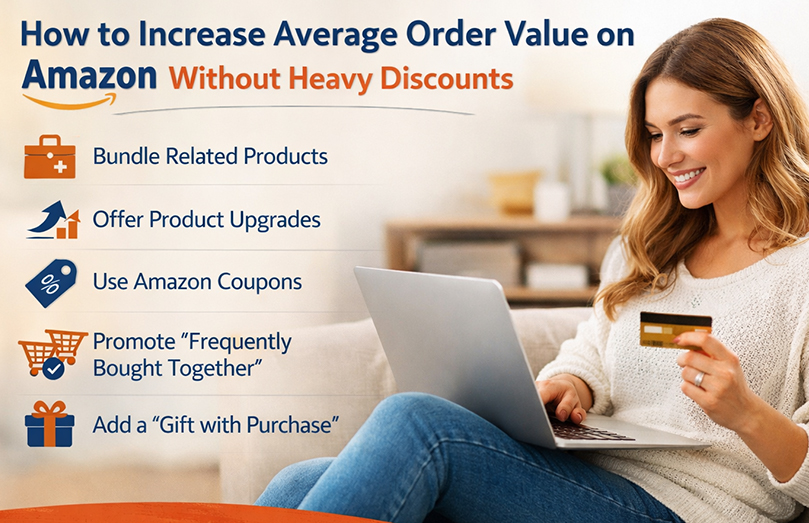
How to Increase Average Order Value on Amazon Without Heavy Discounts


Want to increase average order value on Amazon without slashing your margins with constant discounts? You are not alone. Many brands hit a revenue ceiling because customers buy only one item at a time or choose the lowest-priced option in the cart.

The good news is you can increase average order value on Amazon using smart merchandising, positioning, and experience tweaks instead of heavy couponing. By optimizing how products appear, how they are bundled, and how customers move through your listings, you can increase AOV on Amazon, boost basket size, and grow revenue per customer sustainably.

Understanding Average Order Value on Amazon and Why It Matters

Before you try to increase average order value on Amazon, you need to understand what it represents. Amazon average order value (AOV) is the total revenue divided by the number of orders over a period. It shows how much, on average, each customer spends per transaction with your brand.

When you increase AOV on Amazon, you improve profitability without needing more traffic. Instead of chasing new visitors with expensive ads, you extract more value from existing demand. This makes every click, impression, and page view more profitable and stabilizes your long-term growth.

Key Drivers That Influence Amazon Average Order Value

Several factors directly affect your ability to increase average order value on Amazon. Product pricing, catalog depth, and how well your items complement each other all play a role. The way you structure offers, bundles, and variations can either limit or expand what customers add to their carts.

Customer behavior is equally important. Shoppers respond to convenience, perceived value, and social proof. When your Amazon product listing and SEO are optimized, customers discover more relevant products, trust your brand more, and feel confident buying multiple items in a single order.

Why Increasing Basket Size Beats Discount-Driven Growth

Relying on deep discounts to grow sales can quickly erode margins and train customers to wait for deals. Instead, focusing on strategies that increase basket size on Amazon helps you grow profitably. You encourage customers to buy more of what they already value, not just chase the lowest price.

When you increase basket size Amazon shoppers often discover complementary products that improve their experience. This leads to better reviews, more repeat purchases, and a healthier account performance, all without a race to the bottom on pricing.

Optimize Product Listings to Naturally Increase AOV

One of the most effective ways to increase average order value on Amazon is to improve your listings. High-intent shoppers land on product pages expecting clarity, relevance, and trust signals. When these elements are strong, they are more open to buying additional or higher-value items.

Start by aligning your Amazon product listing and SEO with how customers search and compare products. This ensures your best offers appear for high-intent queries and that your catalog structure supports upselling and cross-selling opportunities.

Strengthen Titles, Bullets, and Images for Higher-Value Purchases

Compelling titles and bullets help increase AOV on Amazon by positioning premium features and multi-pack options as better value. Use clear benefit-driven language and highlight quantity, durability, or long-term savings to justify higher price points.

High-quality images and infographics can also increase basket size Amazon customers by visually promoting bundles, usage scenarios, and complementary products. When shoppers see how items work together, they are more likely to add more than one product to their cart.

Use Variations and Packs to Lift Amazon Revenue per Customer

Smart variation structures are a powerful lever to increase average order value on Amazon. Instead of listing single units only, consider multi-packs, value bundles, and size upgrades as variations on the same parent listing. This makes trading up feel natural, not forced.

When you present higher-quantity or premium options first, you subtly guide shoppers toward choices that increase Amazon revenue per customer. Customers still feel in control, but your catalog is designed to favor higher-value selections.

Amazon Upselling Strategies That Do Not Depend on Discounts

Upselling is one of the most direct ways to increase AOV on Amazon without cutting prices. The goal is to move customers from a base product to a more valuable version that better meets their needs. Done well, upselling feels helpful, not pushy.

Effective Amazon upselling strategies rely on positioning, social proof, and clear differentiation. You want customers to understand why the higher-priced option is the smarter long-term choice, whether due to durability, performance, or convenience.

Position Premium and Bundle Options as the Default Choice

When customers land on your listing, what they see first shapes their expectations. To increase average order value on Amazon, make sure premium or bundled options are clearly visible and well-explained. Use comparison charts to highlight the extra value they deliver.

Consider these tactics to support upselling without discounts:

  • Feature premium variations in the main images and A+ content.
  • Use bullets to contrast base and upgraded versions.
  • Highlight long-term savings from larger packs or better materials.

These simple adjustments can increase AOV on Amazon by nudging customers toward higher-value choices they already find appealing.

Leverage Social Proof to Justify Higher-Value Purchases

Reviews and ratings are critical when you want to increase average order value on Amazon. High review counts and strong ratings on premium options reduce perceived risk and make upgrades feel safer. Customers trust the experiences of others when deciding what to buy.

Encourage satisfied customers to mention pack sizes, longevity, and value in their reviews. When shoppers see proof that others are happy with larger or premium options, they are more likely to increase basket size Amazon orders and spend more per transaction.

Cross-Selling and Bundling to Increase Basket Size

Cross-selling is another powerful way to increase average order value on Amazon without relying on heavy coupons. The idea is to surface complementary products that enhance the main purchase, such as accessories, refills, or compatible items.

When done strategically, cross-selling can increase basket size Amazon shoppers by turning single-item orders into multi-product solutions. Customers feel they are getting a complete setup rather than a standalone product.

Design Complementary Product Ecosystems

To increase AOV on Amazon through cross-selling, think in terms of ecosystems, not isolated SKUs. Map out which products naturally go together and how customers use them over time. Then align your catalog and content to reflect those real-world use cases.

Examples of cross-selling opportunities include:

  • Main product plus protective or storage accessories.
  • Core item with refills, replacements, or consumables.
  • Starter kit with add-ons that unlock extra functionality.

These structures help increase Amazon revenue per customer while genuinely improving the customer experience.

Leverage Amazon Account Management Strategies and Data

To sustainably increase average order value on Amazon, you need ongoing optimization, not one-time changes. Strong Amazon account management strategies ensure you are tracking performance, testing new approaches, and responding to customer behavior.

Instead of focusing only on traffic or rankings, build dashboards that track AOV, units per order, and attach rates. This data shows whether your efforts to increase AOV on Amazon and boost basket size are working across your catalog.

Use Data to Refine Catalog, Pricing, and Content

Analyze which ASINs naturally drive higher Amazon average order value and why. Look at which bundles, variations, or cross-sells perform best. Then replicate those patterns across similar product lines to scale your success.

Combine these insights with ongoing Amazon advertising services, if you use them, to drive more qualified traffic to high-AOV listings. Even if you aim to boost Amazon sales without ads, understanding how paid and organic traffic behave will sharpen your overall strategy.

Conclusion: Build a Sustainable AOV Growth Engine

Increasing average order value on Amazon without heavy discounts is not about tricks; it is about strategy. By optimizing listings, designing smart variations, using thoughtful upselling and cross-selling, and leveraging data-driven Amazon account management strategies, you can lift AOV while protecting your margins.

When you treat your catalog as a connected ecosystem and focus on real customer value, you naturally increase AOV on Amazon, expand basket size, and grow revenue per customer. If you are ready to turn these principles into a tailored growth plan for your brand, HRL Infotechs can help you design and execute a scalable strategy.

How to Improve Product Discoverability on Walmart Without Increasing Ad Spend


Walmart Marketplace is now one of the most competitive ecommerce channels, and brands are fighting for visibility. The good news is that you can dramatically improve product discoverability on Walmart without increasing ad spend by applying smart, data-backed Walmart Marketplace SEO tactics that align with how the platform’s search algorithm works.

By focusing on walmart marketplace seo, you can boost organic rankings, increase click-through rates, and drive more conversions from shoppers already in buying mode. This guide breaks down practical walmart seo strategies, from listing optimization to operational performance, so you can rank higher and sell more without spending extra on ads.

Understanding Walmart Marketplace SEO and Search Intent

Before you can improve visibility, you must understand how walmart marketplace seo differs from traditional search engines. Walmart’s algorithm is built to match shopper intent with the most relevant, trustworthy, and conversion-ready products. That means relevance, performance, and customer experience signals all influence where your listings appear.

The dominant search intent on Walmart is commercial, with users ready to compare options and purchase. Effective walmart seo strategies therefore focus on optimizing product data, pricing, and fulfillment so your listings look both relevant and reliable. When you align your content and operations with this intent, you gain more impressions without relying on higher ad budgets.

Keyword Research for Walmart: Foundation of Higher Rankings

Strong walmart marketplace seo starts with precise keyword research tailored to Walmart’s ecosystem. Instead of only using generic ecommerce terms, you should analyze Walmart’s search suggestions, competitor listings, and category pages to identify how shoppers actually phrase their queries on the platform.

To rank products on Walmart Marketplace, prioritize a mix of primary, secondary, and long-tail phrases. Your primary term might be the core product name, while long-tail keywords capture specific use cases, sizes, or attributes. This layered approach helps you win visibility for both high-volume and high-intent searches, boosting organic traffic without additional ad spend.

How to Find High-Intent Walmart Keywords

Start by typing your main product term into Walmart’s search bar and reviewing autocomplete suggestions. These phrases reflect real shopper behavior and should inform your walmart product listing optimization. Next, scan top-ranking listings in your category to see which words repeat in titles and descriptions.

You can also use third-party tools that track marketplace search trends to validate demand and competition. Combine this data with your own sales and search term reports to refine your keyword list over time. Consistent refinement is key to sustainable walmart marketplace seo success.

Walmart Product Listing Optimization: Titles, Bullets, and Descriptions

Once you have the right keywords, the next step is walmart product listing optimization. Walmart’s algorithm heavily weighs how well your titles, key features, and descriptions match shopper queries. At the same time, your copy must remain clear, readable, and persuasive to drive clicks and conversions.

Focus on structuring each listing so both the algorithm and the shopper quickly understand what you sell. This balance between technical optimization and human-friendly messaging is what separates average listings from top performers in walmart marketplace seo.

Optimizing Product Titles for Maximum Relevance

Your product title is the single most important on-page element for walmart seo strategies. Include your primary keyword early, followed by critical attributes such as brand, size, color, quantity, and key differentiators. Avoid keyword stuffing or unnecessary punctuation that can hurt readability.

A well-structured title might follow a pattern like: Core Keyword – Brand – Key Feature – Size/Variant – Use Case. This format helps Walmart understand your product while giving shoppers enough detail to click confidently. Over time, better click-through rates reinforce your walmart marketplace seo efforts.

Crafting High-Converting Key Features and Descriptions

Key features (bullet points) should highlight the main benefits and specifications that matter most to your audience. Use concise, benefit-driven language and naturally incorporate both primary and secondary keywords. This section is crucial for walmart product discoverability and conversion.

In your long description, tell a clear story about the product’s use cases, materials, and advantages. Break up text with short paragraphs and occasional bullet lists for scannability. When shoppers can quickly understand value, they are more likely to buy, which in turn strengthens your walmart marketplace seo performance.

Improving Product Discoverability Through Content and Media

Beyond text, Walmart’s algorithm also evaluates how complete and compelling your content is. High-quality images, videos, and rich content elements help your listings stand out and signal professionalism. This is especially important in crowded categories where many sellers compete on similar keywords.

Think of your listing as a digital shelf. The more informative and visually appealing it is, the longer shoppers stay, and the more likely they are to convert. These engagement signals support your walmart seo strategies without requiring higher ad bids.

Best Practices for Images and Rich Media

Use multiple high-resolution images that show the product from different angles, in use, and with scale references. Ensure the main image has a clean, white background and clearly displays the product. Consistent visual quality across your catalog reinforces trust and supports walmart product discoverability.

Where available, add videos or 360-degree views to demonstrate features and usage. Rich media helps answer common questions before they become objections, reducing bounce rates and returns. These improvements indirectly enhance walmart marketplace seo by signaling relevance and customer satisfaction.

Operational Performance: The Hidden Driver of Walmart Rankings

Walmart’s search algorithm does not only look at keywords and content. It also rewards sellers who deliver strong operational performance. Metrics such as on-time shipping, low cancellation rates, and positive reviews all influence how to rank products on Walmart Marketplace.

When your operational metrics are strong, Walmart is more confident promoting your listings to shoppers. This means that improving back-end performance can lift your organic rankings and impressions, even if your ad spend strategy stays flat or decreases.

Key Performance Factors That Impact Visibility

Several performance indicators tie directly into walmart marketplace seo. These include order defect rate, customer ratings, fulfillment speed, and inventory reliability. Consistently meeting or exceeding Walmart’s standards positions your account as low risk and high value.

To stay competitive, monitor these metrics weekly and address issues quickly. Improve packaging, refine inventory forecasting, and respond to customer messages promptly. Over time, these actions create a feedback loop where better performance leads to better rankings and more organic sales.

Leveraging Walmart Account Management Services for Scale

As your catalog and sales volume grow, managing walmart product listing optimization and performance can become complex. This is where specialized walmart account management services can provide a strategic advantage. These services help you maintain best practices at scale while uncovering new growth opportunities.

Experienced marketplace teams can audit your listings, refine your walmart seo strategies, and align operations with Walmart’s evolving requirements. By delegating execution to experts, you can focus on product development and brand building while still improving walmart product discoverability without increasing ad spend.

When to Consider External Support

If you are struggling to maintain consistent content quality, keep up with policy changes, or interpret performance data, it may be time to seek support. External specialists can bring proven frameworks for how to rank products on Walmart Marketplace and maintain compliance.

This partnership approach is especially valuable when entering new categories or scaling to multiple marketplaces. With the right guidance, you can unlock more value from walmart marketplace seo and reduce dependency on paid campaigns for visibility.

Conclusion: Turn Walmart SEO into a Long-Term Growth Engine

Improving product discoverability on Walmart without raising ad budgets is absolutely achievable when you treat walmart marketplace seo as an ongoing, strategic discipline. By combining precise keyword research, robust walmart product listing optimization, compelling media, and strong operational performance, you create listings that both the algorithm and shoppers prefer.

As you refine these walmart seo strategies over time, your organic visibility, click-through rates, and conversion rates will compound, turning Walmart into a sustainable growth channel. For brands that want expert support implementing and scaling these tactics, HRL Infotechs can provide the strategic and operational partnership needed to win on Walmart Marketplace.

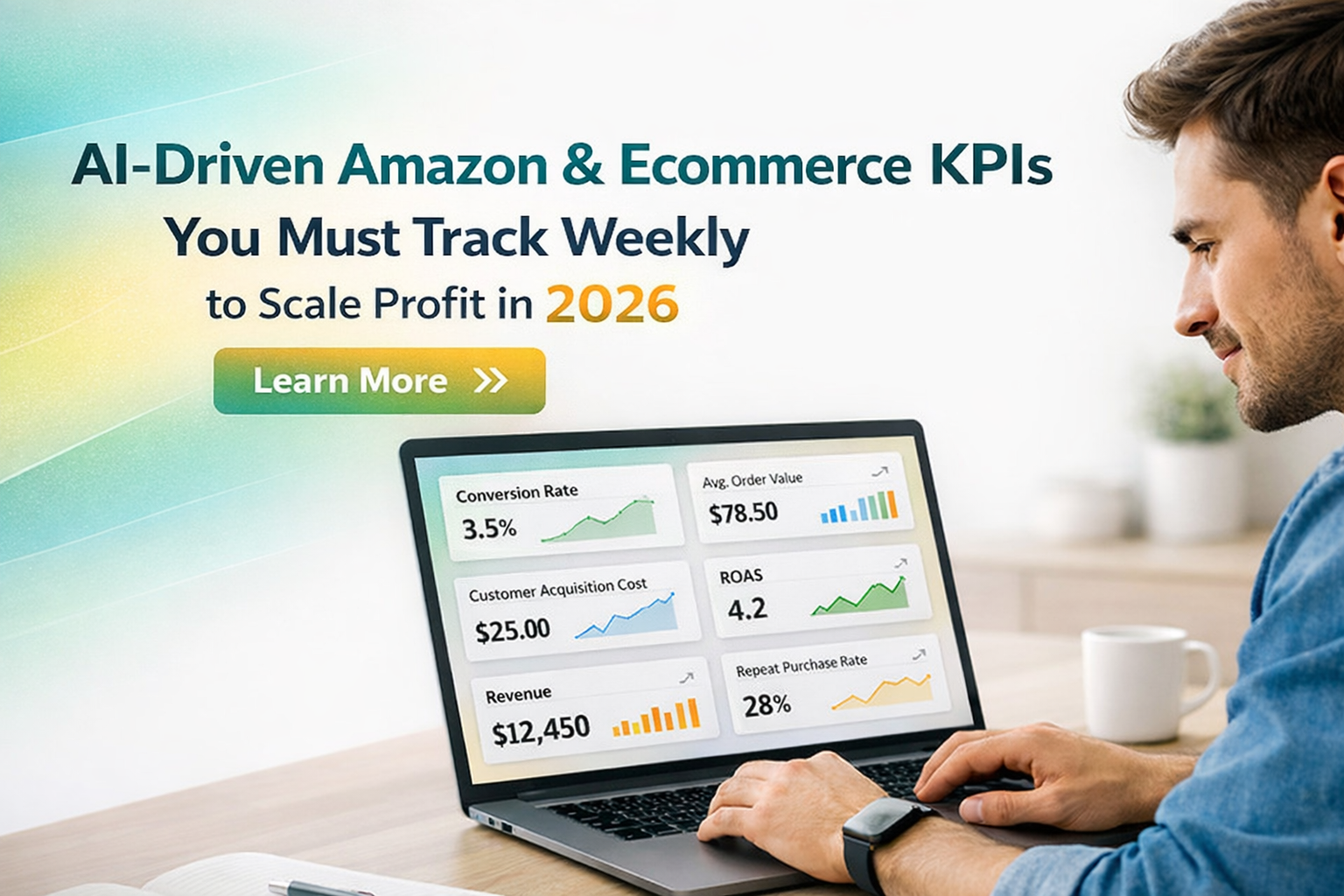
AI-Driven Amazon & Ecommerce KPIs You Must Track Weekly to Scale Profit in 2026


Weekly tracking of the right Amazon & Ecommerce KPIs is the difference between scaling profitably and burning ad spend. In 2026, with AI-driven optimization and rising competition, brands that ignore their numbers will see shrinking margins, higher CAC, and stalled growth. Those that track, predict, and act on data weekly will win.

This guide breaks down the essential AI-driven Amazon & Ecommerce KPIs you must monitor every week to scale profit, not just revenue. You will see how leading ecommerce teams, ecommerce marketing agency India partners, and ecommerce consulting services structure their dashboards to make fast, confident decisions.

Why Weekly KPI Tracking Matters More Than Ever in 2026

Digital marketplaces are changing faster than monthly reports can keep up. Algorithms update, competitors adjust bids, and consumer behavior shifts in days, not quarters. Weekly monitoring of core Amazon & Ecommerce KPIs lets you react before small issues become expensive problems.

AI tools now surface patterns that humans miss, but they still depend on clean, timely data. When you review KPIs weekly, you feed your AI models better signals, improve predictions, and unlock compounding gains in ad efficiency, conversion rate, and lifetime value.

Core Revenue and Profit Amazon & Ecommerce KPIs to Track Weekly

Most teams obsess over top-line sales, but profit-focused brands go deeper. They track a tight set of Amazon & Ecommerce KPIs that connect traffic, conversion, and margin. This weekly view reveals whether growth is sustainable or just paid for with discounts and ad spend.

For ecommerce kpis for growth, focus on metrics that show both scale and efficiency. AI can then model which levers to pull: pricing, bids, creatives, or inventory. The goal is to protect contribution margin while still pushing for aggressive revenue targets.

1. Net Revenue, Contribution Margin, and Profit per Order

Start with net revenue after discounts and refunds, then layer in contribution margin. This shows how much money remains after variable costs like COGS, shipping, and marketplace fees. Profit per order reveals if your growth is actually worth the effort.

Weekly, compare revenue and margin trends across channels: DTC, marketplaces, and paid media. AI models can flag SKUs where revenue is up but margin is collapsing, helping you adjust pricing, bundles, or promotions before profitability erodes.

2. AOV, Units per Transaction, and Repeat Purchase Rate

Average order value and units per transaction are foundational Amazon & Ecommerce KPIs for scaling profit. Small lifts here compound across thousands of orders. AI-driven recommendations and cross-sell engines can increase AOV without heavy discounts.

Repeat purchase rate, measured weekly on a rolling cohort basis, shows whether your acquisition spend is justified. Ecommerce consulting services often build dashboards that connect AOV, repeat rate, and CAC to model payback periods and guide budget allocation.

AI-Driven Traffic and Conversion KPIs for Amazon and Ecommerce

Traffic without intent wastes budget; intent without conversion wastes opportunity. AI-powered optimization focuses on the Amazon & Ecommerce KPIs that link audience quality with on-site performance. Weekly reviews help teams refine targeting, creatives, and landing experiences.

Modern ecommerce advertising agency partners rely on granular data from search, social, and marketplace ads. They feed this into AI systems that predict which segments, keywords, and placements will convert profitably, not just drive clicks.

3. Sessions, Click-Through Rate, and Search Visibility

Sessions and CTR remain core ecommerce kpis for growth, but the context has changed. AI can now cluster traffic by intent, device, and funnel stage, revealing which segments deserve more budget. Weekly, review sessions by channel and campaign, not just in aggregate.

On Amazon, search visibility for priority keywords is a critical Amazon kpis for profit signal. Track organic rank and share of voice for branded and non-branded terms. AI tools can simulate how changes in bids or content might impact visibility and downstream sales.

4. Conversion Rate by Channel, Device, and Funnel Stage

Instead of a single sitewide conversion rate, segment by channel, device, and landing page. These segmented Amazon & Ecommerce KPIs reveal friction points that broad averages hide. Weekly, identify outliers where traffic is strong but conversion lags.

AI-driven experimentation platforms can then test new creatives, offers, and layouts. By feeding them weekly conversion data, you accelerate learning cycles. Over time, this compounds into higher ROAS and stronger profitability across all acquisition channels.

Critical Amazon Advertising and Marketplace KPIs for Profit

Marketplace growth often hinges on Amazon marketing services for scale sales. Yet many brands chase revenue and ranking while ignoring true profitability. Weekly tracking of the right Amazon & Ecommerce KPIs inside your ad accounts prevents overspending.

Amazon advertising services now lean heavily on AI bidding and audience tools. However, these systems still require clear guardrails. You must define the profit thresholds and KPI targets that AI should optimize toward, not just let it chase attributed revenue.

5. TACoS, ROAS, and Blended Cost of Sale

Advertising Cost of Sales (ACoS) is useful, but Total ACoS (TACoS) is more strategic. It measures ad spend against total revenue, including organic sales. This Amazon kpis for profit view shows whether ads are lifting the whole account or just cannibalizing existing demand.

Weekly, compare campaign-level ROAS with blended cost of sale across the account. If TACoS rises while organic rank falls, your strategy may be too dependent on paid. AI tools can then reallocate budget toward campaigns that drive incremental, profitable growth.

6. Share of Voice, Buy Box Win Rate, and Listing Health

Share of voice across sponsored and organic placements is a leading indicator of future sales. These Amazon & Ecommerce KPIs show whether competitors are outbidding you or outranking you on critical terms. Weekly tracking helps you defend your most profitable keywords.

Buy Box win rate and listing health metrics, such as content quality, reviews, and stock status, complete the picture. AI systems can scan thousands of listings to flag gaps, from missing images to weak titles. Fixing these quickly protects both revenue and ad efficiency.

Customer-Centric KPIs: LTV, CAC, and Retention

In 2026, the most advanced ecommerce advertising agency teams optimize for customer lifetime value, not just first-order profit. They treat LTV, CAC, and retention as core Amazon & Ecommerce KPIs that guide every budget and channel decision.

AI excels at predicting LTV based on early behavior signals. When you feed it accurate weekly data, it can identify high-value cohorts and recommend where to increase bids, improve offers, or build tailored retention journeys.

7. LTV:CAC Ratio, Churn, and Subscription Health

The LTV:CAC ratio is one of the most important ecommerce kpis for growth. It tells you how much value each acquired customer generates relative to the cost of acquiring them. Weekly, monitor this ratio by channel and campaign, not just overall.

For subscription or repeat-purchase brands, churn rate and subscription health metrics are vital Amazon & Ecommerce KPIs. AI can predict which customers are at risk of churning and trigger personalized win-back flows, improving retention and long-term profitability.

Building an AI-Ready Weekly KPI Dashboard

To make these Amazon & Ecommerce KPIs actionable, consolidate them into a single weekly dashboard. Pull data from your ecommerce platforms, ad accounts, and analytics tools into one source of truth. This reduces reporting time and increases decision speed.

Then, layer AI models on top to surface anomalies, forecast trends, and recommend actions. Many ecommerce consulting services now specialize in building such AI-ready KPI stacks, enabling leadership teams to move from reactive reporting to proactive, profit-focused optimization.

Conclusion: Turn Weekly KPIs into a Profit Engine

Tracking Amazon & Ecommerce KPIs weekly is no longer optional for brands that want to scale profitably in 2026. When combined with AI, these metrics become a powerful engine for smarter bidding, sharper targeting, better customer experiences, and stronger margins.

By aligning your teams, tools, and partners around a clear KPI framework, you create a culture of data-driven growth. If you are ready to turn your weekly numbers into a competitive advantage, HRL Infotechs can help you design and execute an AI-first KPI strategy tailored to your ecommerce business.

Why Quick Commerce Requires a Different Marketing Strategy Than Amazon


Quick commerce has changed how consumers discover and buy everyday products. Unlike traditional marketplaces, these 10–30 minute delivery apps compress the entire journey from awareness to purchase into a few taps. That speed is exciting for brands, but it also means your quick commerce marketing strategy cannot simply copy what works on Amazon.

To win on these platforms, brands must rethink how they show up, how they spend, and how they measure success. The rules of search, visibility, and impulse buying are different. Understanding these differences is the first step to building a marketing strategy for quick commerce platforms that actually drives profitable growth.

Why Quick Commerce User Behavior Differs From Amazon

On Amazon, shoppers usually arrive with a clear intent. They search, compare, read reviews, and often build a cart across categories. The journey is more considered, and price, ratings, and detailed content play a major role in conversion. This shapes the classic Amazon marketing strategy most brands follow today.

Quick commerce users behave differently. They open the app to solve an immediate need: missing ingredients, snacks, last-minute essentials, or impulse treats. Session times are shorter, browsing is lighter, and decisions are faster. As a result, your quick commerce marketing strategy must prioritize speed of impact over depth of information.

Quick Commerce vs Amazon: Core Marketing Differences

When comparing quick commerce vs Amazon, the most important difference is context. Amazon is a search-led marketplace, while quick commerce is a mission-led convenience channel. This shift changes how you should think about assortment, pricing, and media investments.

On Amazon, you optimize for keywords, category rankings, and long-term review building. On quick commerce, you optimize for visibility on home screens, mission-based shelves, and real-time availability. Your quick commerce advertising strategy must therefore be built around micro-moments rather than long research cycles.

From Search-First to Mission-First Experiences

Amazon journeys usually start with a typed search, which makes search term optimization and product detail pages critical. Brands invest heavily in titles, bullets, A+ content, and review generation to win the algorithm. This is the backbone of a classic Amazon marketing strategy.

Quick commerce journeys often start from curated missions like “Breakfast,” “Movie Night,” or “Party Essentials.” Users tap into these missions instead of typing long queries. A strong quick commerce marketing strategy must therefore align products and promotions with these missions, not just with generic category keywords.

Impulse-Driven Baskets and Smaller Decision Windows

Quick commerce baskets are smaller and more impulsive. Shoppers add what they see in the first few screens, often influenced by discounts, badges, and visual cues. This makes top-of-shelf and banner placements disproportionately powerful for brands.

Because decision windows are short, your brand has only seconds to win attention. A winning marketing strategy for quick commerce platforms focuses on simple messaging, recognizable packs, and clear price cues that can convert at a glance.

Building a High-Impact Quick Commerce Marketing Strategy

To design a winning quick commerce growth strategy India or in any market, brands must align media, assortment, and operations. The goal is to be visible, available, and relevant at the exact moment of need. This requires a more integrated approach than simply running isolated ads.

A strong quick commerce marketing strategy usually combines three pillars: always-on visibility, mission-based activation, and operational excellence. When these work together, brands can turn quick commerce from a pure discount channel into a sustainable growth engine.

Always-On Visibility and Share of Screen

On quick commerce, “share of screen” matters more than share of shelf. You need consistent presence across home screens, category pages, and search results. This is where a structured quick commerce advertising strategy becomes critical.

Key tactics often include:

  • Sponsored listings on high-intent keywords and mission pages
  • Homepage banners during key consumption moments and festivals
  • Badges such as “Bestseller,” “Trending,” or “Value Pack” to drive clicks

These placements ensure that your brand is seen first, which is often enough to win the basket in a quick commerce environment.

Assortment, Packs, and Price Architecture

Quick commerce favors smaller, high-rotation packs that fit urgent or impulse needs. Large family packs or slow-moving SKUs often underperform. Your quick commerce growth strategy India should therefore start with a tailored assortment, not a copy-paste of your Amazon catalog.

Brands that win usually design:

  • Occasion-based bundles (movie combos, party packs, breakfast kits)
  • Entry price packs for trials and low-risk impulse purchases
  • Premium variants for late-night or indulgence missions

This approach aligns your quick commerce marketing strategy with real consumer missions, improving both conversion and repeat purchase.

How Brands Grow on Quick Commerce Platforms

Growth on quick commerce is not just about discounts. It is about building mental availability and habit. When shoppers repeatedly see and choose your brand for specific missions, you start owning those occasions. This is how brands grow on quick commerce in a sustainable way.

To achieve this, brands must combine performance media with brand-building levers inside the app. Over time, this creates a flywheel where visibility drives trials, trials drive reviews and ratings, and ratings further improve visibility.

Occasion Ownership and Mission Mapping

One of the most effective strategies is to map your brand to specific missions. For example, a beverage brand might focus on “Game Night,” “Weekend Chill,” and “Party Starter” missions across platforms. This gives structure to your quick commerce advertising strategy.

By consistently appearing in these missions with tailored creatives and bundles, your brand becomes the default choice for that occasion. This is more powerful than generic discounting and builds long-term loyalty on quick commerce platforms.

Measurement, Attribution, and Incremental Growth

Measuring success on quick commerce requires a different lens than Amazon. Traditional metrics like organic rank and detail page views still matter, but they are not enough. You also need to track mission-level performance and repeat rates.

Strong quick commerce marketing strategy frameworks usually track:

  • Incremental sales from media versus baseline demand
  • New buyer acquisition versus repeat purchase growth
  • Share of category on key missions and time slots

These insights help refine both your quick commerce vs Amazon investment mix and your in-app activation plans.

Integrating Amazon and Quick Commerce in One Growth Plan

Amazon and quick commerce should not compete for attention inside your organization. Instead, they should play different roles in your digital commerce strategy. Amazon can remain the research-heavy, wide-assortment destination, while quick commerce becomes the instant gratification and top-up channel.

When you design a unified plan, your Amazon marketing strategy can focus on depth, education, and long-tail search, while your quick commerce marketing strategy focuses on speed, missions, and impulse. Together, they cover the full spectrum of consumer needs across the month.

Balancing Budgets and Creative Across Platforms

Because the roles of each channel differ, your creative and budget allocation should also differ. Long-form content, comparison charts, and review-building tactics fit Amazon better. Short, bold, and occasion-led creatives perform best on quick commerce.

Brands that win usually set clear objectives for each channel, then align media, content, and packs accordingly. This disciplined approach ensures that investments in quick commerce platforms complement, rather than cannibalize, your marketplace efforts elsewhere.

Conclusion: Turning Quick Commerce Into a Strategic Growth Engine

Quick commerce is no longer just an experimental channel. It is a core part of how consumers discover and buy everyday brands, especially in urban India. To unlock its full potential, you need a dedicated quick commerce marketing strategy that respects how different these platforms are from Amazon.

By aligning missions, assortments, media, and measurement, brands can turn quick commerce into a powerful driver of incremental growth and market share. Partnering with experts like HRL Infotechs can help you design and execute a strategy that connects Amazon, quick commerce, and broader digital commerce into one cohesive growth engine.

Amazon India Seller Strategy: Identifying Slow-Moving Products Before They Impact Profit


Running a profitable Amazon India business is no longer about just adding more SKUs and waiting for sales. Today, every Amazon Indian Seller must track product performance closely, spot slow movers early, and take action before they drain cash flow and ad budgets. If you ignore slow-moving SKUs, they quietly eat margins through storage fees, blocked capital, and weak account health.

This guide breaks down a practical Amazon inventory management strategy tailored for the Indian marketplace. You will learn how to identify slow selling products on Amazon, analyze SKU performance, and build a proactive plan so slow movers never surprise you again.

Why Slow-Moving SKUs Are Dangerous for Amazon Indian Seller Profitability

Many sellers focus only on top sellers and ignore the long tail. However, slow moving SKUs on Amazon India can be more damaging than you think. They lock working capital, reduce your ability to restock winners, and increase the risk of aged inventory penalties.

For an Amazon Indian Seller, every unit sitting idle in the warehouse represents missed opportunity. Instead of funding new product launches or scaling ads, money gets stuck in dead stock. Over time, this weakens cash flow, limits growth, and can even trigger storage clean-up at a loss.

Hidden Costs of Slow Moving SKUs on Amazon India

Slow moving SKUs Amazon India sellers ignore often generate silent but consistent costs. Long-term storage fees, warehouse handling, and return processing all add up, especially during peak seasons when space is tight and fees rise.

Beyond fees, slow movers also hurt Amazon SKU performance analysis metrics. Low sales velocity can reduce organic ranking, limit Buy Box share, and weaken your overall account performance score, making it harder to scale profitable campaigns.

Impact on Cash Flow and Reinvestment Cycles

Healthy Amazon inventory management strategy depends on fast reinvestment cycles. You buy stock, sell quickly, and reinvest profits into ads and new SKUs. Slow movers break this cycle by delaying cash recovery and reducing available capital.

When too many SKUs move slowly, an Amazon Indian Seller may cut back on marketing, delay restocks of winning products, or skip new launches. This creates a downward spiral where growth slows, while fixed costs remain the same or even rise.

Defining a Slow-Moving Product for Amazon Indian Seller Accounts

Before you can fix slow selling products, you must define what “slow moving” means for your business. There is no universal rule, but clear thresholds help you act early and consistently across your catalog.

Most Amazon Indian Seller accounts use a mix of sales velocity, days of cover, and inventory age. The right benchmark depends on category, seasonality, and your cash flow needs, but it must be documented and tracked regularly.

Key Metrics to Classify Slow Selling Products on Amazon

To build a reliable Amazon inventory management strategy, start by tracking a few core indicators. These metrics help you separate temporary dips from true slow moving SKUs Amazon India sellers need to fix or exit.

  • Units sold per day or per week for each SKU
  • Days of inventory on hand versus target days
  • Inventory age buckets (0–90, 91–180, 181+ days)
  • Sell-through rate over the last 30, 60, and 90 days
  • Ad spend versus sales for each ASIN

When a product consistently underperforms across these metrics, it should be flagged as a slow mover. This early warning allows an Amazon Indian Seller to react before losses become serious.

Setting Category-Specific Thresholds

Not all categories behave the same. Seasonal, fashion, and trend-based products may move fast for a short window, then slow down. Essentials and repeat-purchase items may have stable but moderate velocity. Your Amazon SKU performance analysis must respect these differences.

Define separate slow-mover rules for each category. For example, a fashion SKU with less than 10 units sold in 30 days may be slow, while a high-ticket appliance with 5 sales could be acceptable. Clear rules help your team make faster, data-backed decisions.

How to Identify Slow Selling Products on Amazon Proactively

Once thresholds are set, the next step is building a repeatable review process. Successful Amazon Indian Seller operations do not wait for quarterly reports. They run weekly or bi-weekly checks to spot slow movers early.

This process should combine Amazon reports, advertising dashboards, and listing audits. When you align data from multiple sources, you see not just which SKUs are slow, but also why they are underperforming.

Using Amazon Reports and Dashboards

Start with the Business Reports and Inventory Health dashboards. Filter by low sales, high inventory age, and low sell-through. These tools give an Amazon Indian Seller a quick snapshot of problem SKUs that need attention.

Next, review advertising reports to identify products with high ACOS and low conversion. Sometimes a SKU is slow because the targeting is weak or the listing does not match the traffic. Combining these views sharpens your Amazon marketing management decisions.

Conducting Amazon SKU Performance Analysis

After identifying potential slow movers, perform deeper Amazon SKU performance analysis. Check price competitiveness, reviews, ratings, and content quality. Compare your offer with top competitors on the same search terms.

Look for gaps in images, bullet points, and keywords. Often, improving content and repositioning the offer can revive a slow SKU. If the market itself is shrinking or over-saturated, you may instead decide to liquidate and exit.

Strategic Actions to Fix or Exit Slow Moving SKUs

Identifying slow moving SKUs Amazon India sellers struggle with is only half the battle. The real impact comes from decisive action. Each flagged SKU should follow a clear decision path: optimize, reposition, discount, or liquidate.

Documenting these playbooks keeps your Amazon inventory management strategy consistent. It also helps your team move faster, instead of debating the same questions every month when new slow movers appear.

Optimization and Repositioning Tactics

For SKUs with solid demand but weak performance, start with optimization. Improve titles, bullets, images, and A+ content. Align keywords with how buyers actually search, using terms like how to identify slow selling products on Amazon in your research process.

Then, adjust pricing and offers. Test coupons, limited-time deals, or bundles with faster-moving SKUs. When combined with focused Amazon marketing management campaigns, these changes can quickly lift velocity and clear excess stock.

Discounting, Bundling, and Liquidation

Some products will not recover despite optimization. In these cases, an Amazon Indian Seller should protect cash first. Use aggressive discounts, outlet deals, and bundled offers to convert stock into cash as quickly as possible.

If inventory age is high and fees are rising, consider liquidation through off-Amazon channels. The goal is to free working capital and storage space so you can double down on proven winners and new opportunities.

Building a Scalable Amazon Inventory Management Strategy

To prevent slow movers from recurring, you need systems, not one-time fixes. A scalable Amazon inventory management strategy combines forecasting, replenishment rules, and continuous Amazon SKU performance analysisM,LKML,; .

As your catalog grows, manual tracking becomes impossible. At this stage, many sellers turn to specialized Amazon account management services to implement dashboards, automation, and standardized decision frameworks.

Integrating Marketing, Inventory, and Finance Data

Slow moving SKUs are rarely just an inventory problem. They usually reflect misaligned marketing, pricing, or product selection. By integrating advertising, inventory, and finance data, an Amazon Indian Seller can see the full picture.

This integrated view supports smarter Amazon marketing management decisions. You can shift budgets from weak SKUs to strong ones, refine launch criteria, and avoid over-ordering on unproven products in the future.

When to Leverage Amazon Account Management Services

As complexity increases, many brands seek expert support. Amazon account management services can design custom dashboards, set up automated alerts, and create category-specific playbooks for slow movers.

With expert guidance, you move from reactive firefighting to proactive control. Instead of discovering slow movers after they hurt profit, you catch them early and turn inventory management into a competitive advantage.

Conclusion: Turn Slow Movers into a Strategic Advantage

Slow moving SKUs do not have to be silent profit killers. With clear definitions, disciplined monitoring, and structured responses, an Amazon Indian Seller can turn inventory data into a powerful growth lever. The key is acting early, before storage fees, cash lock, and ranking loss become severe.

If you want expert support in building a data-driven Amazon inventory management strategy, optimizing slow movers, and scaling profitable SKUs, HRL Infotechs can help you design and execute a performance-focused roadmap tailored to the Indian marketplace.

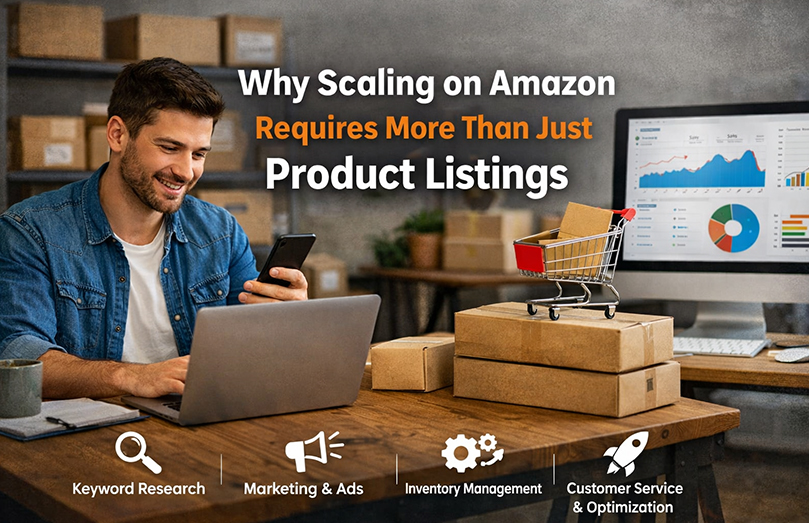
Why Scaling on Amazon Requires More Than Just Product Listings


Scaling on Amazon is no longer about uploading a few product listings and waiting for sales. Competition is intense, ad costs are rising, and customers have endless options. To achieve sustainable Amazon account growth, sellers need a strategic, data-driven approach that looks at every part of the business, not just the catalog.

Today, successful brands treat Amazon like a full ecosystem. That means aligning product, pricing, inventory, advertising, and customer experience under a clear Amazon business growth strategy. When these elements work together, sellers can unlock consistent revenue, stronger margins, and long-term brand equity on the marketplace.

Why Product Listings Alone Don’t Drive Amazon Account Growth

Many sellers assume that optimized titles, bullet points, and images are enough to drive Amazon account growth. While listings are essential, they are only one piece of a much larger growth engine. Without the right strategy behind them, even the best listings struggle to rank, convert, and scale profitably.

Amazon’s algorithm rewards more than keywords. It looks at sales velocity, stock health, pricing competitiveness, ad performance, and customer satisfaction. If any of these are weak, your visibility and sales suffer, no matter how polished your product pages appear.

The Limits of Listing-Only Optimization

Listing optimization improves click-through and conversion, but it cannot fix structural issues. If your Amazon inventory management strategy is weak, you risk stockouts or overstock, both of which hurt rankings and cash flow. Listings cannot compensate for poor availability or slow fulfillment.

Similarly, if your pricing or reviews are not competitive, shoppers will scroll past your offers. A strong Amazon seller growth strategy must address these operational and commercial levers, not just on-page content. This is where many sellers hit a ceiling in their Amazon account growth.

How the Algorithm Rewards Holistic Performance

Amazon’s A9 algorithm favors products that sell consistently, stay in stock, and delight customers. That means your Amazon business growth strategy must focus on improving conversion, maintaining inventory, and driving repeat sales. The algorithm connects these signals to determine which products deserve top placement.

When your ads, pricing, reviews, and inventory all align, your listings gain momentum. Over time, this synergy builds organic ranking power, which is the foundation of sustainable Amazon account growth. The goal is to create a flywheel where every sale improves your future visibility.

Building a Strategic Foundation for Amazon Account Growth

To scale effectively, you need a clear roadmap for how to scale on Amazon. This starts with understanding your category, competitors, and customer behavior. Without this foundation, it is easy to waste budget on the wrong products, keywords, or audiences.

A robust Amazon seller growth strategy defines which SKUs to prioritize, how to position them, and what success looks like. It also sets measurable goals for revenue, profitability, and market share. With this clarity, every decision supports long-term Amazon account growth instead of short-term spikes.

Defining Your Growth Levers and KPIs

Not all products contribute equally to Amazon account growth. Identify your hero products, high-margin items, and seasonal winners. Then, assign specific KPIs such as target ACOS, conversion rate, and inventory turns to track performance. This helps you focus resources where they matter most.

In addition, map your customer journey on Amazon. Understand which keywords drive discovery, which pages convert, and where shoppers drop off. This insight shapes your Amazon business growth strategy and helps you prioritize optimization efforts that move the needle.

Aligning Catalog, Pricing, and Positioning

Strategic catalog management is central to how to scale on Amazon. You may need to rationalize underperforming SKUs, bundle products, or introduce variations to capture more search demand. Each decision should support your broader Amazon account growth goals.

Pricing and positioning also play a critical role. You must balance competitiveness with profitability, especially as fees and ad costs rise. Clear positioning, supported by strong content and reviews, allows you to command better prices while still driving volume.

Amazon Inventory Management Strategy as a Growth Engine

Inventory is often the hidden driver of Amazon account growth. Stockouts kill momentum, while excess stock ties up capital and increases storage fees. A smart Amazon inventory management strategy keeps products available without overcommitting resources.

Effective planning requires accurate demand forecasting, seasonality analysis, and close monitoring of lead times. When you consistently stay in stock on your best sellers, your rankings stabilize and your advertising becomes more efficient.

Balancing FBA, FBM, and 3PL Options

Choosing the right fulfillment mix is a key part of how to scale on Amazon. FBA offers Prime eligibility and strong conversion, but it comes with storage and handling fees. FBM or third-party logistics can provide flexibility for bulky or slower-moving items.

Your Amazon inventory management strategy should segment products by velocity, size, and margin. This allows you to assign the most cost-effective fulfillment method while maintaining service levels. The result is healthier cash flow and more predictable Amazon account growth.

Designing a Profitable Amazon Ads Strategy

Advertising is now central to how to grow sales on Amazon. However, simply increasing ad spend does not guarantee profitable Amazon account growth. You need a structured Amazon ads strategy that aligns with your goals and margins.

Start by segmenting campaigns by product type, match type, and intent. This gives you better control over bids and budgets. Over time, you can shift investment toward the highest-converting keywords and placements, improving both sales and efficiency.

Balancing Organic and Paid Visibility

A mature Amazon seller growth strategy treats ads as a catalyst for organic ranking, not a permanent crutch. Use Sponsored Products, Sponsored Brands, and Sponsored Display to accelerate sales on key SKUs. As organic rankings improve, gradually rebalance spend to protect profitability.

Track how ad-driven sales impact your organic position for target keywords. This feedback loop helps refine your Amazon ads strategy and ensures that every dollar spent contributes to long-term Amazon account growth, not just short bursts of traffic.

When to Leverage Amazon Account Management and Consulting Services

As your catalog, ad spend, and operations expand, managing everything in-house becomes challenging. This is where Amazon account management services and Amazon seller consulting services can create real leverage. They bring specialized expertise, tools, and processes that most internal teams lack.

These partners can help refine your Amazon business growth strategy, optimize campaigns, and streamline operations. More importantly, they provide an outside perspective on risks and opportunities, helping you avoid costly mistakes and accelerate Amazon account growth.

Key Areas Where Expert Support Adds Value

Strategic partners can support you across multiple growth levers, including:

  • Comprehensive account audits and growth roadmaps
  • Advanced keyword research and listing optimization
  • End-to-end Amazon ads strategy and campaign management
  • Inventory planning and demand forecasting support
  • Brand protection, compliance, and policy guidance

With the right support, you can focus on product and brand development while experts manage the complexity of how to scale on Amazon. This collaboration often unlocks faster, more predictable Amazon account growth.

Conclusion: Turning Amazon into a Scalable Growth Channel

Scaling on Amazon requires more than attractive listings and occasional ad campaigns. Sustainable Amazon account growth comes from a coordinated strategy that connects catalog, pricing, inventory, advertising, and customer experience. When these elements align, Amazon becomes a powerful, predictable revenue engine rather than a volatile sales channel.

If you are ready to move beyond basic listing optimization and build a true Amazon seller growth strategy, partnering with experienced specialists like HRL Infotechs can help you turn Amazon into a scalable, long-term profit center for your brand.

How to Prepare Your Brand for Quick Commerce Expansion in India


Quick commerce is reshaping how Indian consumers discover, evaluate, and buy everyday products. For brands, this shift is not just about faster delivery; it is about building visibility and preference at the exact moment of purchase. As quick commerce platforms grow across India, brands that prepare early will capture disproportionate market share and long-term loyalty.

However, winning in quick commerce requires more than listing products on Blinkit, Zepto, or Swiggy Instamart. It demands a clear quick commerce strategy, tailored content, optimized assortments, and performance-led campaigns. This guide breaks down how to prepare your brand for quick commerce expansion in India with practical, market-ready steps.

Understanding Quick Commerce in India and Why It Matters Now

Quick commerce in India refers to ultra-fast delivery models, usually within 10–30 minutes, powered by dark stores and hyperlocal logistics. Categories like groceries, personal care, snacks, beverages, and household essentials are leading this quick commerce growth in India, but more categories are joining every quarter. For brands, this channel is no longer experimental; it is becoming a core part of the digital shelf.

The rise of quick commerce is driven by urban convenience, rising disposable incomes, and a mobile-first consumer base. Shoppers are searching, comparing, and buying directly within quick commerce apps, often without visiting marketplaces or brand websites. This means your quick commerce strategy for brands must focus on visibility, availability, and impulse triggers at the point of decision.

Defining the Right Quick Commerce Expansion Strategy for Your Brand

Before jumping into listings, define what quick commerce should achieve for your brand. Is the goal incremental sales, higher market share in key cities, or trial for new launches? A clear objective will shape your quick commerce expansion strategy and help you prioritize platforms, budgets, and product focus. Without this clarity, efforts often become fragmented and hard to scale.

Start by mapping your core consumer segments and their quick commerce behavior. Identify which cities, pin codes, and platforms show the highest relevance for your category. Then, align internal stakeholders across sales, marketing, supply chain, and finance so that quick commerce in India is treated as a strategic channel, not just another listing exercise.

Choosing the Right Quick Commerce Platforms

Each quick commerce platform has a different audience mix, category strength, and promotional ecosystem. For example, Blinkit is strong in metros and high-frequency grocery baskets, while Zepto and Swiggy Instamart are rapidly expanding into Tier 1 and emerging Tier 2 markets. Your quick commerce strategy for brands should reflect these nuances instead of treating all platforms the same.

Evaluate platforms based on category relevance, serviceable locations, ad formats, and data access. Prioritize 2–3 core partners for the first phase of quick commerce expansion in India. This focused approach allows you to test, learn, and optimize faster before scaling to additional platforms.

Aligning Pricing, Promotions, and Trade Terms

Quick commerce shoppers are highly price-aware and promotion-sensitive. At the same time, platforms expect competitive pricing and attractive offers to drive conversion. Your quick commerce expansion strategy must balance margin protection with aggressive visibility. Avoid deep discounting without a clear payback model or long-term plan.

Design promo mechanics that support trial and repeat: combo packs, limited-time offers, and cart-level deals. Ensure price parity with other online channels where possible to avoid consumer confusion. Finally, build in measurement frameworks to track how these promotions impact both sales and brand equity over time.

Optimizing Product Assortment for Quick Commerce Growth in India

Not every SKU in your portfolio is suited for quick commerce. Start with high-velocity, high-repeat products that fit quick missions like top-ups, cravings, or last-minute needs. These SKUs will anchor your presence and fuel quick commerce growth in India. Over time, you can layer in premium or niche variants to increase basket value.

Think in terms of missions and occasions, not just categories. For example, “movie night,” “breakfast rush,” or “weekend cleaning” can guide which SKUs to prioritize. Use platform data and sales reports to refine your quick commerce strategy for brands, dropping underperforming SKUs and doubling down on winners.

Packaging and Formats That Win in Quick Commerce

Quick commerce favors SKUs that are easy to stock, pick, and deliver. Smaller packs, multi-packs, and ready-to-use formats often perform better than bulky or fragile items. Consider creating quick commerce-exclusive bundles that solve a complete consumer need, such as a snack combo or cleaning essentials kit.

Packaging should also be optimized for on-screen visibility. Clear product images, legible labels, and strong color blocking help your brand stand out in crowded quick commerce search results. This is especially important when consumers scroll quickly and make decisions in seconds.

Ensuring Availability and Operational Readiness

Nothing kills quick commerce performance faster than out-of-stock issues. Align your supply chain and distributor partners with platform demand forecasts and seasonal spikes. Ensure that dark stores in priority pin codes are consistently stocked with your core SKUs to support sustainable quick commerce growth in India.

Set up regular reviews with platform account managers to track fill rates, stock-outs, and replenishment cycles. Integrate these insights into your broader quick commerce expansion strategy so that marketing investments are always backed by reliable availability on the shelf.

How to Sell on Quick Commerce Platforms Effectively

Listing your products is only the first step. To truly understand how to sell on quick commerce platforms, you must treat each product page as a mini landing page. Optimize titles, descriptions, and images with relevant keywords like quick commerce, quick delivery, and category-specific terms, while keeping language natural and consumer-friendly.

Use benefit-led copy that highlights speed, convenience, and usage occasions. Add clear claims, certifications, and differentiators that support your E-E-A-T profile and build trust. Regularly A/B test creatives and descriptions to see what drives higher click-through and conversion across platforms.

How to Sell on Blinkit: Practical Considerations

When planning how to sell on Blinkit, focus on search visibility and banner placements. Consumers often use generic category searches, so ranking high for those terms is critical. Optimize product titles with brand, variant, size, and key benefits while keeping them readable and concise.

Participate in Blinkit-led events, theme days, and seasonal campaigns to gain incremental visibility. Track performance by city, store, and placement type, then refine your quick commerce strategy for brands based on what actually moves the needle on Blinkit.

Marketing Strategy for Zepto and Swiggy Instamart

A strong marketing strategy for Zepto should combine always-on visibility with tactical bursts. Use sponsored listings, in-app banners, and homepage placements to secure top-of-shelf presence. Complement this with occasion-based campaigns such as festivals, exam season, or weather-driven triggers.

For Swiggy Instamart, build a quick commerce ads strategy that leverages audience targeting and time-of-day insights. Promote relevant SKUs during peak demand windows, such as evenings for snacks or mornings for breakfast essentials. Continuously refine your quick commerce ads strategy based on ROAS, new-user acquisition, and repeat purchase metrics.

Measuring and Scaling Your Quick Commerce Strategy

To scale quick commerce in India, you must move beyond vanity metrics and focus on actionable KPIs. Track share of search, share of shelf, conversion rate, repeat purchase, and average order value. These indicators reveal whether your quick commerce expansion strategy is building both sales and brand strength.

Set up dashboards that integrate platform data, internal sales reports, and campaign performance. Review them monthly with cross-functional teams to decide where to invest more, where to optimize, and where to exit. This disciplined approach will help you build a resilient quick commerce strategy for brands in a competitive market.

Conclusion: Turning Quick Commerce into a Growth Engine

Quick commerce is no longer a side channel; it is a frontline battleground for consumer attention and loyalty in India. Brands that invest in the right assortment, operational readiness, and platform-specific marketing will capture outsized gains as quick commerce growth in India continues. The key is to treat quick commerce as a strategic pillar, not a short-term experiment.

By aligning your teams, refining your quick commerce expansion strategy, and executing sharply on platforms like Blinkit, Zepto, and Swiggy Instamart, you can turn ultra-fast delivery into a sustainable growth engine. Partnering with specialists like HRL Infotechs can further accelerate this journey, ensuring your brand is fully prepared to win in the evolving quick commerce landscape.

The Real Impact of A+ Content on Amazon Sales in India


Amazon has become the primary marketplace for brands across India, but competition is fiercer than ever. Shoppers scroll through endless similar products, and most decisions are made in seconds. In this crowded space, Amazon A+ Content India is no longer a nice-to-have; it is a powerful lever that can directly influence click-throughs, engagement, and conversions on your product detail pages.

When used strategically, A+ Content does far more than make listings look attractive. It helps communicate value, answer objections, build trust, and guide buyers to purchase with confidence. Understanding the real impact of A+ Content on Amazon sales, and how to implement it correctly for the Indian marketplace, can transform underperforming listings into consistent revenue drivers.

The Role of Amazon A+ Content India in Today’s Marketplace

Amazon A+ Content India allows brand owners and sellers to enhance product detail pages with rich visuals, comparison charts, and structured storytelling. Instead of relying only on plain text bullets and a short description, you can showcase benefits, features, and use cases in a more persuasive way. This richer experience aligns with how Indian shoppers research and compare products online.

Most top-ranking listings in competitive categories now use A+ Content as a standard. As a result, products without it often look incomplete or less trustworthy. The impact of A+ Content on Amazon sales is especially visible in categories like electronics, beauty, home, and fashion, where visual storytelling and clear differentiation strongly influence purchase decisions.

How A+ Content Increases Amazon Sales in India

The direct impact of A+ Content on Amazon sales comes from improving how shoppers understand and feel about your product. When customers see clear visuals, benefit-driven copy, and comparison modules, they spend more time on the page and feel more confident. This often leads to higher conversion rates and better sales velocity over time.

In the Indian market, buyers frequently compare multiple listings before deciding. Well-structured Amazon A+ Content India helps your listing stand out by answering questions upfront, reducing doubts, and highlighting unique selling points. Over time, this can also contribute to better organic ranking, as improved conversions signal listing relevance to Amazon’s algorithm.

Reducing Purchase Anxiety and Returns

One of the most overlooked benefits of A+ Content is its ability to reduce returns and negative reviews. Detailed modules can clarify product dimensions, compatibility, usage instructions, and care guidelines. This clarity helps align expectations and reduces post-purchase disappointment.

When customers know exactly what they are buying, they are less likely to feel misled. Fewer returns and better reviews indirectly support higher sales. This is a key way the impact of A+ Content on Amazon sales extends beyond just the initial conversion rate.

Boosting Brand Perception and Trust

High-quality visuals and consistent branding across your A+ modules create a premium perception. In India, where many buyers are still building trust with online brands, this professional presentation makes a strong difference. It signals that the seller is serious, reliable, and invested in customer experience.

As your Amazon product listing optimization India strategy matures, A+ Content becomes a central tool for brand storytelling. You can highlight brand values, certifications, quality checks, and social proof. This emotional connection often nudges buyers to choose your product over a cheaper but less credible alternative.

Key Elements of High-Converting A+ Content in India

To truly leverage Amazon A+ Content India, you must go beyond generic templates. The best-performing listings follow a clear structure that mirrors how shoppers scan a page. Each module should have a purpose, from grabbing attention to closing the sale.

When planning your layout, think about the buyer journey: awareness, consideration, and decision. Align each section of your A+ Content with these stages. This strategic approach ensures that every image, icon, and line of copy works together to drive conversions.

Visual Storytelling and Lifestyle Imagery

High-resolution lifestyle images help customers imagine the product in real use. For Indian shoppers, context matters: show how the product fits into local homes, routines, or cultural moments. This makes the listing feel more relevant and relatable.

Use images to demonstrate scale, usage steps, and key benefits. Avoid cluttered designs; instead, focus on one message per visual. This clarity supports both user experience and Amazon product listing optimization India best practices.

Benefit-Focused Copy and Feature Highlights

While visuals attract attention, words close the sale. Your A+ copy should translate features into clear benefits. Instead of only listing technical specs, explain how they improve comfort, convenience, savings, or performance for the buyer.

Use short, scannable sentences and sub-points where needed. For example, highlight benefits like durability, energy savings, or skin safety. This style of writing aligns with how users skim content on mobile, which dominates Amazon traffic in India.

Integrating A+ Content into a Complete Amazon Marketing Strategy

A+ Content performs best when it is part of a broader Amazon marketing services plan. It should support your keyword strategy, ad campaigns, and pricing decisions. While A+ modules themselves are not directly indexed for SEO, they influence engagement and conversions, which affect ranking.

To maximize the impact of A+ Content on Amazon sales, ensure that your titles, bullets, and backend keywords are already optimized. Then, use A+ to reinforce those messages visually and emotionally. This integrated approach creates a consistent narrative across the entire product detail page.

Aligning with Sponsored Ads and Deals

When you drive traffic through Sponsored Products or Sponsored Brands, your A+ Content becomes the conversion engine. Ads may win the click, but the detail page must win the purchase. Strong A+ modules help convert paid traffic into profitable sales.

During key sale events in India, such as festive seasons or payday weekends, optimized A+ Content can significantly lift performance. Buyers are more open to discovering new brands, and a polished listing can quickly build trust and urgency.

Why Many Sellers in India Underuse A+ Content

Despite its proven benefits, many sellers still treat Amazon A+ Content India as an afterthought. Common issues include low-quality images, generic text, or modules that simply repeat bullet points. These mistakes waste a valuable opportunity to influence buyer behavior.

Another challenge is the lack of a clear content strategy. Without understanding target audiences, pain points, and competitive positioning, sellers often create A+ layouts that look good but fail to convert. This gap is where expert Amazon marketing services and structured planning make a real difference.

When to Consider Professional Amazon Account Management Support

As your catalog grows and competition intensifies, managing A+ Content, ads, and optimization in-house can become overwhelming. A specialized Amazon account management agency can help build a scalable strategy that covers design, copywriting, keyword research, and performance tracking.

Such partners understand how to tailor Amazon A+ Content India for different categories and price points. They can test variations, analyze conversion data, and refine layouts over time. This data-driven approach ensures that your A+ modules are not just visually appealing but also commercially effective.

Key Outcomes You Should Expect

When A+ Content is executed strategically, you should see measurable improvements in several areas. These include higher conversion rates, better session-to-order ratios, and stronger review profiles. Over time, these metrics contribute to improved organic ranking and lower dependence on aggressive discounting.

Additionally, you can expect clearer brand positioning within your niche. With consistent messaging and visuals across products, shoppers begin to recognize and trust your brand. This recognition supports repeat purchases and cross-selling opportunities across your catalog.

Conclusion: Turning A+ Content into a Competitive Advantage

In the evolving Indian ecommerce landscape, Amazon A+ Content India is one of the most controllable levers for improving performance. It shapes how buyers perceive your brand, understand your product, and decide to purchase. When aligned with strong listing fundamentals and smart advertising, A+ Content can unlock meaningful, long-term growth.

If you are serious about scaling your presence on Amazon and want to convert more clicks into loyal customers, investing in strategic A+ Content is essential. Partnering with experts like HRL Infotechs can help you move beyond basic templates and build data-backed, high-impact experiences that turn your product pages into powerful sales assets.

How Professional Amazon Seller Account Management Improves Buy Box Winning Rate


Winning the Amazon Buy Box is no longer optional for serious sellers. It is where most customers click, compare, and complete their purchase. Yet many brands still treat Amazon Seller Account Management as a side task instead of a strategic growth engine that directly impacts Buy Box win rate and long-term profitability.

When your Amazon Seller Account Management is handled professionally, every lever that influences the Buy Box is monitored, optimized, and aligned with your business goals. From pricing and inventory to Amazon listing optimization and advertising, a structured approach can dramatically increase Buy Box percentage on Amazon and protect your margins at the same time.

Why the Buy Box Matters for Serious Amazon Sellers

The Buy Box is the default purchase option on a product detail page. Most shoppers click “Add to Cart” without checking other offers. That means your Buy Box win rate directly controls how many of your product views convert into sales. Even small improvements in Buy Box percentage Amazon can translate into significant revenue growth.

Professional Amazon Seller Account Management focuses on this reality. Instead of chasing random tactics, it builds a consistent Amazon Buy Box strategy for sellers. The goal is simple: keep your offers eligible, competitive, and profitable, while maintaining strong operational performance that Amazon’s algorithm rewards.

How Amazon Decides Who Wins the Buy Box

Amazon uses a complex algorithm to determine which seller wins the Buy Box at any moment. Price is important, but it is not the only factor. The system also weighs fulfillment method, delivery speed, seller performance metrics, and stock availability. Sellers who ignore these elements often see their Buy Box share drop without understanding why.

With structured Amazon Seller Account Management, these factors are tracked and improved continuously. Instead of reacting when Buy Box share falls, you proactively manage pricing rules, fulfillment options, and service levels. This data-driven approach helps stabilize and increase Buy Box percentage Amazon over time.

Core Elements of Professional Amazon Seller Account Management

Effective Amazon Seller Account Management is not just about logging in daily. It is a disciplined process that combines strategy, analytics, and execution. Each area of your account is reviewed and optimized to support Buy Box performance and profitable growth.

When these elements work together, your account becomes more resilient to competition and marketplace changes. You are not just fighting for today’s sales; you are building a sustainable presence that consistently wins the Buy Box and attracts repeat customers.

Account Health and Performance Metrics

Amazon’s algorithm favors reliable sellers. That means order defect rate, late shipment rate, and cancellation rate must stay within strict thresholds. Professional account management monitors these metrics daily and addresses issues before they trigger penalties or Buy Box suppression.

In addition, proactive communication with buyers, fast response to messages, and effective returns handling all contribute to stronger seller performance. Over time, this operational discipline supports a higher Amazon buy box win rate and protects your brand reputation on the marketplace.

Pricing Strategy and Automated Repricing

Price is a major driver of the Buy Box, but racing to the bottom destroys margins. A professional Amazon Buy Box strategy for sellers uses intelligent repricing rules instead of constant manual changes. These rules consider competitor offers, fees, and your minimum acceptable margin.

By combining pricing tools with expert oversight, Amazon Seller Account Management can keep your offers competitive without undercutting your profitability. This balance is crucial if you want to increase Buy Box percentage Amazon while still scaling a healthy business.

Amazon Listing Optimization That Supports Buy Box Wins

Many sellers focus only on price and ignore product detail pages. Yet strong Amazon listing optimization improves both traffic and conversion, which indirectly supports Buy Box performance. Amazon wants to feature offers that give shoppers a great experience and clear information.

Optimized listings also help you rank for more relevant search terms, bringing in higher intent buyers. When your content, images, and keywords align with shopper expectations, your conversion rate improves. This stronger performance can help your offers remain competitive in the Buy Box rotation.

High-Converting Content and Keyword Strategy

Professional Amazon Seller Account Management includes detailed keyword research and content refinement. Titles, bullet points, and descriptions are crafted to include primary and family keywords naturally, such as amazon buy box win rate and amazon storefront optimization. This supports both search visibility and clarity for shoppers.

At the same time, content must stay readable and persuasive. Clear benefits, use cases, and differentiators help buyers decide faster. When listings convert well, Amazon’s algorithm sees your offers as more valuable, which can positively influence Buy Box share.

Visual Assets and A+ Content

Images and enhanced content are critical for building trust. Professional listing optimization ensures you have high-resolution images, lifestyle shots, and infographics that answer common questions visually. This reduces hesitation and cart abandonment, improving conversion rates.

A+ Content and brand storytelling further differentiate your products from generic competitors. When shoppers stay longer on your page and interact with your content, it sends positive engagement signals. Over time, this engagement supports stronger search rankings and a healthier Amazon buy box win rate.

Leveraging Amazon Seller Ad Services in India for Buy Box Growth

Advertising and Buy Box performance are closely linked. When you win the Buy Box, your Sponsored Products ads can show more often and convert better. Professional Amazon seller Ad services India help align your ad strategy with your Buy Box goals, not just clicks or impressions.

By targeting the right keywords and optimizing bids, you can drive qualified traffic to listings that are already Buy Box eligible. This combination of visibility and eligibility can significantly increase Buy Box percentage Amazon, especially in competitive categories.

Integrated PPC and Organic Strategy

Advanced Amazon Seller Account Management treats advertising and organic optimization as one system. Keyword data from ads informs listing content, while strong organic rankings reduce your long-term cost per acquisition. This integrated approach maximizes return on ad spend and supports sustainable growth.

Additionally, continuous bid optimization, negative keyword management, and campaign restructuring keep your ads efficient. When your campaigns focus on profitable terms and high-intent searches, you attract buyers who are more likely to convert when you hold the Buy Box.

Amazon Storefront Optimization and Brand Control

Beyond individual listings, your Amazon Storefront acts as a branded hub. Effective amazon storefront optimization helps present your full catalog in a structured, visually appealing way. This improves cross-selling, average order value, and brand recall among repeat customers.

When your storefront, listings, and ads all share a consistent strategy, it becomes easier to protect your brand from unauthorized sellers and pricing chaos. Strong brand control supports stable pricing and inventory, which are both essential for maintaining a healthy Amazon buy box win rate.

Data-Driven Decisions and Continuous Improvement

The most successful sellers treat Amazon Seller Account Management as an ongoing optimization process. They rely on dashboards, reports, and marketplace insights to guide decisions on pricing, inventory, and advertising. This data-driven mindset helps them react quickly to competition and demand shifts.

By reviewing Buy Box share, session data, and conversion trends regularly, you can identify which products need attention first. Over time, this disciplined approach compounds, leading to higher Buy Box coverage, stronger rankings, and more predictable revenue from Amazon.

Conclusion: Turning Account Management into a Buy Box Growth Engine

Winning the Buy Box consistently is not about luck or one-time tricks. It is the result of structured Amazon Seller Account Management that connects pricing, performance, content, ads, and brand control into one cohesive strategy. When each of these areas is professionally managed, your Amazon buy box win rate improves, and your business becomes more resilient to marketplace volatility.

If you are ready to turn your Amazon presence into a predictable growth channel and increase Buy Box percentage Amazon across your catalog, partnering with a specialist like HRL Infotechs can help you implement the systems, processes, and optimizations needed to stay ahead of competitors and convert more of your traffic into profitable sales.

How to Improve Conversion Rate on Flipkart Without Changing the Product


Improving your Flipkart conversion rate does not always require changing your product. In many cases, the real problem lies in how your product is presented, discovered, and trusted on the platform. By optimizing your listings, store page, and account management, you can significantly increase sales without touching the core product itself.

This guide explains how to improve flipkart conversion rate using proven marketplace strategies. You will learn how to increase conversion rate on Flipkart through listing optimization, store page optimization, and smart account management, so more visitors turn into paying customers.

Understanding Flipkart Conversion Rate and Buyer Intent

Before you can improve flipkart conversion rate, you must understand what it actually measures. Conversion rate is the percentage of visitors who land on your product page and complete a purchase. A low conversion rate means many shoppers visit but do not buy, even if your product is good.

On Flipkart, buyer intent is usually high because users are already in shopping mode. If your flipkart conversion rate is low, the issue often lies in trust, relevance, or presentation. Fixing these areas is the fastest way to increase conversion rate on Flipkart without changing the product itself.

Common Reasons Your Flipkart Product Is Not Selling

Many sellers ask, “why my flipkart product is not selling” even though they have competitive pricing. Often, the problem is not demand but how the listing appears in search and on the product page. Weak titles, poor images, and missing details push buyers away.

Other times, low flipkart conversion rate comes from negative reviews, slow response times, or unclear shipping and return policies. Understanding these friction points helps you prioritize the right optimization steps to increase Flipkart sales.

Flipkart Listing Optimization: Fix the Product Page First

Flipkart listing optimization is the most powerful lever to improve flipkart conversion rate. Your product page is where buyers decide to purchase or leave, so every element must build trust and reduce doubt. Small improvements here can create a big impact on sales.

Focus on optimizing the title, images, description, and key attributes. When these elements match buyer expectations and search behavior, you naturally increase conversion rate on Flipkart and improve your organic visibility in marketplace search.

Optimize Titles and Keywords for Higher Relevance

Your title is one of the strongest signals for both search ranking and click-through rate. To improve flipkart conversion rate, your title should be clear, keyword-rich, and benefit-driven without being spammy. Include brand, main feature, size or variant, and primary use case.

Research how top competitors phrase their titles for similar products. Then, structure your own title to cover the main search terms buyers use when looking for your product. This approach supports flipkart listing optimization and helps answer why your Flipkart product is not selling.

Upgrade Images and Visual Storytelling

High-quality images are critical for a strong flipkart conversion rate. Shoppers cannot touch the product, so visuals must do the convincing. Use clear, high-resolution images with a clean background and multiple angles to show details.

Where allowed, add lifestyle images that show the product in real use. Include close-ups of important features and size references. Better visuals reduce uncertainty, increase conversion rate on Flipkart, and often justify a slightly higher price.

Strengthen Descriptions, Bullet Points, and Attributes

Your description should answer every question a buyer might have before purchase. To improve flipkart conversion rate, write clear, benefit-focused copy that explains what the product does, who it is for, and why it is better. Avoid generic text and focus on real outcomes.

Use bullet points for key features and specifications so buyers can scan quickly. Ensure all attributes, such as size, color, material, and compatibility, are complete and accurate. This level of flipkart listing optimization reduces returns and builds long-term trust.

  • Highlight 3–5 core benefits in bullets.
  • Clarify usage instructions or care guidelines.
  • Address common objections directly.

Flipkart Store Page Optimization for Brand Trust

Even if a single listing is strong, a weak store page can still hurt your flipkart conversion rate. Buyers often click through to your store to check credibility, especially for higher-value products. A professional, consistent presence increases confidence.

Flipkart Store page optimization involves aligning visuals, messaging, and product assortment. When your store looks trustworthy and well-managed, shoppers feel safer buying from you, which helps increase conversion rate on Flipkart across all your listings.

Create a Consistent Brand Experience

Use consistent colors, imagery style, and tone of voice across your store banner, logo, and product images. This consistency signals professionalism and reliability, both of which support a stronger flipkart conversion rate. Avoid cluttered designs or mismatched visuals.

Organize products into logical categories and highlight bestsellers or top-rated items. This structure makes navigation easier and guides buyers to proven products, which can quickly increase Flipkart sales without changing your existing catalog.

Flipkart Account Management Optimization for Performance

Flipkart account management optimization goes beyond listings and store design. The platform also rewards operational excellence, such as fast shipping, low cancellation rates, and responsive customer service. These factors influence your visibility and flipkart conversion rate.

When your operational metrics are strong, Flipkart is more likely to favor your products in search and promotions. This improved exposure, combined with optimized listings, can dramatically increase conversion rate on Flipkart and drive sustainable growth.

Improve Service Metrics and Seller Performance

Monitor key performance indicators like on-time dispatch, return rate, and customer response time. Poor metrics can quietly drag down your flipkart conversion rate, even if your product pages look good. Set internal standards that exceed Flipkart’s minimum requirements.

Respond to customer queries quickly and professionally. Resolve issues before they turn into negative reviews. Over time, better ratings and fewer complaints will increase Flipkart sales and strengthen your overall marketplace reputation.

Leverage Promotions and Pricing Smartly

You do not need to change your product to adjust your pricing and offers. Strategic discounts, coupons, and limited-time deals can boost flipkart conversion rate by creating urgency. However, avoid constant deep discounts that hurt margins and brand perception.

Test different price points and promotional structures to see what best increases conversion rate on Flipkart for your category. Combine these offers with strong listing optimization to convert the extra traffic generated during campaigns.

Using Data and Reviews to Continuously Improve

Improving flipkart conversion rate is not a one-time task. You should regularly analyze performance data, customer reviews, and search trends. This ongoing review helps you spot new opportunities to refine your listings and store page.

Pay attention to which keywords drive the most sales and which products have the highest conversion. Use this insight to guide future flipkart listing optimization and store layout decisions, focusing on what actually works rather than guesswork.

Turn Customer Feedback into Optimization Ideas

Reviews and Q&A sections are a goldmine for understanding why your flipkart product is not selling as expected. Look for repeated complaints or confusion about features, sizing, or usage. Then, update your description, images, and bullets to address those issues.

Highlight positive reviews and ratings where possible to reinforce trust. This social proof can significantly improve flipkart conversion rate, especially for new visitors who are comparing multiple sellers and products.

Conclusion: Turn Traffic into Revenue Without Changing Your Product

When your product is good but sales are slow, the answer often lies in how you present, position, and manage it on the platform. By focusing on flipkart listing optimization, Flipkart Store page optimization, and strong account management, you can improve flipkart conversion rate and unlock more revenue from existing traffic. If you want expert help implementing these strategies at scale, HRL Infotechs can provide structured marketplace optimization support tailored to your business.

Consistent improvements in titles, images, descriptions, service metrics, and data-driven decisions will steadily increase conversion rate on Flipkart. Over time, these changes compound, helping you overcome the question of why your Flipkart product is not selling and turning your Flipkart presence into a reliable, high-performing sales channel.